
Table of contents7 sections
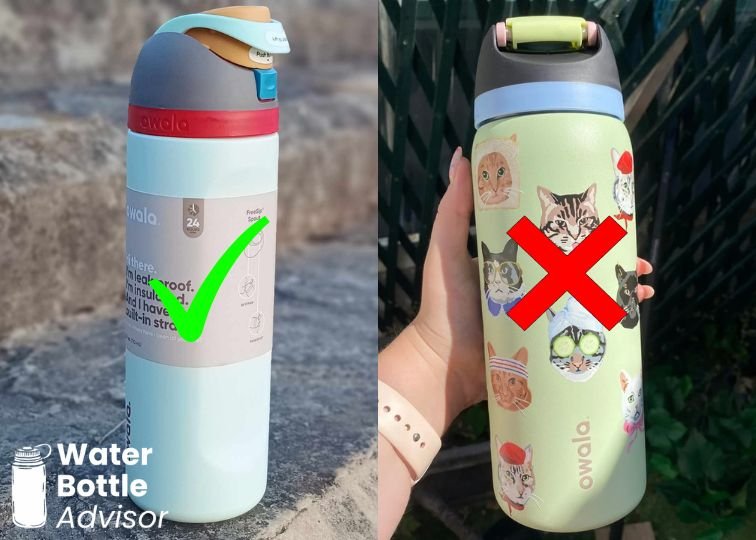
Counterfeit drinkware has become more common than most people realize, and Owala is no exception. At first glance, fake bottles can look surprisingly convincing. They copy the colors, logos, and even packaging closely enough that many buyers don’t notice anything wrong until later.
In this guide, we’ll go through the key differences between fake and real Owala bottles and show you exactly what to look for before you buy or when you’re trying to verify one you already own.
Tip #1: Check for the “V” Mark Under the Lid
The “V” mark (or V-number) you sometimes see under the lid or inside parts of an Owala bottle is basically a factory production code.
It’s used internally to identify things like:
- production batch
- mold/version line
- manufacturing quality control tracking
You’ll often see it as something like V1, V2, V23, etc.
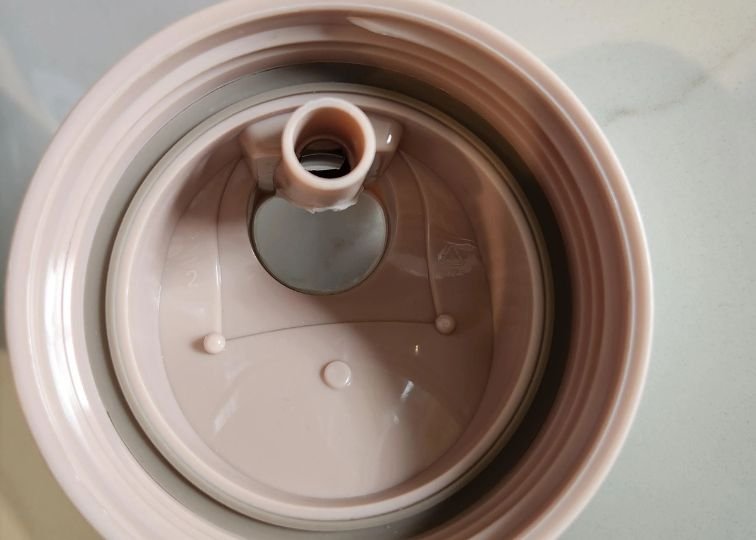
If your bottle has no V marking at all in the expected areas, that’s a strong warning sign that it may not be genuine.
You can refer to the image below showing a fake Owala with no V mark under the lid:
And this is what a real one should look like:
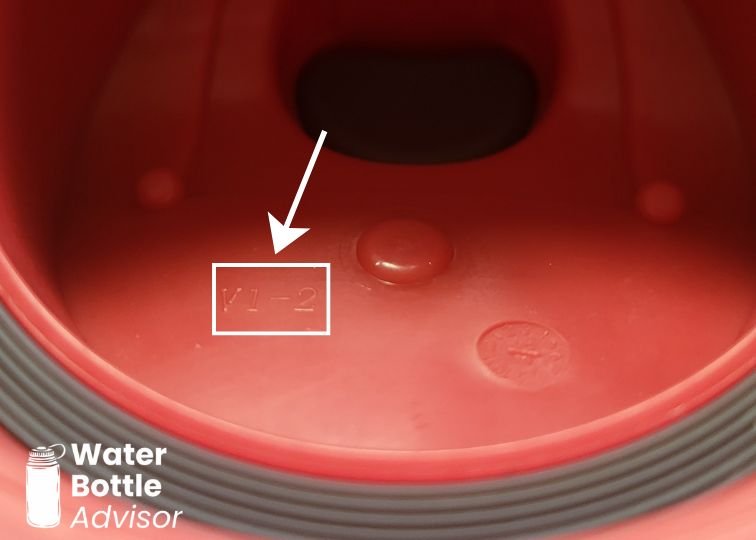
Unfortunately, I’ve seen fake Owala bottles that do include a V mark, which makes this method less reliable on its own.
One pattern I’ve noticed is that a lot of counterfeit bottles reuse the same marking format, especially “V1-1”. If you see this exact code, it can be a red flag, especially if other details (logo, build quality, seller) also look suspicious.
Tip #2: Compare Colors with Official Listings
This sounds simple, but in practice it’s one of the trickiest checks because Owala releases a lot of shades and limited editions.
The most reliable approach is to start with the exact color name. Owala doesn’t use generic names like “blue” or “green”. Instead, their shades usually have specific branded names. If the seller can’t match your bottle to an official color name, that’s already a red flag.
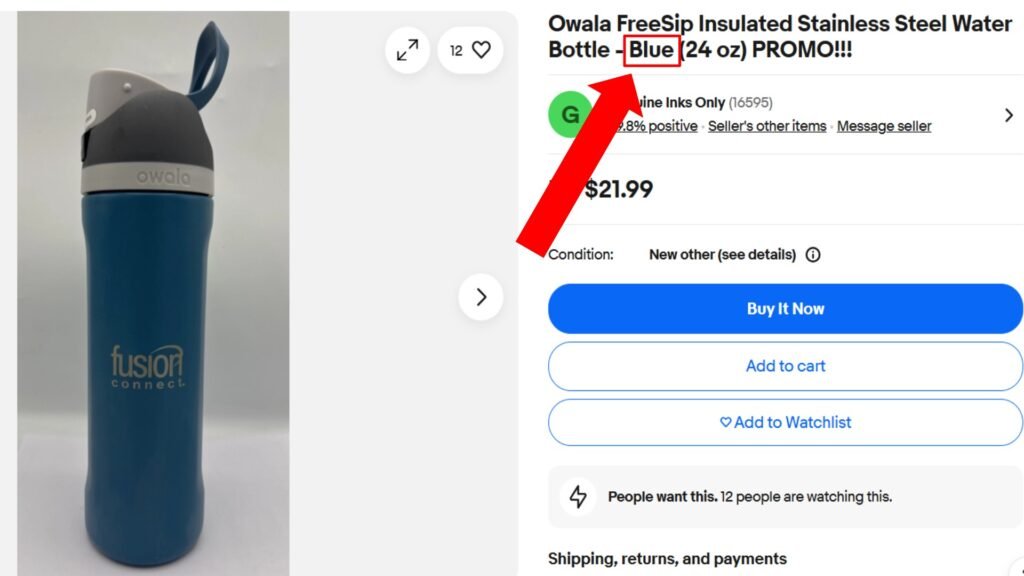
In fact, one of the easiest ways scammers trick buyers is by inventing colors that sound like limited editions. People often assume they’ve found a rare drop and buy quickly due to FOMO, without double-checking.
In reality, those colors often don’t exist in any official Owala listings.
Tip #3: Check the Wording and Spelling
Another quick but effective check is to look closely at any text printed on the bottle, especially on the bottom and around labels.
On authentic Owala bottles, the wording is always clean, consistent, and free of errors. Counterfeits, on the other hand, often slip up with small spelling mistakes or awkward phrasing.
For example, in the image below you can see a fake bottle where the warning text says “not for us[a] with hot liquids” instead of the correct “not for use with hot liquid”. That kind of mistake is an immediate red flag.
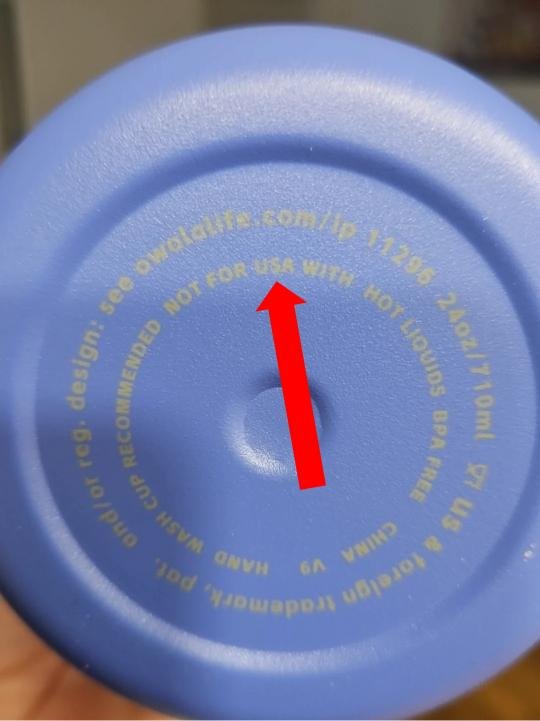
If you notice even a single spelling error or unusual phrasing, don’t ignore it. Real Owala products go through strict quality control, and mistakes like this should not appear on authentic bottles.
What If the Country of Origin Is Not China?
The default and most common manufacturing location for Owala bottles is China. However, in recent years, some buyers have reported seeing bottles labeled “Made in Thailand” or “Made in Vietnam”, which has understandably caused confusion.
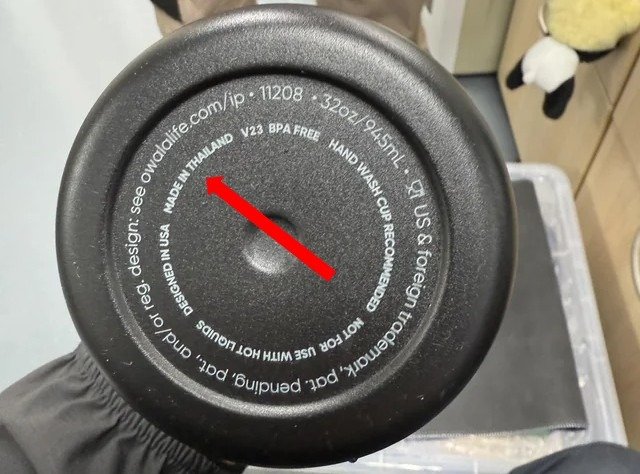
At first glance, this can look like a red flag, but it doesn’t automatically mean the bottle is fake. In most cases, this kind of variation can be explained by:
- Different production batches
- Multiple factories within the same supply chain
- Regional manufacturing adjustments over time
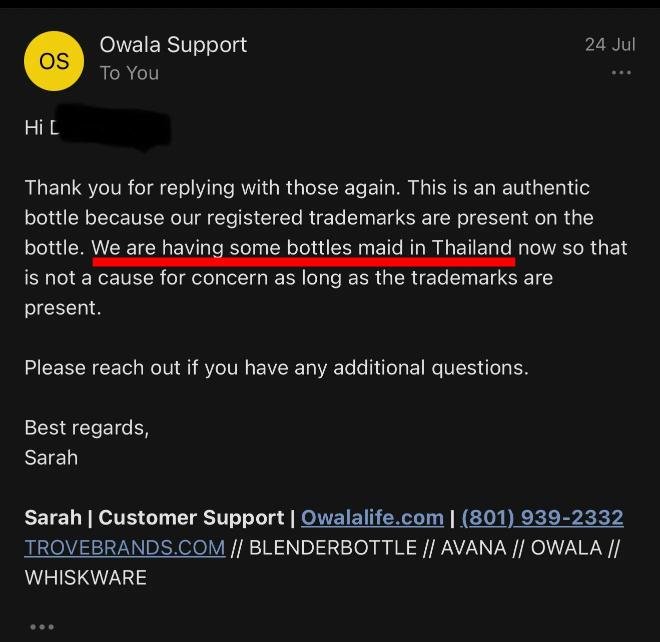
There have also been cases where Owala customer support confirmed that bottles with non-China markings were still authentic, depending on batch and distribution.
The Mark in the Cap
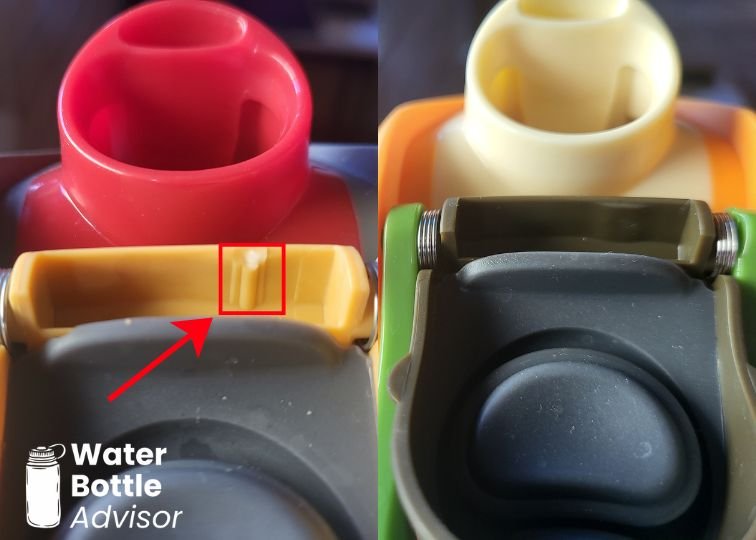
I’ve also seen people worrying about a small mark inside the cap, usually in the hollow area between the spring components.
This is not a reliable sign of a fake.
On authentic Owala bottles, these small marks can appear as part of the manufacturing process and may vary between production runs. In my own bottles, one cap has a visible mark while another doesn’t – both are genuine.
How to Avoid Buying a Fake Owala Bottle?
The safest option is simple: buy directly from the official Owala website (owalalife.com) or from trusted retailers.
One of the most common scams I’ve seen involves fake websites that look almost identical to the real one. The trick is usually in the domain name. Scammers change a single letter or add an extra word, hoping you won’t notice. For example:
- owalalife.com (real)
- owalaliife.com (extra letter)
- owalastore.com (added word)
At a glance, these sites look legitimate. They often copy the design, product photos, and layout of the original site. The goal is either to sell counterfeit products or take your money and not ship anything at all.
That’s why it’s important to double-check the domain name before buying. Make sure it’s spelled correctly and doesn’t include any extra words or unusual variations.
Trusted and Official Retailers (US)
If you’re not buying directly from the official site, stick to well-known retailers that carry genuine Owala products:
- Target (often has exclusive colors)
- Dick’s Sporting Goods (often has exclusive colors)
- Whole Foods Market (often has exclusive colors)
- Urban Outfitters (often has exclusive colors)
- Amazon (look for official listings and sellers)
Other reliable options include:
- Nordstrom Rack
- The Vitamin Shoppe
- Best Buy
- Kroger / Meijer
- REI
Sticking to these retailers significantly lowers the risk of getting a fake. If you’re buying from a smaller or unfamiliar store, take a moment to verify it before placing an order.
How we test products
Every product we review is tested using the same structured process, with dozens of measurements and checks covering areas such as thermal performance, lid usability, cleaning, durability, portability, and everyday use. Those results feed into the WBA Score, which helps us compare bottles using consistent criteria instead of relying only on manufacturer claims.
You can read our full product testing protocol, learn more about Water Bottle Advisor and how we test products, or see how the WBA Score works.
About the author
Jeremiah Kowalski
Jeremiah Kowalski founded Water Bottle Advisor to make drinkware reviews more useful and less dependent on manufacturer claims. He has personally tested more than 120 bottles, tumblers, mugs, and filtration systems, putting each one through measuring, cleaning, leak testing, and everyday use before sharing his conclusions. It also means occasionally explaining why yet another large box of bottles has arrived at his door.
Leave a Reply