

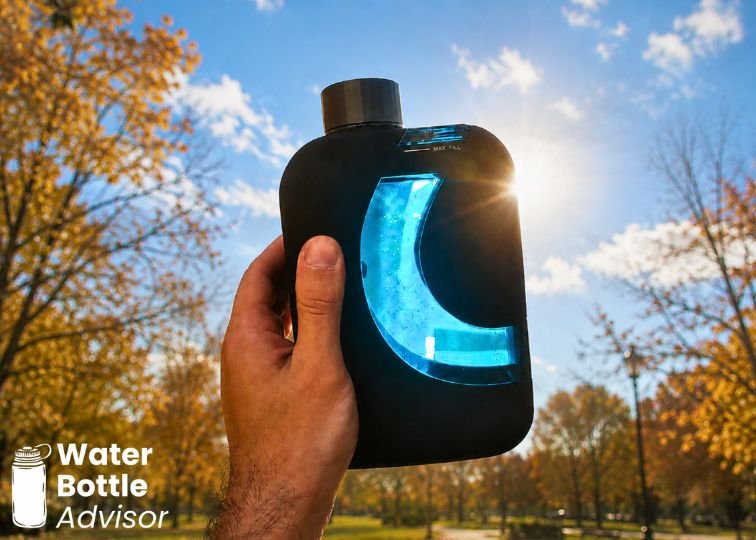
Hydrogen water bottles are not like regular reusable bottles. With a normal bottle, you mostly worry about size, leaks, lid design, and whether it’s annoying to carry. With hydrogen bottles, the details matter a lot more.
I learned that the expensive way. I’ve bought 10 hydrogen bottles and pitchers so far, and I regret buying about half of them. Sometimes I fell for flashy Amazon photos. Sometimes I trusted big hydrogen numbers without checking how they were measured. Sometimes I just rushed the research.
So I’m glad you found this guide before buying one. Below, I’ll show you the eight things I now check before spending money on a hydrogen bottle.
And just to be clear: I don’t treat hydrogen bottles like miracle machines. I’ve been testing hydrogen water on myself for more than 3 years and had results I’m happy with, which I cover in my do hydrogen bottles work guide. But I’d still read the research and understand the limits before buying your first bottle.
No Certificate, No Trust
This is the first thing I’d check before buying any hydrogen water bottle.
Measuring hydrogen output at home is tricky. I’ve tried the two realistic methods regular people can use – a hydrogen meter and hydrogen reagent drops. Both can help, but only up to a point. Some meters and drops are also just junk, so even your “test” can be misleading.
That creates a big problem. Brands can throw around huge hydrogen numbers because most customers won’t be able to verify them at home. A bottle can claim 5,000 ppb, 8,000 ppb, or some wild number that looks great on Amazon, but unless there’s real lab testing behind it, I don’t put much weight on it.
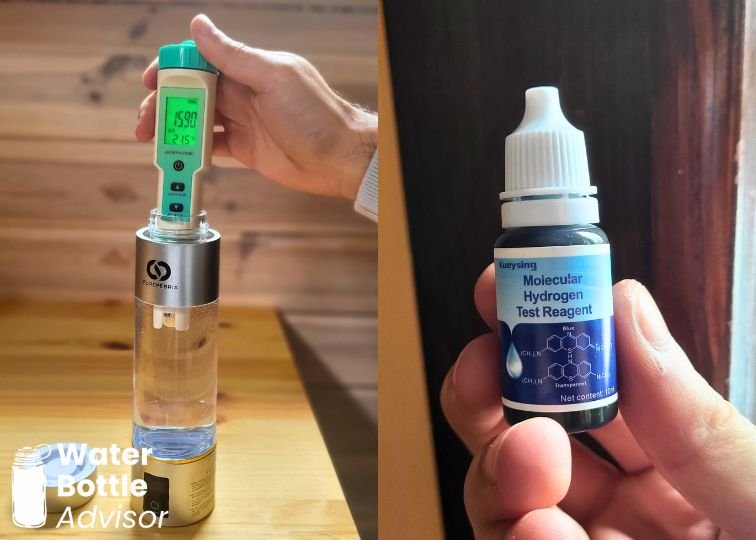
The more accurate method is gas chromatography, and that’s done in a professional lab. That’s why I care so much about certificates that clearly show gas chromatography results.
The certificate I trust most is from H2 Analytics, a lab based in Nevada. Their reports show a lot of detail – probably more than most people need. You’ll see things like lab elevation and notes about a sample being taken from a specific depth with a gas-tight syringe. You don’t need to memorize any of that, but I do like the transparency.
The part that matters most is the actual hydrogen result from the gas chromatography test. For example, here’s part of the H2 Analytics certificate for the Piurify Hydrogenator bottle, showing the results after 10- and 20-minute cycles:
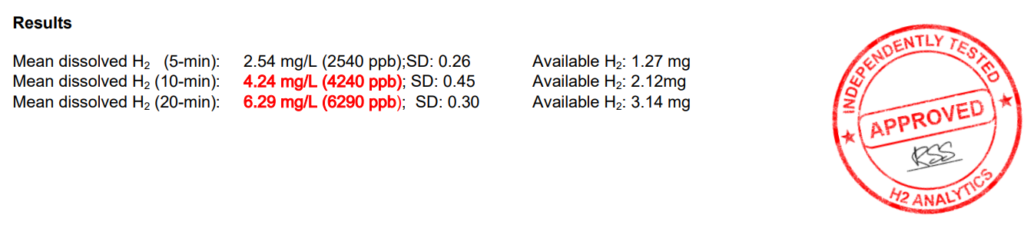
If a brand shows a full certificate like this on the product page, that’s a huge green flag for me. If there’s no certificate, no lab name, no test method, or just a vague “high hydrogen concentration” claim, I treat that as a red flag right away.
Don’t Chase the Biggest PPB Number
Once you’ve checked the certificate, the next question is: how much hydrogen should the bottle actually produce?
This confused me a lot at first. I fell for the same marketing trick many people probably fall for:
Bigger number = better bottle.
If one bottle claims 3,000 ppb and another claims 8,000 ppb, the 8,000 ppb bottle sounds like the obvious winner.
But I don’t think it’s that simple.
I’ve read multiple studies on hydrogen water, and many of them used water in the 500-1,600 ppb range. In my own testing, I noticed the biggest changes when drinking water around 3,000 ppb.
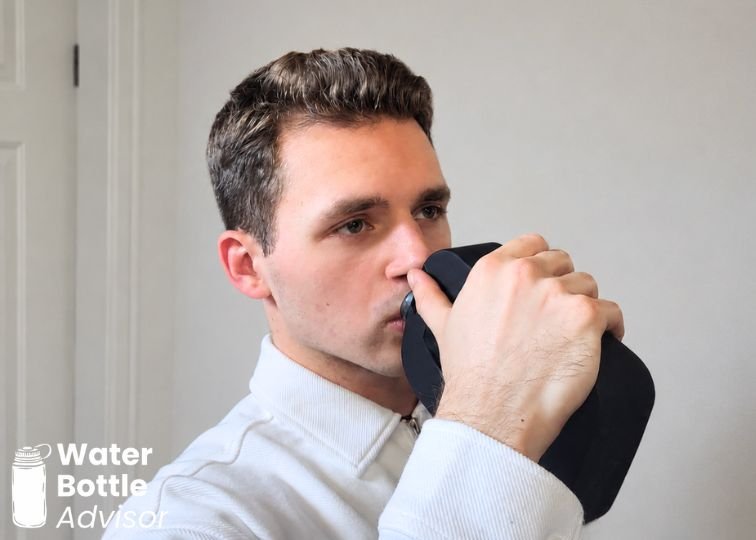
I also own bottles that can go much higher (even around 8,000 ppb) but I haven’t noticed a huge difference between 3,000 and 8,000 ppb.
One possible reason is that hydrogen escapes quickly. Very high hydrogen levels are hard to keep inside a normal bottle unless you’re using some ultra-sealed lab container, and that’s not what most of us are drinking from.
So no, I wouldn’t panic if a bottle doesn’t claim some crazy number. My personal target would be at least 3,000 ppb, backed by a real lab certificate.
I’d also check that the bottle uses SPE/PEM technology to generate hydrogen. Most serious hydrogen bottles I’ve seen use it, so it’s not usually hard to find. Still, it’s worth checking before you buy.
Choose the Right Material
Next, check the material.
For regular water bottles, you’ll see stainless steel, glass, plastic, silicone, aluminum, and a few other odd choices. With hydrogen water bottles, it usually comes down to two: glass or plastic.
Glass sounds like the safer pick at first. I get it. I like glass too. You don’t have to think as much about weird chemicals leaching into your water, and it usually feels cleaner than plastic.
But for a hydrogen bottle, I’d usually choose plastic.
Before you throw your bottle at me, here’s why: glass is fragile, and that matters a lot more when the bottle costs $100 or more. If you drop it once, knock it against the sink, or tip it off a counter, that may be it. And even if the brand offers a warranty, accidental damage usually isn’t covered.
In fact, one of my first hydrogen bottles was made from glass, and I never even got to use it because it arrived broken. Great start.
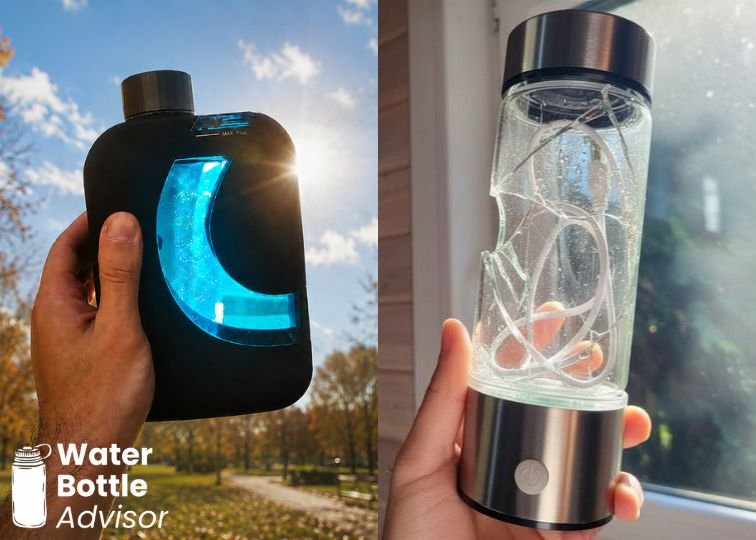
Plastic is much harder to break, which makes more sense for a bottle you’ll use every day. But the type of plastic matters. The two I trust most are Tritan and polycarbonate. I’ve used bottles made from both for years, and they’ve held up well.
Still, I’d check the safety claims carefully. Look for BPA-free, BPS-free, and phthalate-free materials. Thankfully, most decent plastic hydrogen bottles mention this clearly.
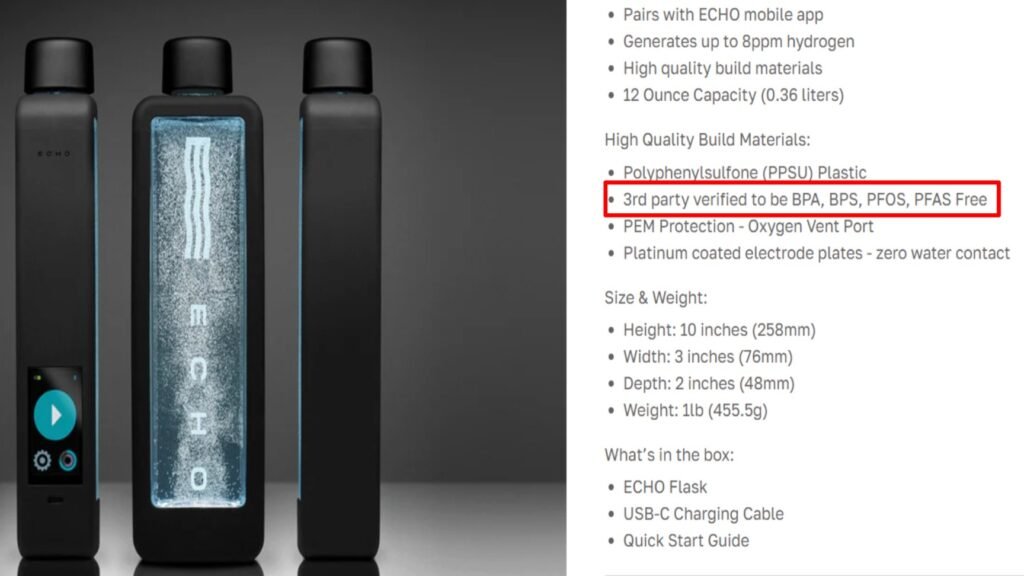
What I’d be more careful with is PET. I still come across some reusable bottles made from PET, and I wouldn’t make that my first choice for a hydrogen bottle, especially if the bottle will sit in warm places or be used often.
I cover materials and long-term durability in more detail in my hydrogen bottles longevity guide.
Don’t Ignore the Bottle Size
I don’t know about you, but I don’t love using tiny bottles. And that’s one of the most annoying things about hydrogen water bottles: many of them hold only 8-10 oz.
That may sound fine until you actually use one every day.
My EVOLV hydrogen bottle is a good bottle, but it holds only about 8 oz. So I have to run a 5-minute cycle before drinking, or a 10-minute cycle if I want the highest hydrogen output. Then I drink it, and I’m still thirsty. If I want more, I have to run another cycle. Some days, getting enough hydrogen water can turn into a 20-30 minute process.
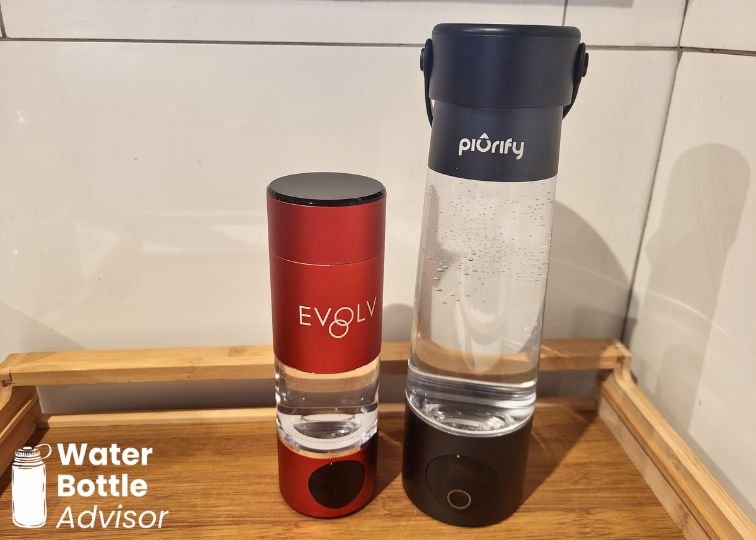
Maybe that won’t bother you. If you’re patient, a smaller bottle might be fine. But if you get annoyed waiting for water, I’d look for a larger size. They’re harder to find, but they exist.
My favorite example is the Piurify Hydrogenator, which holds 17 oz. That 9 oz difference between Piurify and EVOLV may not sound huge on paper, but in daily use, it changes the whole experience.
Check the Battery Before You Buy
Battery life doesn’t get talked about enough with hydrogen water bottles.
If you’ve ever had a phone, earbuds, or any other device with bad battery life, you already know how annoying this gets. You charge it, use it for half a day, and suddenly you’re looking for the cable again.
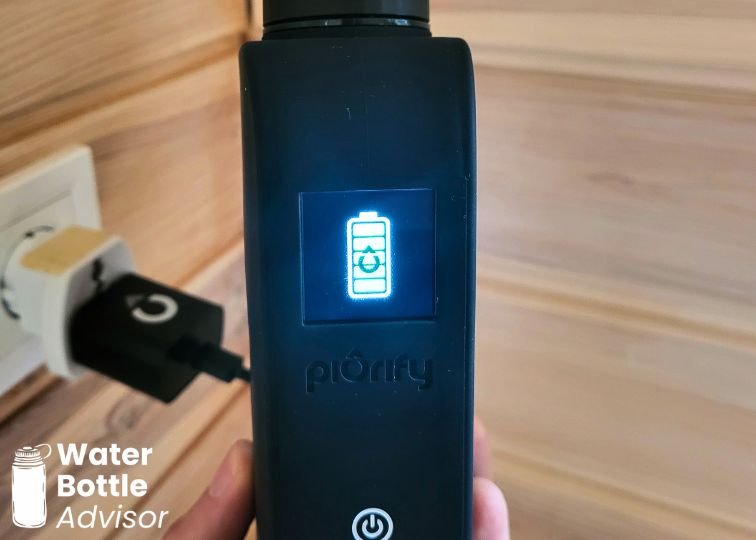
Hydrogen bottles can have the same problem. A lot of them come with a 1,000 mAh battery, which seems pretty common in this category. It works, but I wouldn’t call it great if you plan to use the bottle several times a day.
Personally, I’d look for something closer to 2,000 mAh. That gives you a much better chance of getting through a full day without charging.
There are a few rare bottles that go way beyond that. My Piurify Flask, for example, has a 5,000 mAh battery. That’s not normal in this space, and it makes a difference. I can use it 4-5 times a day and still go around three days without charging.
For a hydrogen bottle, that feels almost spoiled.
Buy From a Brand That Will Actually Help You
Warranty matters with any bottle, but with hydrogen bottles, it matters even more.
These things are expensive. If something stops working and the brand doesn’t cover it, you’re out a lot more money than you’d lose on a regular water bottle.
I’ve seen some brands sell the warranty as an extra add-on. Others give you only a few months of coverage. I’m not a fan of that. A one-year warranty is decent, but if you can find a good bottle with a lifetime warranty, that’s what I’d aim for.
Just don’t forget the boring stuff after buying. Register the bottle on the brand’s website, keep your receipt, and don’t throw away the original packaging too fast. Some brands can get picky during claims, and you don’t want to lose warranty coverage over a missing box.
I’d also pay close attention to the brand itself. A lifetime warranty sounds great on paper, but it doesn’t mean much if customer support disappears when you actually need help.
Another thing I check is where the brand is based. From what I’ve seen, it’s almost impossible to find a hydrogen bottle that isn’t manufactured in China. But I still prefer brands based in the U.S. because support, shipping, returns, and warranty issues are usually easier to deal with.
The brands I trust most in this space are:
- Piurify, based in Delaware
- Echo Water, based in Utah
- EVOLV, based in Iowa
I’ve had the best experience with these three. Their bottles are still made in China, but they’re not just random copy-paste products with a new logo slapped on. They use better parts, such as DuPont membranes, and their bottles usually have their own design, features, and quality control behind them.
Yes, you’re paying a markup. But I’d rather pay a real brand than buy from a dropshipper selling a cheap bottle for 10 times the price and offering nothing when something goes wrong.
Check Reviews, But Don’t Trust Them Blindly
Reviews are worth checking, but in the hydrogen bottle space, they can give you a headache fast.
I’ve seen decent bottles that I personally use get negative reviews because people tried to measure the hydrogen output at home and got confusing results. The problem is, hydrogen meters and reagent drops don’t always work well, and even when they do, they have limits.
So someone may think the bottle produces no hydrogen, when the real issue is the testing method.
Defective units can also happen. That doesn’t always mean the whole product is bad. Sometimes a customer just gets unlucky.
But the opposite is also true. I’ve seen bad bottles with glowing 5-star reviews. That happened to me with the Aqua Vital bottle. The Amazon reviews looked respectable, but after buying and testing it myself, I was disappointed. Reviews can be bought, influenced, or pushed by brands offering free products.
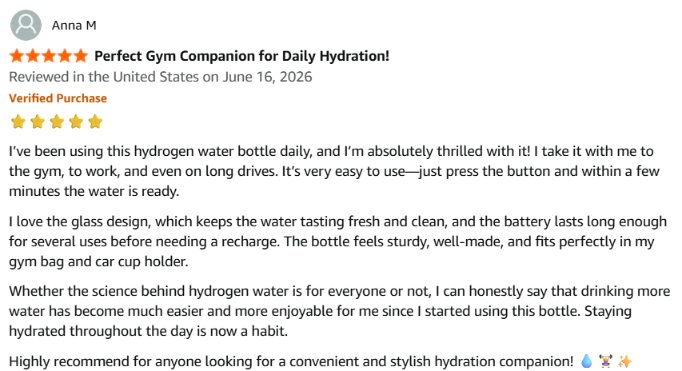
So my advice is simple: use reviews, but don’t let them make the decision for you.
I wouldn’t put much trust in reviews on the brand’s own website. A lot of them look fake, and some are so obvious even a child could spot it.
Amazon reviews are more useful, but only if you slow down and read carefully. I look for reviews that sound like real people wrote them, not polished marketing copy. I also click on the reviewer’s profile and check their past reviews. If every single product they review gets 5 stars, that’s usually a bad sign.
The best reviews mention specific details: charging problems, leaks, strange smells, broken parts, confusing buttons, poor packaging, or whether the bottle still works after a few months. That kind of feedback tells you much more than another “amazing product” review with no details.
Watch Out for Copycat Designs
Design may sound like the least important thing here, but I don’t think it is.
A bottle that looks good makes you want to use it more. I don’t need a study to tell me that because I see it in my own habits. If I can choose between a bottle with a clean, original design and some generic model that looks like it came from the same factory catalog as 50 other Amazon listings, I’m picking the first one.
We care about how things look. We like using nice stuff. We also like being seen with it, even if we don’t always admit that part. Some of my hydrogen bottles with more unusual designs have actually started conversations, which I didn’t expect but kind of love.
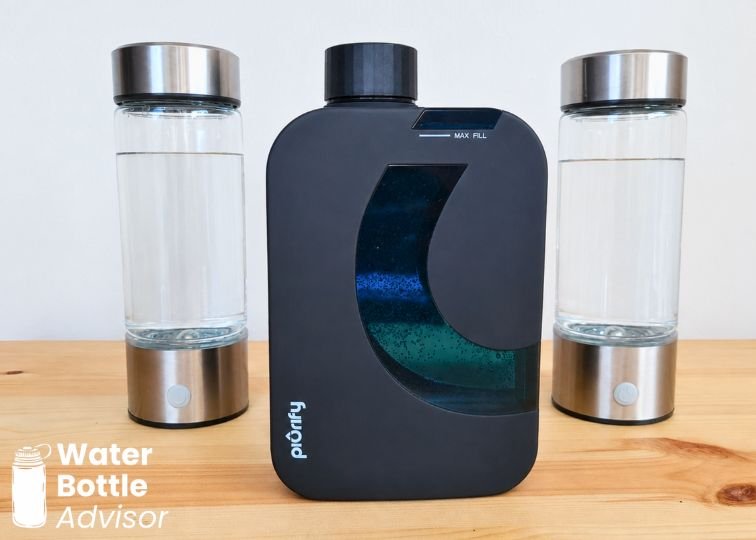
But design is not just about looks with hydrogen bottles. It can also tell you something about the product behind it.
I tested three hydrogen bottles from three different brands and price ranges that all had the same generic setup: glass body, aluminum-coated base, aluminum-coated cap, same general shape.
The result? They were basically the same bottle. Same charging time, same materials, same look, and even very similar hydrogen output.
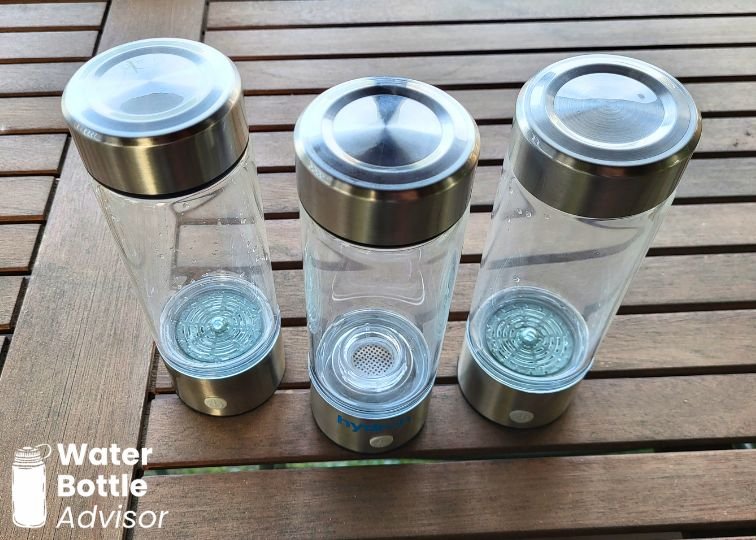
That’s why I’m more careful with copycat designs now. A unique design doesn’t automatically mean the bottle is better, but in my testing, the bottles with their own design and features usually came from brands that cared more about the actual product.
I explain that experiment in more detail in this guide, but the short version is this: don’t treat design as decoration only. In this category, a generic-looking bottle can be a warning sign.
Final Thoughts
If you came here hoping for a quick checklist, I get it. I wish hydrogen bottles were that simple too.
But after buying and testing 10 bottles and pitchers, I don’t think “does it make hydrogen?” is enough. You also need to look at the certificate, hydrogen output, material, size, battery life, warranty, brand reputation, reviews, and even the design.
Skip those details, and it’s way too easy to end up with an overpriced bottle that looks good online but disappoints in real life.
Still not sure which one to buy? See my best hydrogen water bottles guide, where I compare the top options I’ve personally tested and explain which ones I’d actually spend money on again.

Jeremiah Kowalski
Jeremiah Kowalski is a drinkware product researcher who has personally tested 50+ reusable water bottles, tumblers, mugs, and filtration systems from leading brands. He focuses on real-world performance, durability, and safety to help readers choose drinkware that actually fits their daily hydration needs.
