
Table of contents11 sections
Don’t buy a summer bottle the same way you’d buy a normal water bottle.
Heat changes the rules. Capacity matters more. Insulation matters more. A dirty lid gets nasty faster. A bottle that doesn’t fit in your car becomes annoying almost immediately. And cheap plastic that sits in the sun all day starts feeling like the wrong tool for the job.
So before you grab whatever bottle looks decent, here’s what I’d check first.
Quick Checklist: What I’d Look For
If you don’t want to overthink it, start here.
A bottle for serious summer heat should have:
- Vacuum insulation, preferably double-wall or triple-wall
- At least 24 hours of cold retention without relying only on ice
- Stainless steel construction, ideally 18/8 stainless steel
- BPA-free, BPS-free, and phthalate-free materials
- Enough capacity, usually 32 oz or 40 oz
- A handle that fits at least two fingers, preferably more
- A covered spout or covered straw
- A wide enough opening for ice
- A lid that doesn’t take forever to clean
- Cup-holder fit, if you’ll use it in the car
- A weight you can tolerate when the bottle is full (10-20 oz)
Now let’s go through the parts that matter in real use.
Start With Insulation
Warm water still hydrates you. It just doesn’t make you want to keep drinking.
During a hot day, most people would rather drink cold, crisp water than something that tastes like it has been sitting in a garden hose since 1997. That’s not just me being picky. One study found that cooler drinks below 22°C / 71.6°F increased palatability, fluid intake, and hydration during exercise compared with warmer drinks. In normal English: people tend to drink more when the drink is actually pleasant.
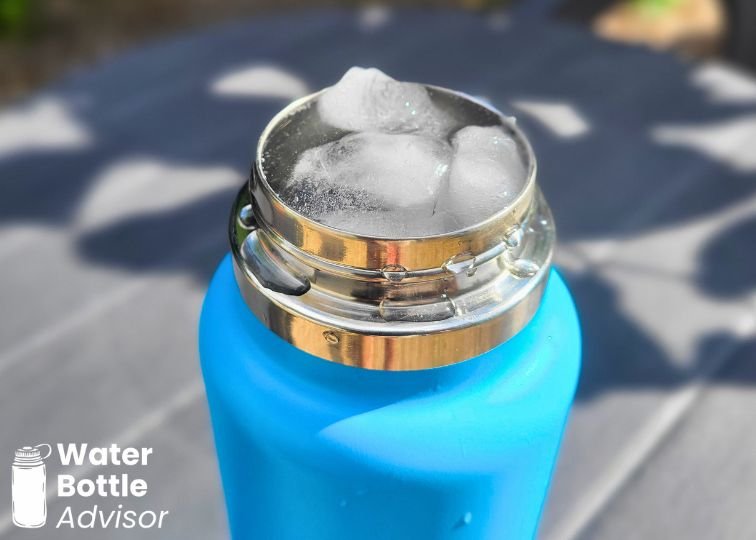
That’s why insulation is the first thing I’d check.
But not every “insulated” bottle gives you the same result. Some bottles use foam insulation. Some use neoprene sleeves. Some are double-wall but not vacuum insulated. In my experience, those usually fall apart fast in real heat. They may keep water cool for an hour or two, but that’s not enough for a beach day, a road trip, a hot car, or a few hours outside.
The words I’d look for are:
- Double-wall vacuum insulation
- Triple-wall vacuum insulation
Both designs use two or three walls with a vacuum layer between them, which slows heat transfer into the bottle. In hot weather, that extra barrier makes a huge difference.
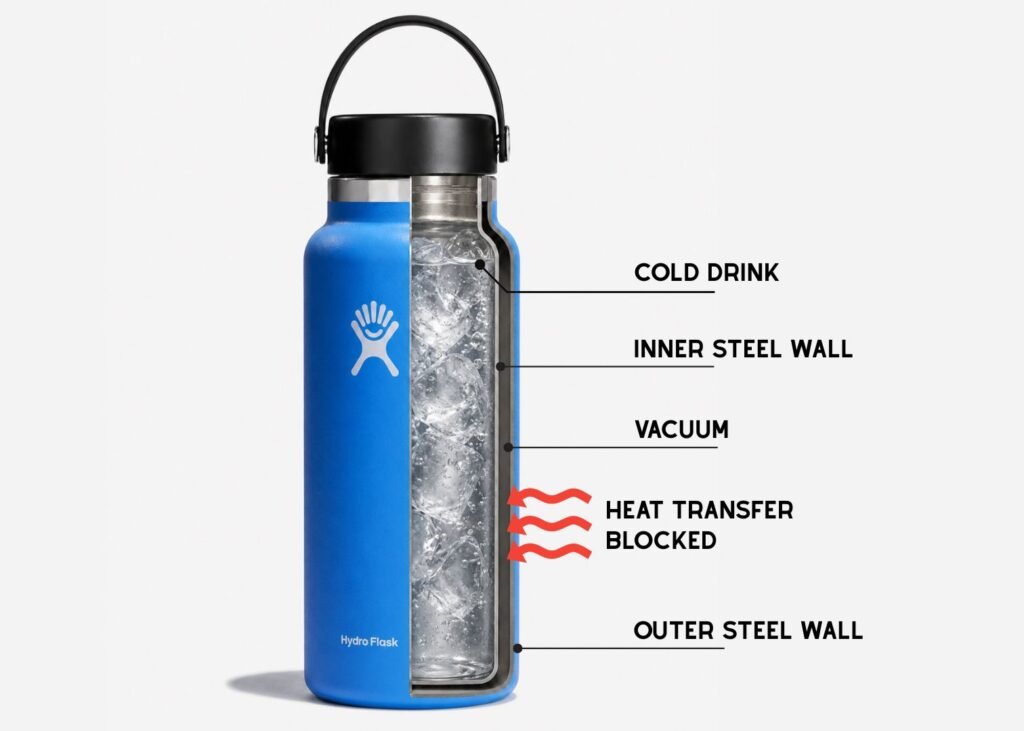
My rule is simple: look for a bottle that claims at least 24 hours of cold retention. That doesn’t mean your water will stay icy for exactly 24 hours in every situation, but it’s a decent starting point.
Just keep one thing in mind: most brand insulation tests are done in controlled conditions, usually at room temperature and away from direct sunlight. Your car in July is not a controlled condition. It’s a portable oven.
A Stanford study found that parked car interiors can heat up by about 40°F within an hour, and much of that rise happens early. So if you leave your bottle in a hot car, don’t expect the same result you’d get in a room-temperature test.
If you want the strongest cold retention possible, a thermos-style bottle is hard to beat. Technically, a thermos is still a bottle. It’s just built with insulation as the priority: smaller opening, tight seal, and strong vacuum insulation.
In my own testing, the THERMOS Stainless King 40 oz gave me one of the best results I’ve seen. The water started at 1°C / 33.8°F and ended at 7°C / 44.6°F after 24 hours without ice. That’s only a 6°C / 10.8°F increase after a full day.
That is the kind of cold retention I want when the sun is trying to personally insult me.
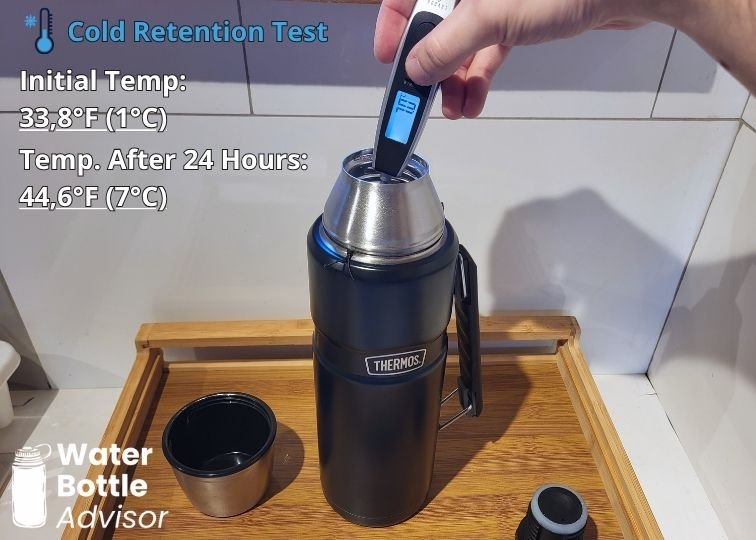
The drawback is portability. Thermos-style bottles are usually heavier, less sleek, and not always easy to carry around. If you want something more practical, check my full insulation test of 46 bottles. Some regular insulated bottles still hold cold water extremely well without looking like camping gear from your uncle’s garage.
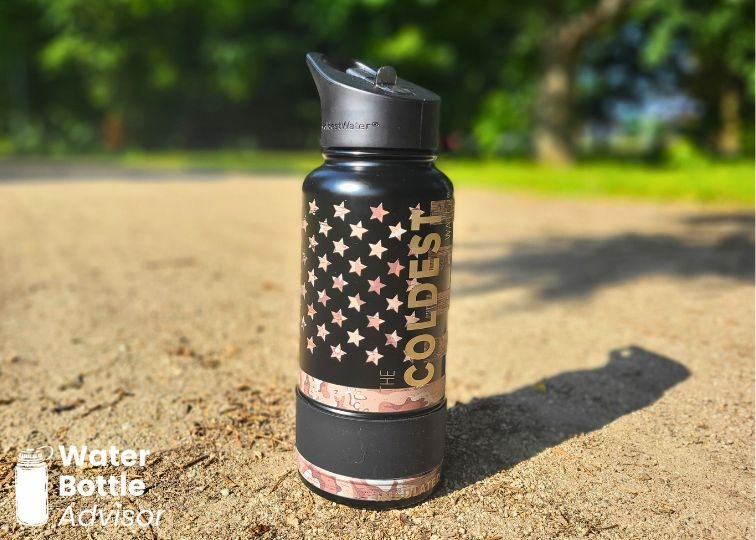
One example is the Coldest Bottle. It uses triple-wall vacuum insulation, and in my test, the water temperature increased by only 8.9°C over 24 hours without ice. That’s not far behind some thermos-style bottles, but the design is much easier to use every day.
I’d Stick With Stainless Steel in Real Heat
Material matters more in summer because the bottle isn’t just sitting nicely on your kitchen counter. It may end up in a hot car, on a beach towel, next to a pool chair, in a backpack, or on a sun-baked table. That changes what I’d trust.
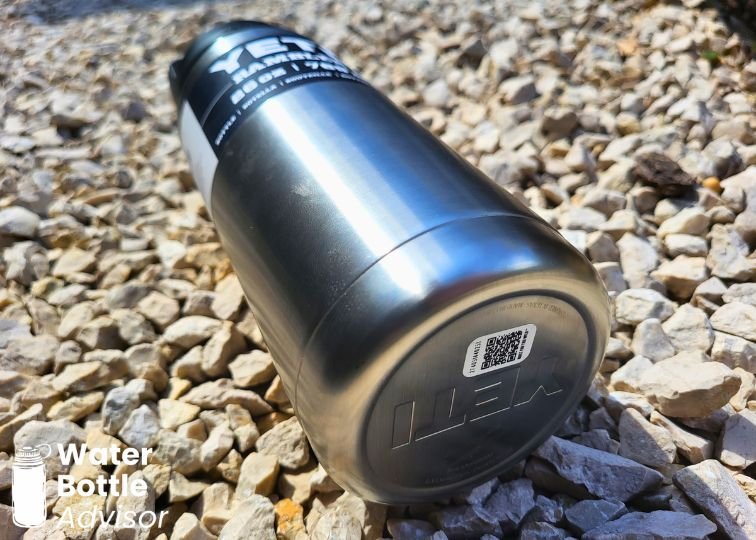
For hot weather, I’d choose 18/8 stainless steel.
It’s strong, safe, and works with vacuum insulation. It also doesn’t sweat when you add ice, which sounds minor until your desk, bag, or car seat gets wet for the third time in one week.
Plastic bottles are more complicated.
I’m not saying all plastic bottles are bad. I use plastic bottles myself, especially when I want something light. But plastic is usually a weaker pick for serious heat for two reasons.
First, most plastic bottles offer almost no insulation. If you fill one with cold water, it warms up fast. If you add ice, the outside often sweats.
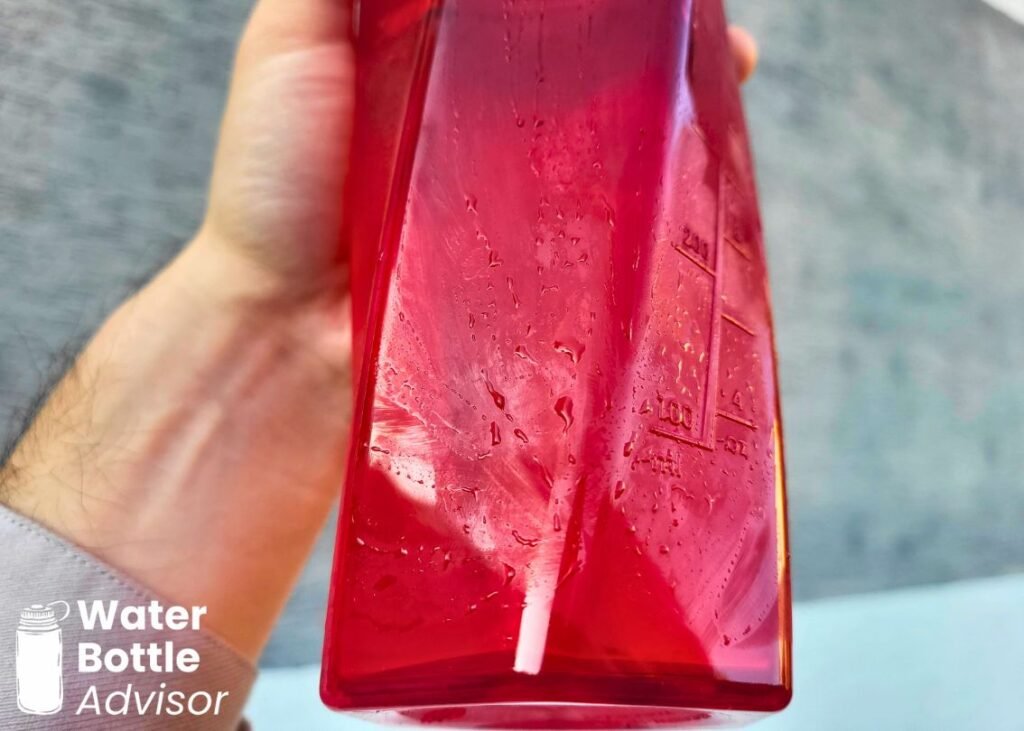
Second, heat and plastic are not the best combination. I remember reading a study showing that temperature and storage time can affect how much antimony migrates from PET plastic into bottled water. PET is most common in single-use water bottles, but I’ve also come across reusable bottles made from PET. So I wouldn’t make a habit of drinking from cheap plastic bottles (single-use or reusable) after they’ve been sitting in a hot car, garage, or beach bag.
I’d also look for bottles that are clearly listed as:
- BPA-free
- BPS-free
- Phthalate-free
For hot weather, stainless steel is the most practical choice for insulation, durability, and daily use.
Glass can be safe, but it’s heavy and breakable. Plastic can be light, but it’s poor for insulation. Aluminum usually needs a lining. Stainless steel gives you the fewest headaches.
Go Bigger Than You Think You Need
Bottle size always matters, but heat makes small bottles feel even smaller.
The National Academies’ general daily water intake reference is about 3.7 liters per day for men and 2.7 liters per day for women, including water from food and drinks. Add heat, sweating, walking, outdoor work, sports, or travel, and your small bottle starts looking a little underqualified.
For hot weather, my two favorite sizes are:
- 32 oz
- 40 oz
A 32 oz bottle is probably the easiest size to live with. It holds enough water to be useful, but it’s usually still manageable. Many 32 oz bottles fit in backpacks, don’t take over your desk, and don’t punish your wrist too much.
A 40 oz bottle makes more sense if you spend more time outside, hate refilling, or want something for the beach, pool, long walks, road trips, or outdoor work.
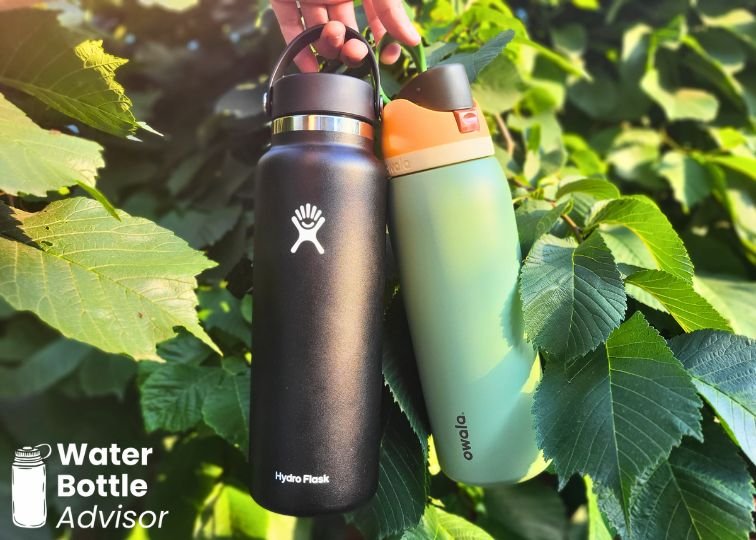
If you’re going somewhere with no easy refill option, you can go even bigger: 64 oz or 128 oz. But I’d save those sizes for car travel, camping, job sites, or situations where the bottle doesn’t need to be carried in your hand for long.
Don’t Ignore Carrying It
Capacity may matter more than portability during extreme heat, but portability still decides whether you’ll actually bring the bottle with you.
A bottle you hate carrying is a bottle you’ll leave at home.
The first thing I’d check is cup-holder fit.
This is one of the most underrated summer bottle features. If you’re driving in hot weather, the bottle should sit in your cup holder, not roll around on the passenger seat or wedge itself under your brake pedal.
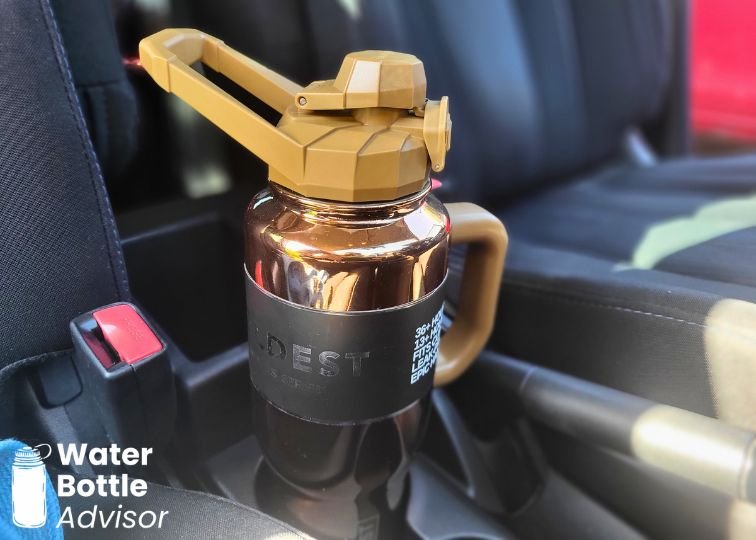
Most car cup holders fit bottles with a base diameter around 3 to 3.5 inches, but it depends on the car. If cup-holder fit matters to you, measure your cup holder before buying. The safest bet is usually a bottle with a base under 3 inches.
This is where tapered bottles and tumblers have an advantage. Some 30 oz and 40 oz bottles still fit in cup holders because the base narrows down, even if the upper body is much wider.
I also care a lot about handles.
In hot weather, your hands get sweaty. Stainless steel bottles can become harder to grip, especially larger ones. A handle sounds like a small detail until you’re carrying a full bottle, keys, a phone, sunscreen, and three other things you didn’t plan to carry.
A good handle should fit at least two fingers. Three is better. Four is best. That may sound too specific, but it changes how the bottle feels in real use.
Some tumblers are even better because they give you two carrying options: a side handle and a lid handle. The Coldest Tumbler is a good example. I use the side handle when I’m drinking from it, but the lid handle makes it easier to grab and carry around.
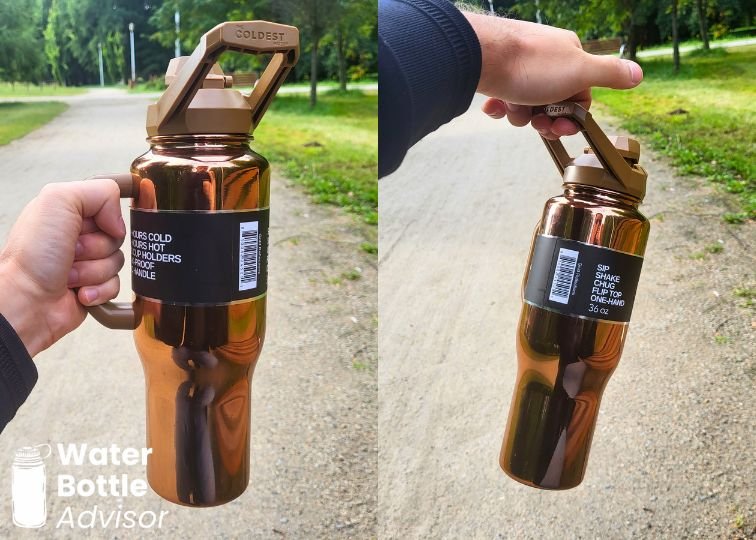
Weight also matters. For stainless steel bottles, I start noticing the weight once the empty bottle goes above 20 oz. That doesn’t automatically make it bad, but once you fill it with water, the weight adds up quickly.
My preferred range for an empty stainless steel bottle is usually 10-20 oz, depending on the size.
Pick a Lid You’ll Actually Drink From
A hot day already gives you enough reasons to be irritated. Your bottle lid doesn’t need to join in.
For summer, I want a lid that makes drinking easy and keeps the drinking surface protected.
I’d avoid bottles where the straw sits exposed all day. An exposed straw can pick up dust, sand, bag grime, car-console debris, and all the other stuff nobody wants near their mouth. If you’re taking the bottle outside, a covered straw or covered spout is a much better choice.
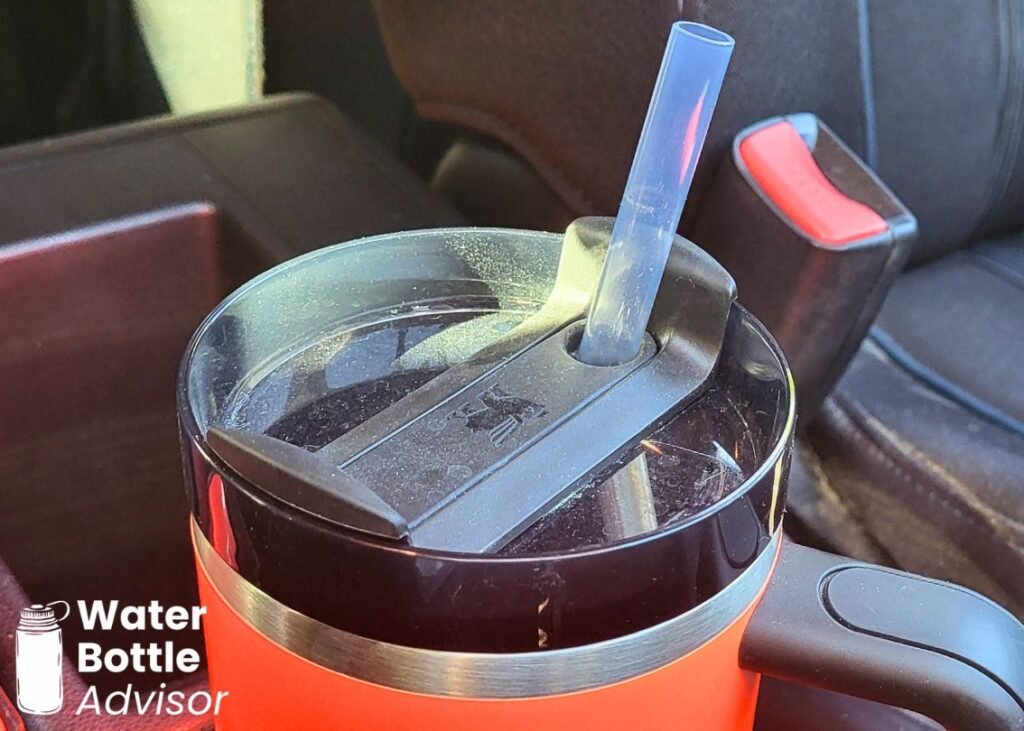
This is one reason I like the Owala FreeSip Sway so much.
The FreeSip lid gives you two drinking options from one spout. You can sip through the built-in straw, or you can tilt the bottle back and drink through the larger opening. You don’t need to change lids. You don’t need to choose between straw mode and chug mode before leaving the house.
The spout also stays covered under the cap, which is exactly what I want in summer.
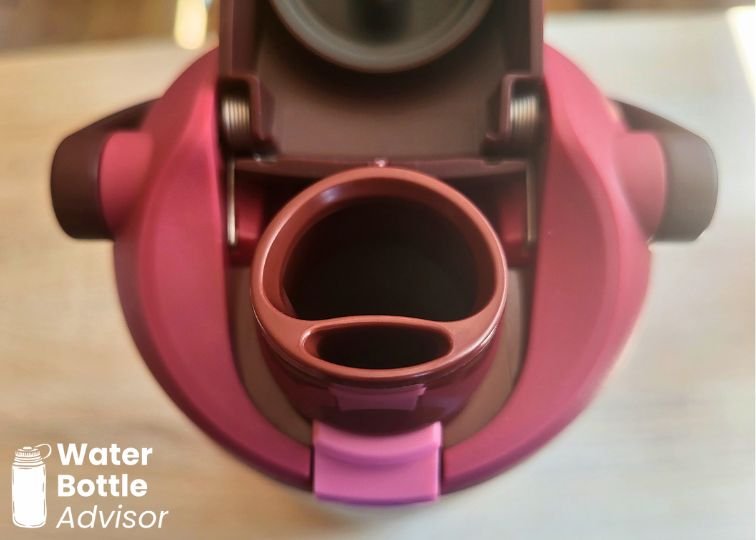
Whether you prefer a straw lid or a chug lid is mostly personal.
A straw lid is great for driving, walking, desk use, and casual sipping. You drink more often because it’s easy.
A chug lid is better for workouts, hiking, and fast drinking.
My ideal hot-weather lid is covered, leakproof, easy to open with one hand, and not annoying to clean.
Don’t Buy a Bottle You’ll Hate Cleaning
Hot weather makes bottles gross faster. You use them more. You touch them more. They sit in warm places. You might fill them with electrolyte drinks, flavored water, iced tea, or iced coffee. All of that means the lid needs more attention.
If a bottle has six or seven parts, tiny gaskets, hidden silicone pieces, and a straw system, I’m already annoyed.
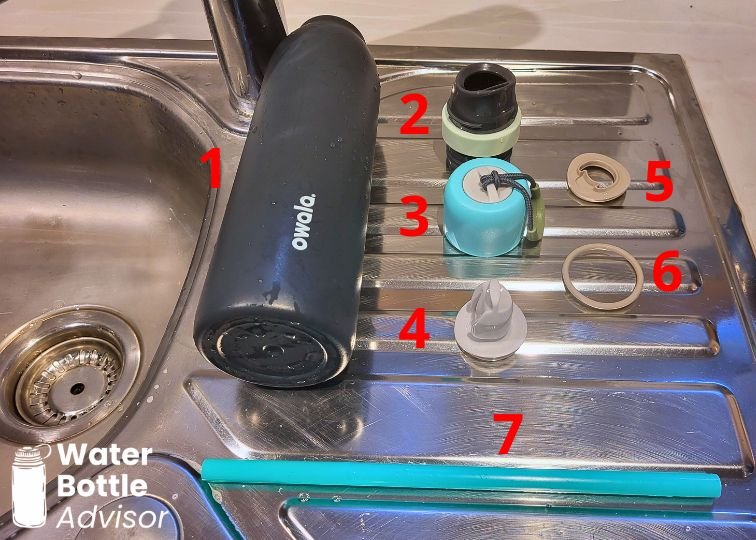
For summer, I’d look for a bottle with:
- 2-3 main parts
- A wide mouth
- A removable straw
- A lid you can scrub around easily
- Gaskets that are removable or at least easy to reach
- No tiny hidden channels that trap residue
- Parts that dry fully overnight
A wide mouth solves two problems at once. It makes cleaning easier, and it lets you add bigger ice cubes.
One of the easiest bottles I’ve cleaned is the Hydro Flask Lightweight. It has only three parts, and I can clean it fully in under two minutes. That’s what I want from a bottle I use often.
A bottle can have amazing insulation and still be a bad summer pick if cleaning it feels like a chore every night.
My Picks for Hot Weather
Here are the bottles I’d personally reach for when the forecast gets ugly. I picked each one for a different reason because not everyone needs the same kind of summer bottle.
My Daily Pick: Coldest Bottle 32 oz
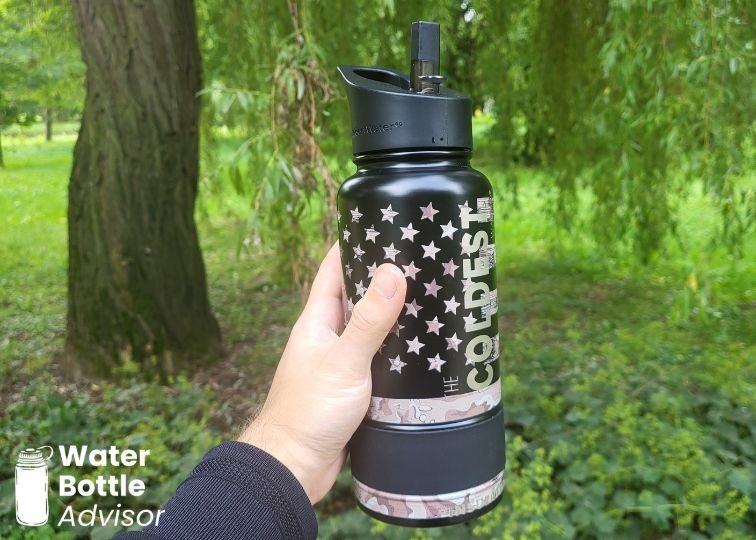
The Coldest Bottle is my favorite water bottle at the moment, and hot weather is one of the biggest reasons why.
In my cold-retention test, the water went from 33.8°F / 1°C to 49.8°F / 9.9°C after 24 hours without ice. That’s excellent, especially for a bottle that doesn’t feel like a bulky thermos.
The big advantage is the triple-wall vacuum insulation. You get serious cold retention, but the bottle still feels practical enough for regular use. It’s not tiny, but it also doesn’t have that clunky thermos feel. You can get it in several sizes, which helps if you want something smaller for daily carry or something bigger for longer hot days.
This is the bottle I’d pick if you want strong insulation without giving up too much portability.
Read my Coldest Bottle review if you want my full experience with it, but the short version is simple: this is one of the bottles I trust most when it’s hot.
Most Useful Lid: Owala FreeSip Sway 40 oz
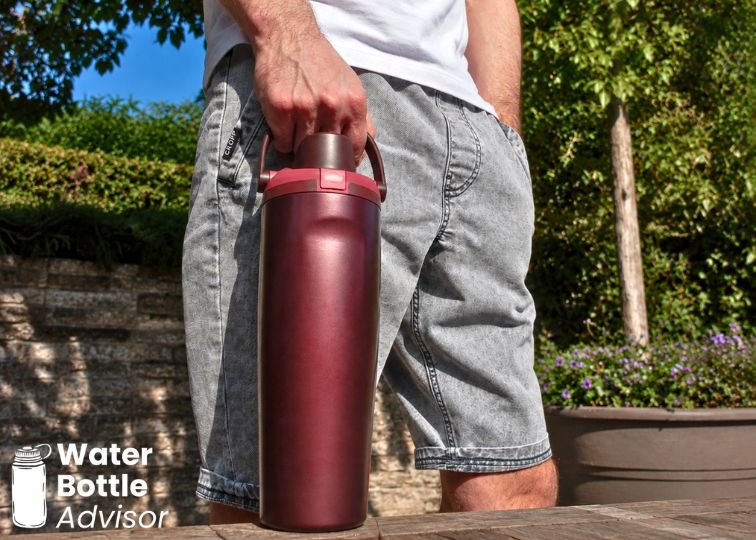
You’ve probably already heard about the classic Owala FreeSip bottles. Their rise happened for a good reason: the lid is actually useful.
The FreeSip spout lets you sip through the built-in straw or tilt the bottle back and drink through the larger opening. You don’t have to unscrew anything. You don’t have to switch lids. In summer, I like that more than usual because sometimes I want quick little sips in the car, and sometimes I want to drink faster after being outside.
I still like the classic Owala FreeSip, but my favorite version is the Owala FreeSip Sway.
The reason is portability. The tapered bottom fits car cup holders, and the rigid full-grip handle is much better than the small carry loops you get on many bottles. You can also use that handle for leverage when unscrewing the lid, which is a small detail until you use it a few times and start wondering why more bottles don’t do this.
The mouth is wide enough to make cleaning easier, and it also lets you drop in bigger chunks of ice without playing that annoying little ice-cube puzzle at the sink.
Cold retention is decent too. In my test, the water warmed from 33.8°F / 1°C to 55.2°F / 12.9°C after 24 hours without ice. It’s not the strongest insulated bottle I own, but it’s more than enough for most hot days.
I talk more about it in my Owala FreeSip Sway review, but if lid design matters most to you, this is one of the bottles I’d look at first.
Easiest to Carry in the Car: Coldest Tumbler 36 oz
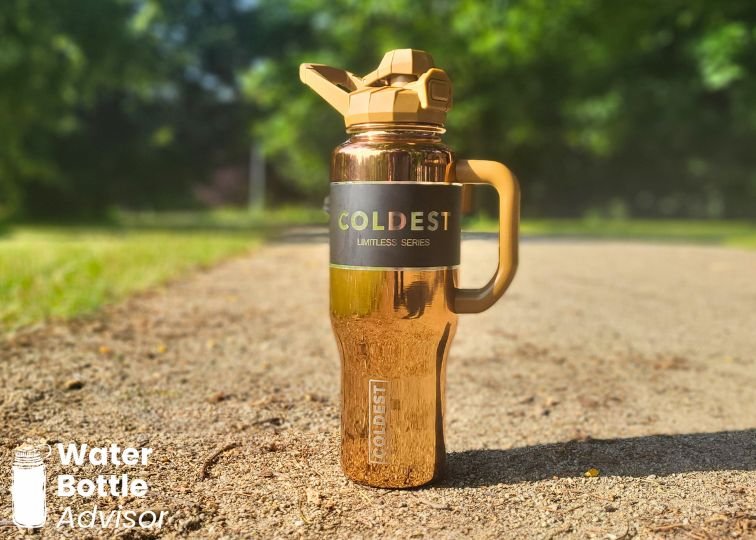
I know this guide is mostly about bottles, but for hot weather, tumblers deserve a serious look too.
The reason is portability. Most good tumblers have tapered bottoms, so they fit car cup holders without a fight. Many also come with a side handle, which makes a big difference when the cup is full and your hands are sweaty.
That’s why I like my Coldest Tumbler so much.
It comes with three different lids in one package, so you can switch between them depending on how you want to use it. One of those lids even has a carry handle, and the tumbler body already has a side handle. That gives you more carrying options than most bottles.
The sizes are not tiny either. You can get it in a large 46 oz size, which gives you a lot of water for hot weather without constant refills. Somehow, it still feels more portable than many regular large bottles because it fits in car cup holders and is easy to drink from with one hand while driving.
The insulation is also excellent. In my cold-retention test, the water warmed from 33.8°F / 1°C to 47.8°F / 8.8°C after 24 hours without ice. That’s one of the best results I’ve seen in drinkware.
If you spend a lot of time in the car during summer, this might make more sense than a traditional bottle. I explain more in my best tumblers guide, but the Coldest Tumbler is one of my favorite hot-weather picks.
Lowest Cleaning Hassle: Hydro Flask Lightweight 40 oz
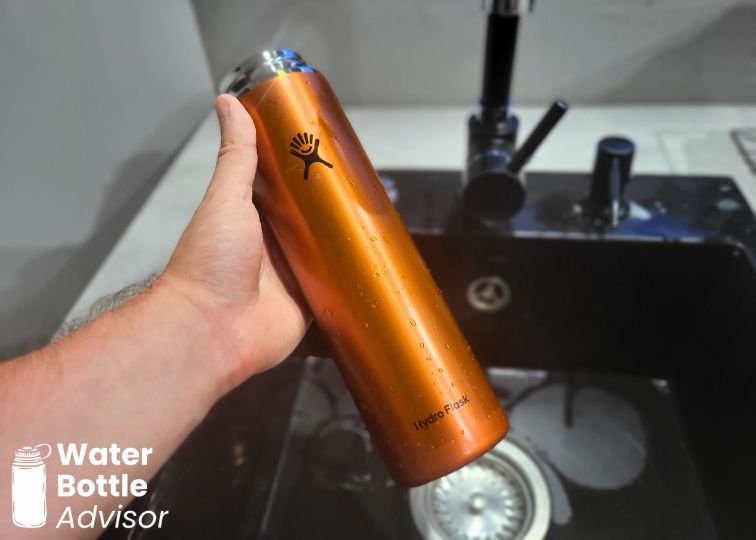
The Hydro Flask Lightweight is one of the easiest stainless steel bottles I’ve used.
Its biggest advantage is the combination of decent insulation and very low weight. Mine 24 oz size weighs only 10.2 oz, which feels almost strange when you pick it up after using heavier insulated bottles for a while.
The cold retention is not class-leading, but it’s still enough for hot weather. In my test, the water warmed from 33.8°F / 1°C to 55.6°F / 13.1°C after 24 hours without ice.
The other reason I like it is cleaning. In the standard setup, it has only three parts, and I can clean it quickly without digging around tiny lid pieces or fighting a complicated straw system.
If you want the absolute strongest insulation, this isn’t my first pick. But if you want a bottle that’s light, easy to carry, easy to clean, and still keeps water cold for a long time, the Hydro Flask Lightweight makes a lot of sense.
Final Thoughts
My summer bottle rule is simple: I don’t want to think about it.
I don’t want to wonder if the water is still cold. I don’t want to fight the lid. I don’t want the spout sitting exposed in dust and sunscreen. I don’t want to clean seven tiny parts every night.
Give me stainless steel, strong insulation, enough capacity, a covered drinking area, and a design I’ll actually carry. That’s what makes a bottle good for hot weather – not the color and definitely not some dramatic “keeps cold for days” claim printed on the box.
Sources
https://pubmed.ncbi.nlm.nih.gov/22693241
https://pmc.ncbi.nlm.nih.gov/articles/PMC7927525
https://med.stanford.edu/news/all-news/2005/07/parked-cars-get-dangerously-hot-even-on-cool-days-stanford-study-finds.html
https://www.nationalacademies.org/read/10925/chapter/6
How we test products
Every product we review is tested using the same structured process, with dozens of measurements and checks covering areas such as thermal performance, lid usability, cleaning, durability, portability, and everyday use. Those results feed into the WBA Score, which helps us compare bottles using consistent criteria instead of relying only on manufacturer claims.
You can read our full product testing protocol, learn more about Water Bottle Advisor and how we test products, or see how the WBA Score works.
About the author
Jeremiah Kowalski
Jeremiah Kowalski founded Water Bottle Advisor to make drinkware reviews more useful and less dependent on manufacturer claims. He has personally tested more than 120 bottles, tumblers, mugs, and filtration systems, putting each one through measuring, cleaning, leak testing, and everyday use before sharing his conclusions. It also means occasionally explaining why yet another large box of bottles has arrived at his door.
Leave a Reply