
Water bottles have gotten weirdly expensive.
A few years ago, a bottle was just a bottle. Now some of them are treated almost like sneakers: limited colors, big launches, social media hype, and price tags that make you pause for a second before clicking “buy”. I like a good bottle as much as anyone, but I’m not always in the mood to spend $40, $50, or more just to carry water around.
These are the best cheap water bottles I’ve bought that don’t feel cheap. Most of them sit around $20, and some drop below that price during Amazon deals. Prices move around all the time, so don’t be shocked if one color costs more than another or if the same bottle is cheaper next week.
Some of the links on this page are affiliate links. This means that if you click on one of the links and make a purchase, I may earn a small commission at no additional cost to you.
Iron Flask | Nalgene | Ello Syndicate | ThermoFlask | |
|---|---|---|---|---|
 |  |  |  | |
Category | Best Overall | Best Lightweight | Best Glass Bottle | Best All-Rounder |
Recommended Size | 32 oz | 32 oz | 20 oz | 24 oz |
Price | $33 (check Amazon for lower prices) | $17 (check Amazon for lower prices) | $16 (check Amazon for lower prices) | $27 (check Amazon for lower prices) |
Material | 18/8 Stainless Steel | Plastic (Tritan) | Borosilicate Glass | 18/8 Stainless Steel |
Review | ||||
My Score | 4.4/5 | 4.2/5 | 4.1/5 | 4.1/5 |
Buy Now |
Best Overall: Iron Flask
KEY FEATURES
PROS
CONS
My top pick is Iron Flask, and it’s not close.
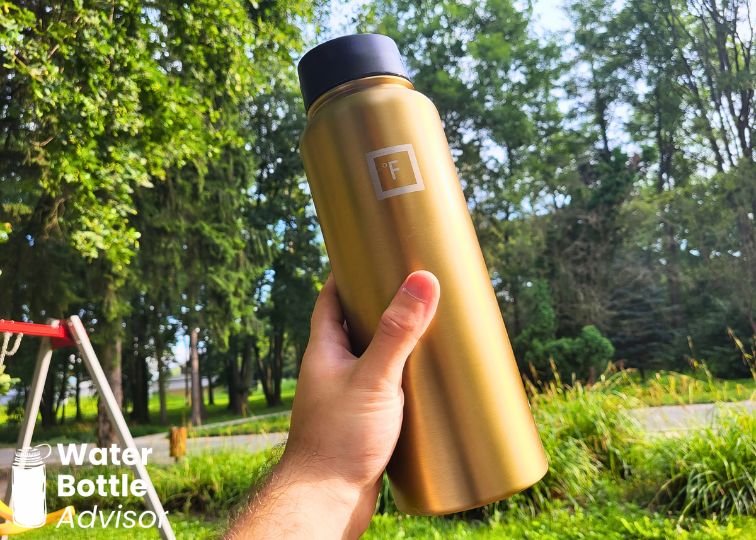
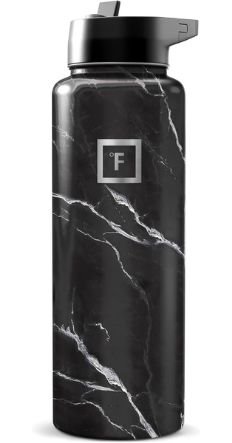
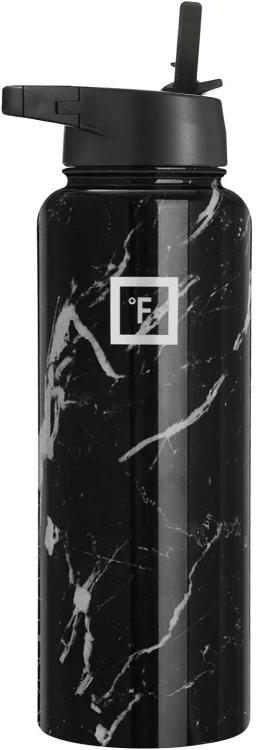
I’ve owned my Iron Flask for about two years, and I still don’t fully understand how this bottle sometimes sells for under $20. I bought the bigger 40 oz size in the Gold color for closer to $30, but I’ve seen Amazon deals where even that big version drops below $20. The smaller 32 oz, 24 oz, and 18 oz sizes can be even cheaper.
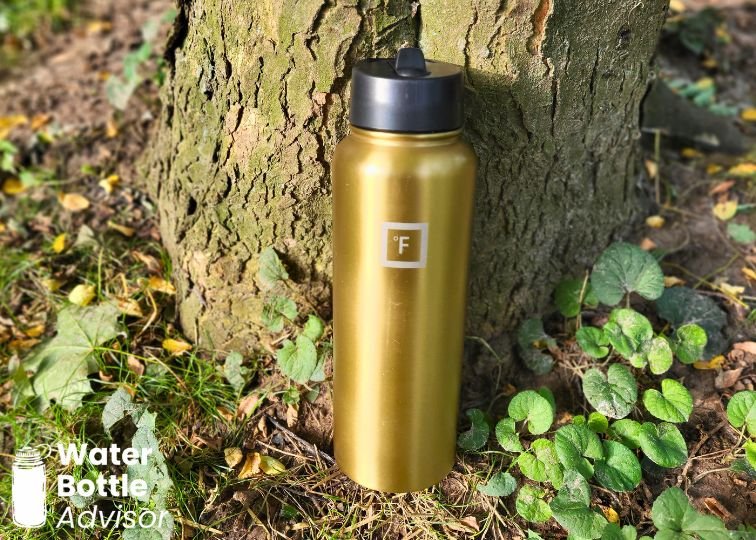
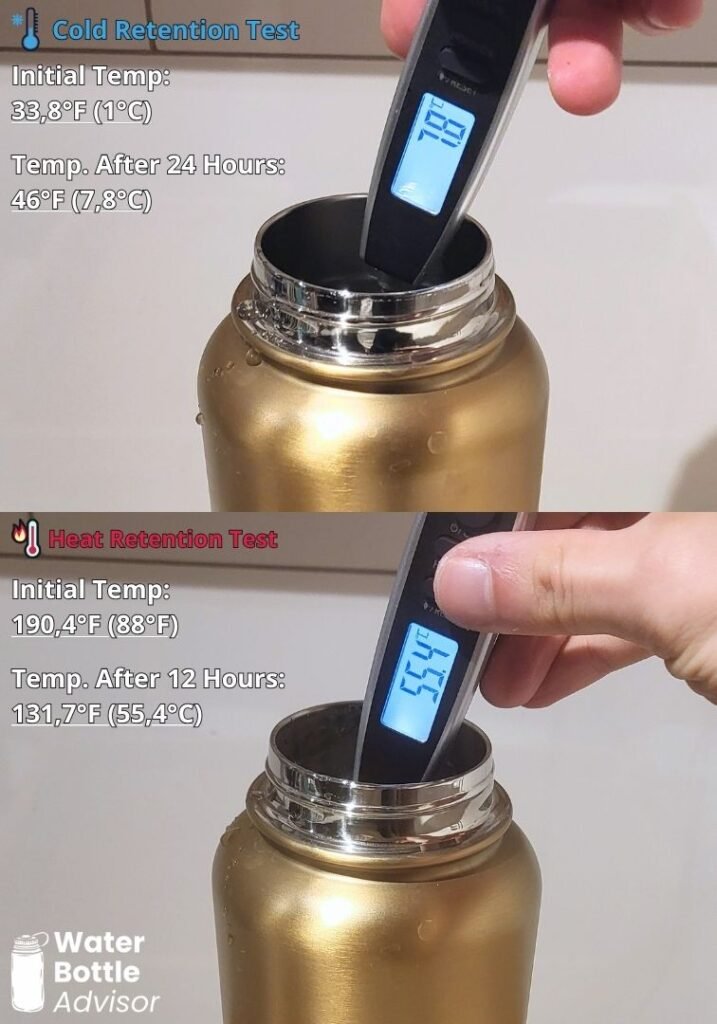
The biggest reason Iron Flask wins here is insulation. In my cold retention test, the water went from 33.8°F (1°C) to only 46°F (7.8°C) after 24 hours without ice. That’s one of the best results I’ve seen in my recent testing of nearly 50 bottles. After a full day, the water was still almost too cold for me to enjoy, which is a funny problem to have from a budget bottle.
It also handles hot drinks. In my heat retention test, the water went from 190.4°F (88°C) to 131.7°F (55.4°C) after 12 hours. For a bottle that can sometimes cost less than dinner for two at a fast-food place, that’s a serious result.
I really like that Iron Flask can be used with both cold and hot liquids. That matters more than people think. You may buy it for water, then one cold morning you’ll want coffee or tea, and suddenly you’re glad the bottle can handle it.
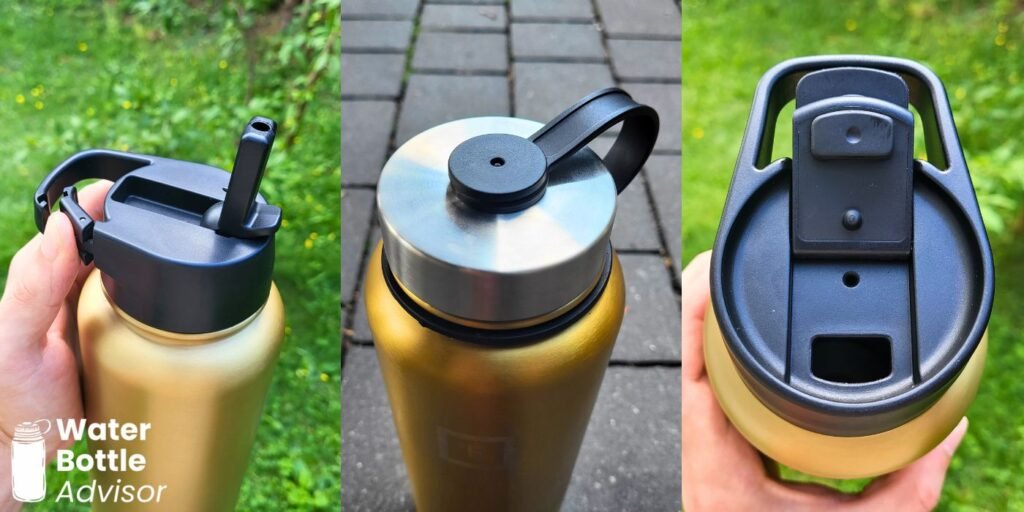
If you spend a little more, you can get the version with three lids:
- a straw lid,
- a sip lid,
- and a screw-on lid.
I bought that version, and I’m glad I did. The straw lid is nice for casual sipping at a desk. The sip lid makes more sense for coffee or tea. The screw-on lid is the one I’d use if I cared most about insulation or leak protection.
The weak spots? The lids don’t feel as sturdy as the bottle itself, and the finish can scratch or dent more easily because there’s no powder coating. I wouldn’t throw this bottle around the way I’d throw around a YETI or Hydro Flask.
But at this price, I’m not going to pretend those flaws ruin the bottle. They don’t. Iron Flask gives you serious insulation, multiple lid options if you choose that package, hot and cold drink compatibility, and even a lifetime warranty.
If you want the most bottle for the least money, this is the one I’d buy first. See more details in my Iron Flask review.
Best Lightweight: Nalgene
KEY FEATURES
PROS
CONS
Not everyone needs insulation. Sometimes you just want a bottle that holds a lot of water and weighs almost nothing. That’s where Nalgene makes sense.
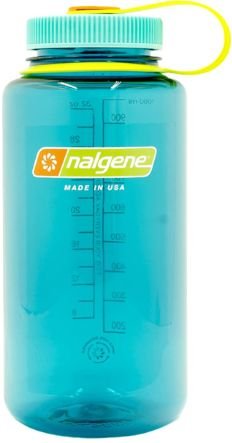
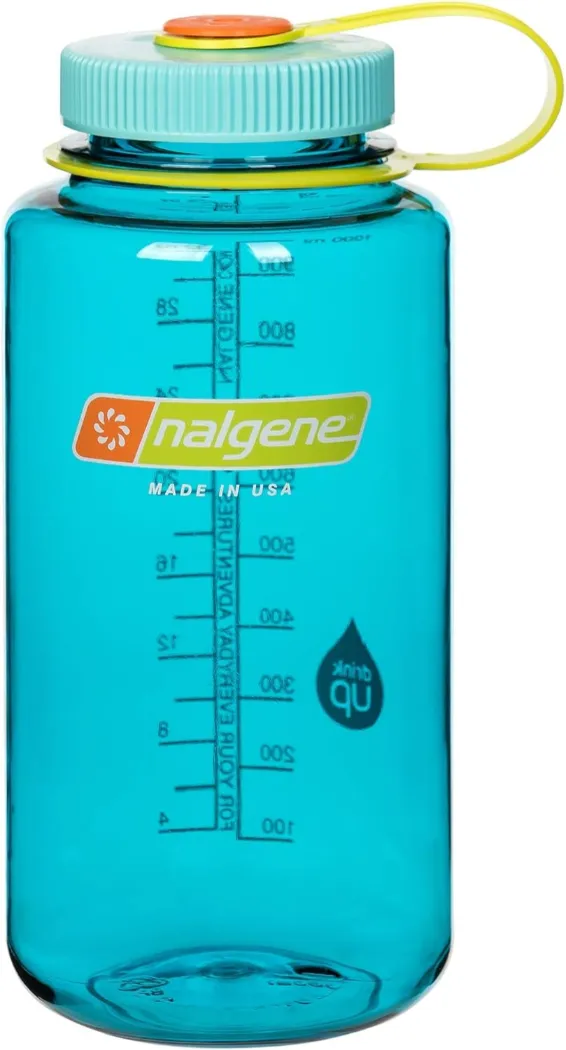
The 32 oz Nalgene is a classic for a reason. It costs around $17, holds plenty of water, and weighs just 6.3 oz empty. I like it for hiking, but I also like it on normal days when I’m tired of carrying chunky stainless steel bottles around.
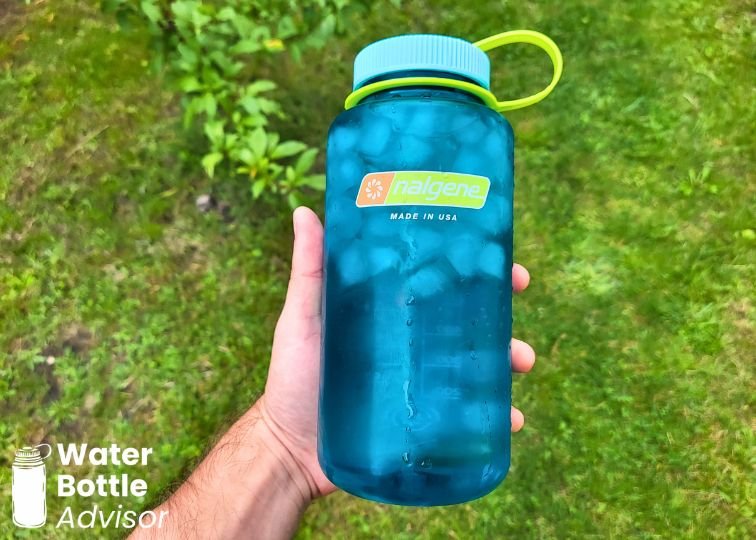
The design is almost aggressively simple. You get the bottle and the cap. That’s it. No straw, no hidden gasket puzzle, no lid pieces rolling around the sink.
That simplicity makes it one of the easiest bottles to clean. I timed myself cleaning it, and it took 1 minute and 54 seconds. Compared with bottles that take closer to 4 minutes and have six or seven parts to take apart, clean, dry, and put back together, Nalgene feels refreshingly low-maintenance.
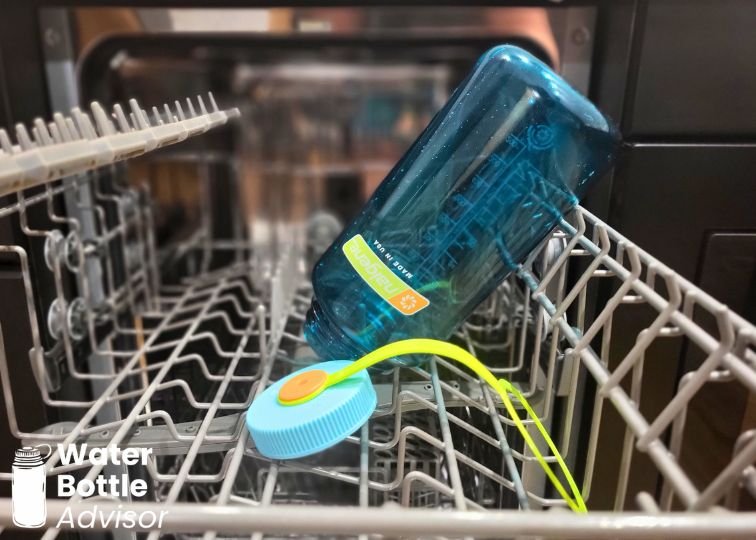
There are a few things to know before buying it. First, it’s plastic, so it doesn’t insulate. If you fill it with cold water, condensation can build up on the outside. Second, the carrying strap can dig into your fingers if the bottle is full and you’re carrying it for a while.
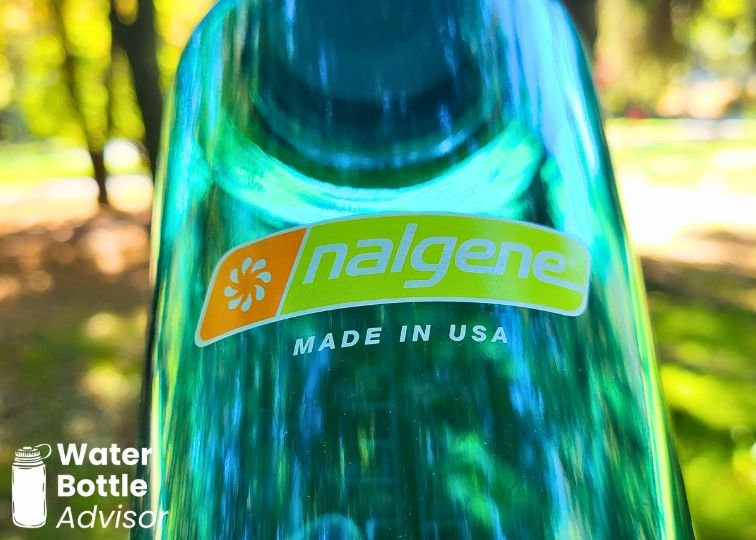
Still, for around $17, I can live with those annoyances. Nalgene is cheap, light, easy to clean, and hard to overcomplicate. It’s also made in the USA, which is rare in the water bottle world. If you’re tired of seeing “Made in China” on almost every bottle you buy, that alone may make Nalgene more appealing.
I wouldn’t choose it for ice-cold water all day. I would choose it for hiking, travel, camping, school, work, or any day when weight matters more than insulation.
Best Glass Bottle: Ello Syndicate
KEY FEATURES
PROS
CONS
If you care about taste, glass is hard to beat.
The Ello Syndicate is the pick I’d choose if you want a cheap glass bottle that doesn’t feel like a random no-name bottle from the back page of Amazon. It’s simple, but that’s kind of the point. The main reason to buy it is the glass body. If you’re sensitive to metallic or plastic taste, or you just want your water touching less plastic, Ello makes a lot of sense.
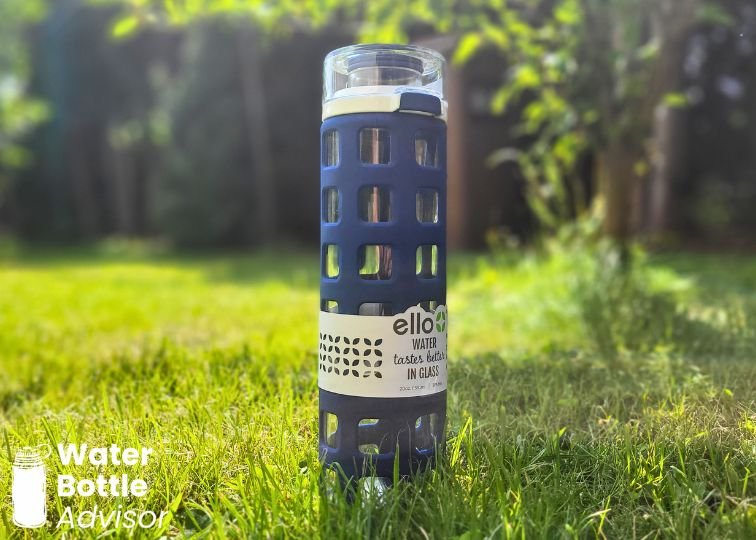
The price is also fair. The standard price usually sits around $17 to $19 depending on the color, but I’ve seen it on Amazon for around $13 during limited-time deals. For a glass bottle with a protective sleeve and a locking lid, that’s not bad at all.
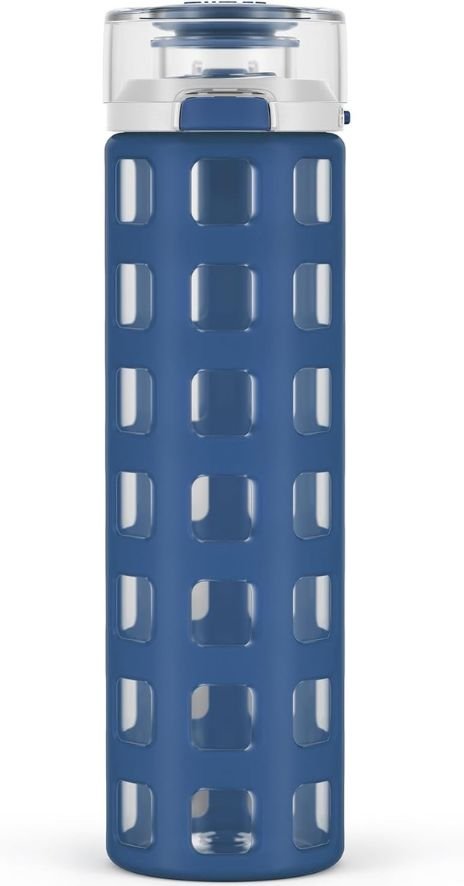
The cap is plastic, but it’s BPA-free, and the design is better than I expected for the price. There’s a side lock to help prevent the lid from popping open in your bag, and the button mechanism gives you quick access to the spout. I like that for driving because you’re not unscrewing a cap while trying to keep your eyes on the road.
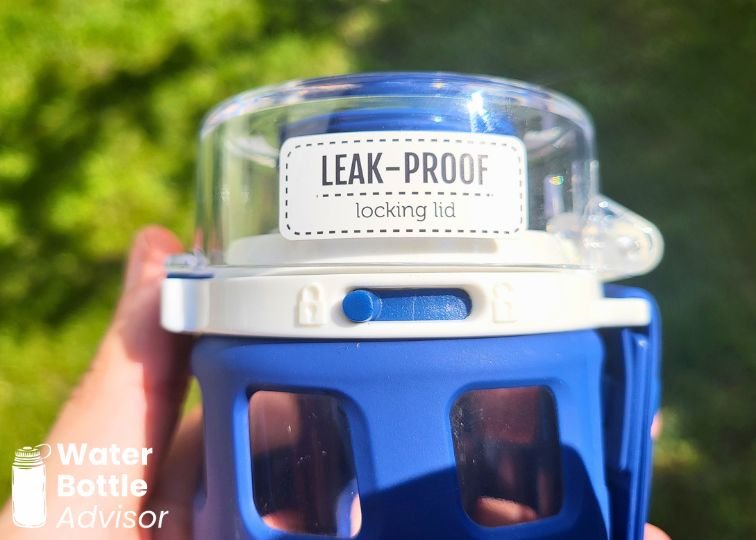
The silicone sleeve is another good touch. It gives the bottle more grip and adds some protection against small bumps. Don’t get too brave, though. It’s still glass. Drop it hard enough and it can break, sleeve or not.
The sleeve is thick, which helps with protection, but it also adds weight. For a modest 20 oz bottle, the Ello Syndicate feels heavier than you might expect. If you want something light for hiking, this isn’t it. If you want clean taste at a low price, it makes much more sense.
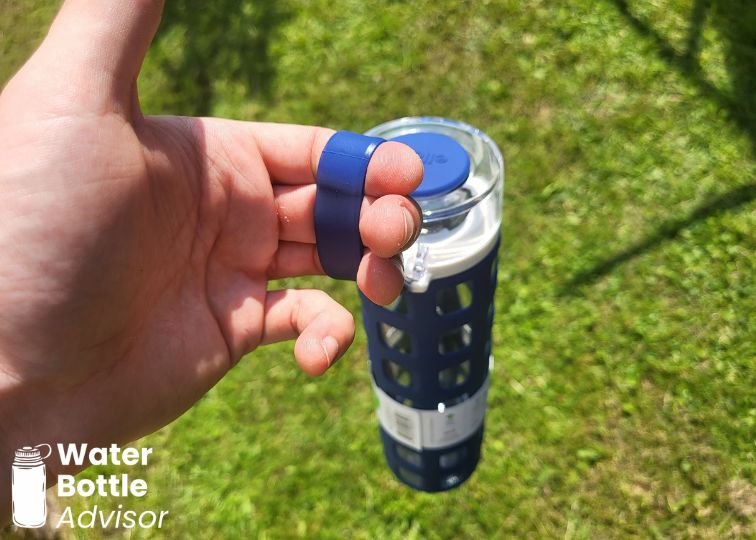
Glass bottles from big drinkware brands are surprisingly hard to find, especially at reasonable prices. Ello fills that gap well. It’s not fancy, but it gives you the main thing people want from glass: water that tastes clean and doesn’t pick up that stale plastic or metal note.
Best All-Rounder: ThermoFlask
KEY FEATURES
PROS
CONS
ThermoFlask is not my personal favorite on this list, but I understand why people like it.
It has very strong reviews on Amazon, and the price can be hard to argue with. I bought a 2-pack from Amazon, and each 24 oz bottle came out to around $18. For an insulated stainless steel bottle that can handle both cold and hot drinks, that’s a pretty good deal.
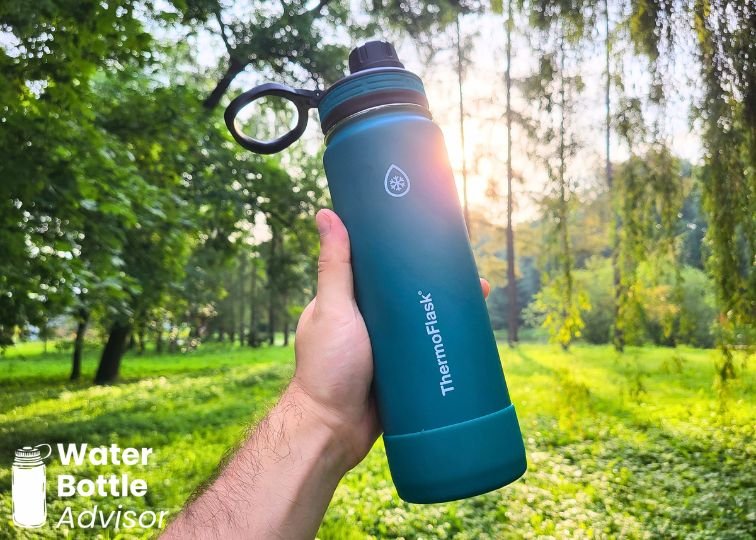
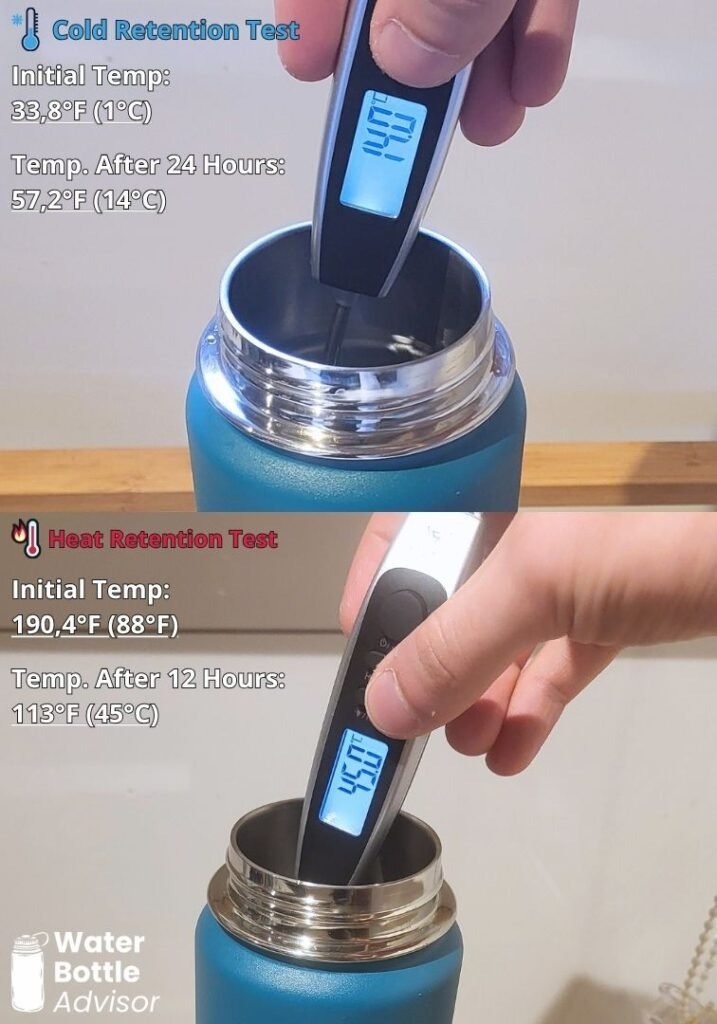
The 24 oz size I tested did fine in my insulation tests. For cold retention, the water warmed from 33.8°F (1°C) to 57.2°F (14°C) after 24 hours without ice. For heat retention, it dropped from 190.4°F (88°C) to 113°F (45°C) after 12 hours.
Those aren’t Iron Flask numbers, but they’re not bad either. If you’re not chasing the coldest possible result, ThermoFlask can get you through a normal workday with cold water or a hot drink.
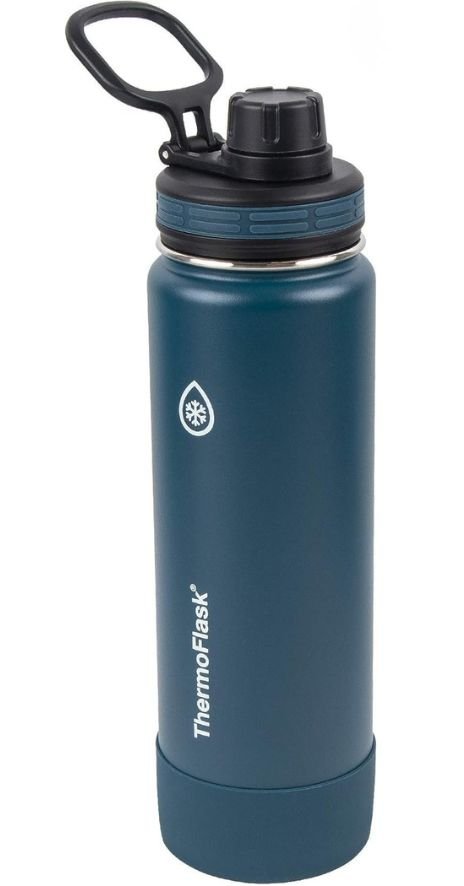
I like the portability of the 24 oz size. Mine fits in my car cup holder, though I’d be more careful with larger sizes because 32 oz and up may not fit. My 24 oz bottle weighs 13.85 oz empty, which is manageable for stainless steel. The handle also gives you enough room for a full four-finger grip, and I always appreciate that. Tiny handles can get annoying once the bottle is full.
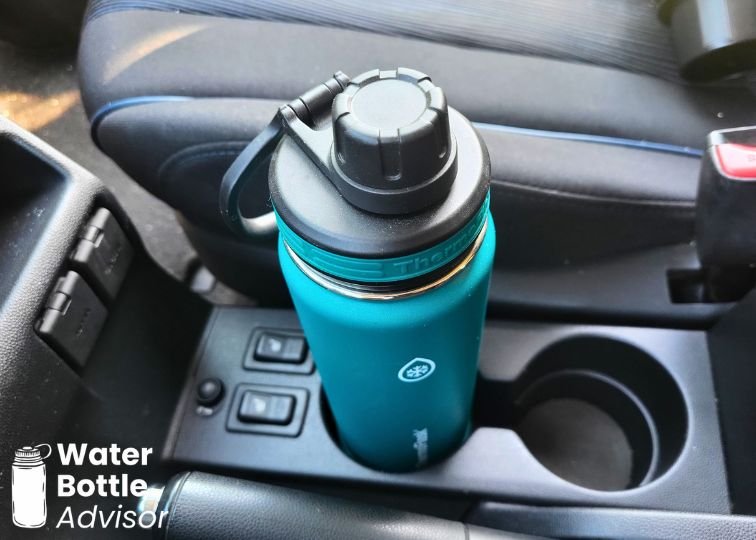
The part I don’t love is the lid. It doesn’t feel unique, and I’ve seen very similar lids on other bottles. The plastic feels thinner than I’d want, especially around the handle. I wouldn’t trust it as much as the body of the bottle.
That’s why I still prefer Iron Flask. It gives you better insulation, better lid options, and a better overall package for the money. But ThermoFlask still deserves a spot here because it’s affordable, useful, and easy to live with if you get it at the right price.
If you want more details, see my ThermoFlask review.
Where to Buy Water Bottles for Cheap
After buying more bottles than any sane person probably should, I’ve had the best luck on Amazon. The worst place for deals is usually the brand’s own website.
That sounds backward, but it makes sense. Amazon is a price fight. Sellers compete for clicks, coupons pop up constantly, and limited-time deals can knock a surprising amount off the price.
A brand website is more like the official showroom. Brands usually keep prices closer to retail there because they want to protect their margins, their image, and their relationships with stores that also sell their products.
So if you see the same bottle cheaper on Amazon, it doesn’t automatically mean something shady is going on. Most of the time, it just means Amazon is where the price battle is happening.
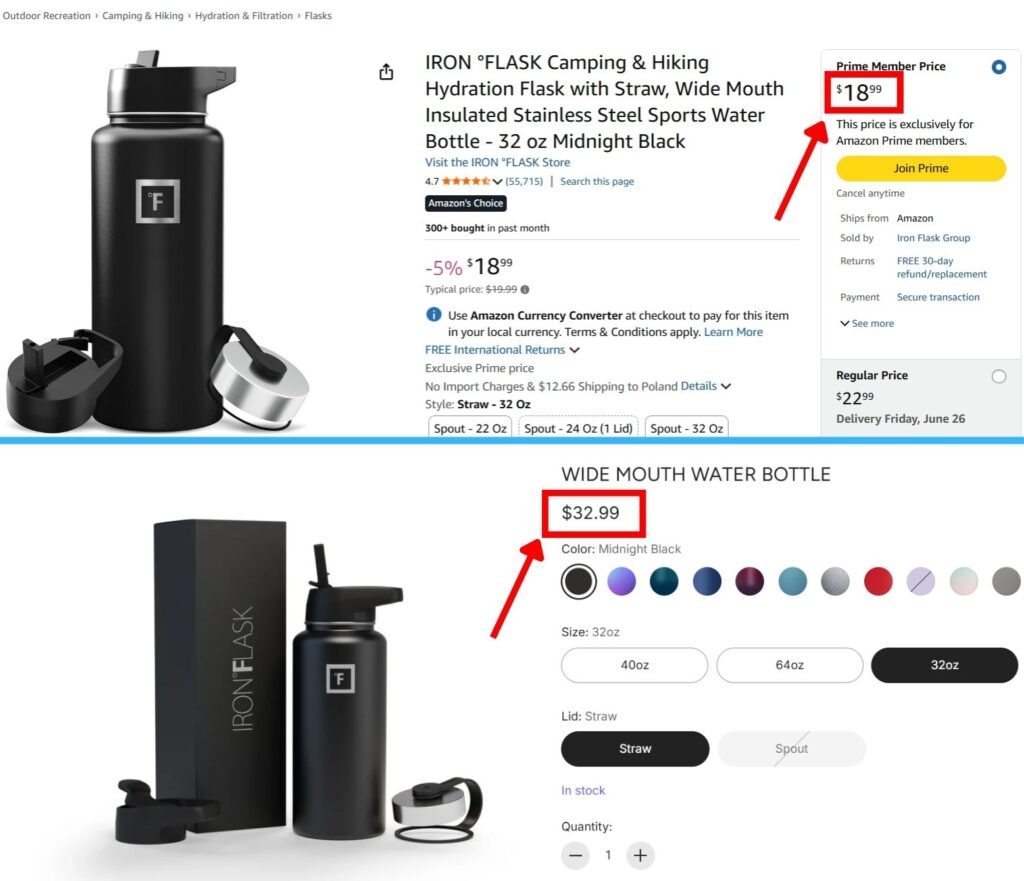
In the Iron Flask example in the image below, you can see how big the difference can get between Amazon and the brand’s website. This isn’t a tiny coupon situation. Depending on the day and deal, the exact same bottle can cost around $14 less on Amazon.
Amazon isn’t the only place where you can find bottle deals, but I’d be more careful with marketplaces like eBay or Mercari, especially with brands that people are actively hunting for, like Owala and Stanley. Fake listings and questionable sellers are much more likely there, and saving a few bucks isn’t worth it if you end up with a knockoff.
My simple rule: if I’m buying a cheap bottle, I check Amazon first, then the brand website, then I compare. I also check who the seller is, whether returns are easy, and whether the listing looks like the real product.
Final Thoughts
If I had to buy only one cheap water bottle from this list, I’d get the Iron Flask. No diplomatic “they’re all good in their own way” answer here. The winner is obvious.
Iron Flask gives you the best insulation, works with hot and cold drinks, and can come with three lids depending on the package you choose. For a bottle that often drops around or below $20 on Amazon, it punches way above its price.
The bigger lesson is this: you don’t always need to spend $40 or $50 to get a bottle that feels good to use. You just need to avoid the flimsy junk and wait for the right deal.

Jeremiah Kowalski
Jeremiah Kowalski is a drinkware product researcher who has personally tested 50+ reusable water bottles, tumblers, mugs, and filtration systems from leading brands. He focuses on real-world performance, durability, and safety to help readers choose drinkware that actually fits their daily hydration needs.