
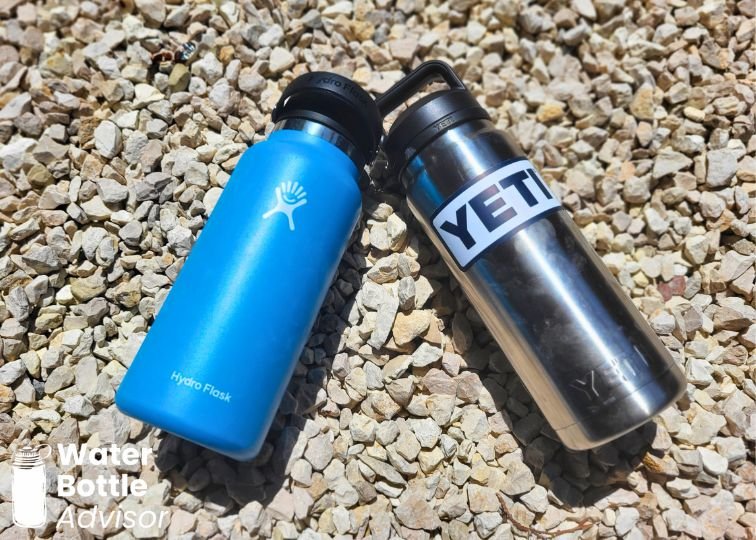
I get why people love YETI. It feels tough, it looks serious, and every time I pick it up, I’m pretty sure it could survive things I wouldn’t.
But after using both YETI and Hydro Flask for a long time, I keep reaching for Hydro Flask more often. Not because it beats YETI in every category, because it doesn’t. YETI still feels more durable. But Hydro Flask fits my actual day-to-day life better: it’s lighter, easier to carry, has better lid options, and works better for the way I drink water.
Rather than telling you which one to buy, I’ll let the results speak for themselves. Below, I’ll compare them across the categories that matter most so you can decide which one fits your life better.
Some of the links on this page are affiliate links. This means that if you click on one of the links and make a purchase, I may earn a small commission at no additional cost to you.
Hydro Flask | YETI Rambler | |
|---|---|---|
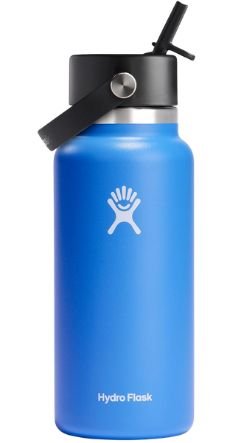 | 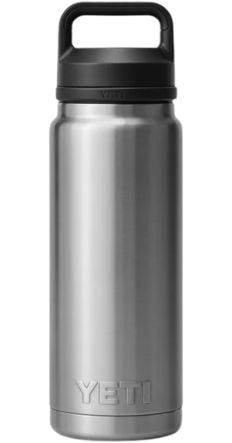 | |
Recommended size | 32 oz | 26 oz |
Price | $45 | $40 |
Material | 18/8 Stainless Steel | 18/8 Stainless Steel |
Fits in cup holders? | NO | NO |
Leakproof? | YES | YES |
Can be used with hot liquids? | YES | YES |
Dishwasher safe? | YES | YES |
Review | ||
My Score | 4.6/5 | 4.3/5 |
Buy Now |
Insulation
What you’re mostly paying for with bottles like these is double-wall vacuum insulation. I’ve said many times that it’s my favorite feature in water bottles, and I still stand by that. It’s what makes a bottle useful not just for a quick walk, but for work, road trips, hot days, cold mornings, and pretty much anything in between.
I’d put both the YETI Rambler and Hydro Flask in the premium insulation category. But instead of just saying they “keep water cold”, I tested both in the same conditions so you can see what that actually means.
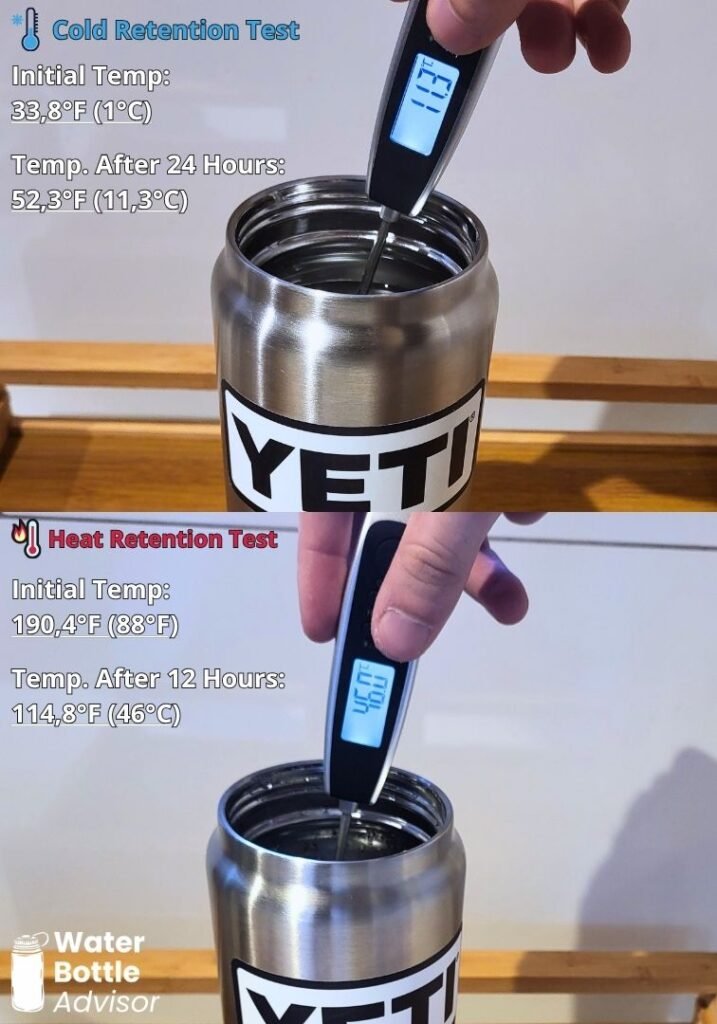
The YETI Rambler went from 33.8°F (1°C) to 52.3°F (11.3°C) after 24 hours without ice. In my hot drink test, it went from 190.4°F (88°C) to 114.8°F (46°C) after 12 hours.
The Hydro Flask went from 33.8°F (1°C) to 53.6°F (12°C) after 24 hours without ice. In the hot drink test, it went from 190.4°F (88°C) to 128.8°F (53.8°C) after 12 hours.
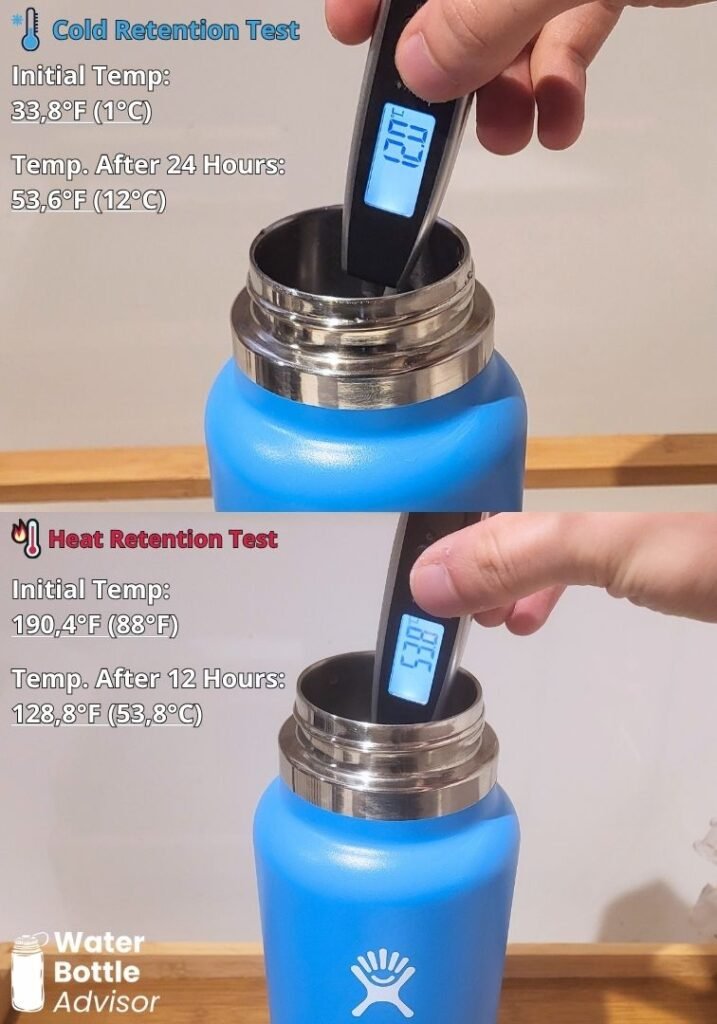
So for cold drinks, YETI was slightly better, but the difference wasn’t huge.
But hot drinks are where Hydro Flask pulled ahead more clearly. After 12 hours, it kept the water noticeably warmer than the YETI, which surprised me a little because YETI usually feels like the more overbuilt bottle.
What I like most is that both bottles can handle cold and hot liquids. That instantly makes them more versatile, and it’s not something every insulated bottle can do.
Lid Usability
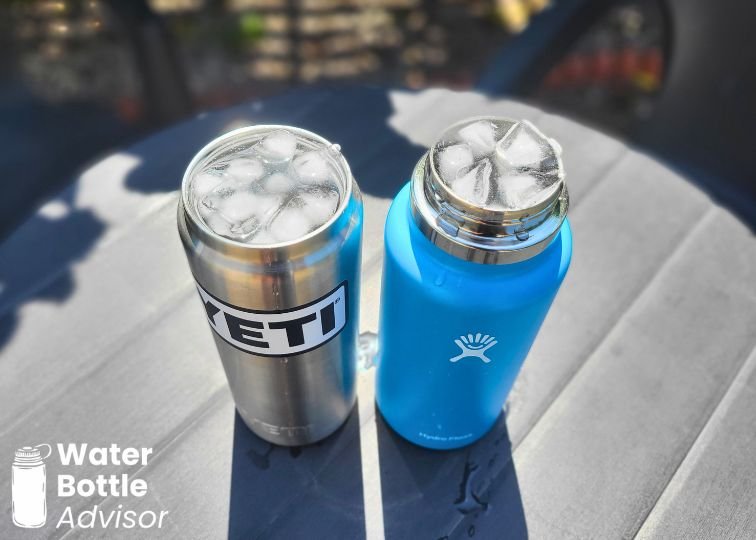
This is where the comparison gets a little tricky because there isn’t one clear winner. Both brands give you a few different lid setups, so the “better” lid really depends on how you use your bottle.
Hydro Flask gives you way more choices. There are multiple lids and caps you can pair with a Hydro Flask bottle, and that’s a huge plus because it makes the bottle much more versatile.
Want something easy for sipping at your desk? Go with the Flex Straw Cap. Just finished a workout and want something simple? The basic Flex Cap works great. Heading out for a hike and want to chug without water splashing everywhere? That’s where the Flex Chug Cap makes more sense.
And those are only three options. Hydro Flask has several more, and I break them all down in my Hydro Flask lids guide.
My personal favorite is the Flex Straw Cap. That’s the one I use the most because I like sipping throughout the day, and I drive a lot. Being able to drink one-handed without tilting the bottle is just too convenient.

YETI gives you fewer options, at least for the regular Rambler bottles. If we exclude the 64 oz+ jugs, you’re basically choosing between the Chug Cap, Straw Cap, and the newer Flip Chug Cap.
I own the first two, and I like them a lot. They feel thick, sturdy, and well-made, especially the Chug Cap. Hydro Flask lids feel high-quality too, but YETI’s caps have that extra chunky, overbuilt feel.
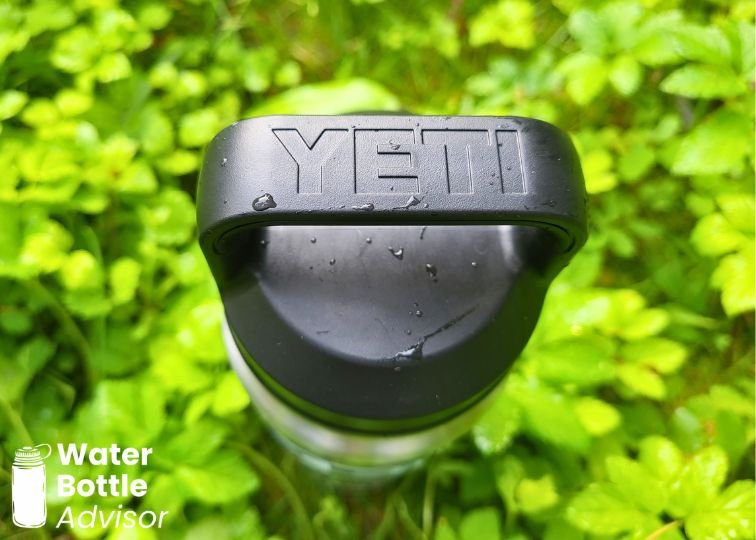
So, I don’t think you can really go wrong with either brand here. If you want the most lid options, Hydro Flask wins. If you want lids that feel especially rugged, YETI makes a strong case.
The good news is that both brands make interchangeable lids, which helps a lot with versatility. Just make sure you’re matching the right mouth size. Hydro Flask also makes narrow-mouth bottles, and lids made for narrow-mouth bottles won’t fit the wide-mouth versions.
Portability
Hydro Flask wins portability for me, and the first reason is the handle.
I didn’t know it was possible to have strong feelings about a bottle handle, but here we are. Hydro Flask is one of the few brands that actually gets this right.
Most of its lids and caps have a soft, flexible strap that feels comfortable in hand and gives you enough room for a proper grip. Some of the smaller lids only leave room for two fingers, but even those are still easy to carry.
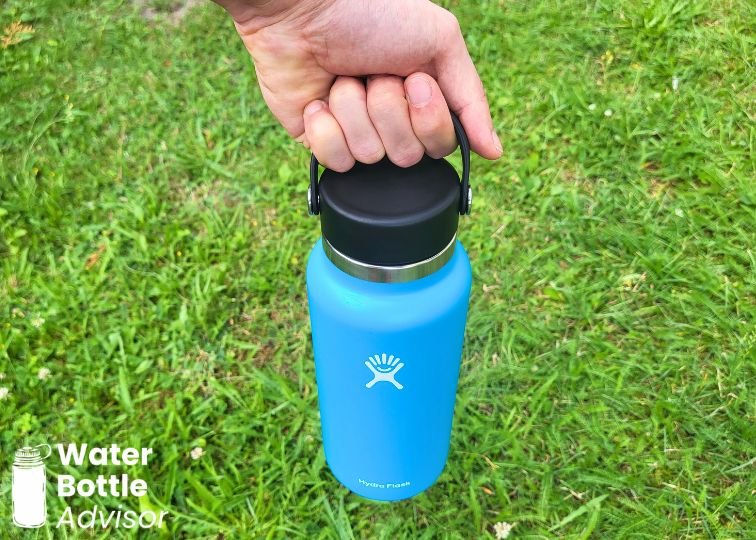
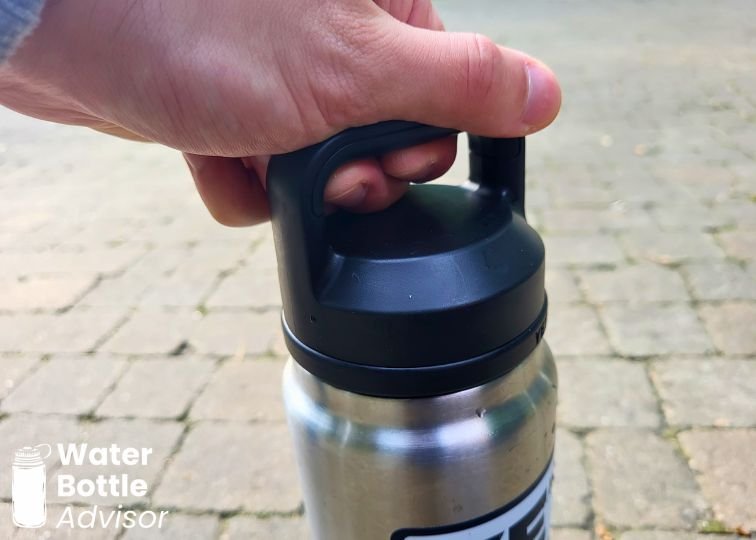
YETI also gives you a handle on the Rambler lids, and mine fits about three fingers. The difference is that YETI’s handle is rigid. That’s not as comfortable as Hydro Flask’s soft strap, but it does have one nice advantage: you can use it for extra leverage when unscrewing the lid. So while I prefer Hydro Flask’s handle for carrying, YETI’s design is still useful.
Then there’s cup holder fit. You may not care about this right away, but at some point, you’ll probably want your bottle to fit in a car cup holder or some other tight space. And this is where both bottles can get a little annoying.
The exact bottles I’m comparing here probably won’t fit in many standard cup holders. My 32 oz Hydro Flask and 26 oz YETI Rambler barely fit in my 3.5-inch cup holder, which is already pretty generous.
So you have two options.
The first is to buy an adjustable cup holder. I bought this one for around $12, and to be honest, it’s one of the most useful bottle accessories I own. It saves you from constantly wondering whether your bottle will fit in the car. With one of these, even bigger bottles become much easier to bring on road trips.
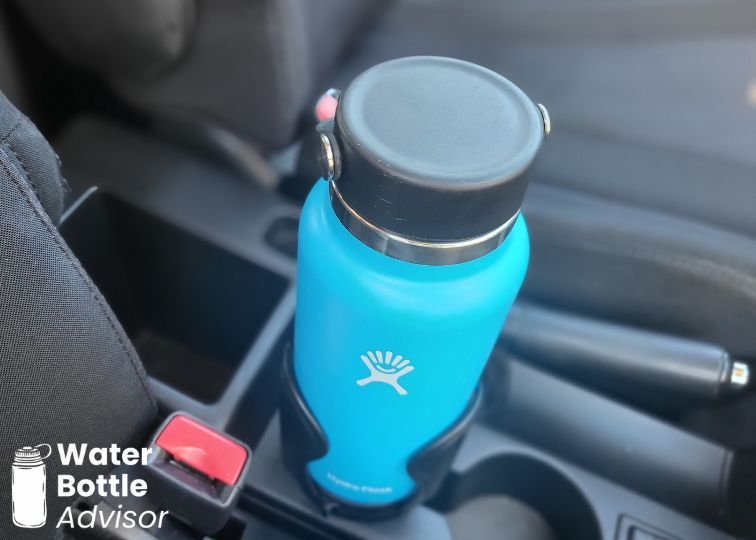
The second option is to go smaller. For Hydro Flask, that usually means staying around 24 oz or below. For YETI Rambler bottles, you’re probably looking at 18 oz if cup holder fit is a priority. The problem is that those sizes are a little too small for me, and I’m guessing they may be too small for you too.
If you want more capacity AND cup holder fit, Hydro Flask has a better solution: its travel-style bottles with tapered bottoms that I explained in this review. That design lets me bring even the 40 oz Hydro Flask on road trips without fighting with the cup holder.
YETI doesn’t currently offer the regular Rambler bottle with a tapered base, which is a downside if you drive a lot.
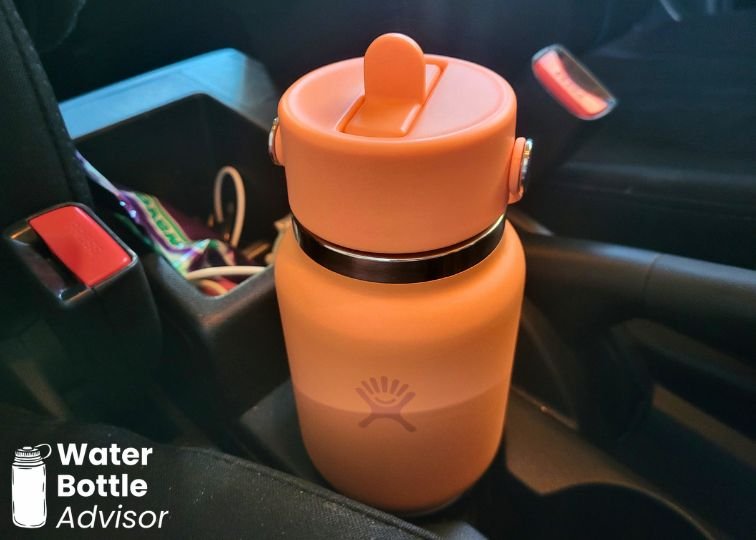
And then we get to the biggest portability issue with YETI: weight.
For context, I start calling a bottle heavy once it gets over 20 oz empty. My 26 oz YETI Rambler weighs 21.5 oz, and that’s not even a huge bottle. If you go for the 36 oz or 46 oz version, you’re carrying a serious piece of steel. You feel that weight when it’s in your bag, your backpack, or even just in your hand for a while.
My 32 oz Hydro Flask weighs only 15.5 oz, which is much easier to live with. That difference may not sound huge on paper, but I notice it right away when I’m actually carrying the bottle around.
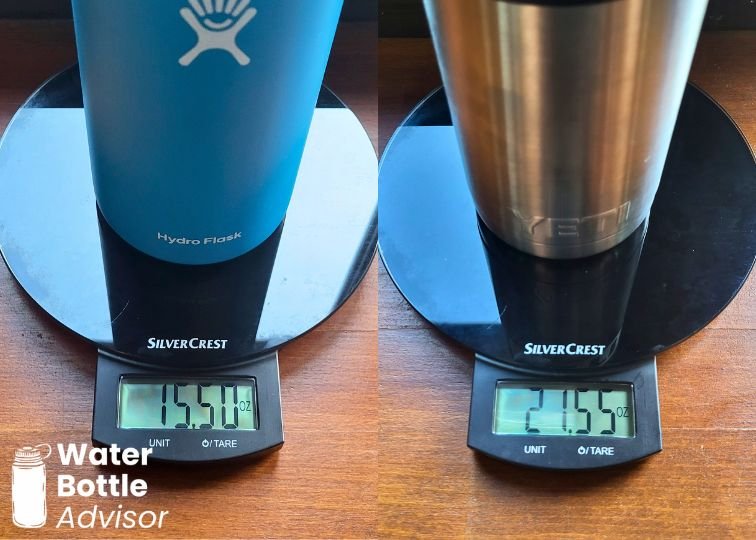
And if you want to go even lighter, Hydro Flask also has its Lightweight series, with some bottles weighing as little as 10 oz while still keeping solid insulation performance.
So between the softer handles, lower weight, and better cup holder options, Hydro Flask is the bottle I’d rather take with me when I’m heading out.
Ease of Cleaning
Hydro Flask and YETI Rambler are both on the easier side to clean.
I actually timed myself cleaning both by hand. My Hydro Flask took 2 minutes and 6 seconds to disassemble, clean, and put back together. The YETI Rambler took 2 minutes and 20 seconds.
That’s very good. I’ve had bottles that take more than 4 minutes to clean because they have 6 or 7 parts, awkward gaskets, hidden pieces, and lids that make you wonder who signed off on the design. Hydro Flask and YETI are not like that.
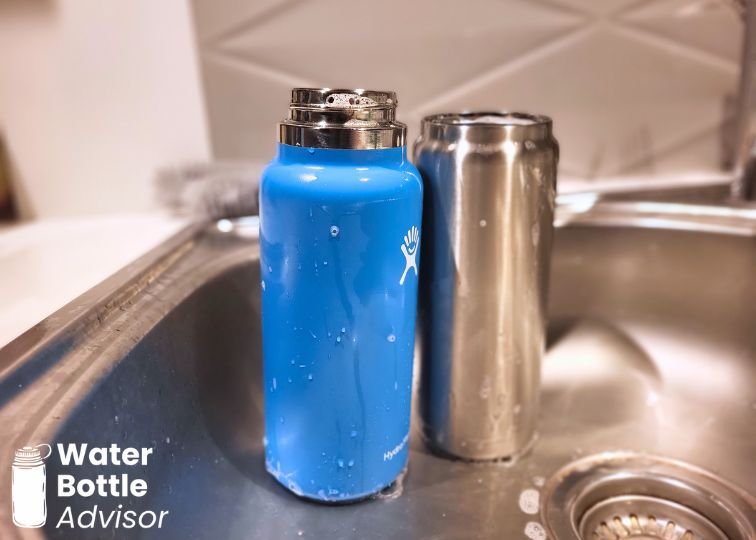
For regular cleaning, all you really need is a long bottle brush, warm water, and dish soap. If you use a straw lid, you’ll also need a small straw brush. And don’t skip the gaskets. That’s where smells like to settle in if you ignore them for too long.
The gaskets are removable, so you’re not breaking anything by taking them out. They can be hard to grab with just your fingers, though, so I usually use a toothpick to pop them out quickly.
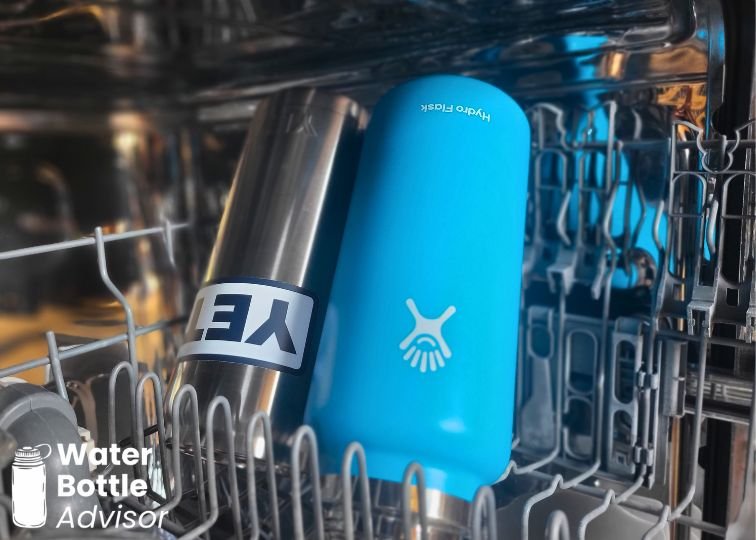
If the thought of hand-washing bottles makes you want to never drink water again, both bottles are also dishwasher safe according to their care instructions. Personally, I still prefer hand-washing because it’s gentler on the finish, but it’s nice to have the dishwasher option.
Materials & Durability
Durability is where YETI pulls ahead for me. And that doesn’t surprise me much. Out of all the bottles I’ve used, YETI is still the one that feels the most overbuilt.
Technically, Hydro Flask and YETI aren’t that different on paper. Both use 18/8 stainless steel, and both feel like quality bottles. But once you actually hold them side by side, the YETI just feels tougher.
The bottom especially feels thicker and more reinforced, which is usually the area that takes the most abuse when a bottle gets dropped. The lids feel more rugged too. I went with the Chug Cap, and it’s a pretty chunky, sturdy lid. It doesn’t feel like something that would crack easily or wear out fast.
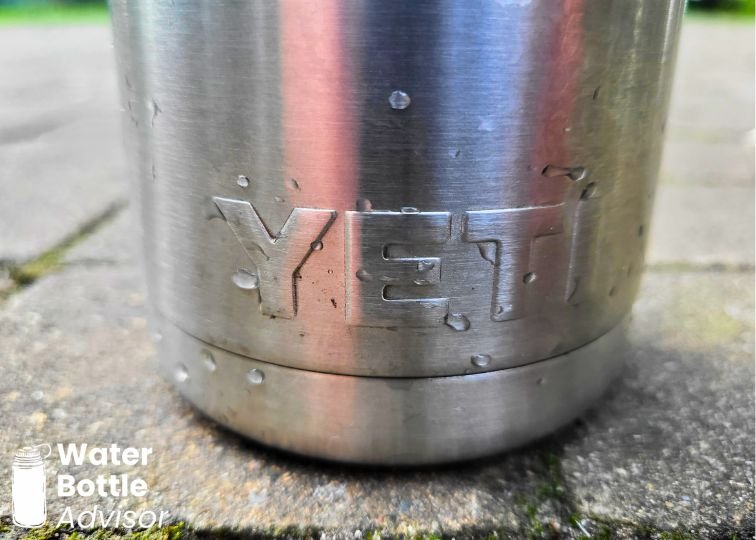
That’s not to say Hydro Flask feels cheap. Not even close. It’s still one of the more durable bottles I own, and I’d trust it over most bottles on the market. But when it’s directly up against YETI, it comes in second.
Materials are also where safety comes into the conversation. Both bottles are BPA-free, BPS-free, and phthalate-free, and I personally use both without worrying about it. I’ve looked into what they’re made of, and both brands are big enough and transparent enough that I feel comfortable using them.
But if I’m being picky, Hydro Flask gets the edge here. YETI insulated drinkware uses lead as part of the vacuum-sealing process. That lead is sealed away, so it doesn’t touch your water or your hands during normal use. Still, if the bottle ever gets seriously damaged, especially around the bottom, I’d replace it rather than keep using it.
Verdict
Hydro Flask and YETI are both premium brands, so yes, you’re paying more than you would for a basic bottle. But I don’t think you’re only paying for the logo.
I paid $45 for my 32 oz Hydro Flask and $40 for my 26 oz YETI Rambler, and both have been worth it. I bought them in 2023, and they still look and work almost like new. With strong insulation, sturdy builds, useful lids, and lifetime warranties, the higher price makes sense.
But if I had to choose one, I’d go with Hydro Flask.
If neither feels like the right pick, you can check my ranking of the best water bottles I’ve tested so far, where I compare more options across different sizes, lids, prices, and use cases.
Hydro Flask | YETI Rambler |
|---|---|
| |
My Score: 4.6/5 | My Score: 4.3/5 |

Jeremiah Kowalski
Jeremiah Kowalski is a drinkware product researcher who has personally tested 50+ reusable water bottles, tumblers, mugs, and filtration systems from leading brands. He focuses on real-world performance, durability, and safety to help readers choose drinkware that actually fits their daily hydration needs.