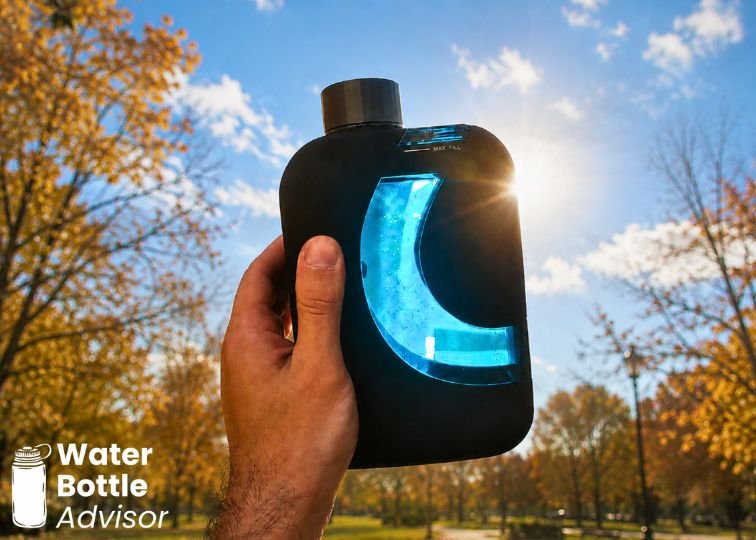

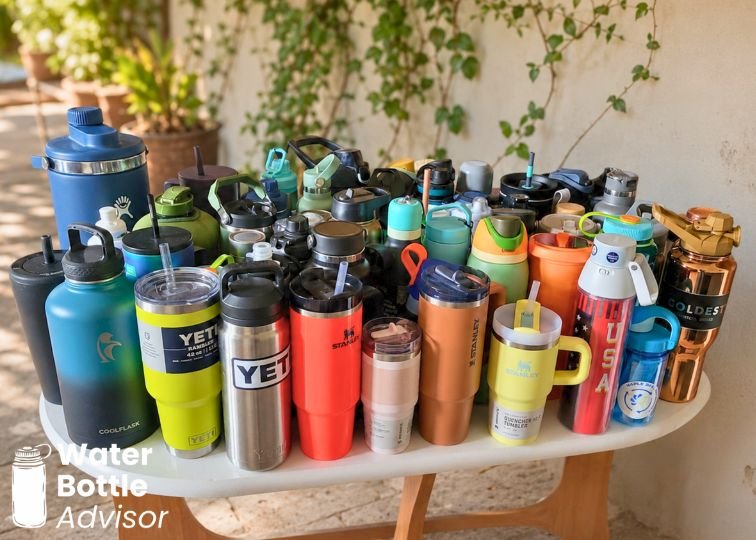
It sounds a bit odd, but yes – I’ve owned 100+ reusable water bottles over the years to help you choose a bottle that works well, saves you money, and doesn’t end up as another disappointing thing shoved into the back of a cupboard.
For this guide, I tested 96 bottles exactly. But instead of forcing every single one into one generic ranking, I narrowed the list down to the 9 best options and I gave each one the category where it makes the most sense.
If you want a short answer, the Coldest Bottle wins this year with a 4.8/5 score. If you want the most well-rounded option and don’t want to overthink it, that’s the one I’d point most people toward.
Why Should You Trust Me?
For this guide, I tested 96 bottles. Each bottle was used for at least one month, and some have been in my rotation for years. On top of that, I judged them across 9 testing categories:
- leakproofness
- portability
- durability
- ease of cleaning
- versatility
- safety
- lid usability
- insulation
- extra features
I also include my own photos, buy every bottle with my own money, and don’t take sponsorships from bottle brands. I don’t use AI to write my reviews either. Every recommendation comes from my own testing, notes, measurements, and day-to-day use.
You can read more about me and my testing process on this page.
Now, let’s get into the bottles.
Some of the links on this page are affiliate links. This means that if you click on one of the links and make a purchase, I may earn a small commission at no additional cost to you.
Coldest | Hydro Flask Travel Bottle | Hydro Flask Lightweight | Hydro Flask Hot Flask | Owala FreeSip Sway | WaterH BOOST | YETI Yonder | YETI Rambler | Ello Syndicate | |
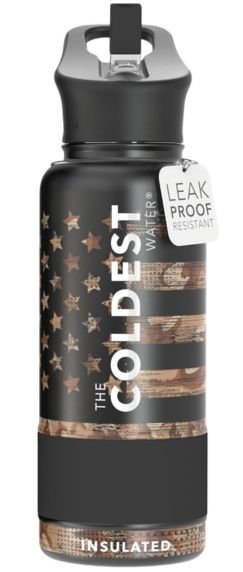 | 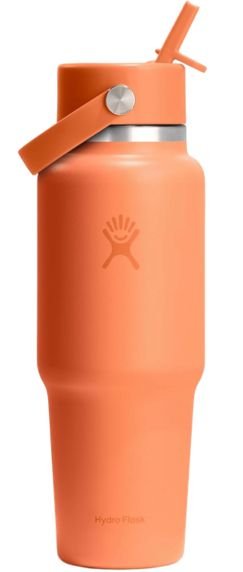 |  |  |  |  |  |  |  | |
Category | Best overall | Best for driving | Best for hiking/travel | Best insulation | Best lid | Best smart bottle | Best plastic bottle | Best durability | Best glass bottle |
Recommended Size | 32 oz | 32 oz | 24 oz | 36 oz | 30 oz | 32 oz | 25 oz | 26 oz | 20 oz |
Price | $40 | $45 | $45 | $60 | $35 | $55 | $25 | $40 | $19 |
Review | |||||||||
My Score | 4.8/5 | 4.7/5 | 4.5/5 | 4.5/5 | 4.5/5 | 4.5/5 | 4.4/5 | 4.3/5 | 4.2/5 |
Buy Now |
Best Overall: Coldest Bottle
KEY FEATURES
PROS
CONS
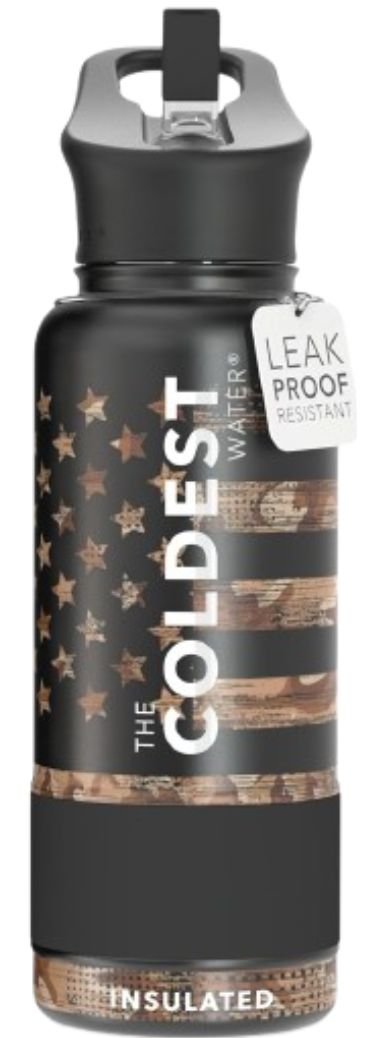
The Coldest Bottle lives up to its name. It really is one of the best bottles I’ve tested for cold retention, and that insulation performance is the main reason it earned my top spot.
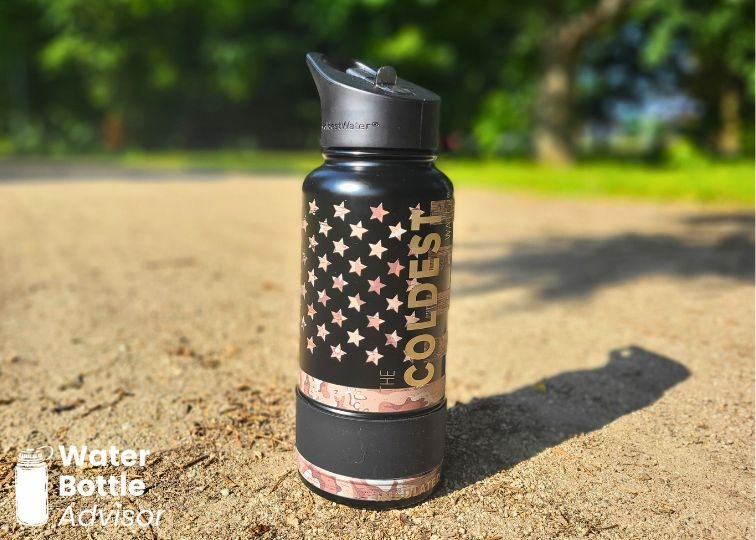
Most insulated bottles use double-wall insulation. This one goes a step further with triple-wall insulation, and you can feel the difference in real use. It also works for both cold and hot drinks, which is not something every bottle handles well.
In my cold retention test, I started with pre-chilled water at 1°C / 34°F. No ice. Just cold water. After 72 hours (so, three full days!) the water was still around 16°C / 61°F. That is not ice-cold anymore, of course, but it was still cool enough to drink. Add ice, and you can stretch that performance even further.
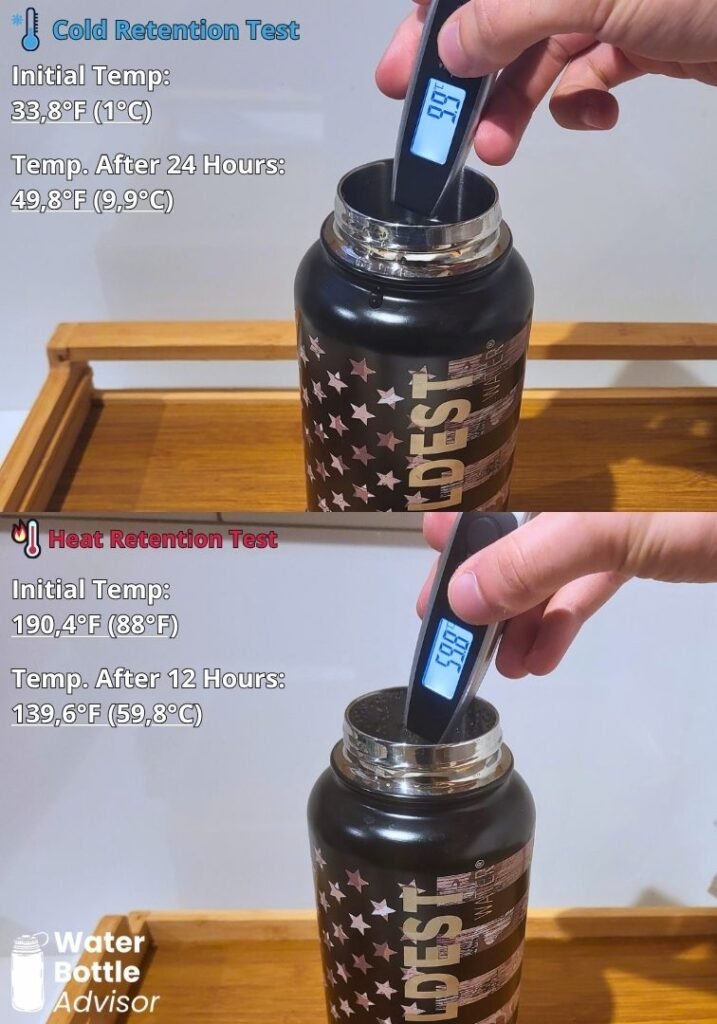
But insulation is only part of the story. This bottle also feels tough. I bought my favorite 32 oz size in the summer of 2025, and after a year of use, it still looks almost new. No worrying dents, no ugly scratches, no loose parts. It has held up extremely well.
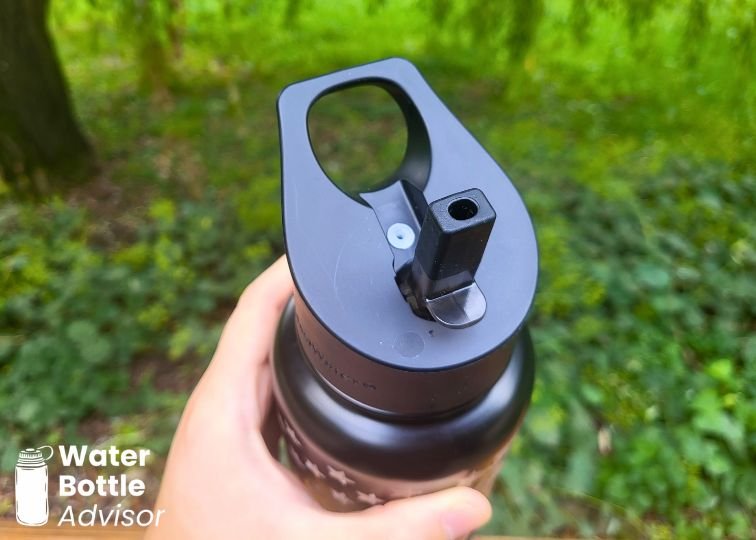
The BPA-free straw lid is another thing I like. I usually prefer straw lids because they make drinking easier when I’m walking, driving, or moving around. You do not have to tilt the whole bottle back, and there is less risk of splashing water all over yourself. The lid also has a two-finger handle, which makes it easier to carry.
For such a heavily insulated bottle, the weight is still manageable. My 32 oz version weighs around 16 oz when empty, which is reasonable considering how well it performs.
And yes, the design matters too. The Coldest Bottle comes in a lot of colors, patterns, and limited editions. We can pretend that looks do not matter, but they do. A bottle is something you carry around every day, so it helps when it looks good on your desk, in the gym, or next to your backpack.
My favorite size is 32 oz, and that is the one I recommend most often. The only real drawback is that it does not fit in my car cup holder. If that matters to you, the 24 oz version is the safer pick because it has a slimmer profile and a base diameter under 3 inches.
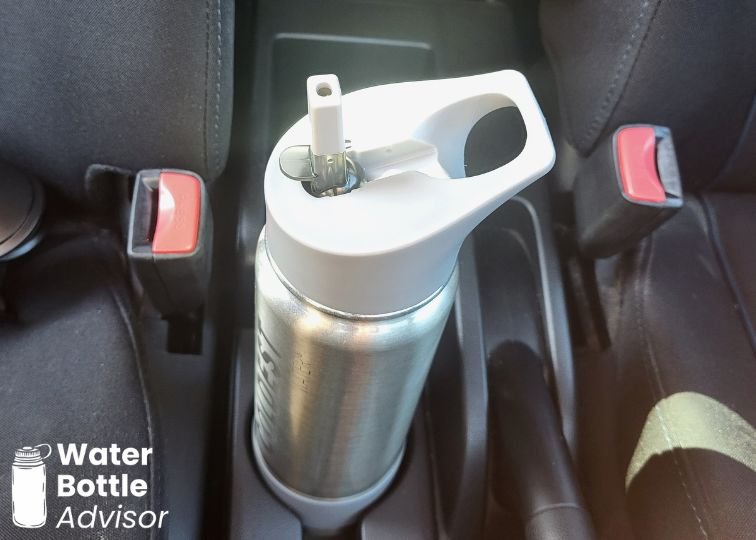
Overall, this is my most versatile bottle and one of the safest bottles at the same time. Out of 96 bottles I tested, the Coldest Bottle is my number one pick, which probably says enough. It is hard to find something I dislike about it.
There is more to cover, so if you want the full breakdown, you can read my complete Coldest Bottle review.
Best for Driving: Hydro Flask Travel Bottle
KEY FEATURES
PROS
CONS
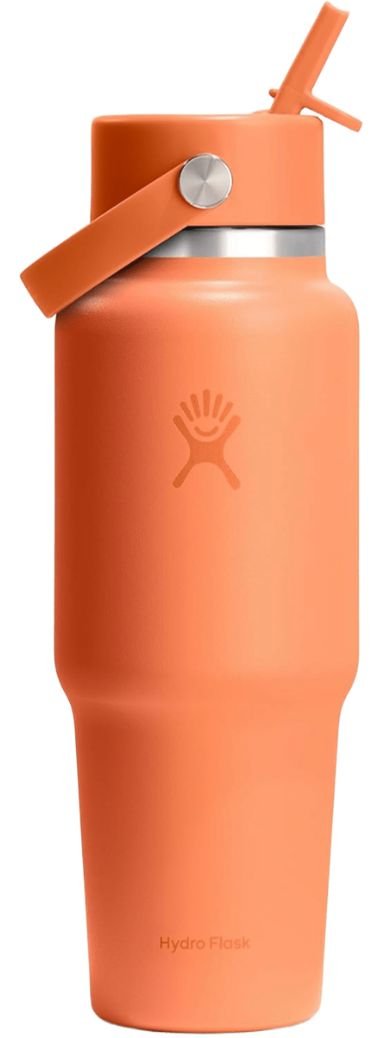
Few things are more annoying than buying a new bottle only to realize it doesn’t fit in your car cup holder. If you spend a lot of time driving and want something versatile, well-insulated, and easy to use on the road, my pick is the Hydro Flask Travel Bottle.
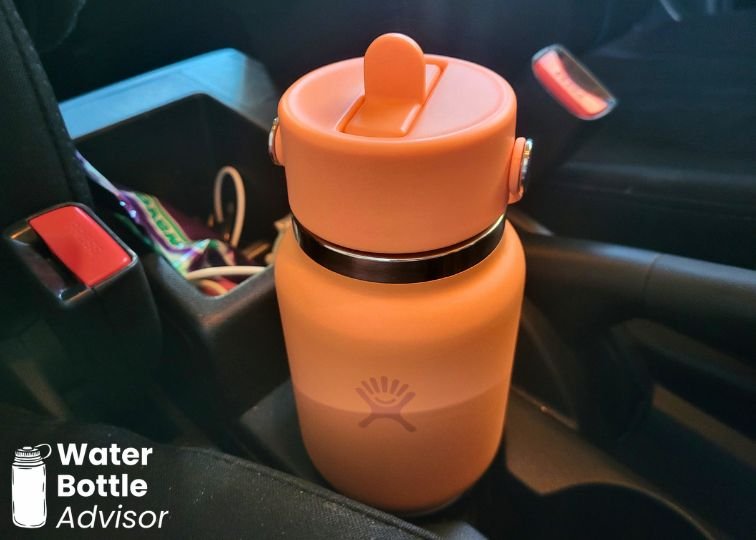
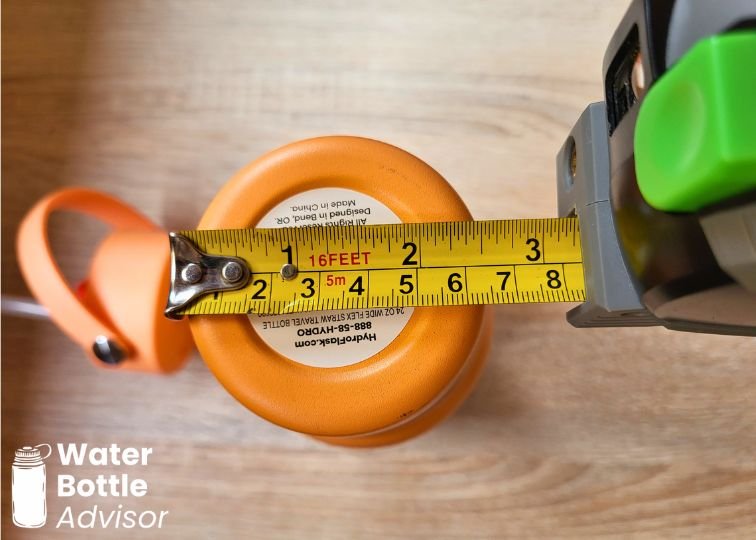
The name fits. This bottle really is built for travel. It has a tapered base, and on my 24 oz version, the base diameter is just 2.5 inches. With many bottles, cup holder fit can be hit or miss. This one is much safer. Even better, it also comes in larger 32 oz and 40 oz sizes, and even the biggest version is still designed to fit most cup holders. That matters on longer drives because a 40 oz bottle can easily get you through a road trip without constant refills.
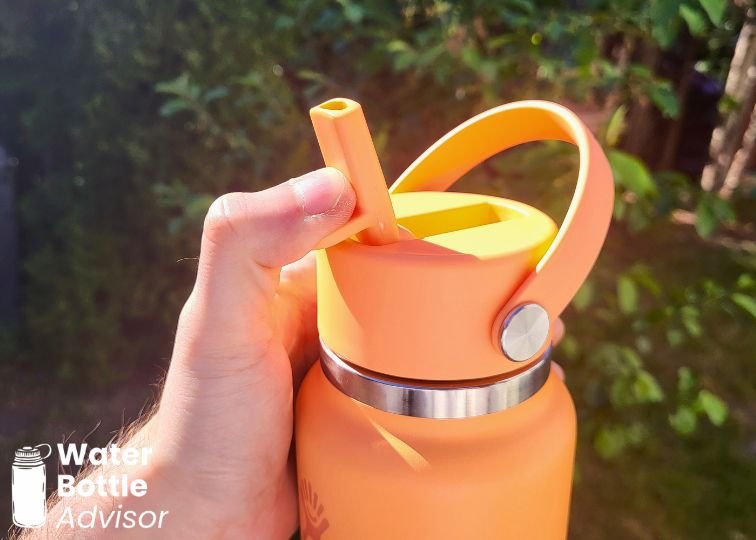
It comes with a straw lid, and it’s probably the best straw lid I’ve used. It closes with a clear click, stays leakproof, and makes drinking feel smooth and controlled. In the car, I usually leave the straw open, then just lift the bottle to drink without fiddling around with the cap or taking my eyes off the road.
Another big advantage is Hydro Flask’s lid system. As long as the mouth size matches, you can swap between different Hydro Flask lids, which gives this bottle a lot more flexibility. I cover the best options and configurations in my Hydro Flask lids guide.
The famous flexible four-finger handle is attached to the lid too, and it’s extremely comfortable to carry.
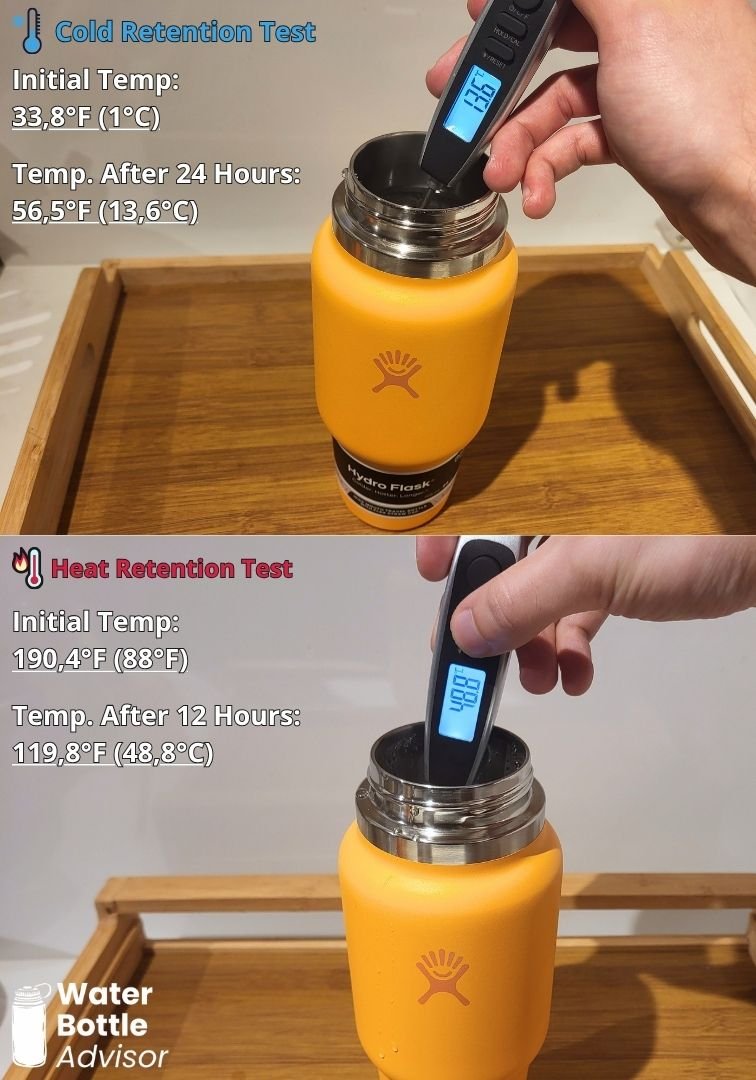
Insulation is decent, which is what I expect from Hydro Flask drinkware. It works with both cold and hot drinks. In my cold retention test, In my cold-retention test, the water warmed from 33.8°F / 1°C to 56.5°F / 13.6°C after 24 hours without ice, so it stayed under my 15°C threshold and passed the test.
There’s a lot more to like about this bottle, and I go into more detail in my Hydro Flask Travel Bottle review. It’s not only for driving, of course. You can use it for work, the gym, errands, or pretty much anything else. But for me, this is the bottle that lives in the car, and it will be hard for another one to knock it out of my cup holder anytime soon.
Best for Hiking/Travel: Hydro Flask Lightweight
KEY FEATURES
PROS
CONS
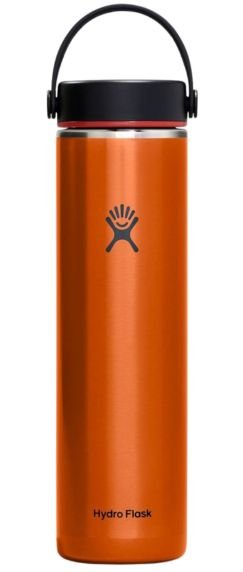
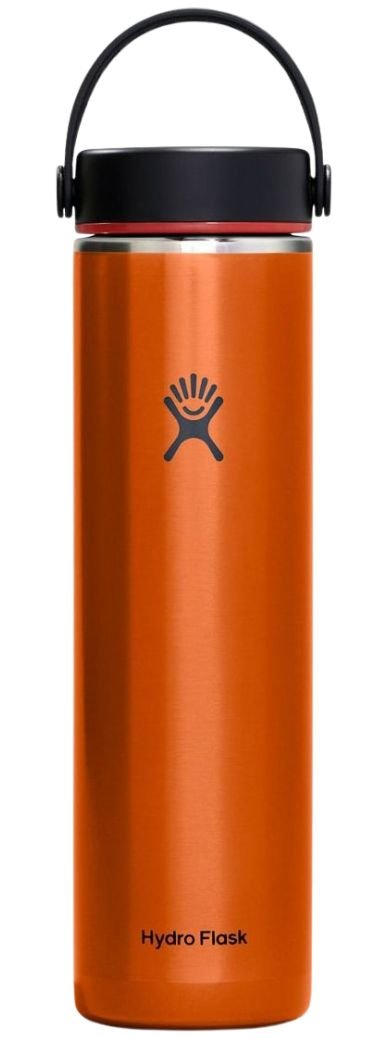
I’ve never found a better bottle for hiking or travel than the Hydro Flask Lightweight.
The biggest selling point is right there in the name: it’s light. Very light. Especially for a heavily insulated stainless steel bottle. My 24 oz version weighs just 10.3 ounces when empty, yet it still somehow keeps drinks cold for up to 24 hours and hot for up to 12. I’m not sure what kind of wizardry Hydro Flask pulled off here, but it works.
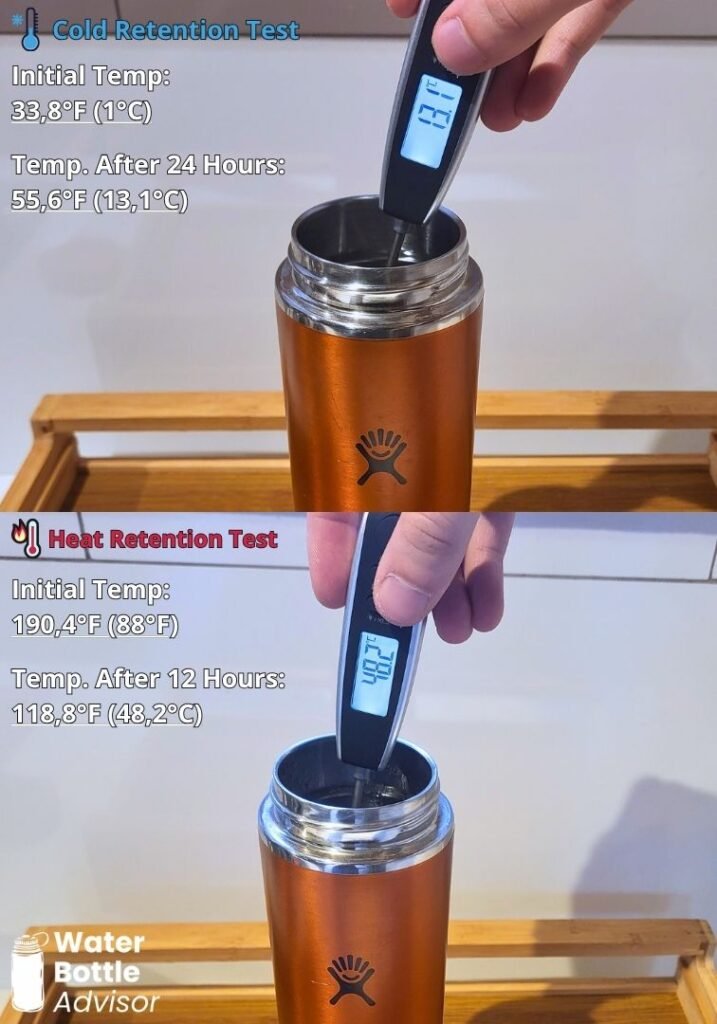
In my cold retention test, the water temperature went from 33.8°F / 1°C to 55.6°F / 13.1°C after 24 hours. For heat retention, it dropped from 190.4°F / 88°C to 118.8°F / 48.2°C after 12 hours.
Is that the absolute best result in the industry? No. Some heavier insulated bottles perform better. But for a bottle this light, it’s still a premium result.
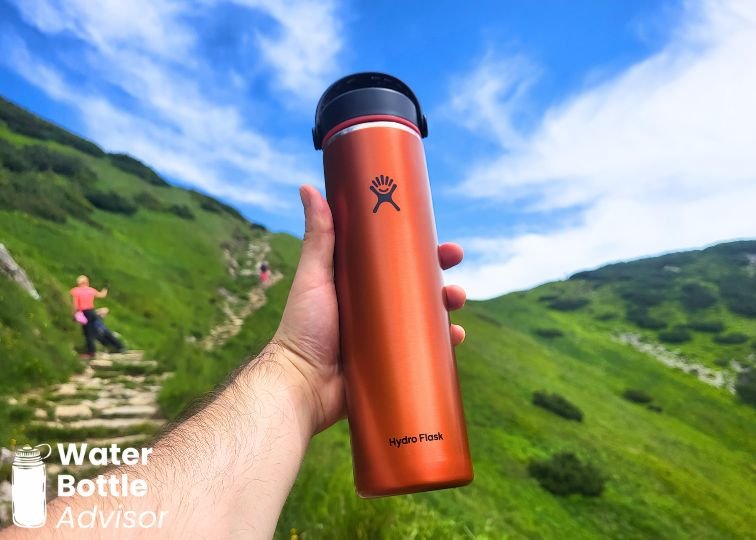
For hiking and travel, that makes a huge difference. I used to take plastic bottles with me because they were the lightest option. The problem? No insulation. If I poured in something cold, the bottle would sweat like crazy. And after a few hours, the drink was usually lukewarm anyway.
This bottle fixes that completely.
And the handle is brilliant. It’s simple, but it makes the bottle much easier to carry around. You can fit your fingers through it comfortably.
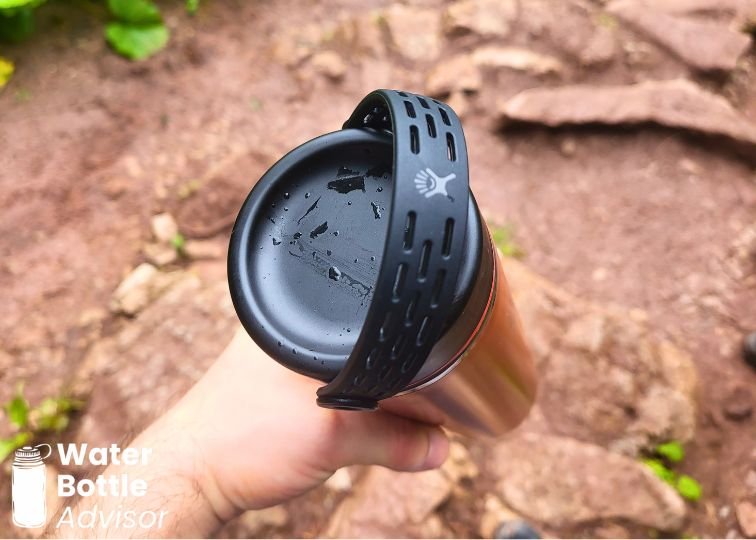
There are a few downsides, though. Mine has already picked up some scratches because it doesn’t have the powder coating you see on classic Hydro Flask bottles. It can also dent fairly easily, so it’s not the bottle I’d throw around without thinking. It’s not dishwasher safe either, and because of the slim shape, you’ll probably need a bottle brush to clean it properly.
That slim profile does come with one nice bonus, though: it fits easily into car cup holders.
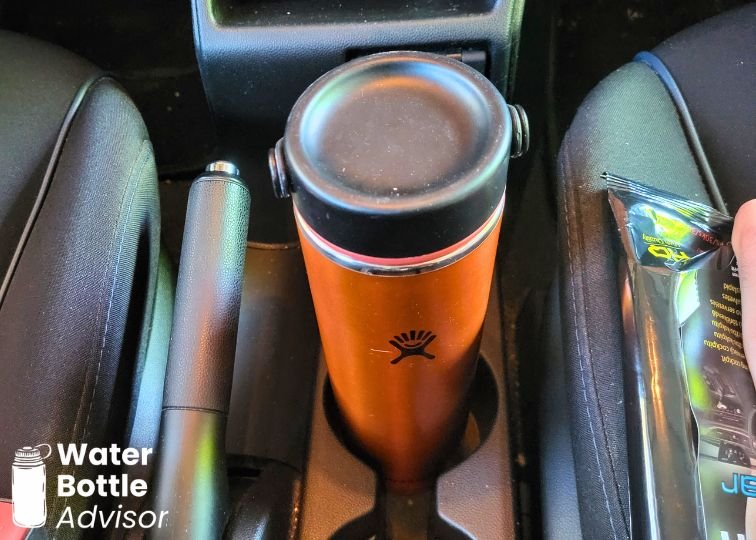
Overall, the Hydro Flask Lightweight has been one of the most useful bottles I’ve owned. I’ve taken it on more hikes and trips than I can count. It’s ultra-portable, practical, and just easy to live with.
Highly recommended.
And if you want more details about how it performs in everyday use, you can check out my full Hydro Flask Lightweight review.
Best Insulation: Hydro Flask Hot Flask
KEY FEATURES
PROS
CONS
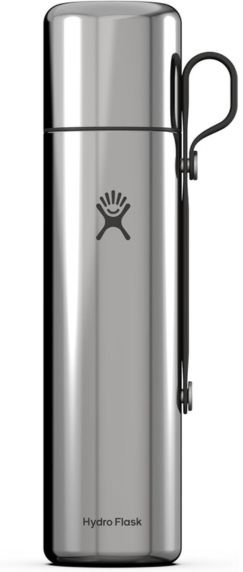
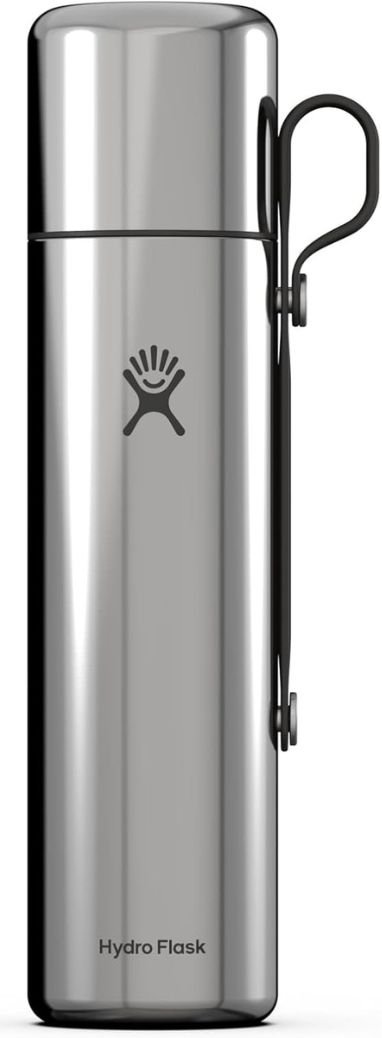
If insulation is the main thing you care about, you probably don’t need another regular bottle. You need a proper thermos. And out of all the ones I’ve used, the Hydro Flask Hot Flask has been the best.
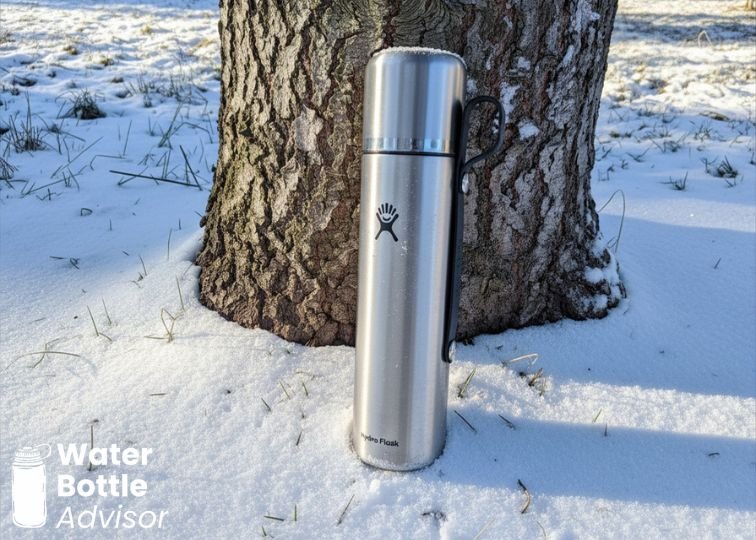
It’s not cheap. The 36 oz version costs around $60, so this is definitely not an impulse buy. But for me, it has been one of the better bottle investments I’ve made. I’ve taken it hiking, camping, and on casual outdoor trips in the woods, and this is exactly where it feels at home.
The biggest reason is simple: it handles both cold and hot drinks extremely well.
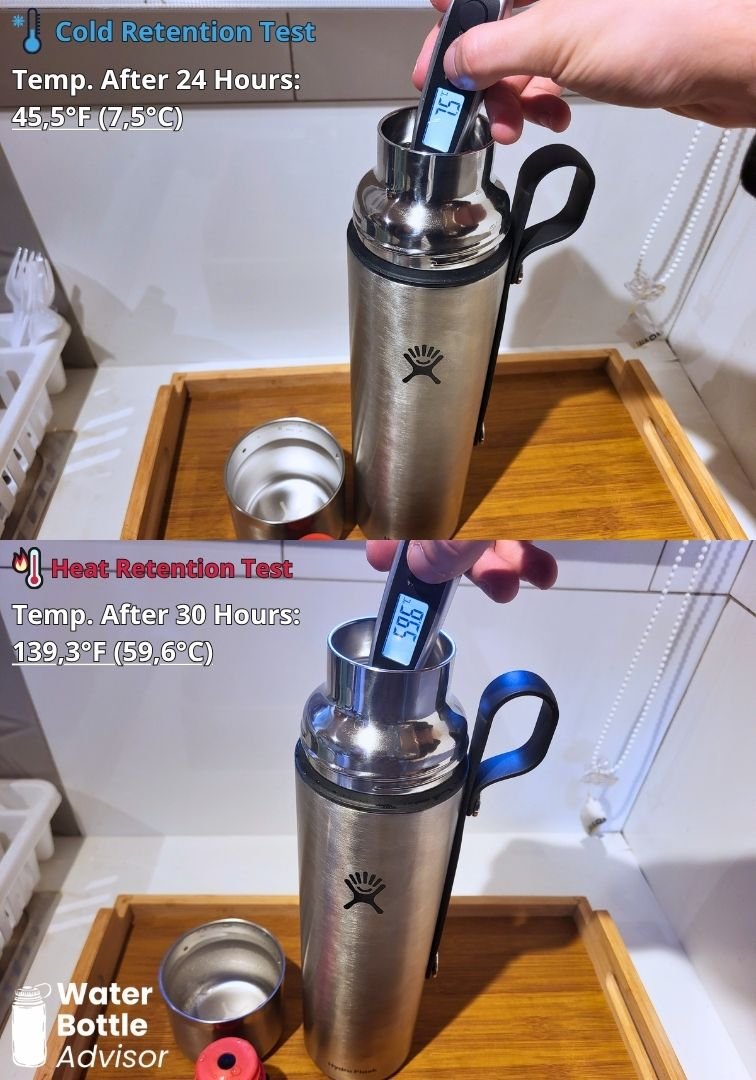
I tested the cold retention with water starting at 33.8°F / 1°C, with no ice inside. After 24 hours, the water had only risen to 45.5°F / 7.5°C. That is proper thermos-level performance. Even after 48 hours, it was still cold at 52.2°F / 11.2°C.
The heat retention was just as impressive. I started with water at 190.4°F / 88°C, and after 30 hours, it was still at 139.3°F / 59.6°C. That is a lot of insulation packed into one bottle.
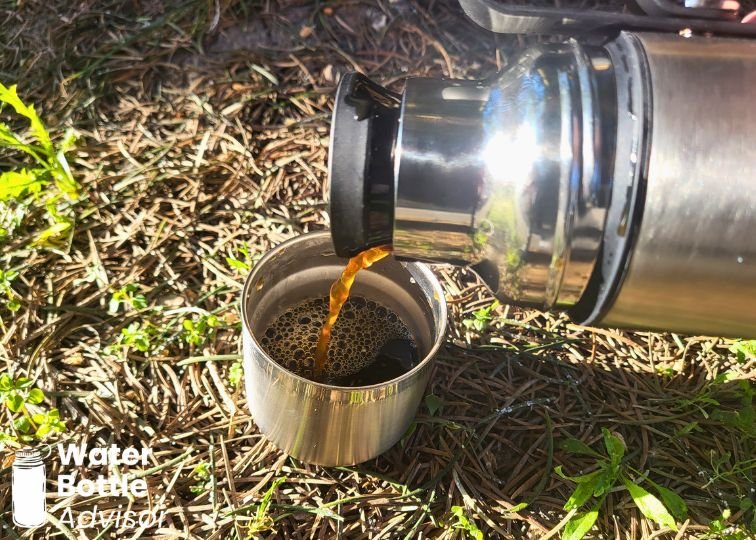
I like the cup design. The stainless steel cup attaches to the top of the thermos, and since the body is stainless steel too, the whole thing feels sturdy and well put together. I prefer drinking very hot coffee from a steel cup instead of a plastic-lined one, so this was a nice touch.
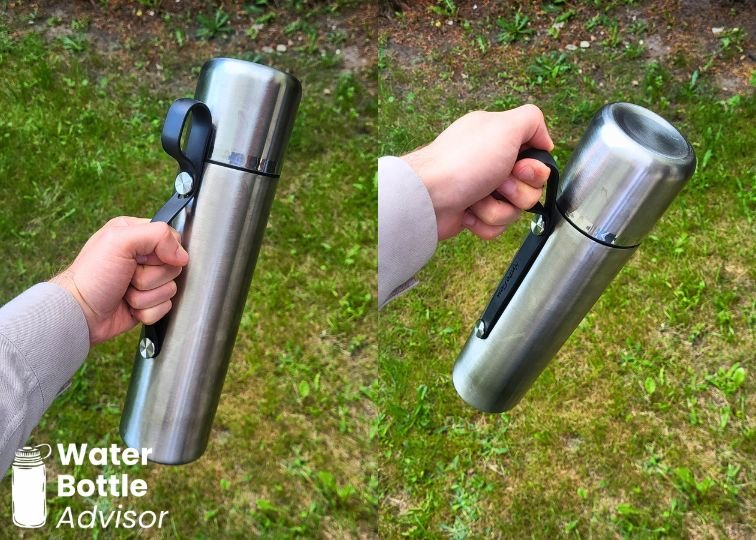
Of course, this is not a small bottle. It’s tall, fairly heavy, and not something you casually throw into every bag without thinking. But it’s still easier to carry than it looks because of the side handle. The handle is flexible, fits four fingers, and lets you carry the thermos in a natural grip. There’s also a smaller two-finger loop, so you can choose whichever feels better at the moment.
There are a couple of drawbacks. Cleaning it is not the easiest job, and you’ll probably need a long bottle brush to reach the bottom properly. Also, if you choose the version without powder coating, like I did, expect scratches.
I’ve had a lot of fun using this thermos outdoors. If hiking, camping, road trips, or long days outside are part of your routine, the Hydro Flask Hot Flask is a strong pick. You can read my full Hydro Flask Hot Flask review if you want the deeper breakdown.
Best Lid: Owala FreeSip Sway
KEY FEATURES
PROS
CONS
A bottle can have great insulation, strong materials, and a nice finish, but the lid is what you interact with all day. If it feels clunky, leaks in your bag, or makes drinking awkward, you notice it every single time you use the bottle. That’s why I rate the Owala FreeSip lid so highly.
The idea is simple, but very clever. With one spout, you can either sip through the built-in straw or tilt the bottle and drink normally. You don’t have to unscrew the lid, change attachments, or choose between a straw bottle and a chug bottle before leaving the house. Both options are always there.
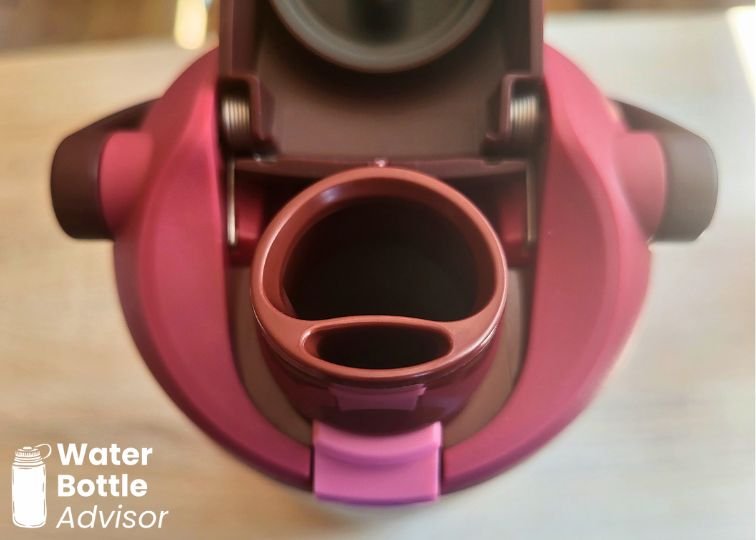
It’s one of those designs that sounds useful on paper, but feels even better in daily use. At my desk, I usually sip from the straw. At the gym or after a walk, I can take bigger gulps from the same opening. Small detail, big difference.
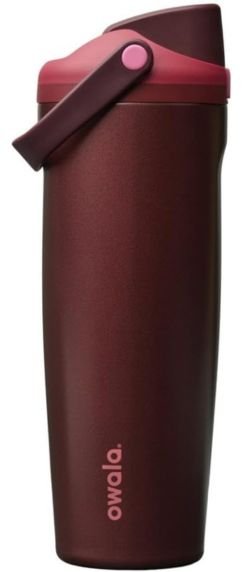
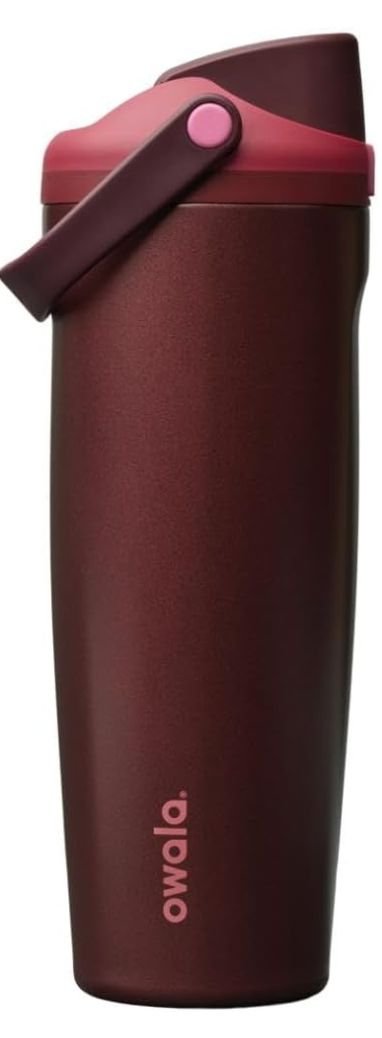
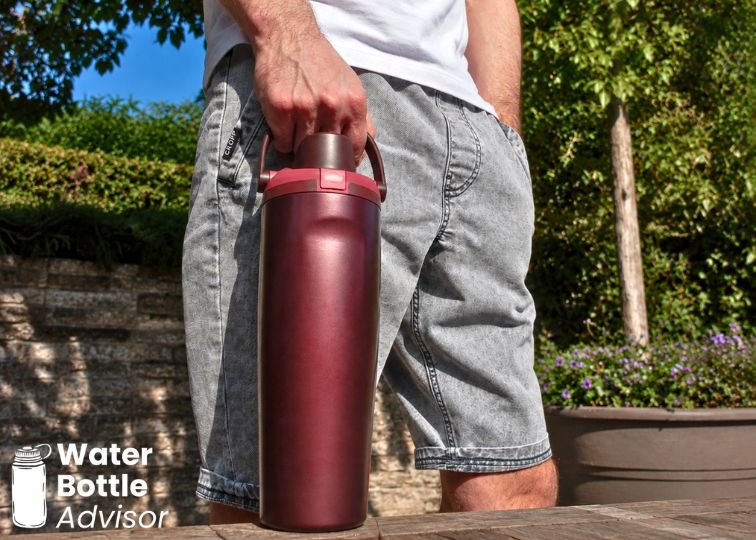
Owala has plenty of bottles and tumblers, and I like many of them, but my favorite is the Owala FreeSip Sway. It takes the FreeSip lid and pairs it with a more portable bottle body. It fits in all my car cup holders, has a proper four-finger handle, and still feels reasonably light for a stainless steel bottle.
The handle deserves a mention because it’s not just there for decoration. You can actually carry the bottle comfortably, even when it’s full. There’s also a locking mechanism on the lid, which helps prevent accidental spills when you throw it into a bag or carry it around in the car.
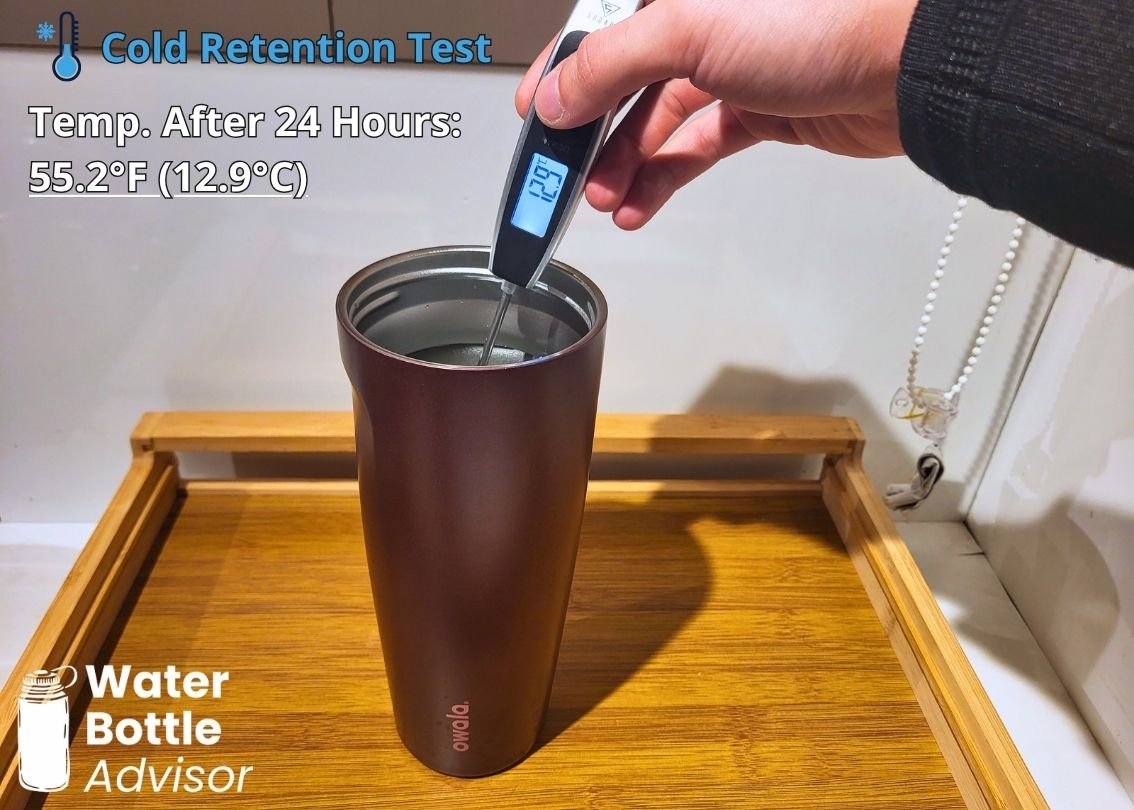
Insulation is another strong point. In my test, the water went from 33.8°F / 1°C to 55.2°F / 12.9°C after 24 hours, with no ice inside. That’s a very strong result, especially for a bottle that focuses so much on drinking comfort and portability.
And then there are the colors. Owala knows what it’s doing here. The regular colors are already fun, and the limited editions can make choosing one annoyingly difficult!
If the lid and drinking experience are your top priorities, the Owala FreeSip Sway is the bottle I’d pick first. It’s practical, easy to carry, well insulated, and the FreeSip spout is still one of the smartest lid designs I’ve used.
You can read the full breakdown in my Owala FreeSip Sway review.
Best Smart Water Bottle: WaterH BOOST
KEY FEATURES
PROS
CONS
If you’ve never heard of smart water bottles, yes, they are a thing. And yes, at first it sounds like one of those products nobody asked for. Then I used the WaterH BOOST and it won me over.
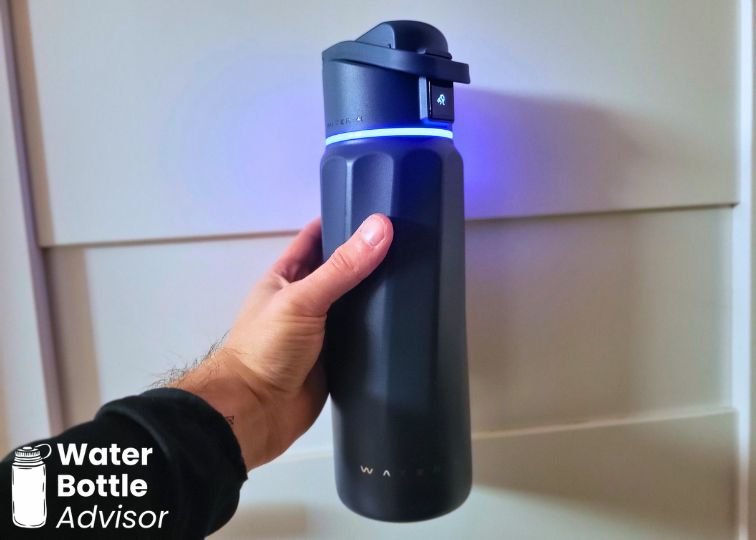
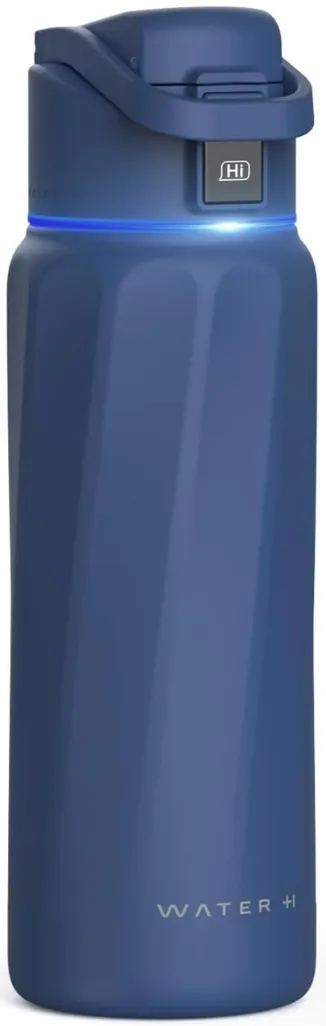
The main feature is hydration tracking. The bottle reminds you to drink by lighting up, and it connects to an app where you can see how much water you’ve had during the day. You can also check your hydration stats over longer periods, including monthly and yearly views.
That part is more useful than I expected. I remember checking my monthly stats and thinking, “Well, that’s not great”. It’s one thing to tell yourself you should drink more water. It’s another thing to see the numbers right there in the app.
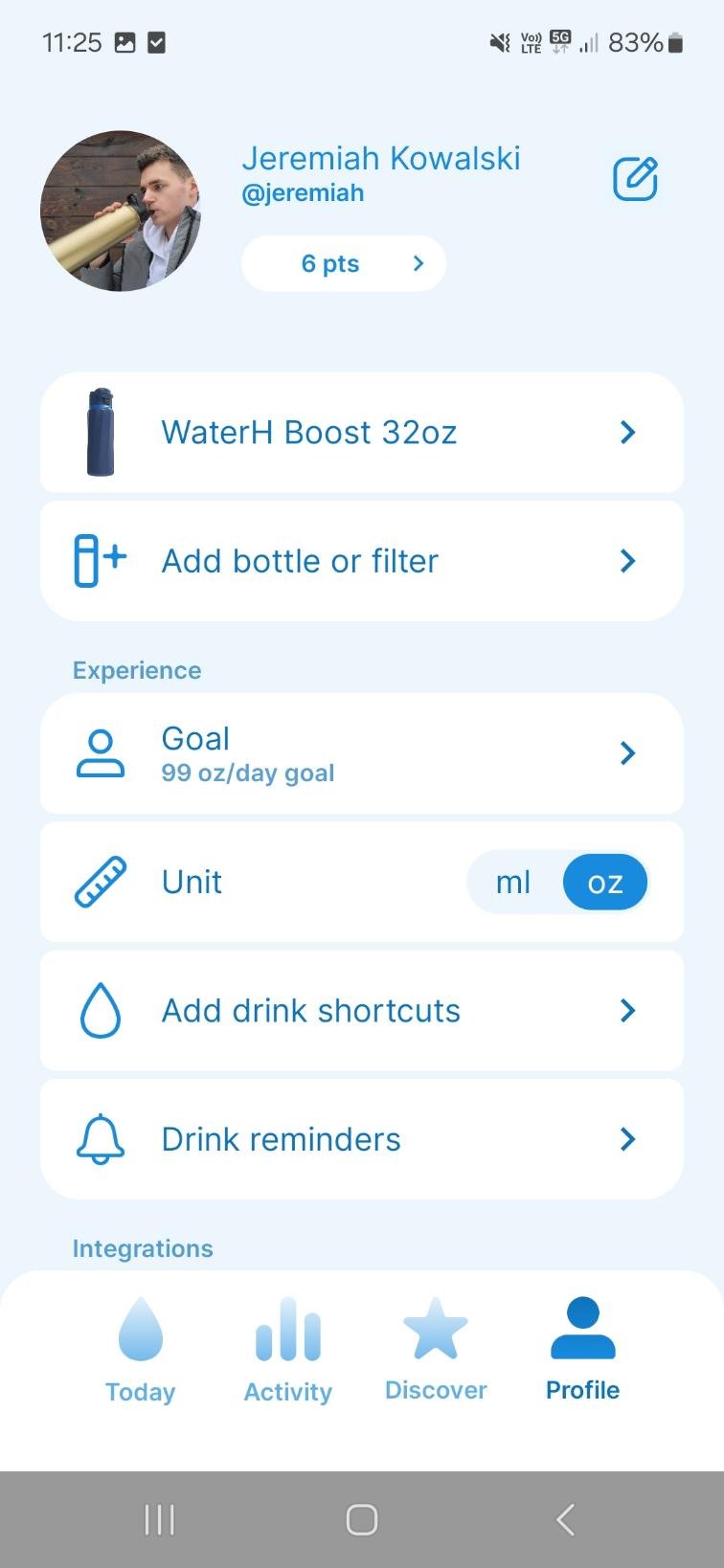
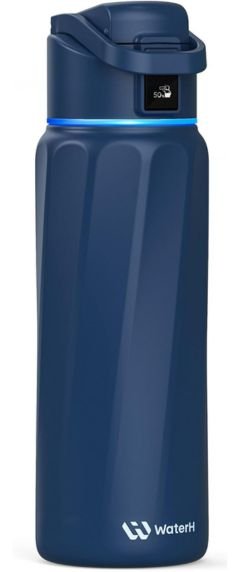
There’s even a small touchscreen on the lid. It greets you, shows the battery level, and tells you how much water is left inside. Is it necessary? Not really. Is it fun? Absolutely. It gives the bottle a high-tech feel without turning it into a complicated gadget.
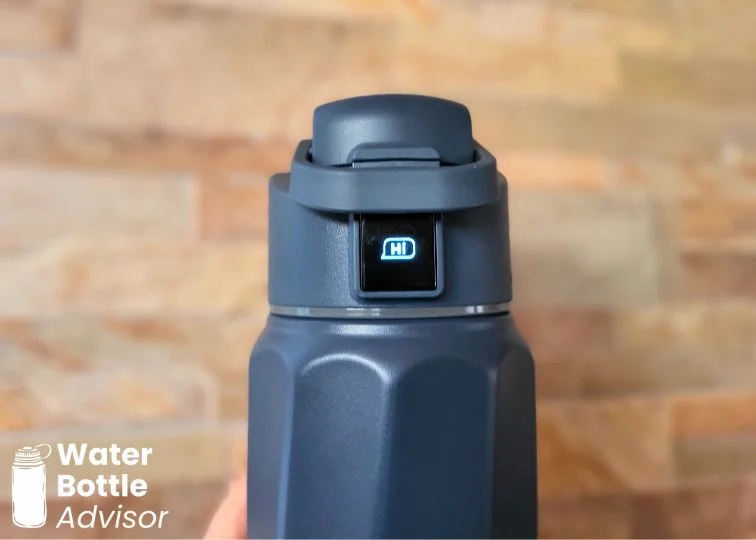
The WaterH BOOST is not just a bottle with lights and an app. It’s also seriously well insulated.
It can handle both cold and hot drinks, which already makes it more versatile than many bottles in this category. In my cold retention test, the water went from 33.8°F / 1°C to just 47.3°F / 8.5°C after 24 hours. That is an excellent result. Some thermoses I’ve tested don’t perform that well.
For heat retention, the water temperature dropped from 190.4°F / 88°C to 135.9°F / 57.7°C after 12 hours. Again, that’s an excellent result.
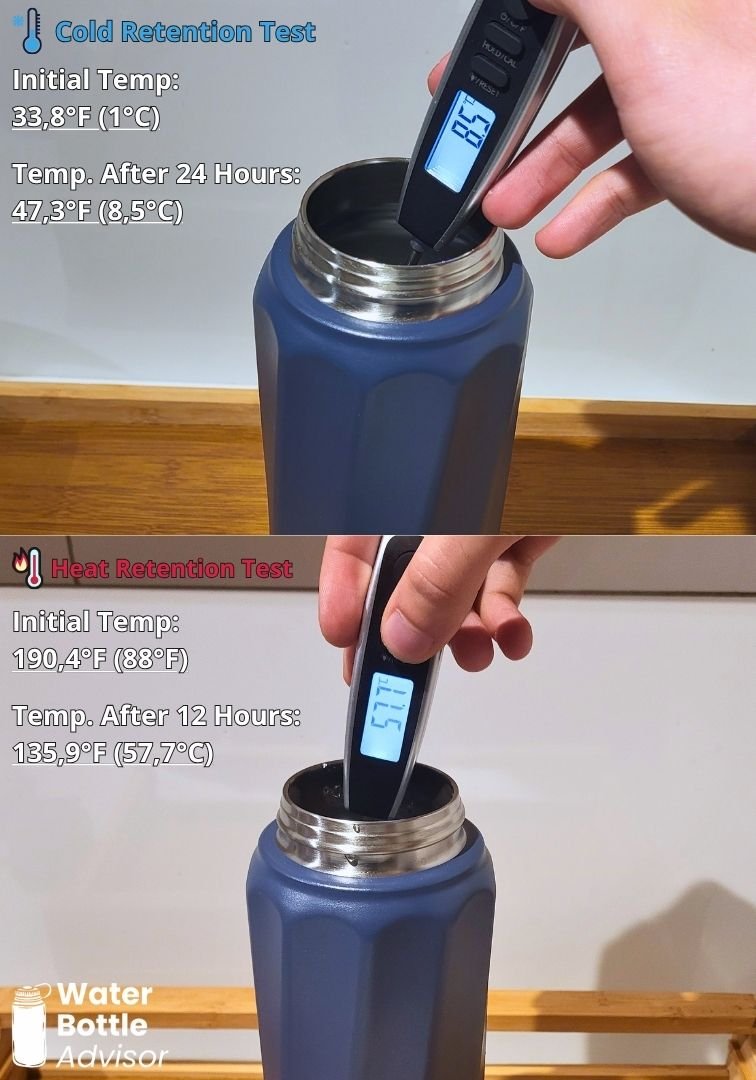
The lid has a two-finger handle, and I like how it covers the button to help prevent accidental spills.
And since there are electronics involved, water resistance matters too. The WaterH BOOST is waterproof and comes with an IPX7 rating, which means it can survive being fully submerged in up to 1 meter / 3.3 feet of fresh water for up to 30 minutes without internal damage.
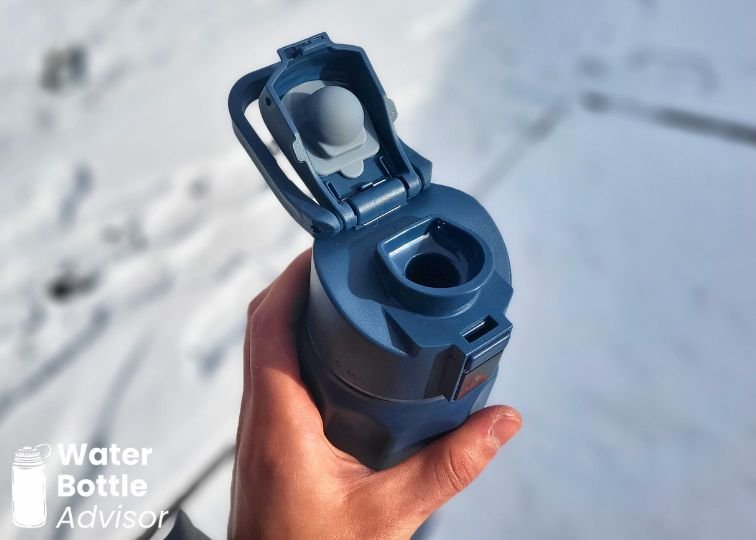
And then there’s the design. This bottle looks different in the best way. The slightly edged walls help with grip, the touchscreen makes it feel modern, and the glowing ring under the lid adds a nice touch.
At $55 for the 32 oz size, it’s not cheap. And for many people, a smart water bottle will be too much. Fair enough. Not everyone needs an app-connected bottle telling them to drink water.
But I don’t regret buying it. The WaterH BOOST is fun to use, looks great, tracks hydration, and still performs like a proper insulated bottle. If you want something different, practical, and a little futuristic, this is the smart bottle I’d pick.
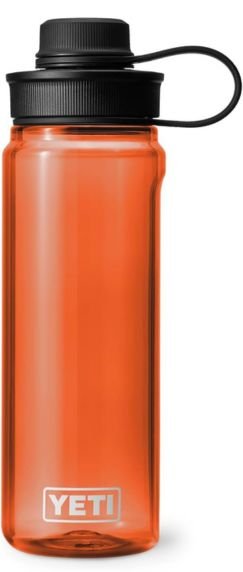
Best Plastic Bottle: YETI Yonder
KEY FEATURES
PROS
CONS
I try to limit how much plastic I use, especially with things that touch my water every day. Still, there are a few plastic bottles I’m comfortable using, and the YETI Yonder is one of them.
It’s BPA-free, feels well made, and I’ve never had that cheap plastic taste in my water. That already puts it ahead of many plastic bottles I’ve tested.
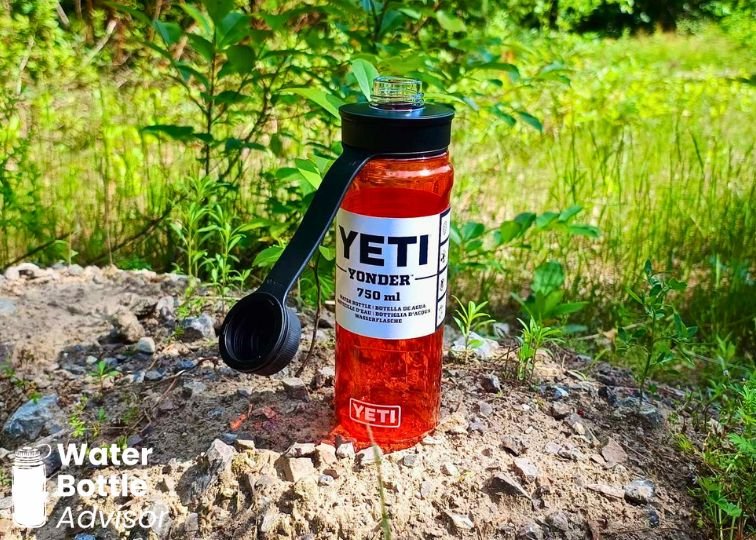
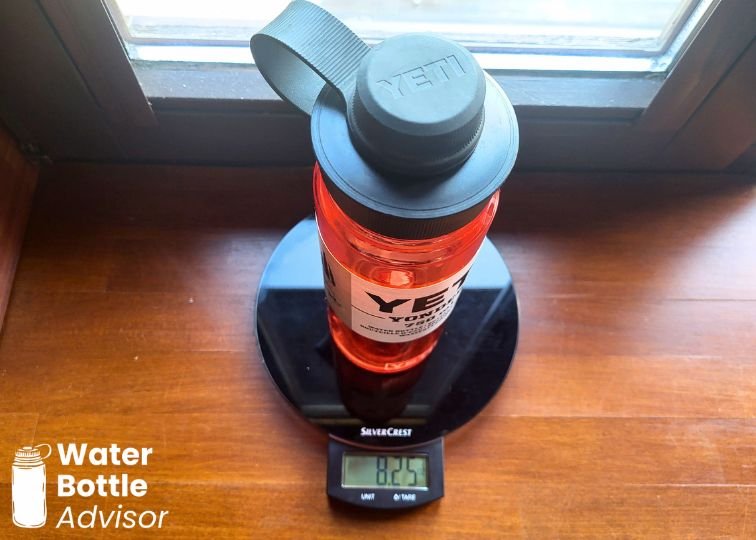
The biggest advantage, of course, is the weight. My 25 oz Yonder weighs just 8.25 oz, which feels almost strange if you’re used to carrying heavy stainless steel bottles everywhere. You pick it up and think, “Oh, right, bottles don’t always have to feel like gym equipment”. For hiking, travel, walking, or throwing into a backpack, that lightness matters.
But the real reason I like the Yonder so much is the cap.
YETI offers a few different cap options for this bottle, including a Chug Cap and a Straw Cap, but my favorite is the Tether Cap. The small cap stays attached to the lid, so you don’t have to worry about dropping it on a trail, leaving it on a bench, or watching it roll under a car seat. Small thing, yes. Very useful thing, also yes.
The carry loop is brilliant. It’s soft, comfortable, and fits two fingers nicely. A lot of bottle loops feel stiff or awkward, but this one is actually pleasant to use.
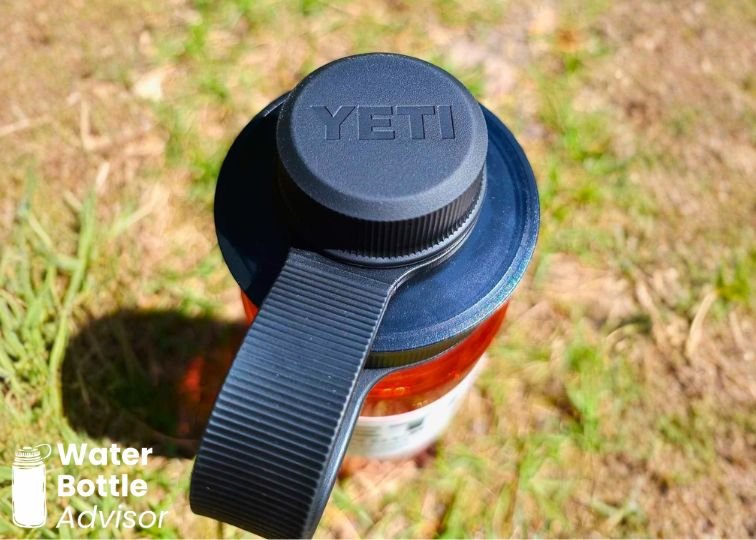
Under the cap, there’s a chug-style spout with a strong flow rate and you can drink quickly without water splashing all over your face. The cap and lid also have textured surfaces, which helps a lot when your hands are wet or sweaty. Smooth caps can be annoying to open, and this one avoids that problem.
There is one obvious drawback: it’s still a plastic bottle, not an insulated one. If you fill it with very cold water or ice, it will sweat. The bottle itself is leakproof in my testing, but condensation is a different story. Toss it into a bag with ice-cold water inside, and the outside of the bottle can still make things damp.
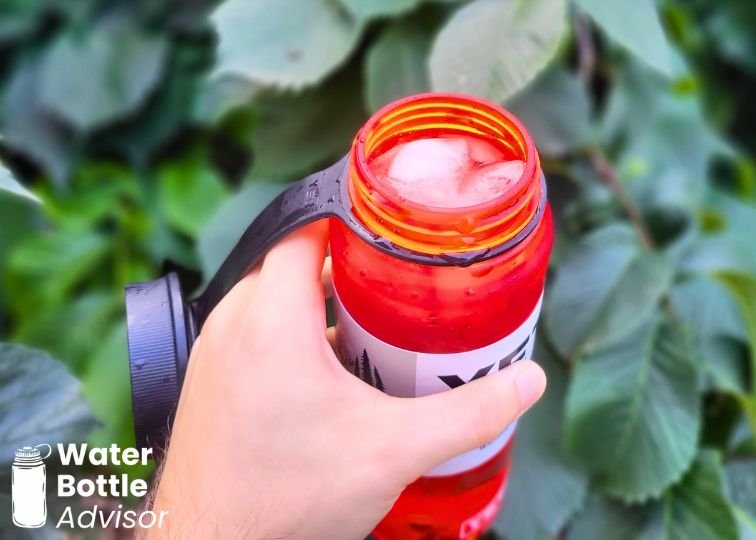
I paid $25 for the 25 oz size, and I think that’s a fair price for what you get. It’s light, practical, easy to carry, and the Tether Cap is one of the best cap designs I’ve used on a plastic bottle.
The 25 oz version is my favorite for portability, but YETI also offers 20 oz, 34 oz, and 50 oz sizes, so there’s a good chance you’ll find one that fits how you use your bottle.
Right now, the YETI Yonder is my top plastic bottle pick. You can read more about my experience with it in my full YETI Yonder review.
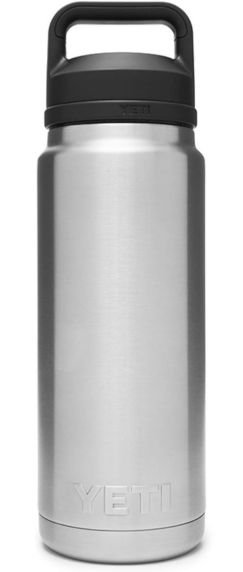
Best Durability: YETI Rambler
KEY FEATURES
PROS
CONS
YETI drinkware is tough.
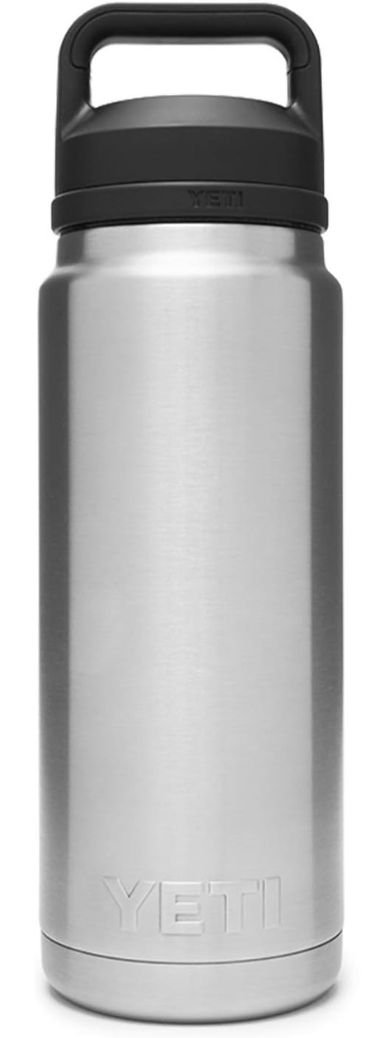
I learned that first-hand one day at a campsite when I used my YETI Rambler bottle as a hammer. Not the smartest idea, maybe, but it says a lot about the bottle. And that’s one of the main reasons I like YETI products so much. They’re built with durability in mind.
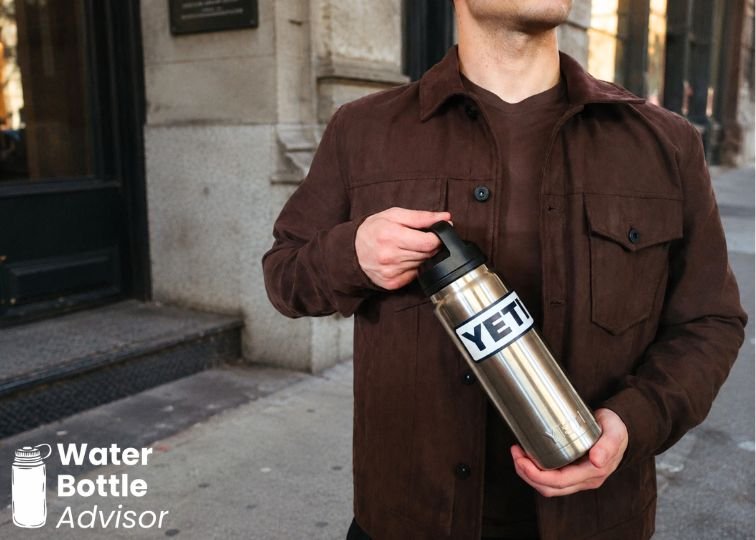
Yes, most stainless steel bottles use the same basic material – 18/8 stainless steel. But the material alone doesn’t tell the full story. Construction matters a lot too!
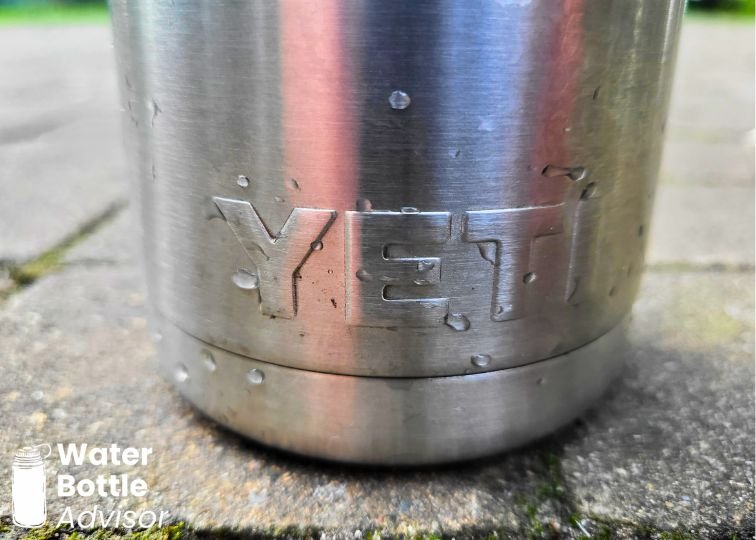
I’ve owned steel bottles that claimed to be durable, and they still ended up covered in dents after normal use. The Rambler feels different. With this bottle, dents are not something you have to worry about every time it bumps into a rock, falls over, or gets knocked around in the back of the car. Just look at that thick, rounded base. It tells you pretty quickly what kind of bottle this is.
The downside is just as obvious: the Rambler is heavy.
My 26 oz version weighs around 22 ounces when empty, and I usually consider a bottle heavy once it goes over 20 ounces. So yes, the Rambler is built for the outdoors, but you have to accept the tradeoff. Personally, I don’t always accept it. I usually skip it on longer hikes because I can feel the extra weight in my backpack.
But for camping, road trips, short outdoor walks, or rough everyday use, though? That durability comes in handy.
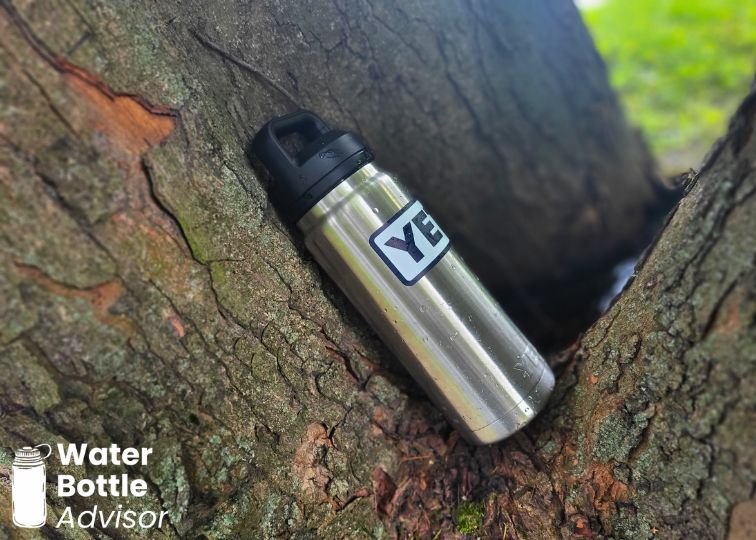
It’s also double-wall vacuum insulated, so you can expect strong cold and heat retention. I like that it handles hot drinks well too, because it means the Rambler is not just a summer bottle. You can use it in winter as well, and where I live, winter can get pretty harsh. A bottle that can keep tea or coffee warm when it’s freezing outside is not a small thing.
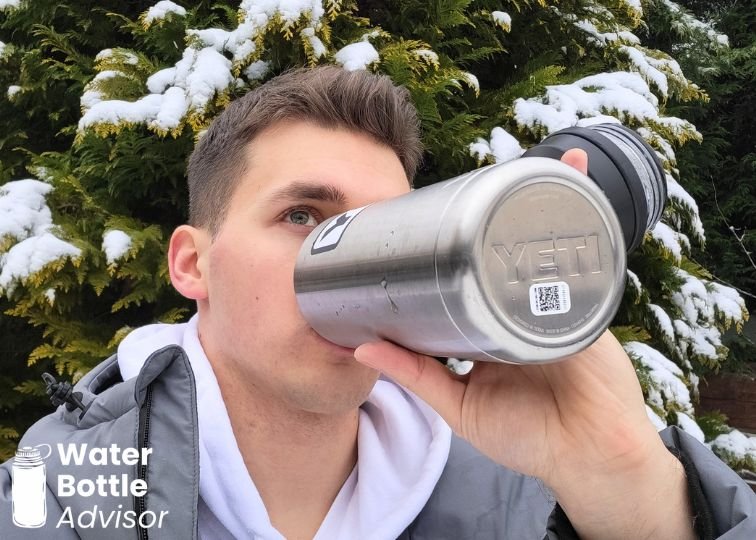
In my cold retention test, the water temperature increased from 33.8°F / 1°C to 52.3°F / 11.3°C after 24 hours. For heat retention, it dropped from 190.4°F / 88°C to 114.8°F / 46°C after 12 hours.
Is that an amazing result? Not really, but it’s still good enough for my use. Unless you’re chasing the strongest insulation possible, the Rambler gives you plenty to work with. And what it may lose in raw temperature performance, it makes up for in other areas.
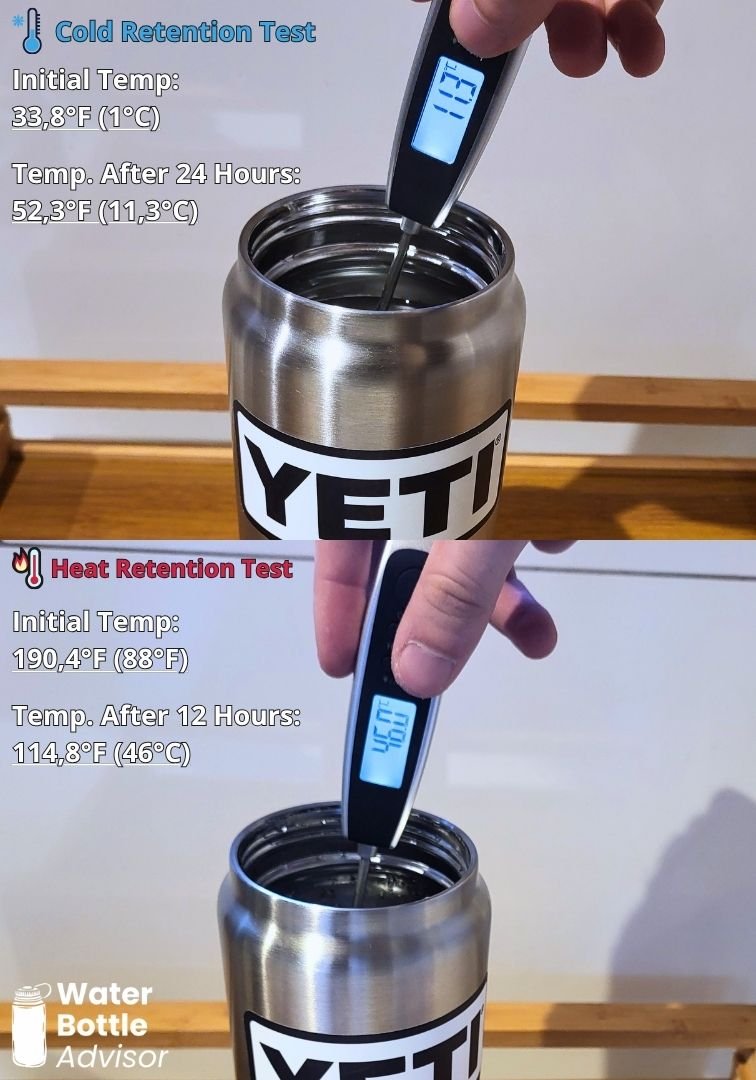
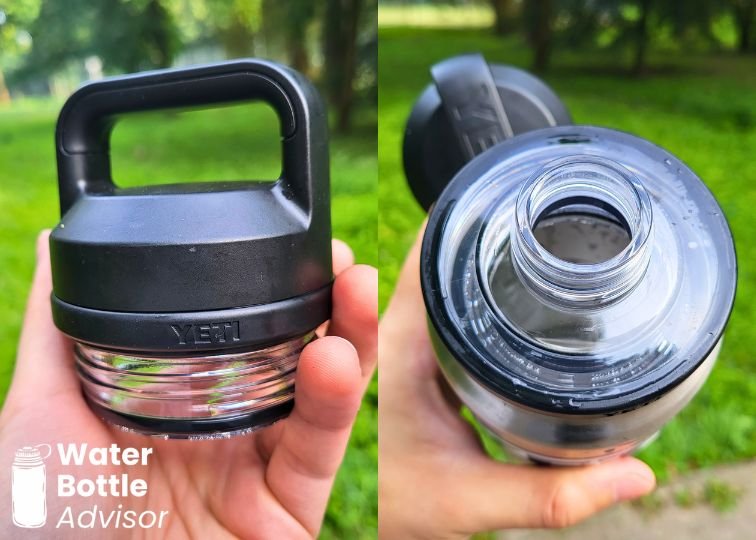
At the moment, the Rambler bottle is usually sold with one of two caps: the Chug Cap or the Straw Cap. I own both, and both work well. It mostly comes down to how you prefer to drink. The Chug Cap is better if you want a simple, controlled flow. The Straw Cap is more convenient if you like quick sipping without tipping the bottle.
One thing to know: the caps are not the quietest. Screwing them on and off can be a bit noisy, and they take some force to open and close. That’s not unusual for rugged bottles, but it’s still worth mentioning. On the plus side, the caps feel seriously durable too. They don’t come across as weak plastic parts.
If you need something dependable, reliable, well-built, and just plain tough, there aren’t many bottles that come close to the YETI Rambler.
For more details and my full experience with the bottle, check out my YETI Rambler review.
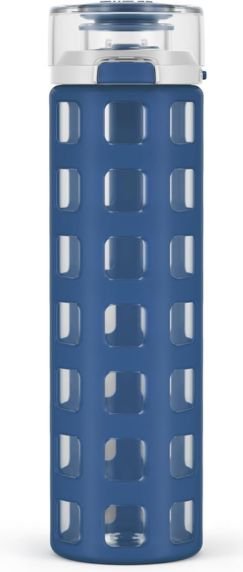
Best Glass Bottle: Ello Syndicate
KEY FEATURES
PROS
CONS
Glass is the best material if you care about clean taste. It doesn’t hold onto flavors the way some plastic bottles can, and it doesn’t give water that faint metallic edge you may notice with cheap stainless steel bottles.
The problem is durability. Finding a decent glass bottle that doesn’t feel like it could shatter five minutes after delivery is hard.
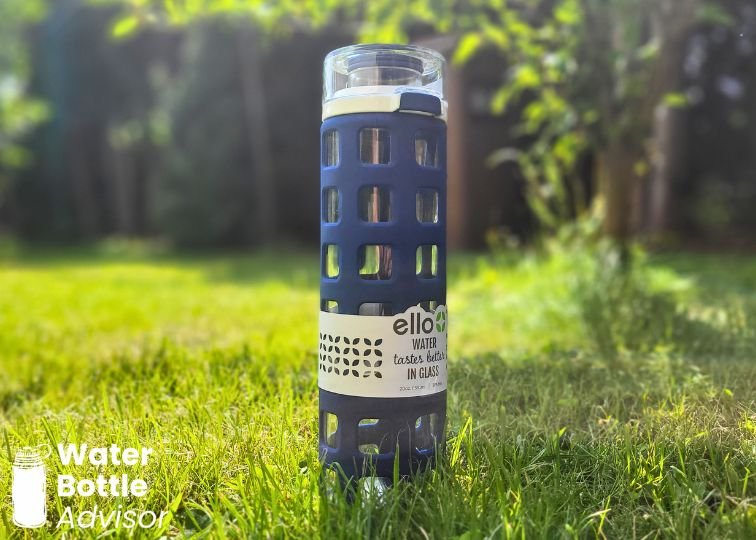
That’s why I usually look for two things: borosilicate glass and a protective sleeve. Borosilicate glass is generally tougher than regular glass, and the sleeve adds a useful layer of protection. The bottle is still fragile, of course. It’s glass, not a brick. But at least this setup gives it a better chance of surviving the occasional knock or small drop.
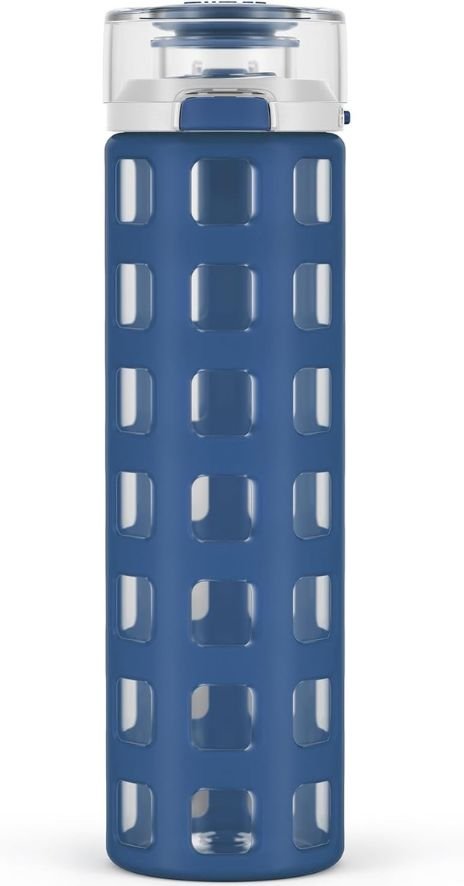
I’ve used a few glass bottles over the years, and my favorite so far is the Ello Syndicate. It’s a simple bottle, but for the $16 I paid, it offers excellent value. The 20 oz capacity is fairly modest, so you’ll probably need a few refills throughout the day. It’s also very heavy for its size, weighing 20.8 oz when empty, so I wouldn’t recommend it as an outdoor or travel bottle. To be fair, that’s true for most glass bottles. You use them mainly for taste purity, and that’s where the Ello does its job well.
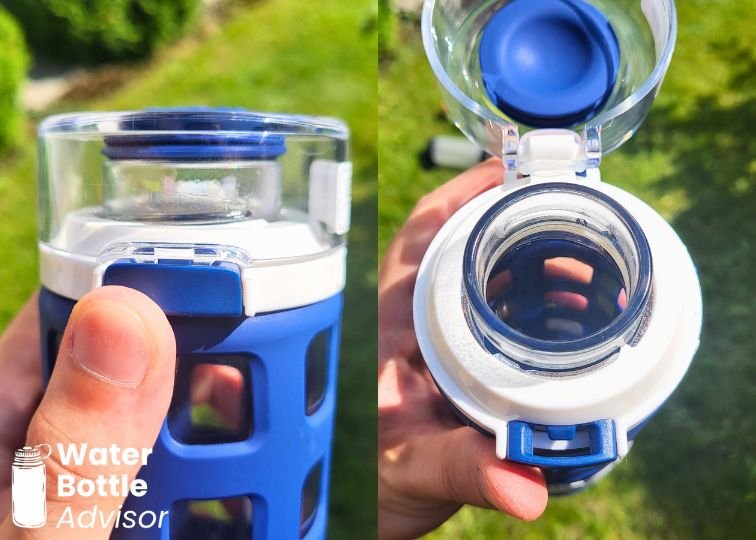
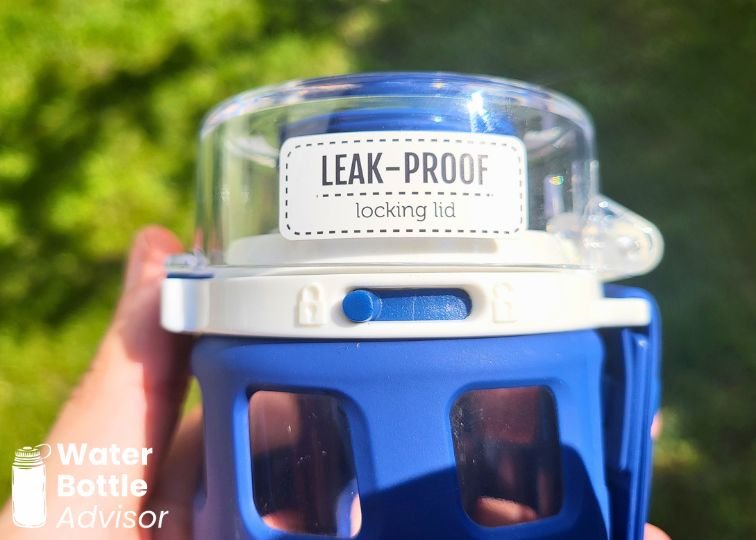
The cap is plastic, which may be a downside, but it’s BPA-free and safe to use. It also has a simple push-button opening and a locking mechanism that helps prevent accidental spills.
There isn’t much more to dress up here. It’s just a good, practical glass bottle at a fair price. And since major drinkware brands like YETI, Hydro Flask, Stanley, and Owala don’t really offer glass bottles, finding a solid option can be surprisingly difficult. The Ello Syndicate fills that gap nicely. The silicone sleeve is thick and substantial, so while the bottle is still breakable, it feels much better protected than many other glass bottles I’ve tried.
That said, the taste difference won’t matter to everyone. The high-quality stainless steel bottles in this ranking don’t leave that cheap metallic aftertaste anyway. But if you want the cleanest, most neutral taste possible, glass still has the edge. In that case, the Ello Syndicate is a solid pick.
How to Choose the Best Water Bottle?
For some people, a water bottle is just a container for water. Fair enough. That is its main job.
But when you realize that some bottles cost dozens, or even hundreds, of dollars, it becomes clear that there is more to it than just “does it hold water?” The right bottle can serve you for years. The wrong one can become annoying fast and end up forgotten in the back of a cupboard.
There are plenty of things worth considering before buying one. I covered them in more detail in my full how to choose a water bottle guide, so check that out if you want the complete breakdown. You might be surprised how many small details can make a bottle either great to use or a pain in the neck.
Here, I’ll go through the most important factors so you know what to look for before buying.
Material
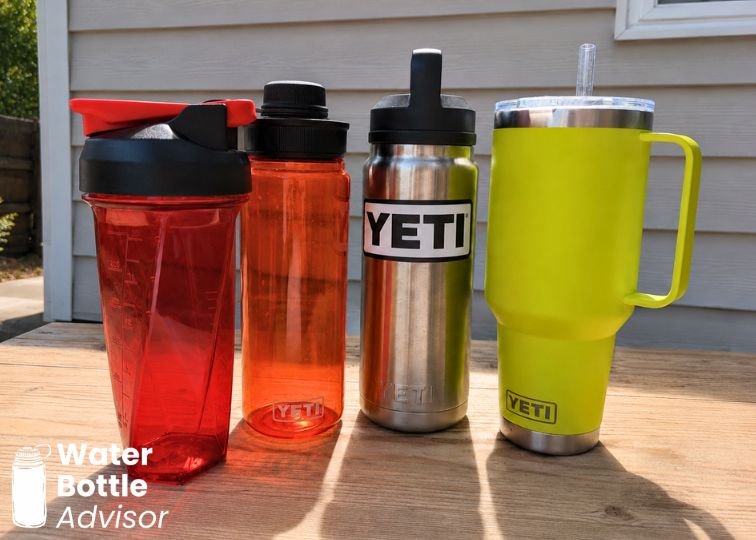
The first thing to decide is the material. There are several options, but the most common ones are stainless steel, plastic, and glass.
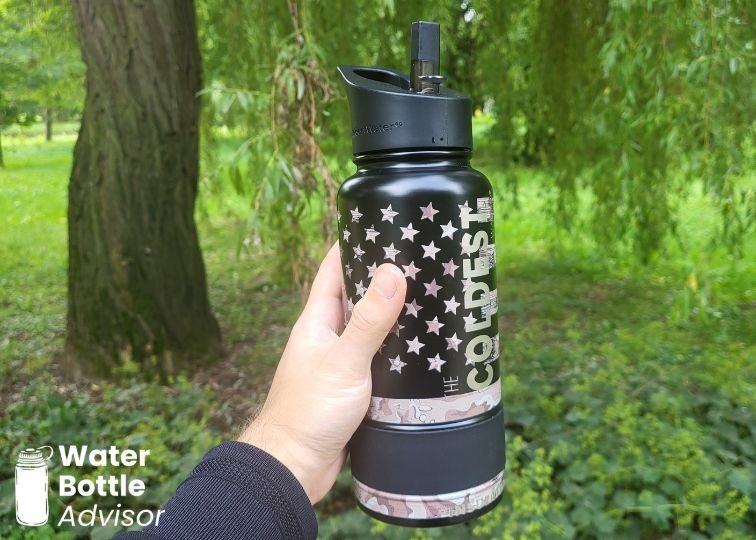
My personal choice is stainless steel, especially 18/8 stainless steel. It offers a strong balance of durability, safety, and price. It is often described as food-grade or medical-grade steel, so you do not have to worry about anything nasty leaching into your drink.
Most stainless steel bottles are also insulated, but not all of them. Some are single-walled, which means they will not keep your drink cold or hot for long. So if insulation matters to you, always check that before buying.
The main drawback of stainless steel is weight. And yes, that becomes even more obvious with half-gallon or gallon bottles. But in smaller sizes, steel bottles are usually easy enough to carry every day. For example, my favorite Coldest bottle in the 32 oz size weighs around 16 oz when empty, and that has never felt like a big deal to me.
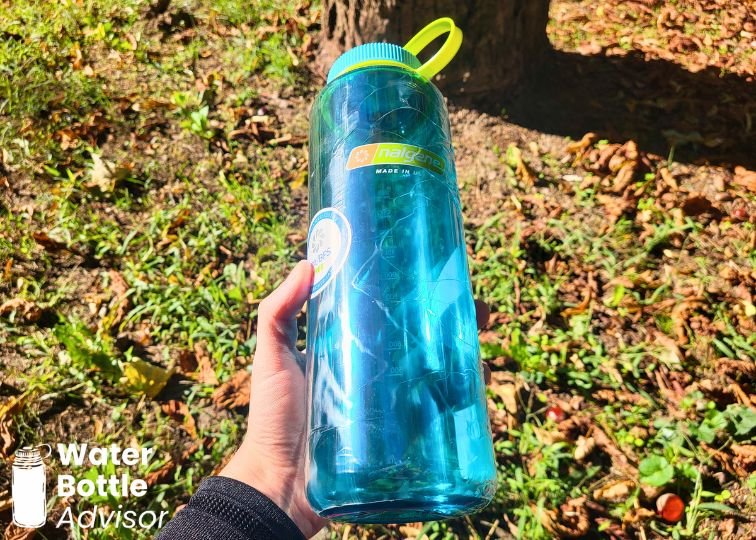
Plastic bottles are another popular option, but you need to be a bit more careful here. Some questionable plastic bottles are still being made, so it is worth doing proper research. If you want a plastic bottle, look for clear information from the brand about it being free from BPA, BPS, and phthalates.
Reputable brands like YETI and Nalgene are among the most trusted names in the plastic bottle space.
That said, a good plastic bottle can last for years. My favorite type of plastic for bottles is Tritan, because it is seriously tough. There is a reason you see people carrying the same Nalgene Tritan bottles for 10 years or more. They just keep going.
Then there is glass.
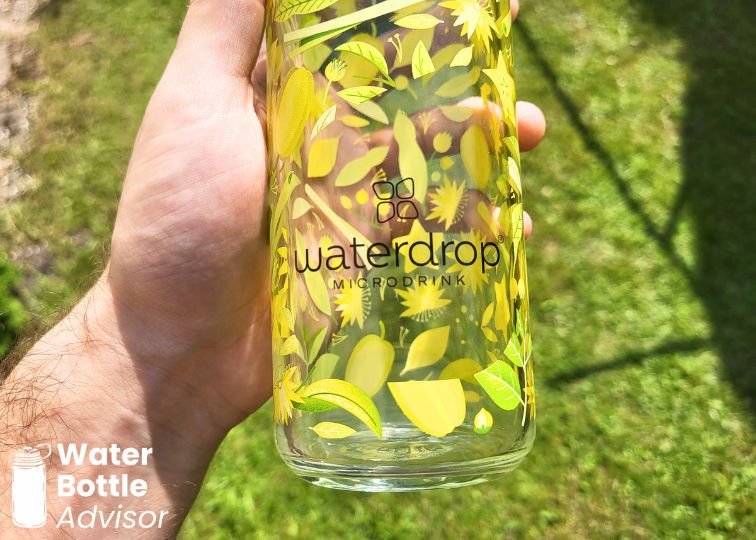
If you want a glass bottle, I would always go for borosilicate glass, since it is more resistant to breaking than regular glass. Still, glass is fragile. Many glass bottles also cost a premium, and even if they come with a warranty, accidental drops are rarely covered.
That is why I use glass bottles the least. But they do have their place, especially at home, at the office, or in other stationary settings. Glass is well known for taste purity, so if you are sensitive to flavors or smells, it can be a great option.
There is much more to say about stainless steel, plastic, and glass, not to mention more unique materials like copper, titanium, or aluminum. If you want the full comparison, check out my best water bottle materials guide.
Size
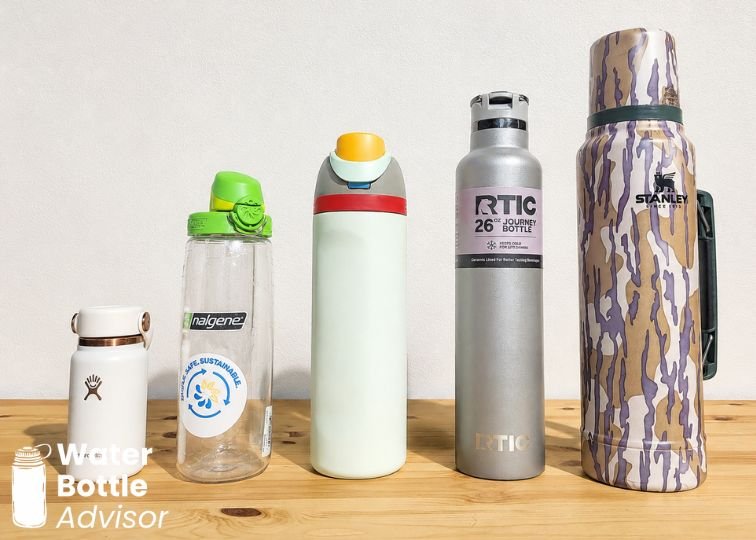
Size is where many buyers get stuck. It is not always obvious what capacity will fit your lifestyle best, so I wrote a separate guide on water bottle sizes where I break them down into categories. But in short, I think there are five main size groups:
Micro: 5–15 oz
Small: 16–24 oz
Medium: 25–39 oz
Large: 40–63 oz
Jugs: 64–128 oz
Each category has its place, but micro bottles and jugs are usually for very specific situations.
For most people, the sweet spot is versatility. You want a size that works in as many situations as possible. For me, that has always been the medium category, especially the classic 32 oz size.
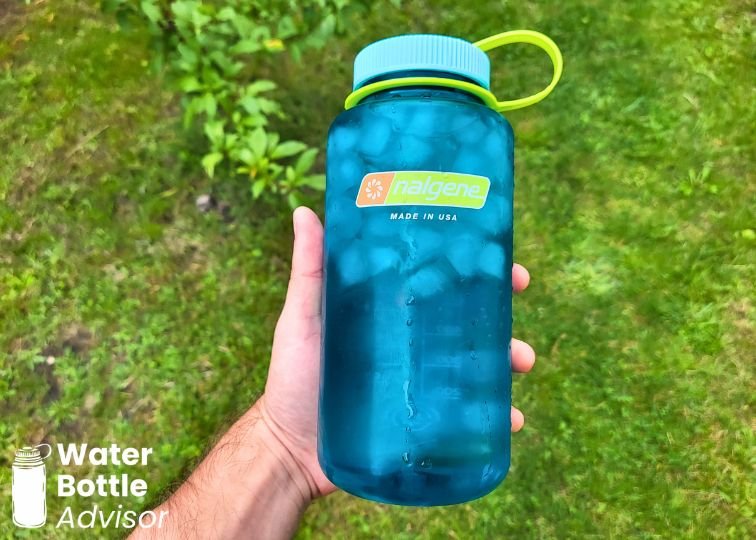
Most bottles I have owned are around this size, and there is a reason for that. They are simply the most practical all-rounders.
A 32 oz bottle may look big at first if you are used to smaller bottles, but once you switch, it is hard to go back. You get a good balance of capacity and weight, you do not have to refill it constantly, and it is still portable enough for daily use without feeling like a burden.
The 24 oz size is my second favorite. I often take that size outdoors, especially on hikes, because it is a bit easier to carry while still holding enough water for shorter trips.
Portability
Portability is one of those things people often overlook. I get it. It is not the most exciting feature on the spec sheet.
But once you start carrying a bottle every day, it matters a lot.
For me, portability is a big deal because I move around quite a bit. If a bottle is awkward to carry, too heavy, or missing a decent handle, it starts to annoy me quickly.
Weight is the first thing to check. I have noticed that once a bottle weighs more than 20 oz when empty, I start to feel it in my hand or backpack. That does not mean heavier bottles are bad, but you should know what you are signing up for.
The handle also matters a lot. There are several types: side handles, loops, hooks, and lid handles. For maximum portability, I prefer a lid handle, especially a bucket-style handle that fits four fingers. That may sound oddly specific, but it makes a real difference.
A good handle can save the day when your hands are full. It gives you a firm grip and lets you carry the bottle in a natural position. Side handles, on the other hand, often tire my hand after just a few minutes.
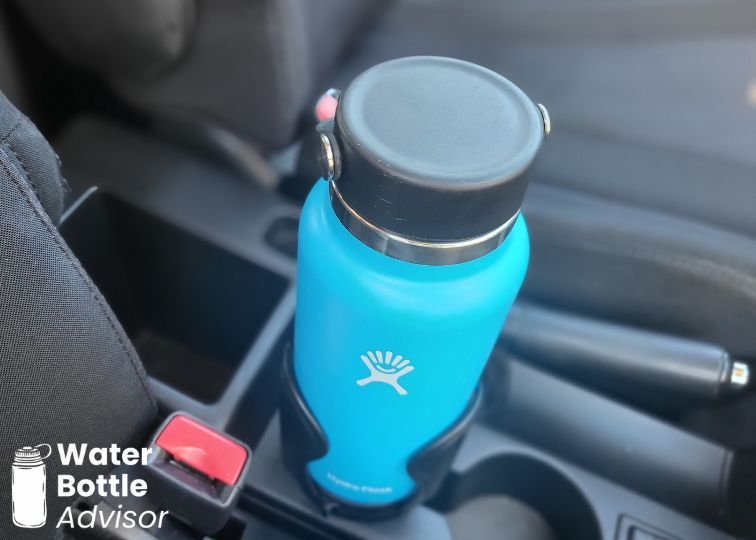
Car cup holder compatibility is another useful detail.
It is not always a dealbreaker if a bottle does not fit in a cup holder, but if you spend a lot of time driving, it is definitely nice to have. Most car cup holders are around 3 to 3.5 inches in diameter, so I recommend measuring yours before buying.
If you cannot measure it, a safe bet is to choose a bottle under 3 inches in diameter. That gives you a much better chance of it fitting in most cars.
Final Thoughts
After testing 100+ bottles, I still haven’t found one that ticks every box. A bottle like that may not exist.
So instead of chasing a unicorn, it makes more sense to start with your priorities. Do you need something lightweight? Built for work, travel, hiking? Or maybe you want something a little different? Innovative?
That’s why I divided this ranking into specific categories. It should make it easier to find a bottle that actually fits your needs and the way you’ll use it.
I hope this ranking helped you narrow things down. Don’t rush the decision. Think about where and how you plan to use the bottle, then choose the one that makes the most sense for you.

Jeremiah Kowalski
Jeremiah Kowalski is a drinkware product researcher who has personally tested 50+ reusable water bottles, tumblers, mugs, and filtration systems from leading brands. He focuses on real-world performance, durability, and safety to help readers choose drinkware that actually fits their daily hydration needs.