
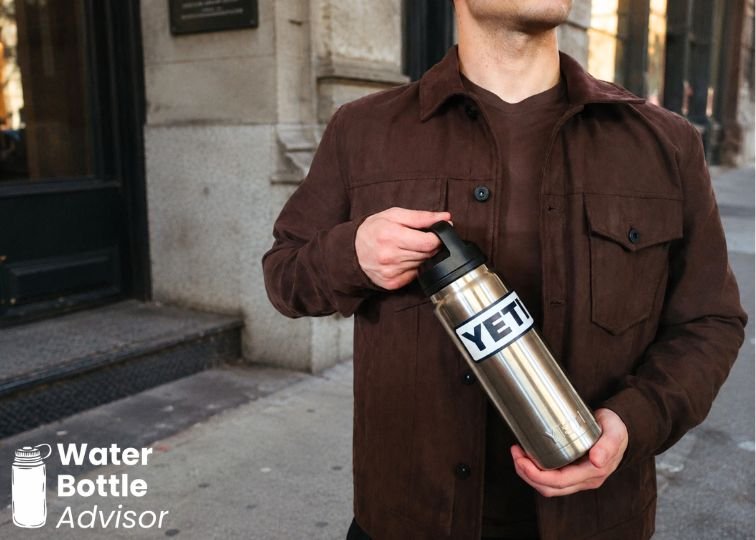
The YETI Rambler is not the lightest bottle I own. It is not the cheapest. It is also not the best-insulated bottle I have tested.
So why do I still like it so much?
Because after more than two years of daily use, trips, drops, scratches, and the kind of casual abuse that would make a thinner bottle file a formal complaint, my Rambler still looks almost new. That is the whole point of this bottle.
It is not trying to be the sleek, ultralight, “barely there” water bottle you take on a 20-mile hike. It is more like the bottle you throw into the back of a truck, take camping, bring fishing, knock against rocks, and then pick up like nothing happened.
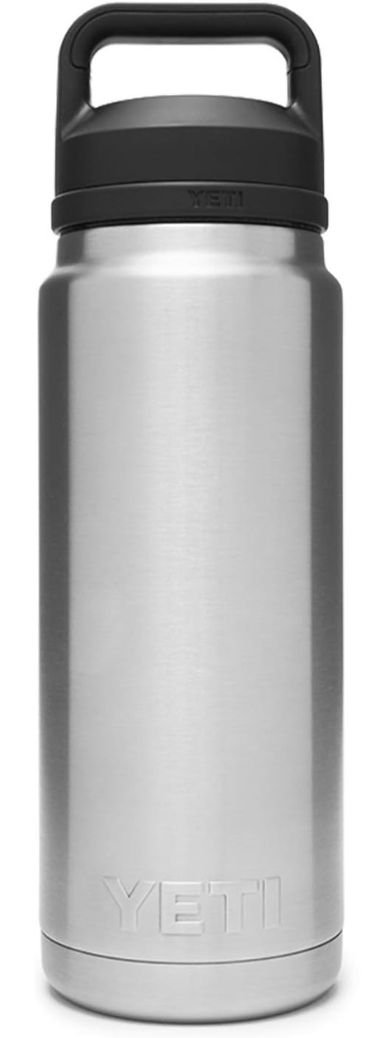
I have the 26 oz version, which I think is the sweet spot in the lineup. YETI sells the Rambler in several sizes, including 18, 26, 36, 46, and 64 oz, but anything larger than 26 oz starts getting too heavy for my taste. And even the 26 oz is not exactly featherweight.
Still, if durability is high on your list, the Rambler makes a very strong case for itself.
Some of the links on this page are affiliate links. This means that if you click on one of the links and make a purchase, I may earn a small commission at no additional cost to you.
KEY FEATURES
PROS
CONS
Insulation
Let’s start with the part where the YETI Rambler is good, but not magical.
In my cold retention test, the water went from 33.8°F (1°C) to 52.3°F (11.3°C) after 24 hours. That is decent. Not industry-leading, but definitely useful in real life.
For hot drinks, I tested it from 190.4°F (88°C) to 114.8°F (46°C) after 12 hours.
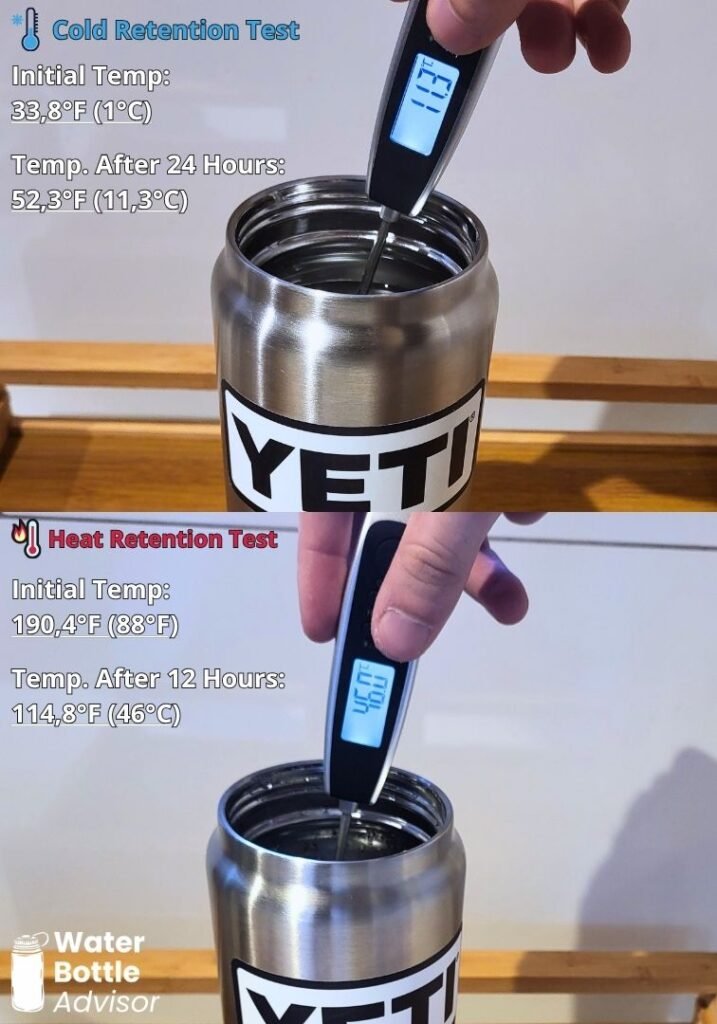
For my use, that is enough. I care more about whether the bottle survives daily abuse than whether my water is two degrees colder at hour 18. Some people will care about that. I respect those people. I am not one of them.
Durability
The Rambler is the most durable bottle I own. That is its biggest selling point, and in my experience, it delivers.
The material is the standard 18/8 stainless steel used by many good bottles, but the construction feels different. Heavier. More reinforced. More serious. When you compare it side by side with a lighter stainless steel bottle, the Rambler feels like it was built with fewer compromises.
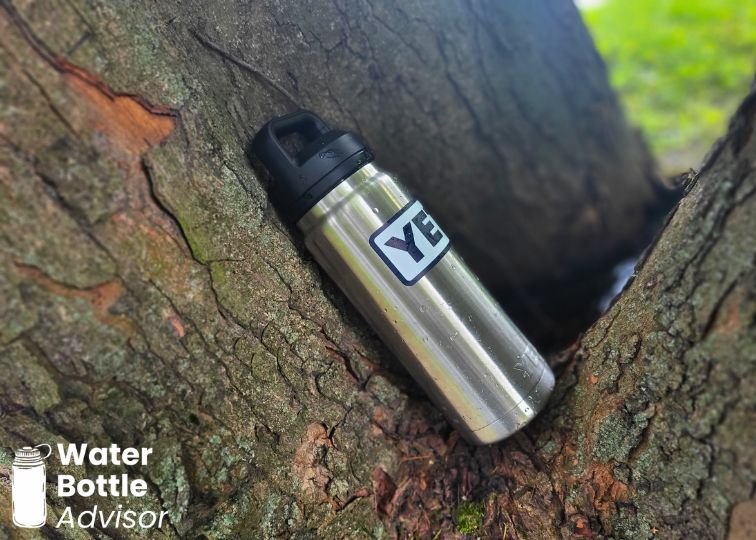
My guess is that YETI uses more material in high-stress areas, or simply makes the walls thicker. I could not find the exact manufacturing details, so I will not pretend to know the secret recipe. But the result is easy to feel.
Of course, steel is still steel. Someone can say, “My Rambler dented, so it is not durable”. Fair enough, but no stainless steel bottle is indestructible. If you hit it hard enough, drop it from high enough, or land it on the wrong edge, it can dent. That does not mean it is fragile. It means physics showed up and did its job.
I own the bare stainless steel version, but I would recommend the powder-coated version to most people. The coating helps hide random scratches, improves grip, and makes the bottle less slippery in the hand. The bare steel version looks great, but it can slip more easily, especially if your hands are wet.
Oh, and the caps are made from BPA-free plastic, but they feel bombproof, just like the steel body.
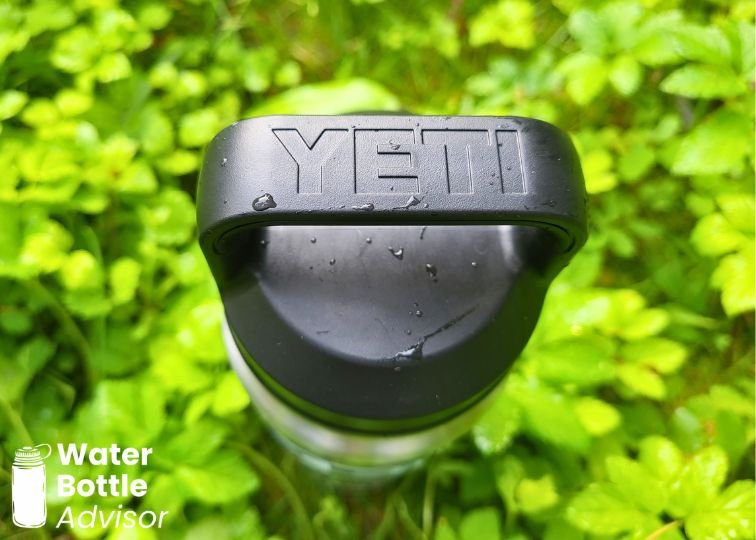
YETI gives the Rambler a 5-year warranty. That is not lifetime coverage like you get from some brands such as Stanley, Hydro Flask, or Owala, but it is still generous. And based on how mine has held up after more than two years, I would expect it to last well beyond those five years.
Portability
Here is where things get more complicated.
The 26 oz Rambler weighs 21.5 oz when empty. For me, a bottle becomes heavy once it crosses the 20 oz mark, and the Rambler steps over that line with work boots on.
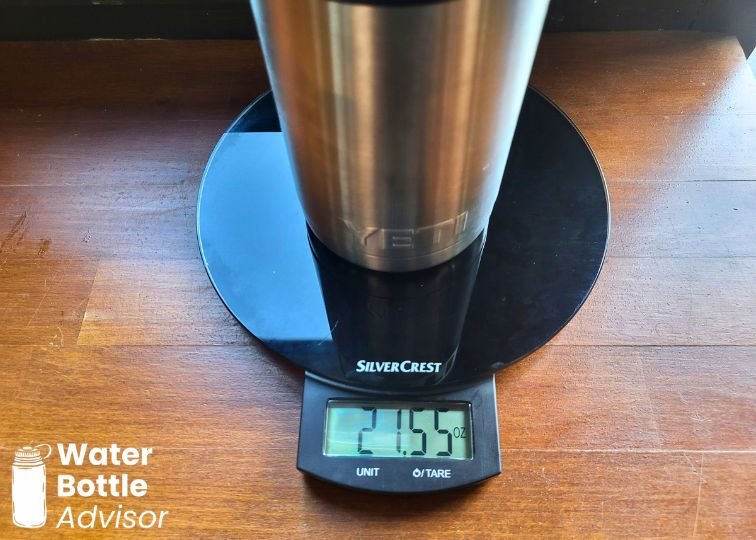
To put that weight into perspective, it is roughly in the neighborhood of a basketball or a small laptop. Not outrageous, but you notice it. Fill it with water, and suddenly it is not something you casually forget in your backpack. Your shoulder will send a reminder.
This is why I do not recommend the Rambler for longer hikes. If I know I will be walking for hours, I usually reach for something lighter like Hydro Flask Trail Series.
But it’s not all that bad – the chug cap helps with portability because the upper part has a handle. It fits three fingers, which makes it easy to carry around.
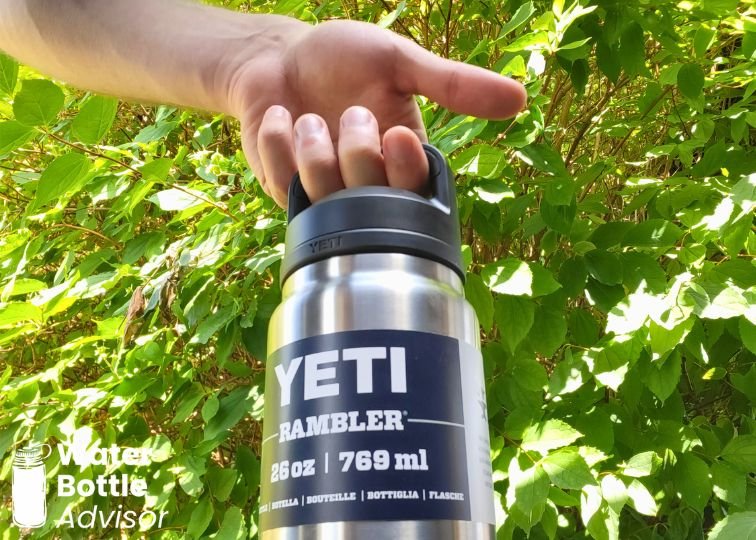
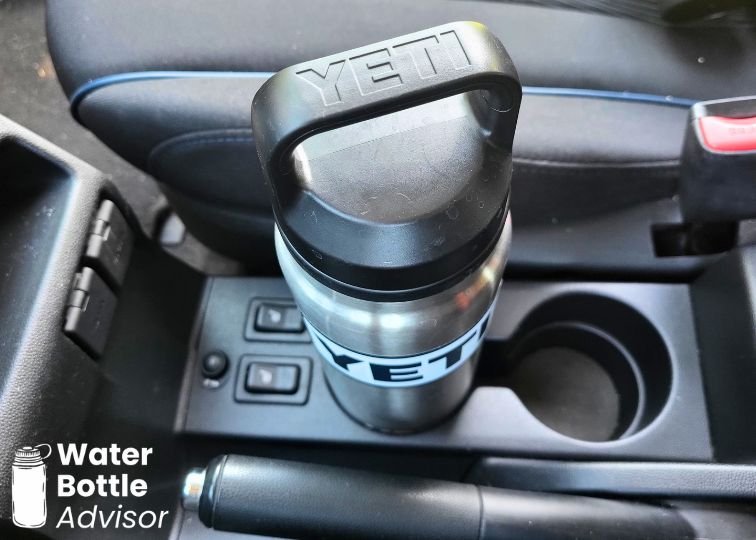
The bottle’s diameter can be a problem for some. The 26 oz Rambler is chunky, with a diameter of more than 3 inches. That means it will not fit in most standard car cup holders. The 18 oz version might fit better since it is around 3 inches in diameter, but then you lose a lot of capacity.
The practical fix is simple: buy an adjustable car cup holder adapter. They usually cost around $10 to $15, and if you spend a lot of time driving, it is a worthwhile little upgrade.
Lid Usability
YETI gives you a choice between the chug cap and the straw cap. I use both, and both work well. It really comes down to how you prefer to drink.
I like the chug cap because, well, I like chugging. Not in an aggressive “hydration challenge” way, just in the normal way where you want a good flow of water.
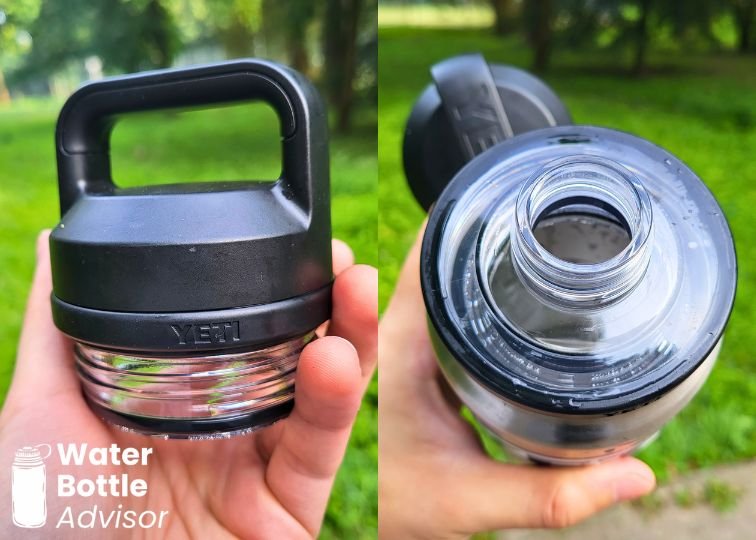
The chug cap has two main parts. The upper part twists off easily and has the carry handle. Under that, there is a lower part with a spout. The spout size is excellent. It gives you a good flow rate, but it is also narrow enough that you can seal it with your lips and avoid splashes.
You can drink directly from the wide mouth if you want, but the splash potential is very real.
There are two downsides, though.
First, the lower part of the chug cap can be hard to unscrew if you tighten it too much. The walls are thin, so they do not give you the best grip. The upper part is easy to remove, but that lower section can occasionally make you question your hand strength.
Second, the caps are noisy. More noisy than the caps on other bottles I own. In most places, this is no big deal. But in a quiet library, people may turn their heads when you open or close it.
Ease of Cleaning
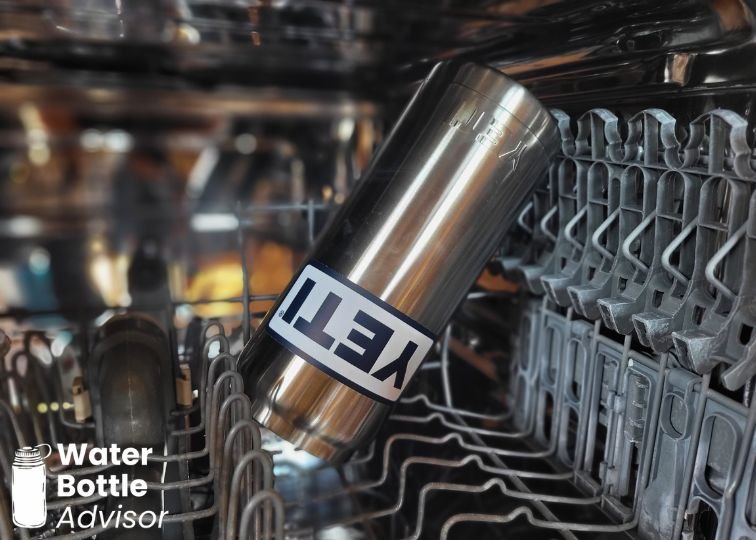
The Rambler bottle is dishwasher safe and easy to clean by hand because it has a wide mouth. That makes a big difference. Narrow-mouth bottles can feel like, well, trying to clean a chimney with a toothbrush!
Still, I recommend buying a long bottle brush. The opening is wide, but I still cannot comfortably reach the bottom with my hand.
The chug cap needs a bit more attention. There are two gaskets, and you should clean around them properly. They are not the easiest to remove, but with something small like a toothpick, it is doable pretty quickly.
This is worth doing every now and then, especially if you drink anything besides water. Coffee, tea, flavored drinks, electrolyte mixes, all of these can leave residue in places you do not see at first. The Rambler is simple, but simple does not mean maintenance-free.
Versatility
The Rambler is not the bottle I would choose for every situation. If you are an ultralight hiker or very sensitive to weight, skip it. You will probably find it too heavy. For commuting with a small bag, it may feel bulky. For car use, the cup holder issue is annoying unless you buy an adapter.
This bottle is built for people who do not want to baby their gear. It belongs outdoors, in trucks, on boats, at campsites, on job sites, and anywhere else where a bottle might get knocked around.
The cap options help a lot. Use the straw cap if you like sipping. Use the chug cap if you want a faster drink. Switch between them depending on the day. That flexibility is one of the things I like most about the Rambler system. But, of course, you need to pay extra for additional caps.
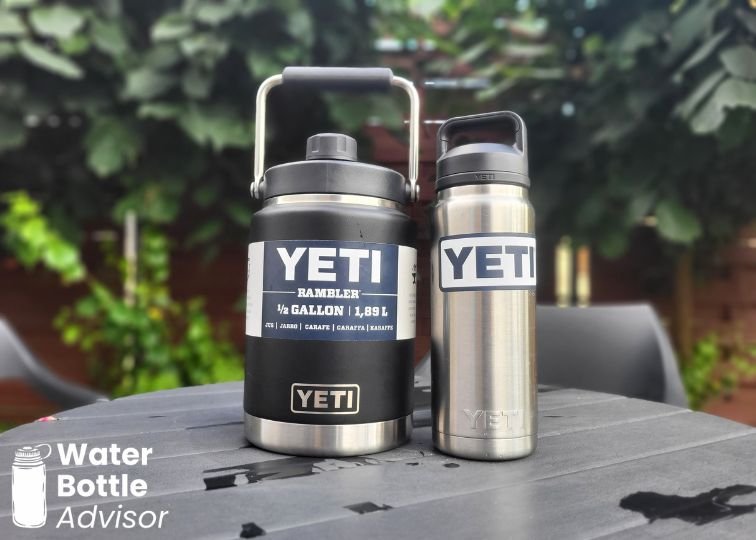
The 26 oz size also feels like the best balance to me. It gives you useful capacity without becoming ridiculous. The bigger sizes are probably great for camping, job sites, or social gatherings. I actually own a YETI Rambler half-gallon jug, and despite the heft, I find it great for situations where the extra capacity makes sense. But that thing is a bit of a unit!
Price/Value Ratio
The Rambler is expensive. I paid around $40 for the 26 oz version, which is a lot for a water bottle. There is no way around that.
Is the price justified?
Mostly, yes.
You are paying for the brand to some extent. That is true. YETI is YETI, and the logo is part of the price. But I would not say you are paying only for the logo. The quality is there. You can feel it in the body, the caps, the finish, and the way the bottle holds up over time.
Verdict
The YETI Rambler is not the best bottle for everyone and if durability is not important to you, there are better-value bottles out there that you can compare in my best water bottles ranking. You can get strong insulation, lower weight, and good daily performance for less money.
But if you want a premium bottle that can handle years of real use, the Rambler is easy to recommend. The insulation is decent, the caps are simple and durable, cleaning is straightforward, and the build quality is excellent.
YETI Rambler Bottle |
|---|
|
My Score: 4.3/5 |

Jeremiah Kowalski
Jeremiah Kowalski is a drinkware product researcher who has personally tested 50+ reusable water bottles, tumblers, mugs, and filtration systems from leading brands. He focuses on real-world performance, durability, and safety to help readers choose drinkware that actually fits their daily hydration needs.