
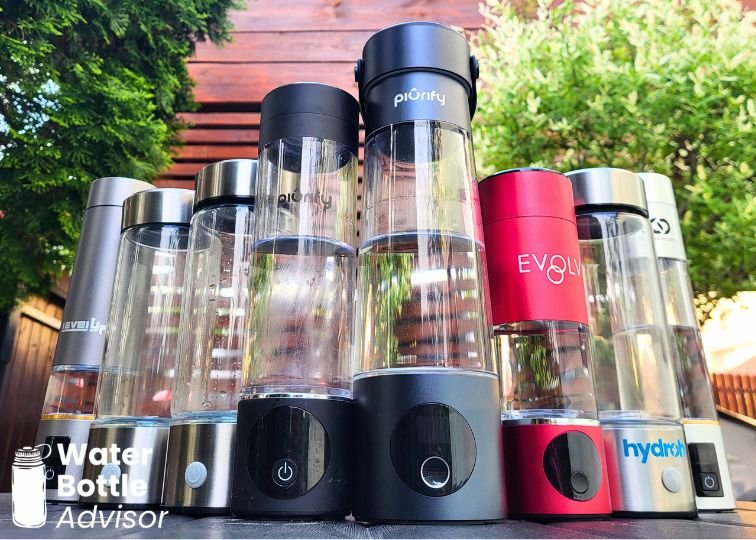
There’s a lot of noise around hydrogen water bottles. Depending on where you look online, you’ll find people calling them everything from a breakthrough to pure marketing fluff. Trying to make sense of it all on forums or review threads usually just leaves you going in circles.
So I decided to cut through that and look at it from my own angle.
I won’t drag it out: based on what I’ve tested, hydrogen bottles do produce hydrogen-rich water, and I’ve noticed some benefits over time. That said, the outcome isn’t black and white. It depends heavily on the quality of the bottle you use and whether you actually stick with it instead of treating it like a one-off experiment.
To back that up, I ran two separate tests that I’ll walk through in this article.
The first one focuses on measurement. I tested my favorite hydrogen bottle to see whether it actually produces meaningful hydrogen levels or just creates the illusion with bubbles.
The second is more personal. I’ve been drinking hydrogen water regularly since the summer of 2023, so this part is basically a long-term log of what changed (and what didn’t) over roughly three years.
Keep in mind that I’m not a scientist, and this isn’t lab research. Everything here is based on my own testing and day-to-day use. Treat it as a real-world perspective rather than a controlled study.
If you want a more academic angle, it’s worth cross-checking independent hydrogen water research before spending money on a bottle. I recommend checking out this page that collects the key studies in one place, so you don’t have to dig through PubMed or scattered papers if you want to check the research yourself.
Do Hydrogen Bottles Actually Produce Hydrogen?
It’s not easy to measure hydrogen levels in your bottle. Outside of a lab, you’re already working with limitations. The most accurate method is gas chromatography, but that’s not something a regular person has access to.
Because of that, I treat lab certificates that rely on this method as one of the main things to look for before buying any hydrogen bottle. It’s basically your only solid confirmation that a product was actually tested properly. I break down certifications in my guide on how to choose a hydrogen water bottle.
For everyday users, there are really only two practical ways to check hydrogen levels:
- Hydrogen test drops
- Hydrogen meters
Hydrogen meters can be useful for home testing, but they seem to have a measurement limit. In my case, the meters worked fairly well up to around 1700-1900 ppb, but anything above that didn’t register properly and the readings stayed almost the same no matter what bottle I tested.
So while they can help verify that a bottle is producing hydrogen, they may not give accurate results for higher-output bottles. I’ve seen people call certain bottles fake because their meter “only showed 1800 ppb”, without realizing the limitation might come from the meter itself.
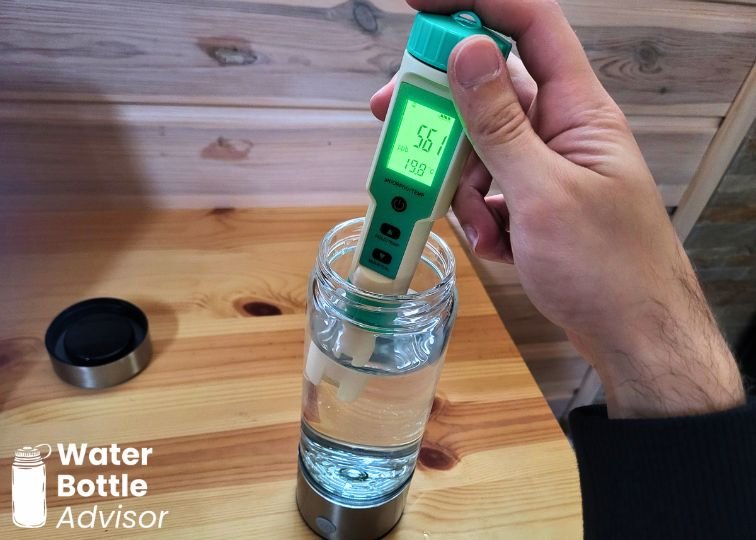
Because of those meter limitations, I mostly rely on hydrogen reagent drops instead. They’re not perfect either and also seem to max out at around 3,000 ppb, but that’s still a wider range than most hydrogen meters. If you want to verify a higher-output hydrogen bottle at home, this is probably the better option.
How this method works: each drop equals roughly 100 ppb. Once the solution stops being clear and shifts into a darker tone, you’re basically at the limit of what it can show.
I wouldn’t treat it as an exact reading tool – more like a rough indicator that the bottle works and can produce enough hydrogen to provide benefits.
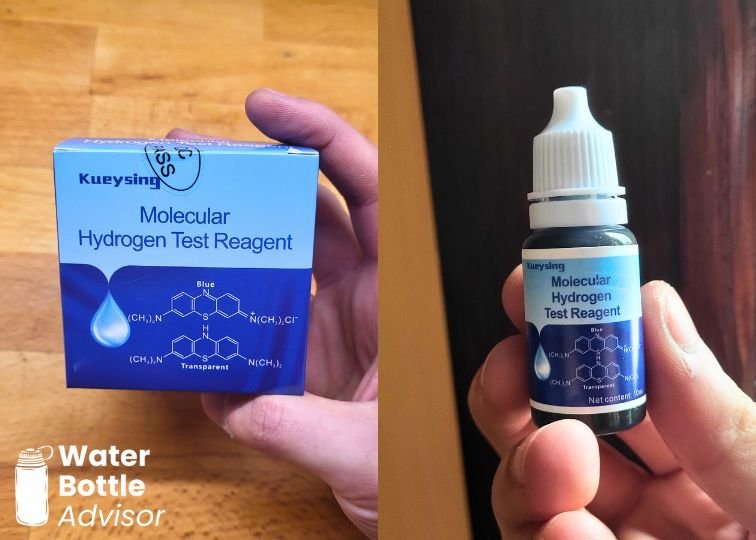
Alright, with the testing methods covered, it’s time to get into the real question: do hydrogen bottles actually produce hydrogen, or are you just paying for fancy bubbles?
Below, I’ve included three tests using the hydrogen reagent drops method:
- first, plain tap water to show how the test behaves in a baseline setup and confirm that the method actually responds as expected;
- second, my favorite Piurify Hydrogenator, which I use daily and paid around $170 for;
- and third, a budget bottle I bought for $12 to highlight the contrast and show that not all hydrogen water bottles perform the same way.
Test #1: Plain Tap Water
To make sure the hydrogen reagent drop method was actually doing something meaningful, I started with plain tap water as a baseline. After adding just 3 drops, the solution turned a deep blue, which is exactly what you’d expect when the test is working properly. With that confirmed, I moved on to testing the hydrogen bottles using the same approach.
Test #2: Piurify Hydrogenator
For this test, I ran a 20-minute cycle on my Piurify Hydrogenator. The manufacturer provides a lab certificate (based on gas chromatography) showing it can reach up to 6,290 ppb in a full cycle.
Using the hydrogen reagent drops method, I added 31 drops before the solution turned dark blue. At roughly 100 ppb per drop, that puts the result at about 3,100 ppb – meaning around 3,100 parts of hydrogen per billion parts of water.
That said, as mentioned earlier, the reagent drops method seems to hit a ceiling around the 3,000 ppb mark, so this isn’t meant as an exact measurement. It’s mainly a practical check to show the bottle is actually producing meaningful levels of hydrogen and not just placebo-level output.
The more precise lab testing on this unit (using gas chromatography) confirms it can go well beyond what this home method can reliably capture, reaching 6,000+ ppb under the right cycle conditions.
Test #3: A $12 Hydrogen Water Bottle
To show the contrast with premium options like the Piurify Hydrogenator, I also tested a $12 hydrogen bottle under the same conditions. The solution turned dark blue after just 5 drops, which puts it at roughly 500 ppb.
In practical terms, that’s only a small step above plain water – barely enough to suggest meaningful hydrogen output, let alone anything close to the higher ranges seen in stronger devices.
What this really highlights is that hydrogen bottles vary a lot in performance. Going for the cheapest option doesn’t necessarily get you into the range where most of the research and claims sit.
Improved Skin, Energy, and Other Effects I Noticed
If measuring hydrogen levels was already tricky, figuring out what actually changed in my health is even less straightforward. There’s no meter for that.
Still, a couple of changes stand out – the clearest showing up in my acne.
I’ve dealt with acne since I was around 14, and at its worst it wasn’t just the usual spots on the face. The back of my head was especially persistent, and that made things even more frustrating.
Over the years I tried quite a few things, from stronger prescription treatments like isotretinoin to more routine fixes such as specialized shampoos. Some of it worked for a while, but nothing really stuck long-term. It would calm down, then slowly creep back again.
That changed in 2023. That’s when I started drinking hydrogen water regularly. Part of what pushed me in that direction were a few studies suggesting possible links between hydrogen water, inflammation, and skin condition – acne included. I also began working with a dietitian at the same time to tighten up my diet.
To be fair, I wasn’t expecting much. But a few months in, something started to shift. The combination actually worked better than I thought it would. I’ll include a comparison below so you can judge for yourself. The second photo was taken roughly six months after I started both hydrogen water and the diet changes.
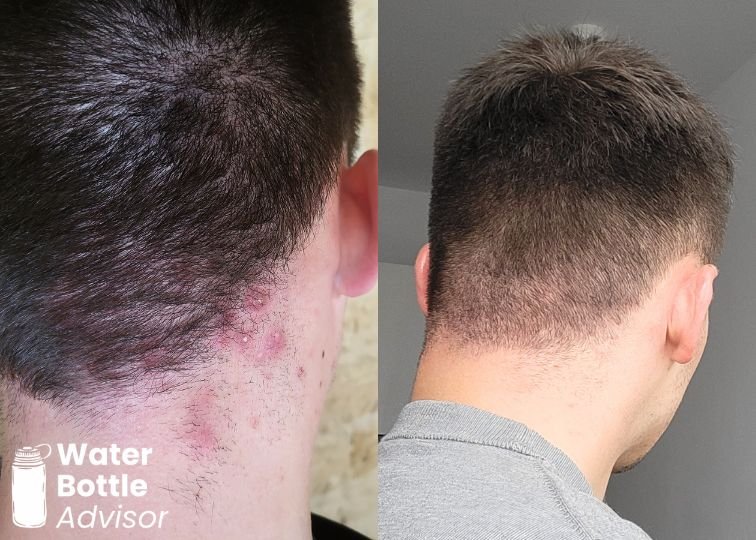
The difference is hard to ignore.
Now, the tricky part is figuring out what did what. Diet clearly played a role, no question about that. But I had worked with structured diets before, and while they helped to some extent, my skin never reached the level of clarity I have now.
That’s why, based on my experience, I lean more toward hydrogen water being a meaningful part of the change, even if it’s not the only factor in the mix.
Skin is the biggest shift, but not the only one.
Energy and stamina have also moved a bit, just in a more subtle way. I play football (soccer), so I’m fairly tuned in to how long I can hold performance during a match. For years, my ceiling was pretty consistent at around 70-80 minutes before things started dropping off.
Over time, and after about three years of drinking hydrogen water regularly, I’ve noticed I can now push closer to a full 90-minute game more often. Not always, but more consistently than before.
Still, this is where things get messy in terms of attribution. Training, conditioning, recovery, sleep – all of that matters more than anything else. So I can’t realistically isolate hydrogen water as the deciding factor. It’s just one piece sitting somewhere in the background.
Outside of that, I haven’t noticed any major changes.
There are studies suggesting possible effects on things like blood sugar or cholesterol, but my baseline in those areas has always been solid, so I don’t have much to compare against. And during those three years, I also haven’t had any significant illness episodes that would give me another clear reference point.
So overall, the picture is mixed. One strong, visible change. A couple of softer signals. And a lot of variables that make it hard to draw clean lines between cause and effect.
Does Higher Hydrogen Levels Lead to More Benefits?
One thing I found interesting during my tests was whether higher hydrogen levels (especially anything above 3,000 ppb) actually translate into stronger or faster results.
From my own experience, I can’t really back that idea up.
The most noticeable changes I saw in skin and stamina happened when I was drinking roughly 30-60 oz of hydrogen water per day, with concentrations sitting around 2,000-3,000 ppb. That range seemed to be enough to notice something over time.
At the same time, I also tested bottles that advertise up to 6,000 ppb per cycle. I kept the intake the same (again, around 30-60 oz daily) but I didn’t see any meaningful difference compared to the lower range.
Looking at research, most clinical studies don’t even go that high. They usually sit in a much tighter window of about 0.5-1.6 ppm (500-1,600 ppb). Within that range, there are signals around oxidative stress, inflammation markers, and exercise recovery. But once you’re inside that “working range”, pushing the concentration higher doesn’t seem to consistently change outcomes.
In simple terms: once there’s enough hydrogen, adding more doesn’t necessarily stack extra benefits on top.
I’m also a bit cautious whenever I see hydrogen bottles advertising extremely high ppb claims. Sometimes it feels more like a marketing hook than something that translates into real-world differences, especially if it pushes the price up without any clear added value.
To be fair, higher ppb levels don’t hurt anything. The problem is that there’s no solid evidence showing they deliver more benefits or speed things up compared to moderate, well-performing levels.
Final Verdict: Do Hydrogen Bottles Work or Are They a Scam?
After going through all the tests and looking at the numbers, it’s hard to lump every hydrogen bottle into the same “scam” bucket. That just doesn’t hold up. Hydrogen bottles I tested clearly produce dissolved hydrogen in meaningful amounts, not just bubbles in water. On that level alone, calling the whole category a scam feels off the mark.
The health side is a different story. That’s where things get less clear-cut. From my experience, I’ve noticed some positives, especially around skin appearance and general stamina over time. Still, that’s just my case. It’s not something I can promise others will replicate, and it wouldn’t be fair to present it that way.
So where does that leave us? Somewhere in the middle.
Hydrogen bottles can work, but only if you’re using a decent one and you’re actually consistent with it. Whether the benefits show up for you is less predictable and probably depends on a mix of factors beyond just the bottle itself.
For my part, I’m still using hydrogen water and keeping an eye on any long-term changes. I’ll update my findings as I go, especially if anything meaningful shifts over time.

Jeremiah Kowalski
Jeremiah Kowalski is a drinkware product researcher who has personally tested 50+ reusable water bottles, tumblers, mugs, and filtration systems from leading brands. He focuses on real-world performance, durability, and safety to help readers choose drinkware that actually fits their daily hydration needs.