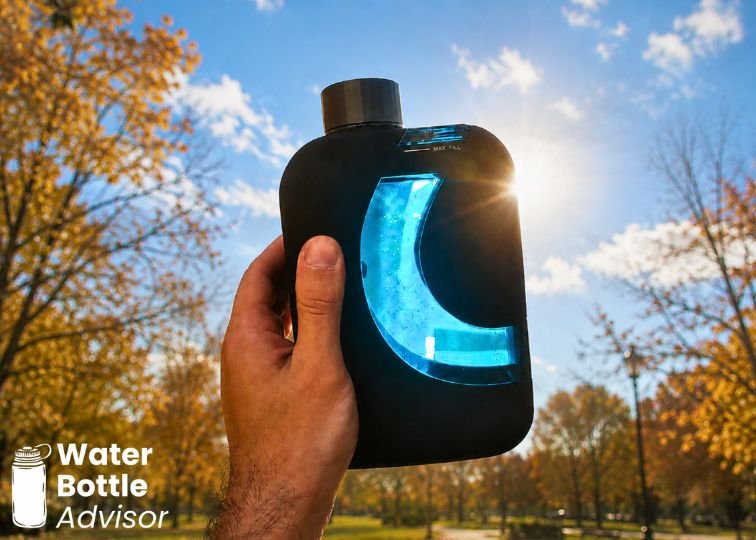

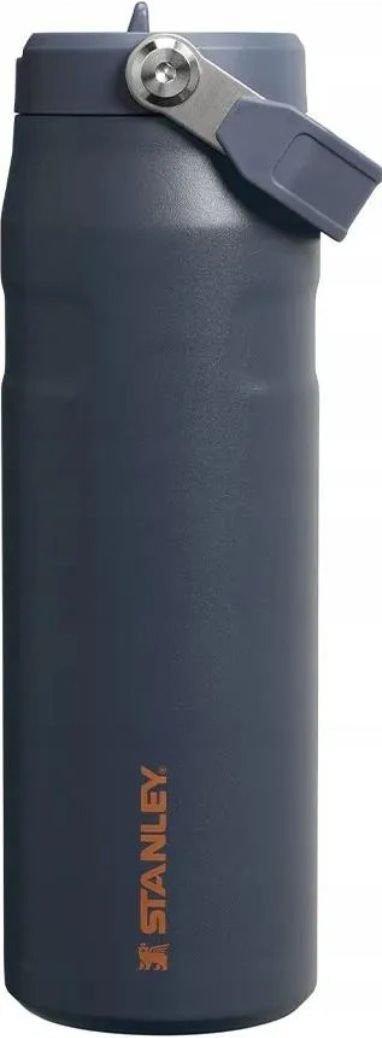
These days, Stanley is mostly associated with flashy colors and oversized tumblers. The IceFlow goes in a different direction. It’s a much more practical bottle, and that’s exactly why I ended up liking it.
I picked up the 24 oz version in the Twilight color for $35, and after using it for a while, the portability stands out the most. It’s easy to carry, fits nicely in cup holders and backpacks, and doesn’t feel bulky like some insulated bottles do.
If you want a bottle built more for everyday use than social media photos, the IceFlow is worth a look. In this review, I’ll break down what it does well, where it could be better, and which alternatives might fit you more depending on what you’re after.
Some of the links on this page are affiliate links. This means that if you click on one of the links and make a purchase, I may earn a small commission at no additional cost to you.
KEY FEATURES
PROS
CONS
Portability
Portability is where the IceFlow really earns its place.
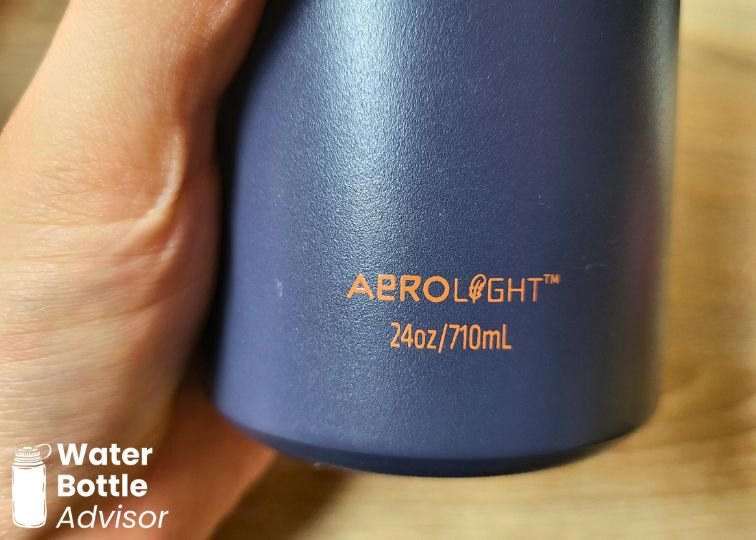
Stanley added what they call AeroLight featherweight technology, which, in simple terms, uses spun steel to shave some weight off the bottle. According to Stanley, it makes the bottle about 33% lighter than standard stainless-steel drinkware.
The idea behind spun steel is fairly straightforward: a flat sheet of steel is rotated at high speed and shaped into a hollow form. It ends up strong, durable, and lighter than you’d expect from something this solid.
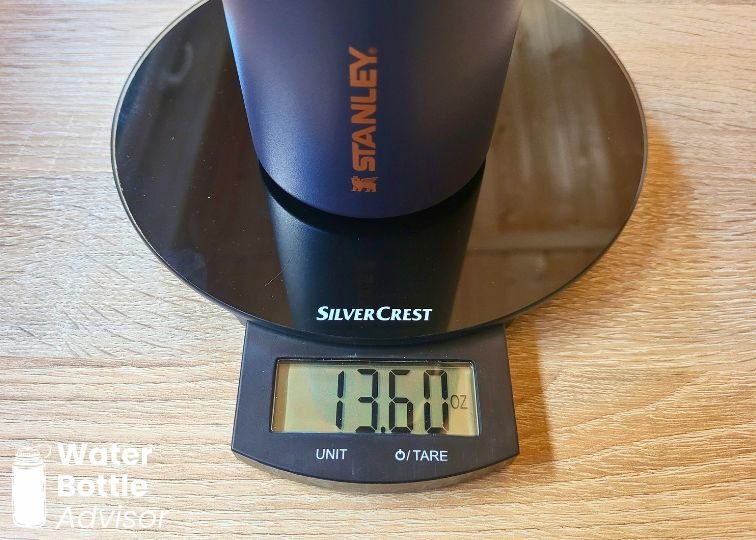
That said, the 33% figure is hard to verify from the outside. In real use, the bottle does feel light for a double-wall insulated design, but it’s not the lightest in its category. My 24 oz IceFlow comes in at around 13.6 oz empty. For comparison, my Hydro Flask Trail Series in a similar size is a few ounces lighter. So the weight reduction is noticeable, just not groundbreaking.
What does stand out more is how the bottle is actually built for carrying.
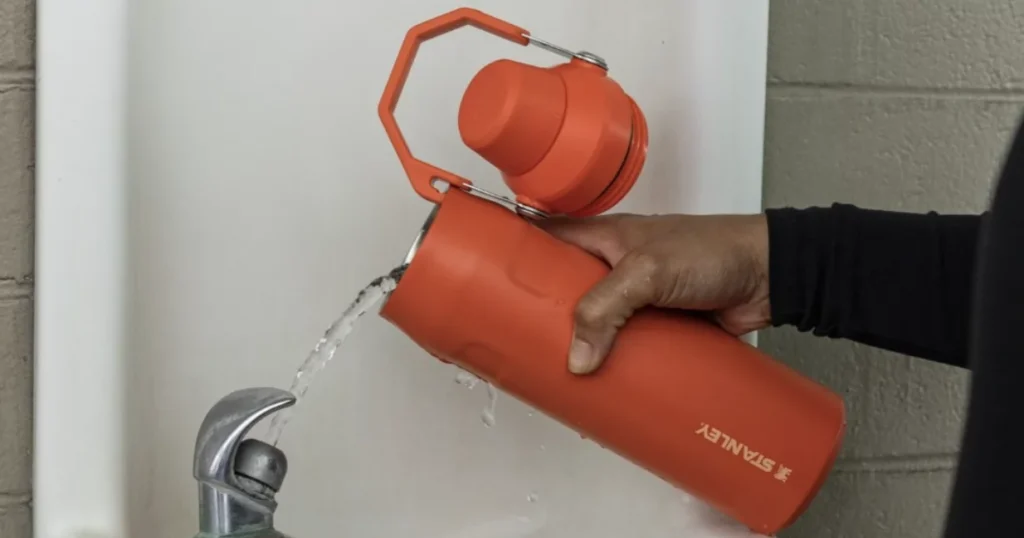
The lid handle is a small detail that ends up making a big difference. It’s shaped like a little bucket handle and easily fits four fingers. Carrying a full bottle by that handle feels far more natural than gripping the bottle itself, especially when it’s filled to the top.

Still, even without using the handle, the bottle doesn’t feel awkward in hand. The powder-coated finish gives it enough grip so it doesn’t slide around, even with wet hands. There are also subtle indents on the sides that help your fingers settle in more comfortably.
One more practical detail: the 24 oz size fits most car cup holders. The base is roughly 3 inches in diameter, which works in many standard holders. Still, it’s worth double-checking your own car setup, since some cup holders run tighter than that.
And keep in mind that the larger IceFlow sizes are bulkier, so they’re much less likely to fit properly in a standard car holder at all.
Insulation
The IceFlow is a double-wall vacuum insulated bottle, and it carries the usual Stanley reputation for keeping temperature under control. I’ve had good experiences with their insulation in the past, so expectations were already set fairly high going into this test.
I started with near-freezing water at 33.8°F (1°C). After 24 hours, it was sitting at around 54.3°F (12.4°C). No ice cubes involved at any point. So while it definitely warms up over time, it stays in that “still refreshing” range for much longer than a basic bottle would.
What stands out here is that Stanley officially claims 10 hours of cold retention without ice. In practice, it stretched well beyond that in my case. Pre-chilling the water before filling the bottle makes a big difference, and that’s where the IceFlow performs at its best – it holds onto that cold start for most of the day and then some.
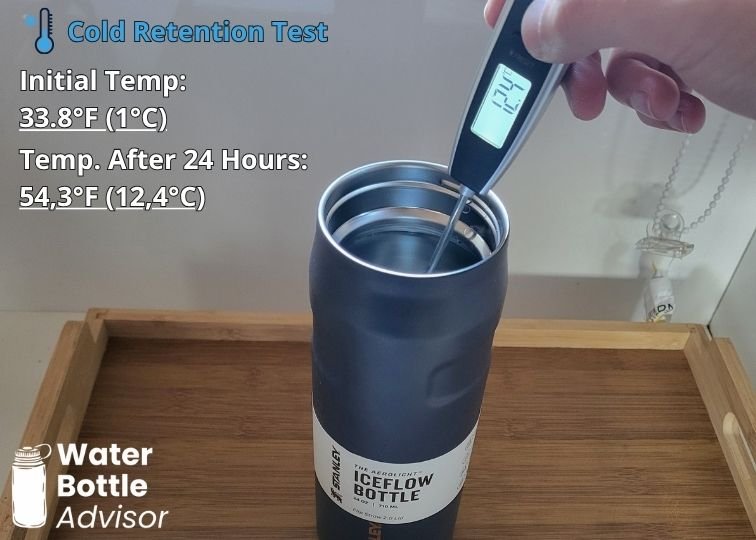
Keep in mind, though, that this test was done with the 24 oz version; Stanley also offers larger 36 oz and 50 oz sizes, which may deliver even better temperature retention thanks to the increased volume.
For hot drinks, this isn’t really the bottle for the job. Stanley doesn’t recommend it for hot liquids due to pressure build-up risks with the lid system, and that warning is worth taking seriously.
That said, for mildly warm drinks (nothing near boiling), it’s generally fine as long as you’re sensible about it.
Lid Usability
The IceFlow comes with two lid styles: a Flip Straw Lid for sipping and a Fast Flow Lid for chugging. I went with the straw version since I mostly use the bottle in the car, and that setup just works better for quick, one-handed drinking. If you’re into straw bottles, this one will feel familiar right away.
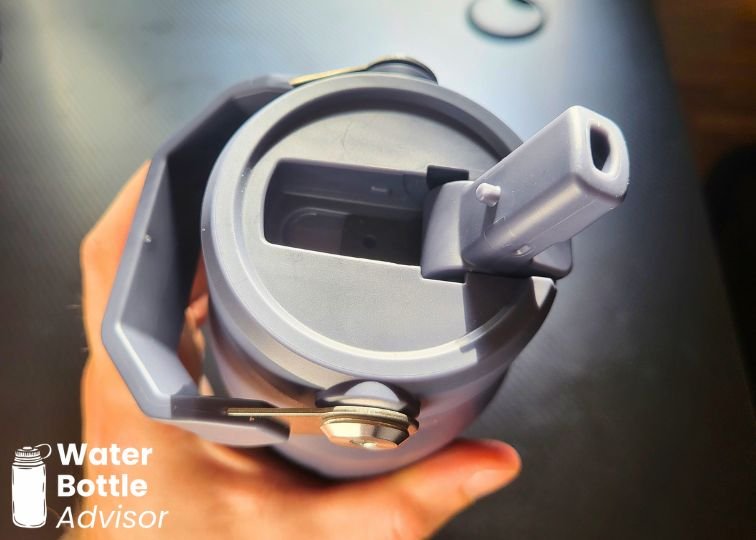
There’s not much of a learning curve here. The mouthpiece folds down with a solid click, which signals it’s closed properly and helps avoid accidental spills.
To open it, there’s a small tab in the middle of the straw that lets you flip it up without touching the drinking surface.
It’s not trying to reinvent anything, and that’s probably the point.
If you prefer bigger gulps over sipping, the Fast Flow Lid is the other option. It keeps the same handle setup but swaps the straw for a wide opening, so you can drink quickly without unscrewing anything.
Both lids are priced the same, so it really just comes down to how you like to drink your water – steady sips or quick chugs.
Ease of Cleaning
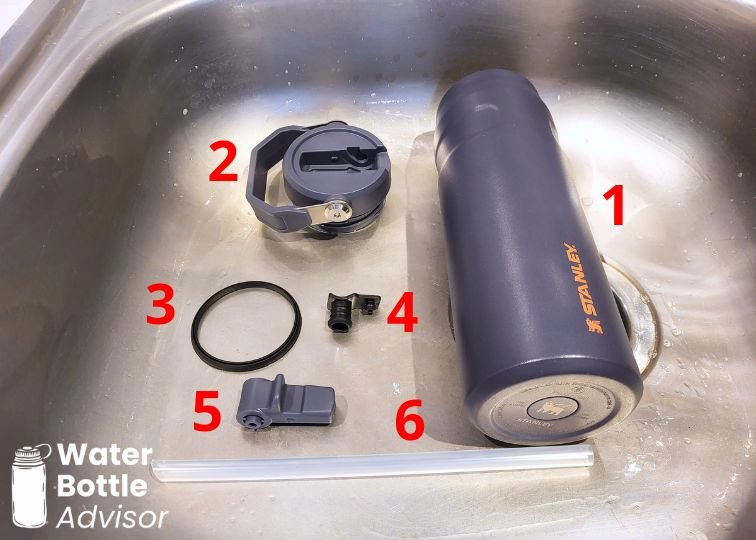
Cleaning the IceFlow doesn’t turn into a full weekend project, which is always a good sign. Still, there are 6 parts to deal with:
- the bottle itself,
- the straw,
- the lid,
- the spout,
- the gasket on the threads,
- and the straw gasket.
If you use the IceFlow only for water, regular cleaning is pretty simple. But if you fill it with anything else, I recommend taking the whole lid apart and cleaning every piece properly. Sweet drinks, smoothies, coffee, or anything with flavor can leave residue in places you won’t notice at first. Then one day you open the bottle and it smells like regret.
There is one annoying part, though: removing the spout takes more force than you might expect. The first time I did it, it felt like I was about to break something. But don’t worry, it is designed to come out.
To remove the spout, place it at about a 45-degree angle and pull firmly. You need to remove it to access the straw gasket underneath. Once everything is clean, put the spout back at the same 45-degree angle and push it into the grooves until it sits securely again.
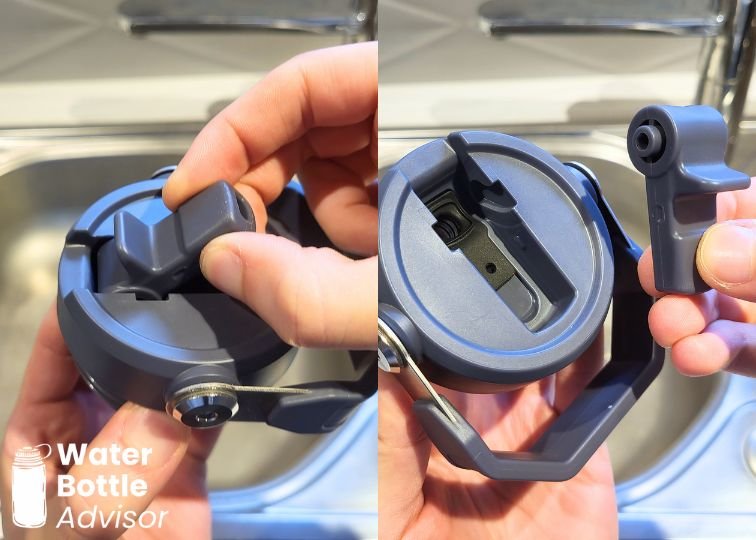
For the bottle and straw, you’ll also need a few extra tools: a long bottle brush and a straw brush. So if you don’t already have them, factor in a few extra dollars. You can get both in one cleaning kit here.
Stanley lists the IceFlow as dishwasher safe, and yes, technically it is. But I still prefer hand washing. Not because I enjoy standing at the sink contemplating my life choices, but because it helps protect the finish over time.
Dishwashers can be rough on coatings, especially after repeated cycles. I’ve noticed that the bottles I wash by hand tend to hold up better years later. Some of my older Stanleys still look close to new, and I’m pretty sure hand washing is a big reason why.
Durability
This one comes in a bit lighter than other Stanley bottles that don’t use the AeroLight construction, but that doesn’t really translate into something flimsy. It still feels solid in hand, just not overbuilt.
Over the years, I’ve used quite a few Stanley bottles, and durability hasn’t really been something I’ve had to think about. Maybe a minor scuff here and there on some models, but nothing that made me question the build. The IceFlow sits in that same category.
The Flip Straw Lid also feels well put together. There isn’t much going on mechanically, which is part of the appeal. Fewer moving parts usually means fewer things that can go wrong.
The Fast Flow Lid gets mixed feedback online, though I haven’t used that version myself, so I can’t really weigh in on it.
Versatility
The IceFlow is flexible in some ways, but it clearly has a lane. It’s built for cold drinks, not hot coffee or tea. So if you’re someone who likes switching between the two throughout the day, this probably won’t replace a full all-purpose thermos.
Where it does shine is warm weather and active days. Summer walks, gym sessions, long drives, or just being outside for hours – that’s the kind of routine where a cold, insulated bottle starts to feel less like a nice-to-have and more like something you reach for without thinking.
Stanley also gives you a fair bit of choice here. The IceFlow comes in 16, 24, 36, and 50 oz sizes, which makes it easier to match the bottle to how you actually use it. The larger versions make sense if you’re out for long stretches or don’t want to refill often.
For me, the 24 oz version hits a nice balance.
Verdict
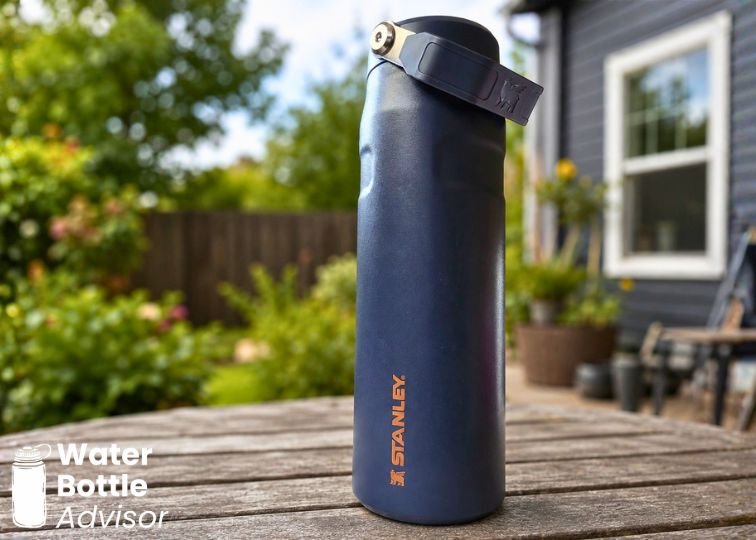
This isn’t the most eye-catching bottle Stanley makes, and it’s not trying to be. The IceFlow feels more grounded than that. What it does focus on is everyday usability, especially portability, and that’s where it earns its keep.
The 24 oz version at $35 makes a lot of sense if you want something simple, reliable, and easy to carry around without overthinking it.
And if the IceFlow still feels like it’s missing something you care about, check out the alternatives in my highest-rated water bottle ranking. There’s a good chance you’ll find a better fit there.
Stanley IceFlow Bottle |
|---|
|
My Score: 4.3/5 |

Jeremiah Kowalski
Jeremiah Kowalski is a drinkware product researcher who has personally tested 50+ reusable water bottles, tumblers, mugs, and filtration systems from leading brands. He focuses on real-world performance, durability, and safety to help readers choose drinkware that actually fits their daily hydration needs.