
From what I’ve seen, hydrogen bottles usually fall into two camps. On one side, you’ve got the expensive, well-built models from brands that actually put some effort into designing it.
On the other, there’s the flood of cheap rebranded bottles coming out of Chinese factories and getting marked up 5x or 10x by dropshippers with slick marketing pages.
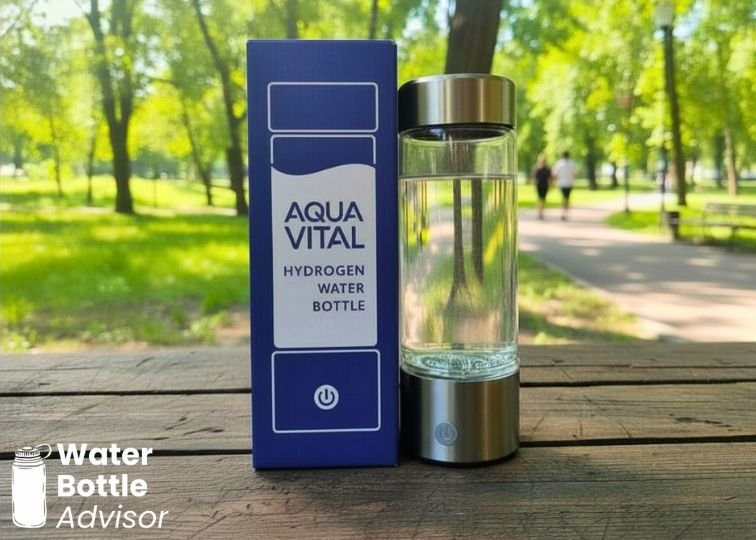
Aqua Vital lands squarely in that second group.
After seeing it pop up all over Amazon, I decided to order one myself for $57. Partly out of curiosity.
If you’re considering buying it, hold onto your money for a minute. I’ll walk you through the problems I ran into and show you a few alternatives that have worked much better for me over time.
Before We Start
Before getting into the details, there’s one thing worth clearing up straight away.
Aqua Vital isn’t really a unique product. It sits in the same bucket as a lot of hydrogen bottles you’ll see floating around marketplaces – same base design, different logo slapped on the front.
I ran a comparison a while back for an article where I looked into whether hydrogen bottles are actually different or just rebranded versions of the same thing. I tested three nearly identical units side by side. No surprises there – they were basically the same bottle with minor tweaks at most. You can read the full article here.
Aqua Vital fits that pattern pretty neatly.
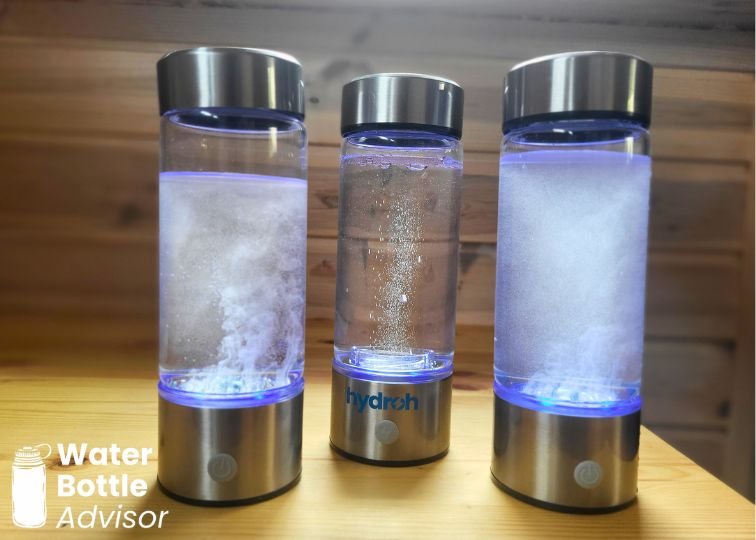
What makes it more noticeable is the pricing gap. You can find what appears to be the exact same bottle for around $12 if you look at generic listings. I picked one up out of curiosity, and side by side there was nothing meaningful separating it from Aqua Vital. Same design, similar battery behavior, and no real difference in hydrogen output.
The only thing that really changes is the branding and the price tag.
That’s where things start to feel a bit off. You’re essentially paying a large markup for something that likely costs only a few dollars to manufacture in bulk.
On that basis alone, it’s already hard to justify. Still, I went through the main features anyway, just to see if there’s anything that would make it stand out beyond the surface-level similarities.
Hydrogen Output & Performance
Let’s start with the whole point of buying a hydrogen bottle in the first place: hydrogen output.
This is where the Aqua Vital bottle falls flat.
One thing that immediately caught my attention was the lack of actual numbers. The product page on Amazon talks a lot about hydrogen-rich water, antioxidants, wellness, energy, all the usual buzzwords, but nowhere do they clearly say what hydrogen concentration this bottle is supposed to produce. In this niche, that’s a pretty big warning sign.
It gets worse. I couldn’t find any independent lab reports or certification showing the bottle produces meaningful levels of hydrogen at all. No third-party testing. No dissolved hydrogen verification. Just marketing copy.
So I decided to test it myself. I used a hydrogen meter that caps out at 1600 ppb. It’s not lab-grade equipment, and I’ll be fair about that. Still, it’s more than enough to spot the difference between a weak bottle and one that’s actually putting out solid hydrogen levels.
After running the only available cycle, which lasts three minutes, the result came back at just 315 ppb.
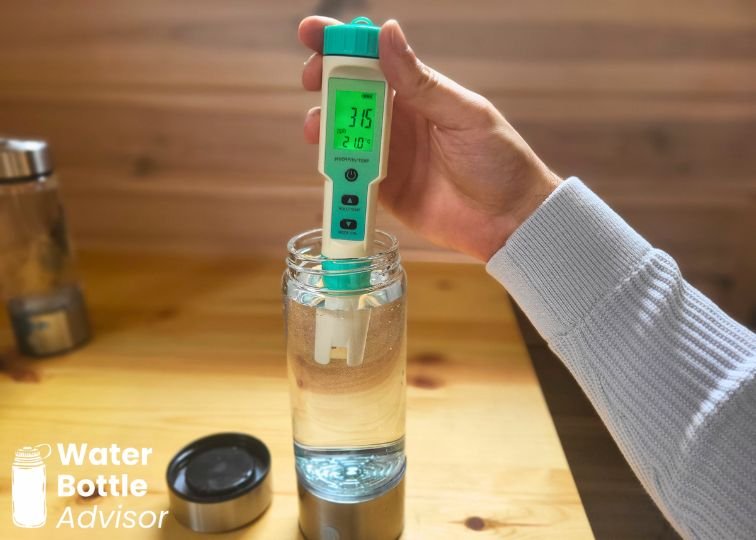
That’s… low. Not “slightly below premium models” low. More like entry-level bottle from a random Alibaba supplier low.
To put it into perspective, some well-known hydrogen bottles that were independently tested in labs can reach 3000+ ppb without much trouble. Even bottles sitting in the mid-range category tend to land far above what I got from the Aqua Vital.
Now, to be fair, the bottle does appear to generate at least some hydrogen. It’s not just creating bubbles for show. And most hydrogen water studies were done using concentrations somewhere around 500 to 1500 ppb, so you don’t necessarily need absurdly high numbers to notice anything.
Still, 315 ppb is hard to defend, especially at this price point.
Durability
If the weak hydrogen performance still hasn’t put you off this bottle, the durability probably will.
Aqua Vital uses glass, which sounds premium at first glance. A lot of brands lean on that because glass feels cleaner, safer, and more high-end than plastic.
The problem is that hydrogen bottles aren’t exactly the kind of product you keep sitting untouched on a shelf. You carry them around, throw them into bags, place them on kitchen counters, take them to work, the gym, or the car. Stuff happens.
And glass doesn’t handle “stuff happens” very well.
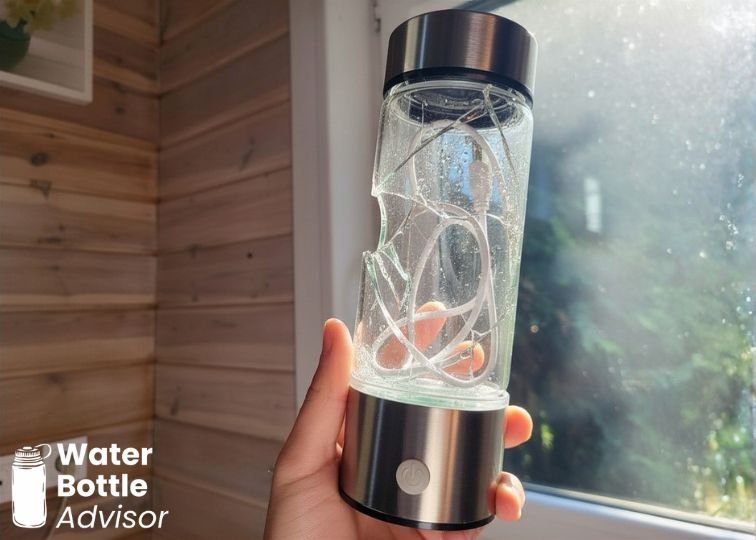
With this bottle, it feels like one bad drop away from becoming a very expensive pile of shards. Even knocking it against a sink or countertop the wrong way could be enough to crack it.
At that point, you’d probably think: fine, I’ll just replace it. Except Aqua Vital doesn’t include a warranty by default. They do offer a 1-year warranty, but it costs an extra $18. So if the bottle breaks and you didn’t pay for that add-on, that’s it, your $57 disappears along with it.
This is one of the reasons I still prefer BPA-free plastic for hydrogen bottles, especially Tritan or polycarbonate. I’ve used hydrogen bottles made from those materials for years, and they’ve held up well. My oldest one is over three years old at this point.
With a glass hydrogen bottle like Aqua Vital, you end up babying it all the time. And for a product that’s supposed to be portable and convenient, that gets old pretty quickly.
Portability
To give Aqua Vital some credit, portability is probably the one area where the bottle does a decent job.
It fits into standard car cup holders, and at 14.1 oz empty, it doesn’t feel heavy or annoying to carry around.
That said, this isn’t exactly a standout feature. Most hydrogen bottles today are portable by design, so it’s more like meeting the minimum expectation.
What I did appreciate was the 16 oz capacity.
A lot of hydrogen bottles top out around 10 oz, which gets irritating fast because you constantly need refills. Aqua Vital gives you a bit more breathing room.
But, again, you can find other bottles with similar or larger capacity that don’t come with all the compromises.
My current favorite is the Piurify Hydrogenator Bottle. It holds 17 oz, feels more durable, and performs far better in hydrogen output.
Brand Reputation & Warranty
There’s not much to grab onto here in terms of brand reputation, mainly because there isn’t much visible brand presence at all.
I tried digging into who actually runs Aqua Vital, and it leads to a dead end pretty quickly. No clear company background, no leadership info, no real footprint you’d normally expect. It feels like one of those white-label products pushed out of a factory and dressed up with marketing to catch the hydrogen water trend.
The only details I could find come from their own site, where they claim to be American-owned and say shipments go out of a New Jersey warehouse. That’s about it.
Warranty-wise, things get even more questionable. The bottle itself doesn’t really include a proper warranty unless you pay an extra $18 for a 1-year cover. That pushes the total to around $75 just to get basic protection, which is hard to justify. Meanwhile, brands like Piurify and Echo Water include lifetime warranties at no extra cost.
At least there’s a 30-day money-back option and basic contact details like email and phone support.
On the marketing side, things get a bit messy. While researching, I ran into a mix of overly polished “reviews” and affiliate pages that look almost identical to official branding. A few Reddit posts also stood out as suspiciously promotional. Once you notice the pattern, it’s hard not to question what’s real and what’s just funnel content.
Verdict: Do Not Buy This Bottle
Straight to the point – this one isn’t worth it.
If you’re serious about trying hydrogen water, Aqua Vital (and anything built on the same generic design) isn’t the way to go. It looks the part on Amazon, but that’s about where it ends.
The reality is pretty simple: decent hydrogen bottles tend to sit above the $100 mark. That’s where you start seeing consistent performance, proper build quality, and brands that actually stand behind their products.
So this isn’t really a space where cutting costs works in your favor.
If Aqua Vital has already landed in your cart, it’s probably worth a pause. There are better options out there that don’t rely on vague specs or recycled designs.
I’ve put together a ranking of the most reliable hydrogen bottles I’ve tested so far – that’s a much safer place to start.

Jeremiah Kowalski
Jeremiah Kowalski is a drinkware product researcher who has personally tested 50+ reusable water bottles, tumblers, mugs, and filtration systems from leading brands. He focuses on real-world performance, durability, and safety to help readers choose drinkware that actually fits their daily hydration needs.