
Table of contents10 sections
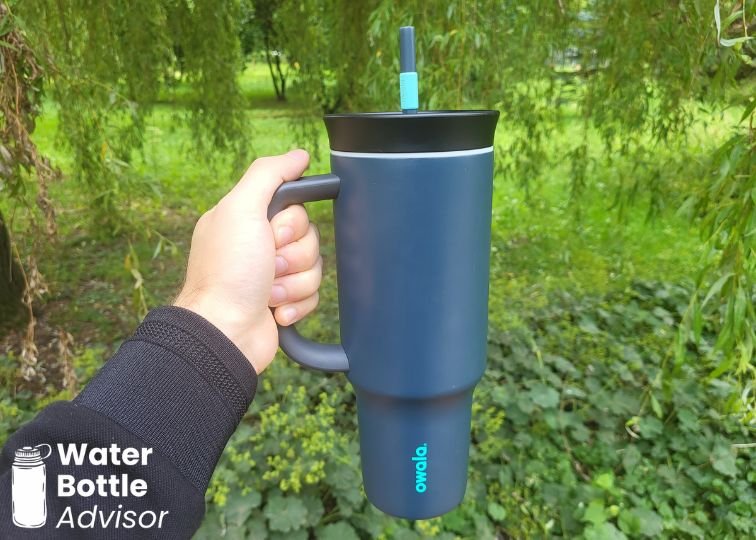
The Owala Tumbler is a solid option, but it’s not without drawbacks. In my experience, it works well, but there are alternatives that do certain things better.
Before we start, there’s a bit of confusion worth clearing up. Owala currently sells three similar but different tumblers:
- Owala Tumbler
- Owala FreeSip Tumbler
- Owala FreeSip Sway Tumbler
They are separate products with noticeable differences, especially in lid design and usability. I break all of that down in a separate comparison guide where I also highlight which one I personally prefer.
In this review, I’m focusing only on the standard Owala Tumbler. I’ll go through its pros, cons, and whether it’s actually worth buying.
WBA Test Results

Insulation
As usual, I ran two tests: cold retention (no ice) and heat retention, since the Owala Tumbler can also handle hot drinks – something many Owala products aren’t really designed for. That’s a nice bonus in itself.
Here are the results:
| Test | Cold Retention | Heat Retention |
|---|---|---|
| Starting temp. | 32.4°F (0.2°C) | 203.9°F (95.5°C) |
| After 12 hours | – | 125.6°F (52°C) |
| After 24 hours | 65.1°F (18.4°C) | – |
These are solid results, especially considering the design. The tumbler has an opening that can’t be fully sealed, which naturally lets heat escape and external air influence the temperature more easily.
Heat retention is actually the stronger side here. It performs really well for a tumbler with this type of lid. Cold retention is good, but not outstanding. For me, anything above ~59°F (15°C) starts feeling more lukewarm than cold, so you’re looking at roughly 20 hours of usable cold temperature.
Lid Usability
The lid is one of the more distinctive parts of the Owala Tumbler, and I actually like the design overall.
First, the lid walls are slightly thicker and easier to grip compared to some other tumblers. That makes twisting it on and off simpler.
The second feature is the sliding tab mechanism. You can push it up to reveal a small opening for chugging. It’s a useful option to have, even if you don’t use it all the time.
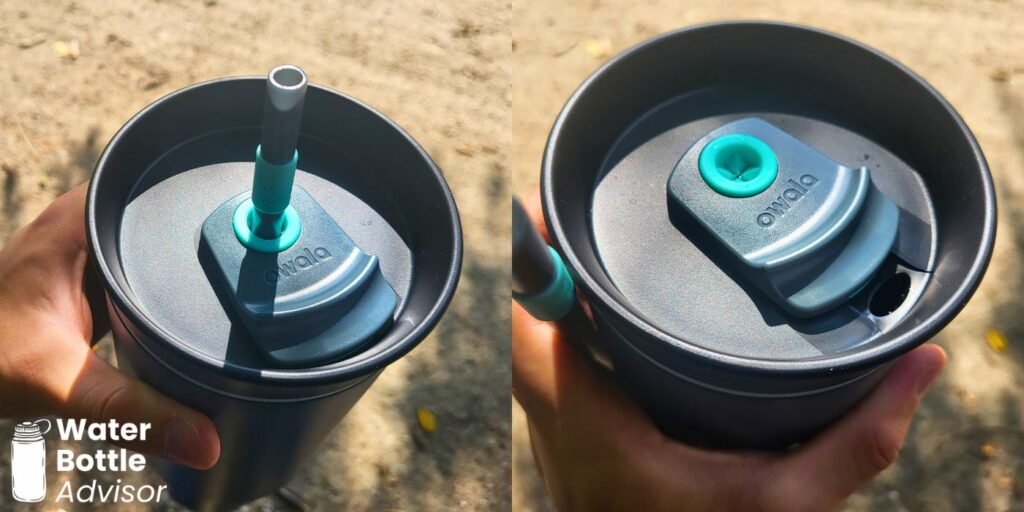
That said, I don’t use the chug feature often for two reasons:
- You need to remove the straw while doing it,
- and the drinking position isn’t as clean or comfortable since your lips touch the outer lid surface.
It works, but it’s not my preferred way to drink.
Most of the time, I just use the straw. It’s what I reach for about 90% of the time. The straw itself is solid too, long enough to reach the bottom of the tumbler.
Overall, the lid is flexible and well designed. The chug option is nice to have, but in everyday use, the straw is clearly the more convenient choice.

Leakproofness
This is where I have a real issue with the Owala Tumbler. It’s splash-resistant, yes, but it is not leakproof.
For me, leakproofness is a key requirement because I often throw bottles and tumblers into a bag with documents, and sometimes electronics. With this one, I can’t do that. I always have to keep it upright and carry it by the handle, which gets annoying over time.
You can reduce the risk a bit by adding a separate straw cover, but even then I wouldn’t fully trust it in a bag next to a laptop or other devices. It’s just not designed for that level of security.
Portability
The Owala Tumbler is kind of a mixed experience when it comes to portability.
On the positive side, the tapered base is well designed and fits standard cup holders without issues. Even the larger 40 oz version fits in my car.
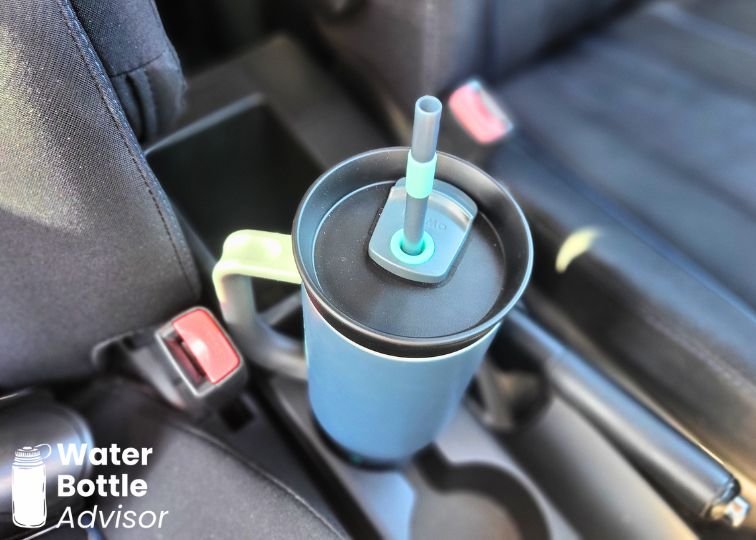
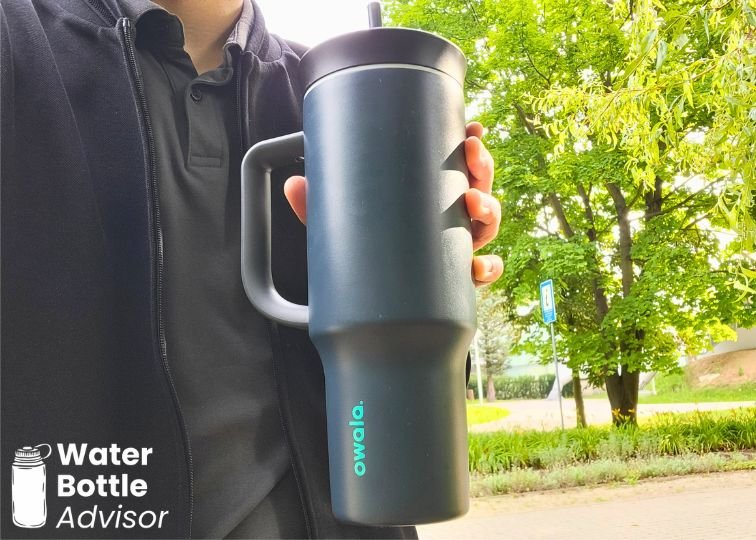
The downside is how you actually carry it because you only get a large side handle (on the 24 oz version there isn’t even a handle at all). The handle itself is ergonomically shaped, but carrying a full 40 oz tumbler by it for more than 5 minutes gets uncomfortable pretty quickly.
Because of that, I personally prefer tumblers that have integrated lid handles – something more like a bucket-style grip, similar to the Stanley IceFlow design. It just feels more balanced when the tumbler is full.
So overall: good for cup holders and short carries, less comfortable for extended hand-carry use.
Ease of Cleaning
The Owala Tumbler isn’t fully dishwasher safe, so you’ll need to clean it by hand (only the lid can go in the dishwasher). For me, that’s not really a downside since I usually prefer hand washing anyway.
The good thing is that the design is fairly simple. There are no overly complex parts or hard-to-reach mechanisms like you find in some other Owala lids, so cleaning the tumbler itself is quick, usually just a couple of minutes to rinse and wipe it properly.
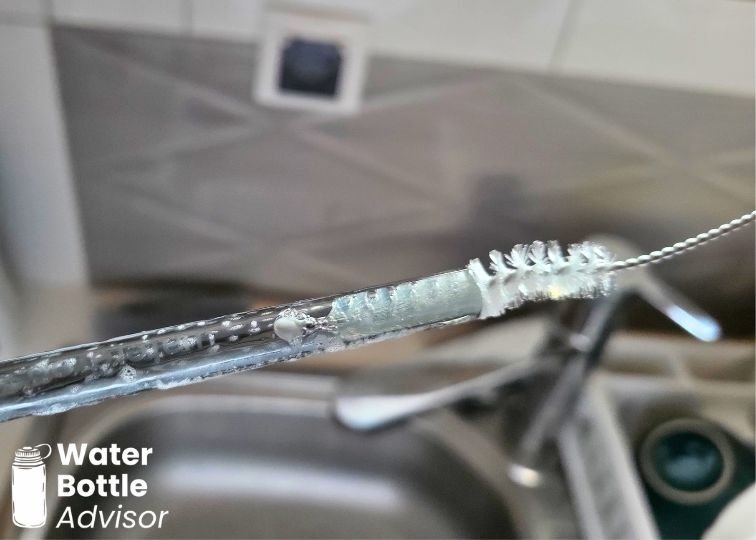
The main thing you do need to stay on top of is the straw. It should be cleaned daily with a straw brush, otherwise residue builds up faster than you’d expect.
Durability
Like most products from Owala, this tumbler feels solid in hand. It uses standard 18/8 stainless steel, so it handles everyday use and minor drops without issues. That said, it’s still metal, so hard impacts can leave dents.
If you want extra protection, a silicone boot is worth a few bucks. It’s a small addition, but it can save the bottom of the tumbler from a nasty dent one day.
Versatility
The Owala Tumbler isn’t the most versatile option. The main limitation is simple: it’s not leakproof. Because of that, I mostly use it for car rides or at a desk, where I can keep it upright and don’t have to worry about spills.
In theory, you can take it anywhere. People do that with tumblers like the Stanley Quencher all the time, even though it has the same limitation. But in practice, it’s not something I’d trust in a bag or while moving around a lot.
What also limits its versatility is the size range. Owala only offers this tumbler in 24 oz and 40 oz, which feels a bit restrictive. A 32 oz option would make a lot of sense here. The 40 oz version I use, while great for capacity, can feel a bit oversized.
Price/Value Ratio
At the time of writing, the Owala Tumbler costs around $30 for the 24 oz and $40 for the 40 oz.
That’s a bit on the higher side for what you’re getting, especially since it’s not leakproof and doesn’t really stand out in a big way. Still, it’s not overpriced compared to other branded tumblers, just not a great deal either.
If you’re already considering it, the 40 oz version makes more sense value-wise. The downside is that it can feel a bit too big for everyday use. The 24 oz is easier to handle, but not as cost-efficient.
One thing that helps is the lifetime warranty, which covers manufacturing defects.
Final Thoughts
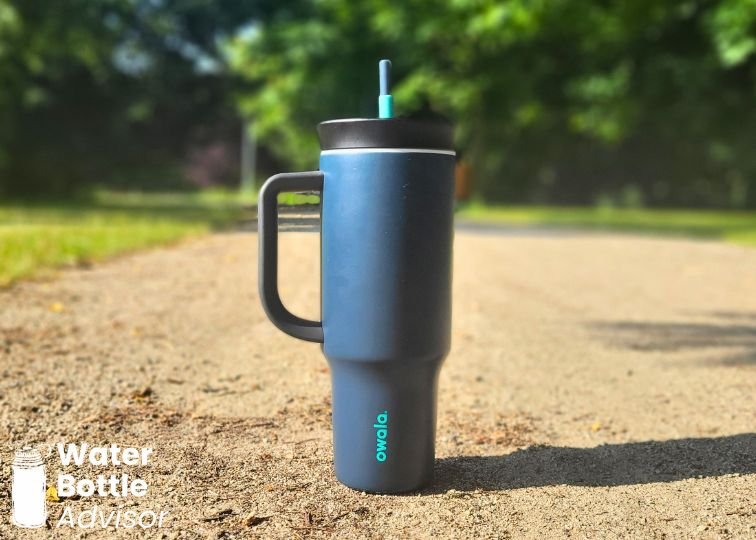
So, what’s the verdict? I like the Owala Tumbler, but I wouldn’t call it my top pick. It’s a solid, well-made tumbler that does its job, even if it doesn’t stand out in any major way.
If you already like Owala products, there’s a good chance you’ll enjoy using it regularly. Just keep in mind it’s not a “grab and go anywhere” type of tumbler. If that’s what you’re after, there are better options that you can see in my best tumblers ranking.
How we test products
Every product we review is tested using the same structured process, with dozens of measurements and checks covering areas such as thermal performance, lid usability, cleaning, durability, portability, and everyday use. Those results feed into the WBA Score, which helps us compare bottles using consistent criteria instead of relying only on manufacturer claims.
You can read our full product testing protocol, learn more about Water Bottle Advisor and how we test products, or see how the WBA Score works.
About the author
Jeremiah Kowalski
Jeremiah Kowalski founded Water Bottle Advisor to make drinkware reviews more useful and less dependent on manufacturer claims. He has personally tested 50+ products, putting them through measuring, cleaning, leak testing, durability testing, and everyday use before sharing his conclusions. It also means occasionally explaining why yet another large box of bottles has arrived at his door.
Leave a Reply