
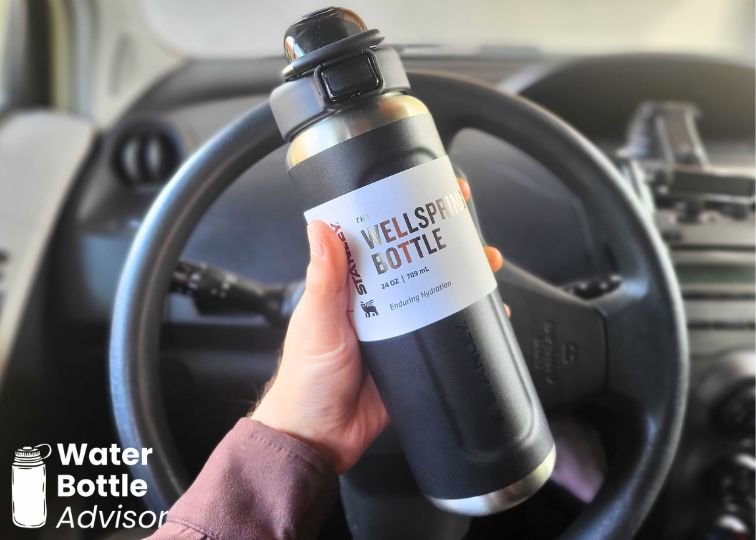
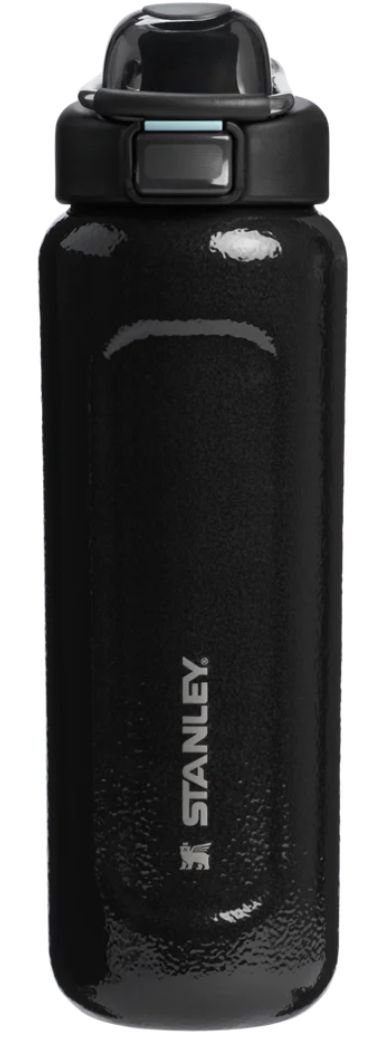
The Stanley Wellspring is a newer insulated water bottle built for portability and leak resistance rather than the oversized tumbler style Stanley is known for.
I bought the 24 oz version for $40 and used it daily for a full month at home, outside, and while carrying it in bags. After that time, I can confidently say it’s one of the more practical bottles Stanley has released in recent years.
Unlike the Stanley Quencher, the Wellspring is actually designed to travel well. The locking lid stays secure, the button is intentionally stiff, and I never had issues with leaks while carrying it in a backpack.
In this review, I’ll break down the bottle across seven categories. By the end you’ll know whether the Wellspring fits your lifestyle or if you’d be better off with another bottle.
Some of the links on this page are affiliate links. This means that if you click on one of the links and make a purchase, I may earn a small commission at no additional cost to you.
KEY FEATURES
PROS
CONS
Lid Usability
The lid is the most distinctive part of the Wellspring bottle. The spout has an oval-like shape that feels unusual at first. It doesn’t form a natural seal around your mouth like a traditional round spout, so the first few sips can feel slightly awkward. Because your lips don’t fully cover the opening, I even splashed myself a couple of times at the beginning.
I did find a simple workaround: rotate the bottle 180 degrees and drink it sideways. This way, your lips cover the entire opening much more comfortably.
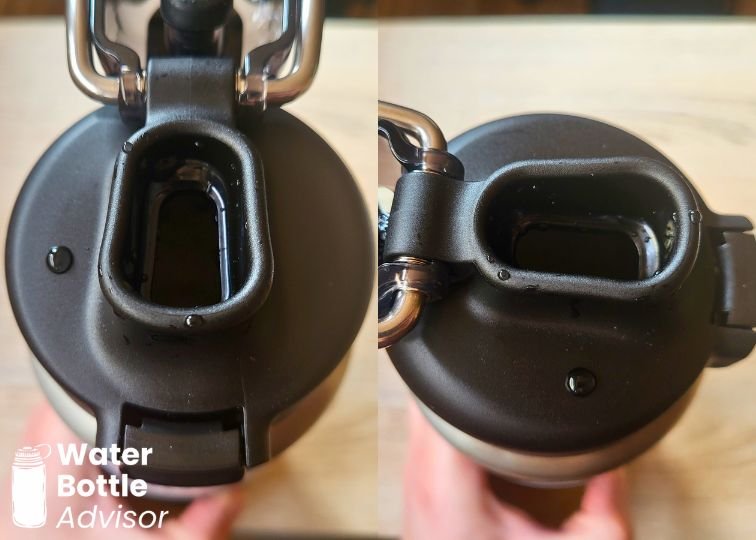
The cap itself is attached to the lid and surrounded by a metal carry handle. Closing it takes a bit of force, but the loud click gives clear confirmation that it’s locked properly. The cap also stays neatly in place while you drink, so it won’t swing forward or hit you in the nose.
The opening mechanism is the most interesting part. Instead of pressing a regular button, you slide it downward with your thumb until the spring-loaded cap pops open. It’s the first bottle I’ve used with this type of system, and it makes the bottle feel more fun and modern to use.
That said, this lid won’t appeal to everyone. If you prefer very simple designs (like the standard lids on Hydro Flask bottles) the Wellspring may feel overengineered. More moving parts usually mean a higher chance that something eventually wears out or breaks.
Still, Stanley includes a limited lifetime warranty with the bottle, so if the lid develops issues during normal use, there’s a good chance the company will replace it.
Insulation
The first limitation with the Wellspring shows up here: it’s not designed for hot liquids. You shouldn’t use it for hot tea or coffee because heat can build pressure inside a sealed insulated bottle.
Pressure buildup can force the lid open suddenly and may even damage the bottle. So this one is strictly a cold-drink bottle.
For cold insulation, though, it performs solidly on paper. For the Wellspring, Stanley claims up to 30 hours with ice and around 12 hours without ice.
In my test, it even outperformed those figures. The initial water temperature was 33.8°F (1°C), and after 12 hours it had only risen to 43.3°F (6.3°C), still well below my personal threshold of 15°C.
After 24 hours, the temperature was 51,6°F (10,9°C) – still cold!
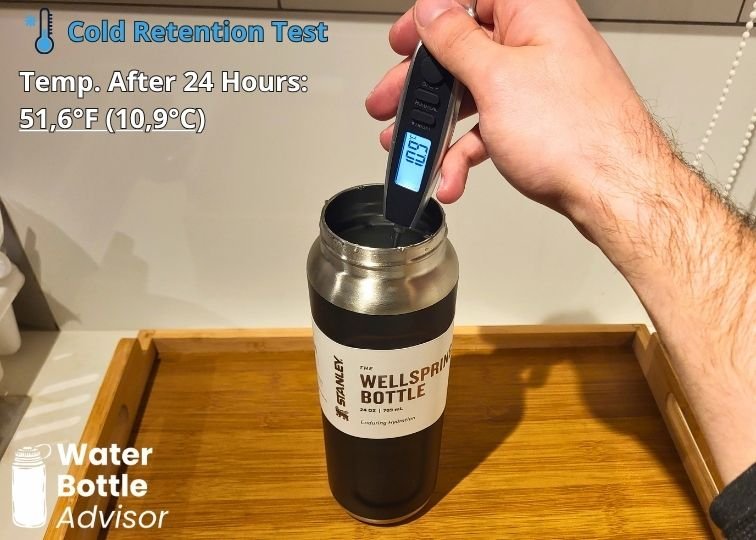
Wellspring’s insulation appears to be on par with other premium bottles such as Hydro Flask or Owala. When packed with ice, it can comfortably reach the promised 30-hour performance window.
I’m not sure why Stanley seems to underestimate the thermal performance of their bottles – perhaps they tested them with a much higher starting temperature than I did. Either way, the results speak for themselves.
Portability
Portability is one of the Wellspring’s biggest strengths. The 24 oz version fits in my car’s cup holder without issues. Its diameter is about 3.1 inches, while my cup holder is around 3.5 inches wide.
That said, some cars have narrower cup holders closer to 3 inches, so it’s worth checking before buying.
The shape also helps a lot. Instead of being perfectly round, the bottle has slight indents on both sides and it actually makes it easier to grip comfortably with one hand. I noticed this immediately because my Stanley Quencher tumblers feel much bulkier and less secure to hold.
The metal carry handle also helps with portability and it comfortably fits two fingers. I usually prefer softer rubber handles that fit four fingers, but this one still feels good in practice because Stanley added soft padding underneath, so your fingers don’t press directly against metal.
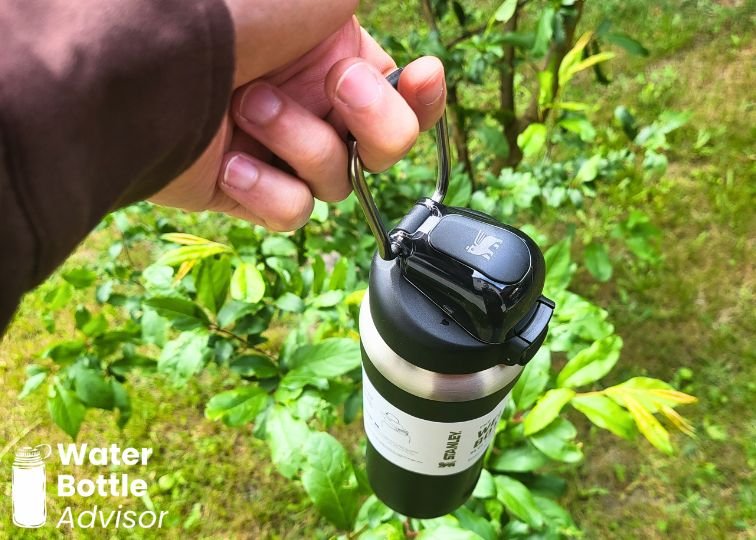
Between the slimmer shape, cup-holder-friendly size, side indents, and carry handle, the Wellspring is one of the more portable insulated bottles I’ve used.
Ease of Cleaning
I don’t have many complaints about cleaning this bottle. I recommend washing it by hand because dishwashing may age the appearance of this bottle (even Stanley states that in the instructions).
Besides that, the lid is easy to clean with a regular sponge. Since there’s no straw, you also won’t need any specialized cleaning brushes for small parts.
The only minor issue is the height of the bottle. If you have larger hands, reaching the bottom with a sponge can be difficult, especially on the 24 and 32 oz versions. I usually use a narrow bottle brush for that.
If you don’t have a brush, you can still put the bottle in the dishwasher. Just place it on the top rack so the bottom heating element doesn’t damage the finish or plastic parts.
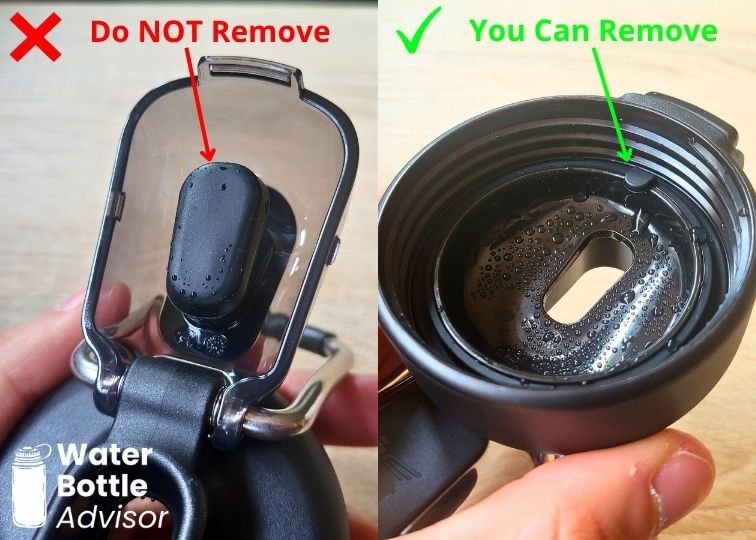
And one more thing: don’t remove the gasket inside the cap. It’s not designed to come out, and getting it back into place properly is difficult.
The only gasket that’s actually meant to be removed is the one underneath the lid. It has a small tab you can grab to pull it out for cleaning.
Durability
The Wellspring feels solid the moment you pick it up. The body is made from 18/8 stainless steel, and even the BPA-free plastic lid and cap feel sturdy and well assembled.
I’ve owned bottles with durable steel bodies but flimsy lids that rattled or felt cheap. The Wellspring doesn’t have that problem.
I especially like the thick, rounded base. It feels more reinforced than the bottoms on many other bottles, so it should resist dents more effectively.
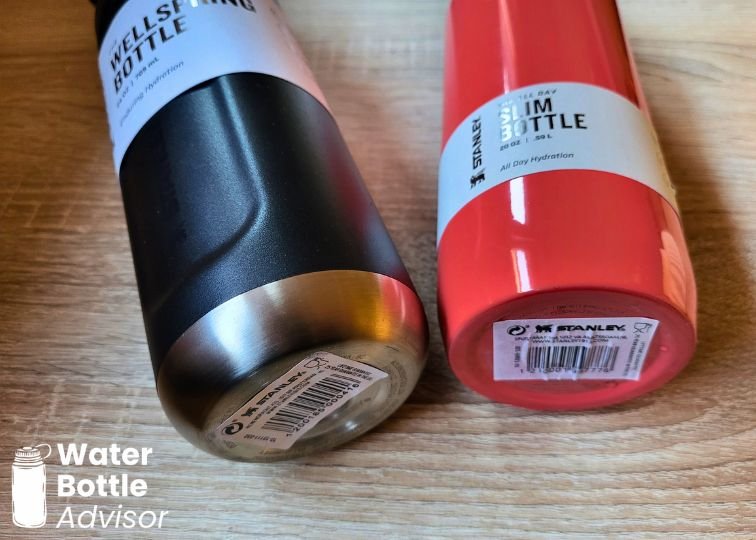
But I still think using a silicone boot is a smart idea if you plan to carry the bottle daily or place it on hard surfaces often. Unfortunately, Stanley doesn’t currently sell a dedicated boot for the Wellspring, so you’ll need to look for third-party options that match the bottle’s dimensions.
Versatility
The Wellspring is one heck of a versatile bottle, but that versatility really shows up in warmer months. In winter, that changes a bit. The limitation is that you can’t use it for hot drinks like tea or coffee.
But it still works well at home, in the car, at work, while walking around town, and even during short hikes. The bottle is light enough to carry comfortably for long periods, weighing only around 13 ounces when empty in the 24 oz version.
It has actually worked especially well for me in the car. The bottle fits securely in my cup holder, and the sliding lid mechanism is surprisingly easy to operate with one hand while driving.
I also like that Stanley offers multiple sizes. The 32 oz version would probably make this bottle even more versatile for most people. There’s also a 16 oz option, but for me, that size is simply too small to be practical for daily use.
Verdict: Is the Wellspring Bottle Worth Your Money?
I paid $40 for the 24 oz version of this bottle, which is STEEP. At that price, you could easily pick up two solid bottles from other brands. No way around that.
But at the end of the day, the Wellspring has been worth my money. I actually reach for it regularly instead of letting it sit on a shelf, which is usually the real test for any bottle.
But it’s not a clear “best in class” option across the board. There are alternatives that do specific things better. For example, I still prefer my Hydro Flask Trail Series when insulation matters more, since it can handle hot liquids better while offering the same capacity and light weight.
And even though the Wellspring lid is interesting and fun to use, the Owala FreeSip is still more enjoyable for me overall thanks to its dual drinking system.
So where does that leave the Wellspring?
If budget isn’t a concern and you already like Stanley bottles, the Wellspring is a solid addition to the lineup. It’s not the most efficient or the most insulated bottle out there, but it is one of the more practical Stanley designs I’ve tried.
Stanley Wellspring |
|---|
|
My Score: 4.4/5 |

Jeremiah Kowalski
Jeremiah Kowalski is a drinkware product researcher who has personally tested 50+ reusable water bottles, tumblers, mugs, and filtration systems from leading brands. He focuses on real-world performance, durability, and safety to help readers choose drinkware that actually fits their daily hydration needs.