
If you travel enough, you eventually develop a weird emotional attachment to your gear. For me, it isn’t the expensive noise-canceling headphones or the camera; it’s the water bottle. It is the one object that stays within arm’s reach from the moment I leave my house until I collapse in a hotel room three time zones away.
I’ll admit up front: I have a massive soft spot for Hydro Flask. Their Trail Series bottle won me over years ago, simply because it figured out how to keep water ice-cold without weighing like a brick. To this day, it is the first thing I throw in my carry-on and my personal favorite for most trips.
But even I know that my favorite bottle isn’t the right tool for every trip. The Trail Series is great until you need to filter questionable tap water in a remote hostel, or when you need a straw to drink safely while driving, or when you just need something cheap and indestructible that you won’t cry over if you leave it on a train.
Travel isn’t a single scenario. It’s a mix of sterile lounges, rough hiking trails, and cramped buses. This ranking breaks down the specific bottles that handle the actual messiness of travel better than the rest.
Some of the links on this page are affiliate links. This means that if you click on one of the links and make a purchase, I may earn a small commission at no additional cost to you.
What Are the Best Water Bottles for Travel?
Hydro Flask Trail Series | Owala FreeSip | Nalgene | Hydaway | LifeStraw Peak Squeeze | |
|---|---|---|---|---|---|
 |  |  |  |  | |
Recommended Size | 24 oz | 24 oz | 32 oz | 25 oz | 34 oz |
Price | $45 | $30 | $17 | $40 | $44 |
Material | 18/8 stainless steel | 18/8 stainless steel | Tritan plastic | Silicone | Plastic |
Fits in cup holders? | YES | NO | NO | YES | YES |
Leakproof? | YES | YES | YES | YES | YES |
Dishwasher safe? | NO | NO | YES | YES | NO |
Buy now |
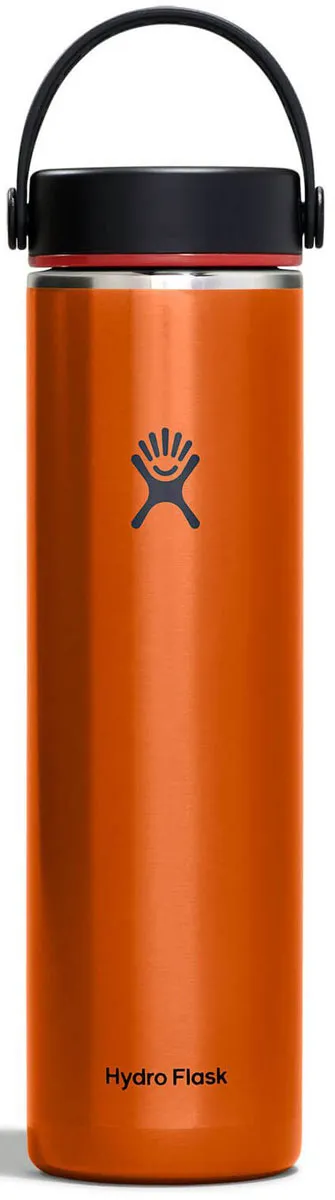
Best Overall: Hydro Flask Trail Series
KEY FEATURES
PROS
CONS
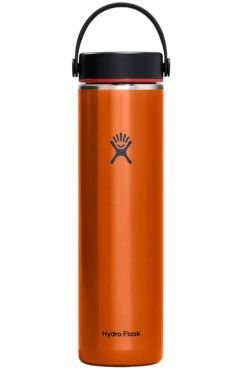
Why do I think the Hydro Flask Trail Series is the best bottle for travel? Because it solves the one problem most insulated bottles ignore: weight.
Stainless steel + double-wall insulation usually means heavy. Not here. My 24 oz version weighs just 11 ounces empty. For comparison, the YETI Rambler 26 oz Bottle weighs 22 ounces and is almost the same size. That’s literally double.
When you’re running through airports or carrying a backpack all day, that difference isn’t theoretical – you feel it.
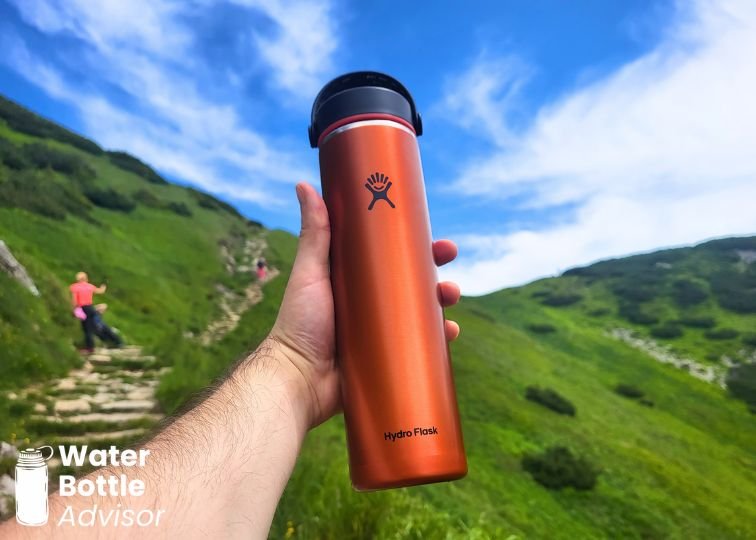
You might assume that a bottle this light wouldn’t insulate well. That would be a mistake. In my 24-hour test, water started at 33°F (0.5°C) and ended at 56°F (13.3°C), without ice. That’s still properly cold after a full day.
And if you’re traveling somewhere cold? It keeps tea or coffee hot for about 12 hours, which is exactly what you want when you’re freezing and nowhere near a café.
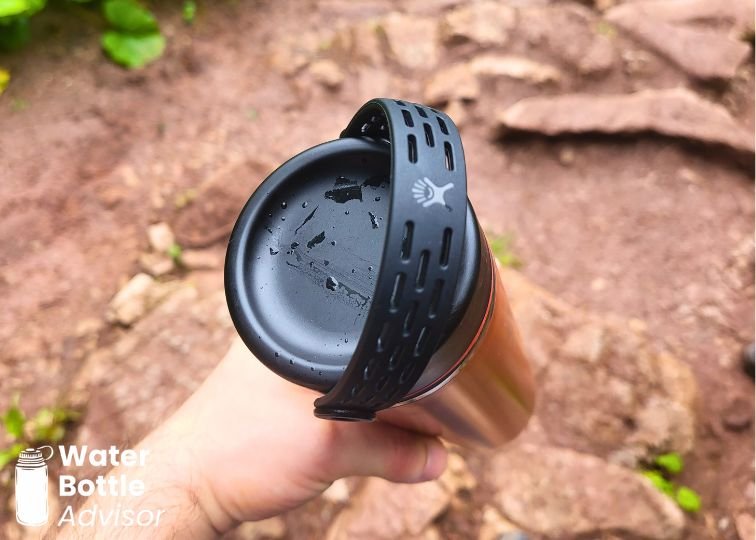
It’s also slim. With a 2.75-inch diameter, it fits into virtually any standard cup holder – car, airplane seat, train, gym equipment – no awkward balancing required. Even the larger 40 oz version keeps a surprisingly practical profile.
Regular Hydro Flask bottles are already solid, but the Trail Series feels purpose-built for travel. It’s lighter, easier to carry, and just more practical. I paid $45 for mine, and it’s one of the few travel purchases I’ve never second-guessed.
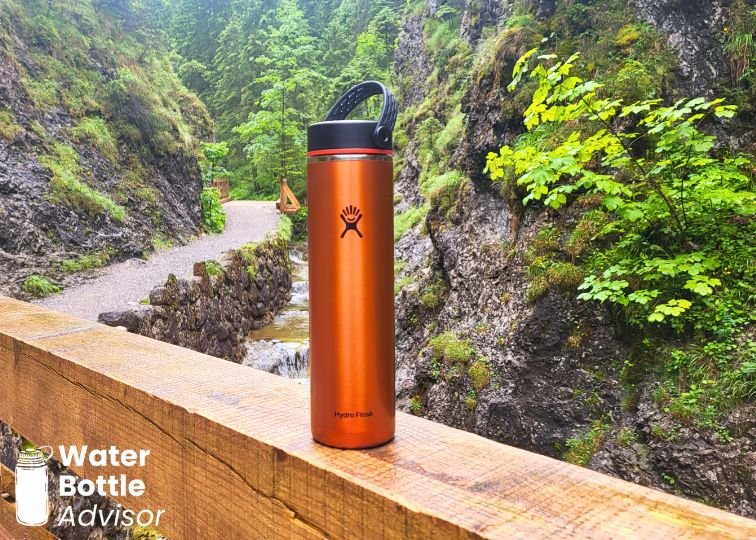
If you want the full breakdown, real-world tests, and a deeper look at pros and cons, check out my detailed Hydro Flask Trail Series review.
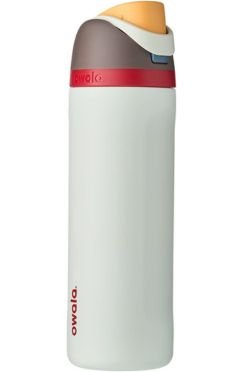
Best with a Straw: Owala FreeSip

KEY FEATURES
PROS
CONS
Drinking from a wide-mouth bottle while you’re on the move is a high-risk activity. One sudden stop or a bump in the road, and you’re wearing your water. Sometimes, you just need a straw to keep your dignity intact.
If the actual experience of drinking matters to you, the Owala FreeSip is hard to beat. Its claim to fame is a genuinely brilliant spout design that gives you the best of both worlds.
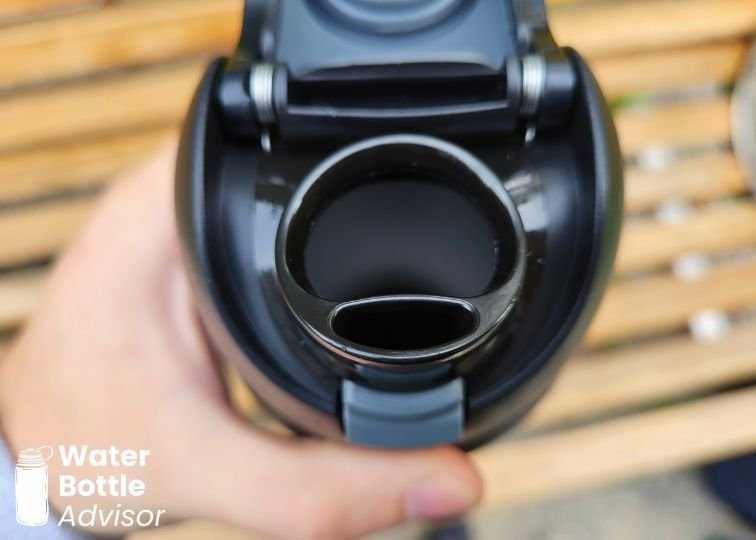
It features a built-in straw for casual sipping and a larger opening that lets you tilt back and chug when you’re really parched. You don’t have to unscrew the lid or swap out caps; it’s all right there.
Beyond the mechanics, Owala is a winner for hygiene, which is a big deal when you’re traveling. With most tumblers, the straw is constantly exposed to the elements, collecting airport dust and whatever else is floating around.
The FreeSip, however, tucks the mouthpiece completely away under a locking cap. It’s a feature you don’t realize how much you need until you see how gross exposed straws can get.
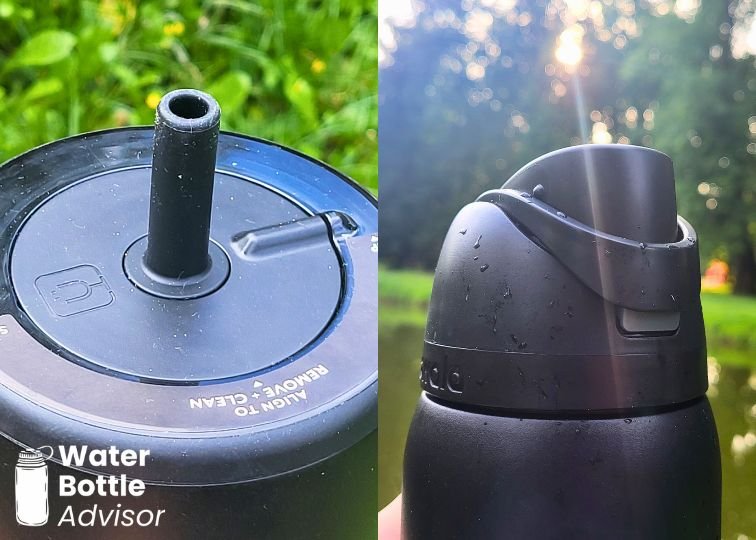
As for the basics (insulation, durability, and portability) the Owala sits comfortably at the adult table with the other top-tier brands. It will handle almost any travel scenario you throw at it, with two important caveats.
First, this is strictly a cold-beverage bottle. Don’t put hot coffee in here; the pressure buildup can damage the seals (or spray you when you pop the lid).
Second, while it’s durable, I highly recommend washing it by hand. It keeps the seal tight and ensures those nice colorways don’t get blasted off by the dishwasher.
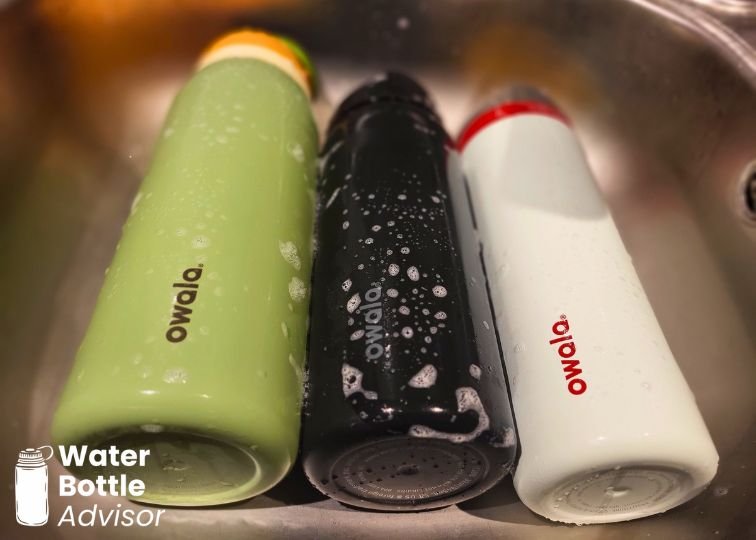
All in all, don’t be surprised if this becomes your permanent travel attachment. It’s also surprisingly fair on the wallet for a “premium” bottle – I grabbed the 24 oz size (my personal recommendation for travel) for about $30.
If you want to dig deeper into the specs or see exactly how it holds up over time, be sure to check out my full review of the Owala FreeSip, where I break down absolutely everything you need to know.
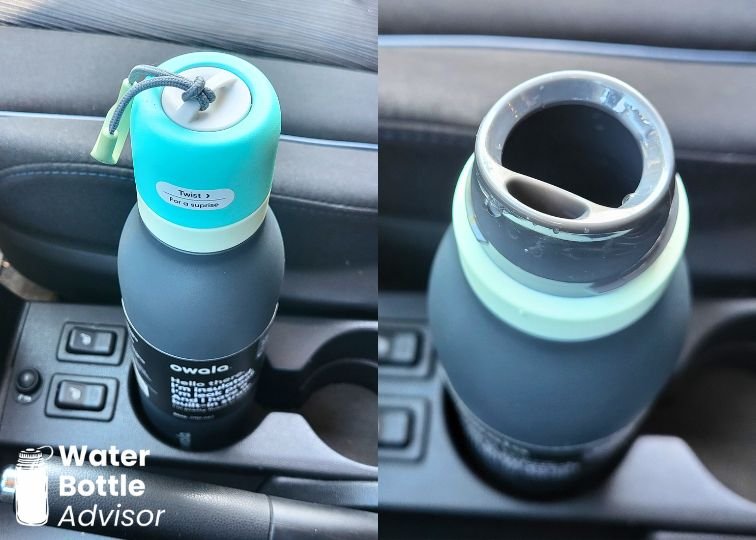
And one final tip: The standard FreeSip is a little… chunky. If you love the straw concept but need something that actually fits in a car cup holder or a slim backpack pocket, check out the Owala FreeSip Twist 24 oz. It gives you that same magical lid technology but in a slimmer profile.
Best on Budget: Nalgene
KEY FEATURES
PROS
CONS
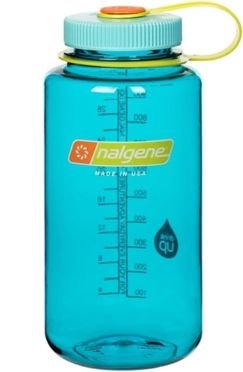
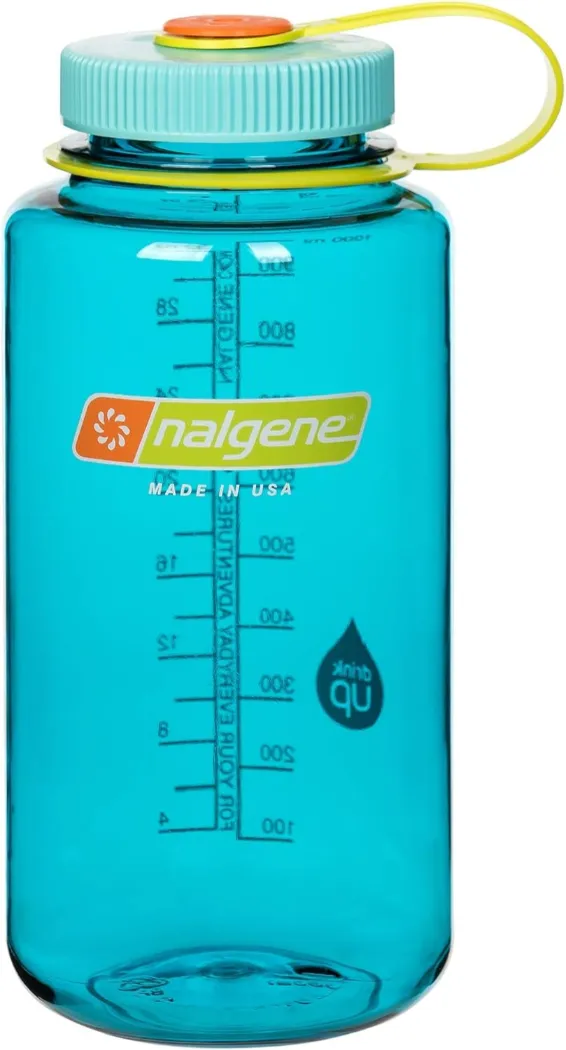
The bottles I’ve mentioned so far are manageable, but the Nalgene is where we really start shaving off the ounces. My go-to size is the 32 oz; even with that generous capacity, it weighs just 6.3 ounces when empty. And believe it or not, they make even lighter versions, which I break down in my separate Nalgene sizes guide.
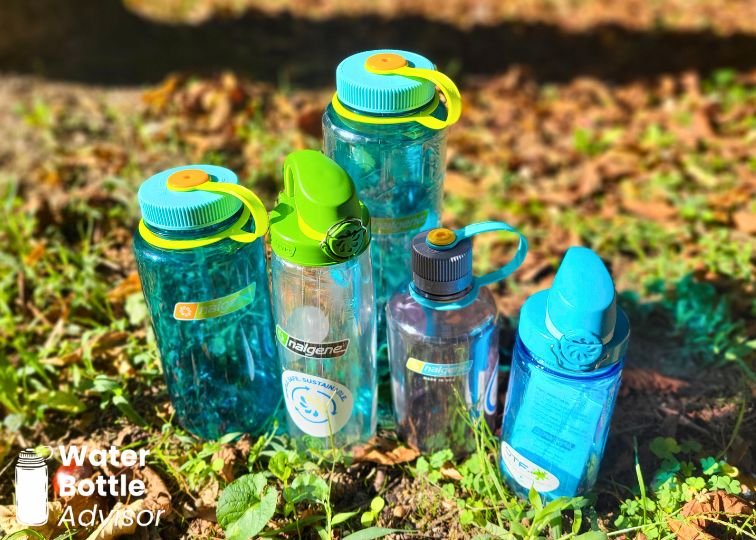
It’s this featherweight profile that makes the Nalgene a cult favorite among hikers and travelers who count every single ounce in their pack.
That weight reduction comes down to material. It is made of Tritan – a type of plastic, yes, but essentially the superhero version of it. It’s BPA-free, impressively shatter-resistant, and surprisingly good at resisting stains and odors.
If you compare it to the cheap plastic bottles you grab at a gas station, the Nalgene is in a completely different galaxy.
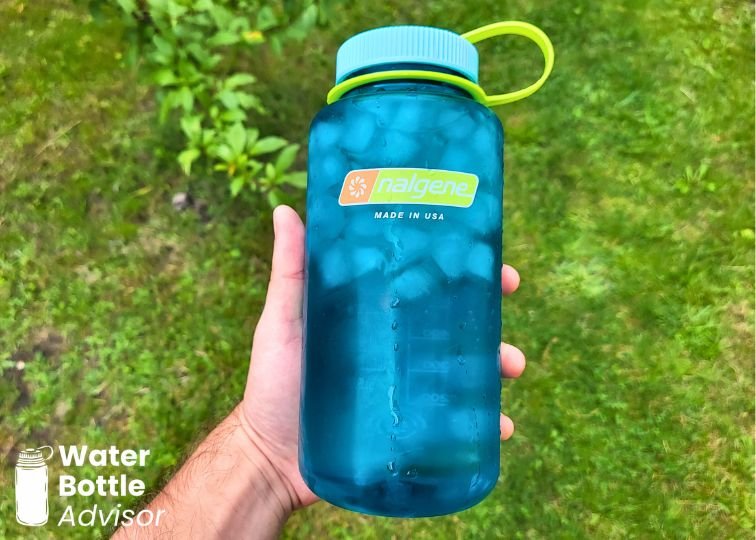
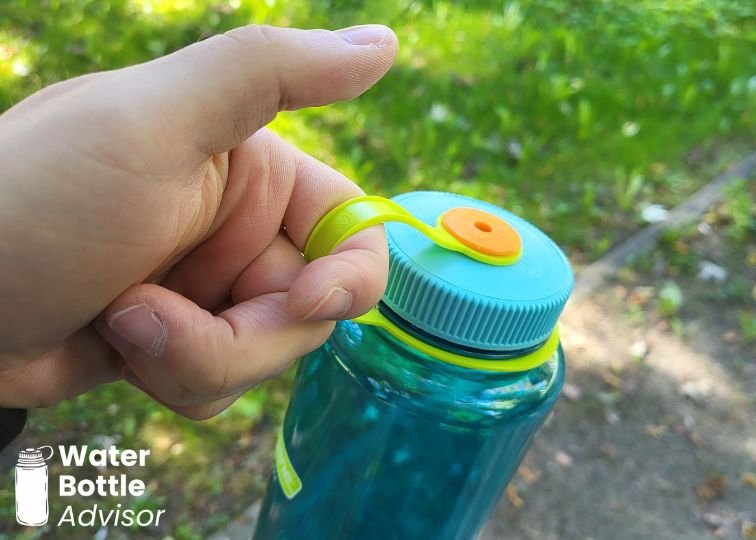
The other thing I love here is the aggressive simplicity. There are no hidden nooks, no spring-loaded buttons, and no complex locks to fail. It’s just a straightforward, bombproof design with a screw-on cap and a retaining loop.
There is also a nice bit of heritage involved: Nalgene is arguably the best water bottle currently made in the USA. That fact alone earns it some extra points in my book. Despite the local manufacturing and the durability, it remains remarkably cheap. You can usually pick one up for around $17, and Nalgene backs it with a lifetime warranty.
Is it perfect? Not quite. Since there is no vacuum insulation, your ice water will eventually turn into room-temperature water. Also, be warned: this bottle sweats. If you load it up with ice on a hot day, the condensation can get pretty aggressive, enough to soak the inside of your bag or leave a puddle on your desk.
Finally, carrying a full 32 oz bottle by that thin plastic loop can start to dig into your finger after a while.
But honestly, that’s where the complaints end for me. If you want something lightweight and cheap for hiking or travel that refuses to break, this is the one.
Best for Saving Space: Hydaway
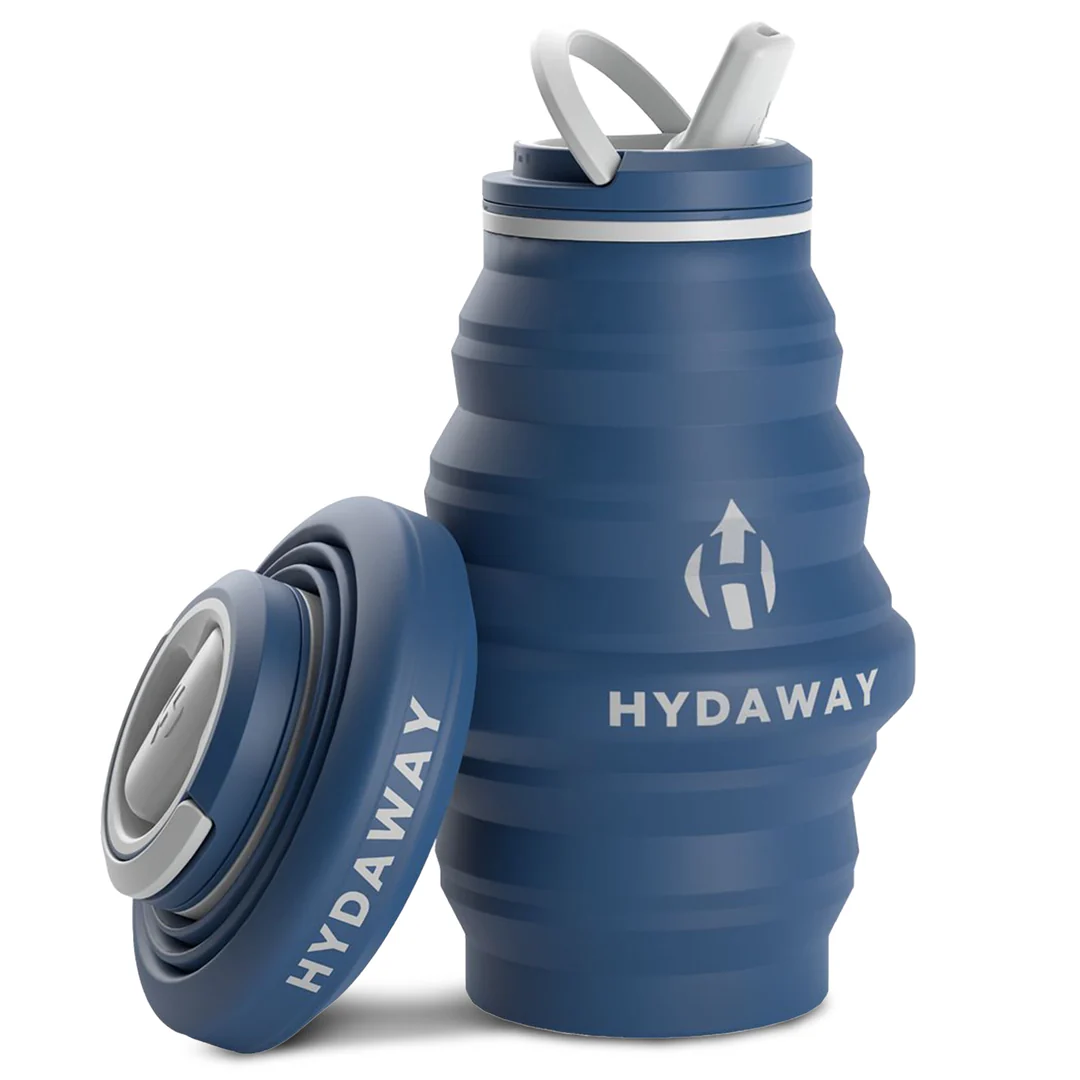
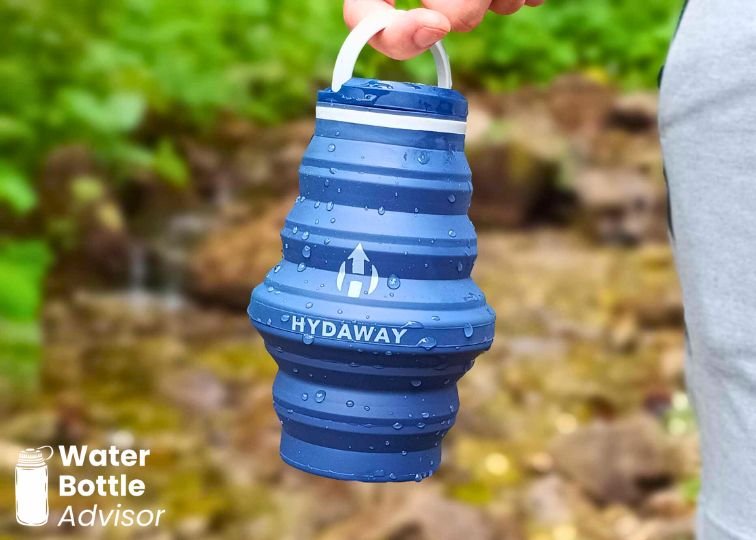
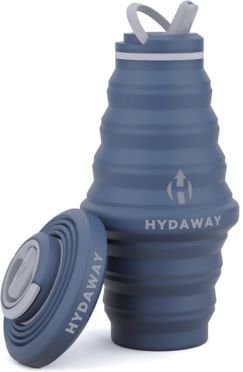
If saving space is your top priority, the Hydaway is hard to beat. The Hydaway bottle is made from very flexible silicone and folds down into a small, palm-sized disc.
It shrinks from about 8 inches tall to just 1.5 inches when collapsed, which makes it one of the most compact water bottles you can pack. When I really want to minimize bulk in my backpack, this is the one I grab.
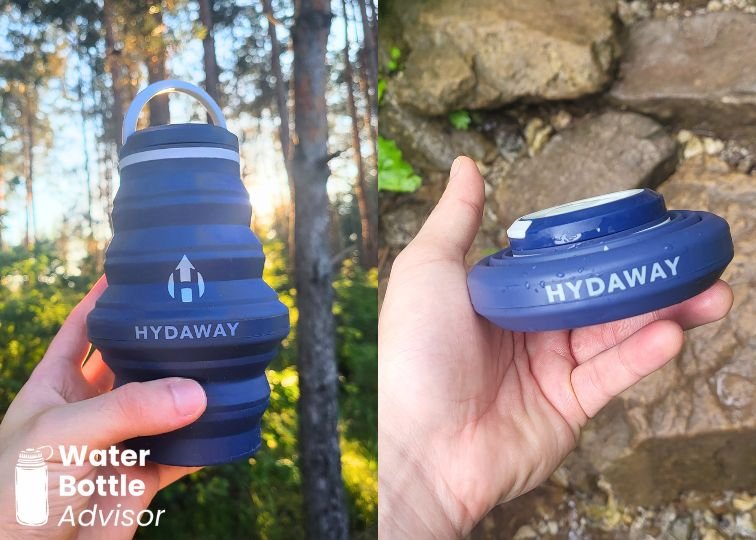
That said, it’s important to understand what it’s designed for. If it’s full, you can toss it into your bag – but I wouldn’t. The silicone body isn’t rigid and could get punctured by sharp objects.
When I carry it filled, I usually clip it to the outside of my pack with a carabiner. That way it stays accessible and I don’t worry about anything pressing against it.
Because it’s soft, drinking from it feels a little different than from a stainless steel bottle. The reinforced ring in the center is the most stable place to grip, and once you get used to that, it’s fine.
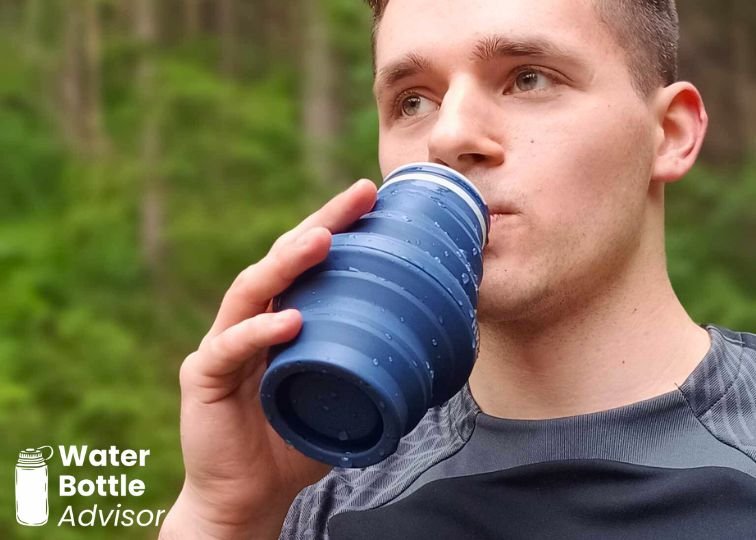
There’s no insulation here, but that’s not the point. This bottle is about maximum portability, not temperature retention. I actually like it as a backup bottle too – something I can keep folded in my bag in case my main bottle gets damaged or I need extra capacity.
If you travel often or hike regularly, it’s surprisingly useful in those “just in case” moments.
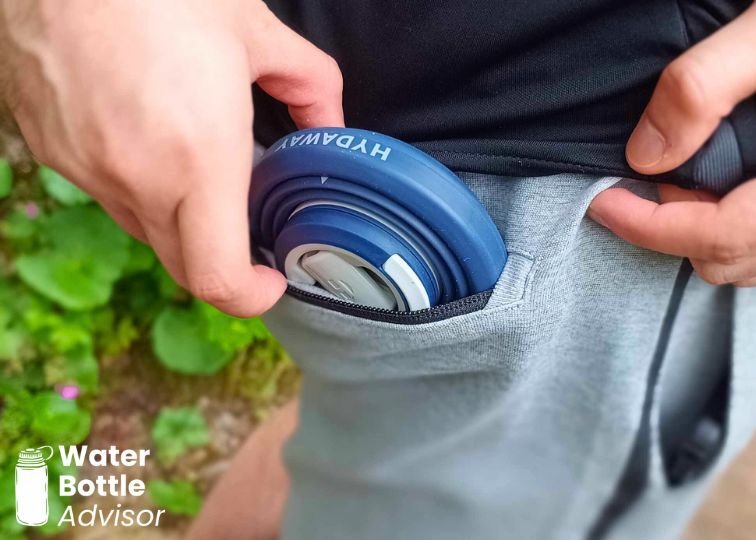
Right now, Hydaway offers two sizes: 17 oz and 25 oz. I’d go with the 25 oz version. It doesn’t take up much more space when collapsed, and the extra capacity makes it far more practical.
Best with Filter: LifeStraw Peak Squeeze

KEY FEATURES (34 OZ)
PROS
CONS
I’ve lost count of how many times I stood at an airport gate, angry about spending $10 on a bottle of water just because I didn’t trust the drinking fountains.
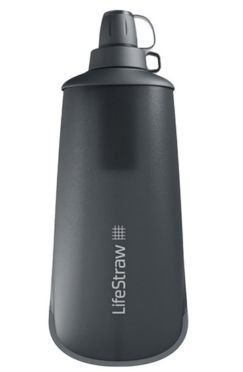
If you want to opt out of that racket, the LifeStraw Peak Squeeze is the answer. It lets you fill up at practically any bathroom tap, gas station sink, or mountain stream, wait a few seconds, and drink immediately. It handles the safety side of things so you don’t have to worry about a stomach disaster halfway through your trip.
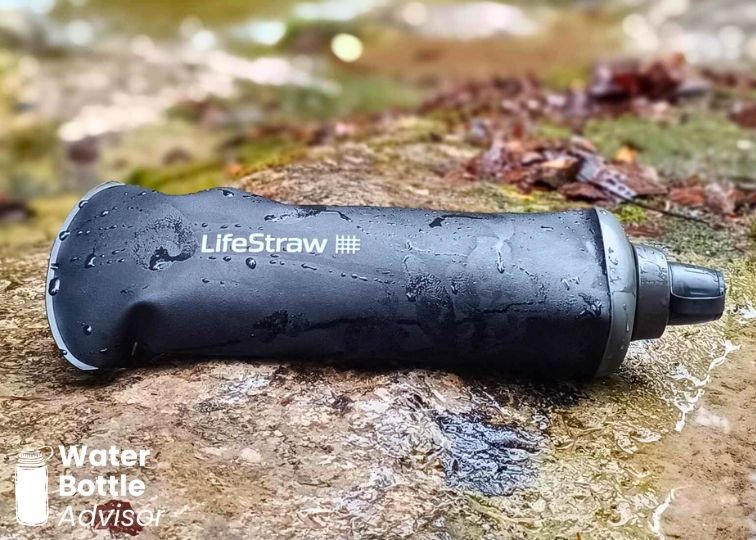
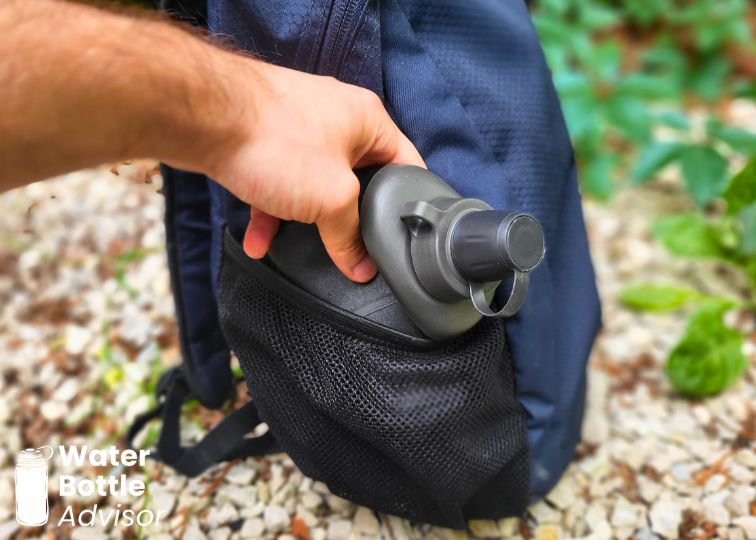
I reach for this over rigid plastic or steel filter bottles for one main reason: space. Since the bottle itself is just a soft pouch, it’s completely collapsible. When it’s empty, you can crush it down and shove it into a pocket of your backpack.
The filter isn’t a gimmick, either. It removes 99.999999% of bacteria (the nasty stuff like E. coli, Salmonella, and Cholera) and 99.999% of parasites and microplastics. It also strips out sand, silt, and that general cloudiness you see in natural water sources.
One capability I use surprisingly often is taking the filter out of the bottle entirely. You can stick the straw directly into the water source and sip straight from a creek or lake. It makes you feel like a proper survivor, and the whole setup (in the 22 oz version) is incredibly light at just 3.6 ounces.
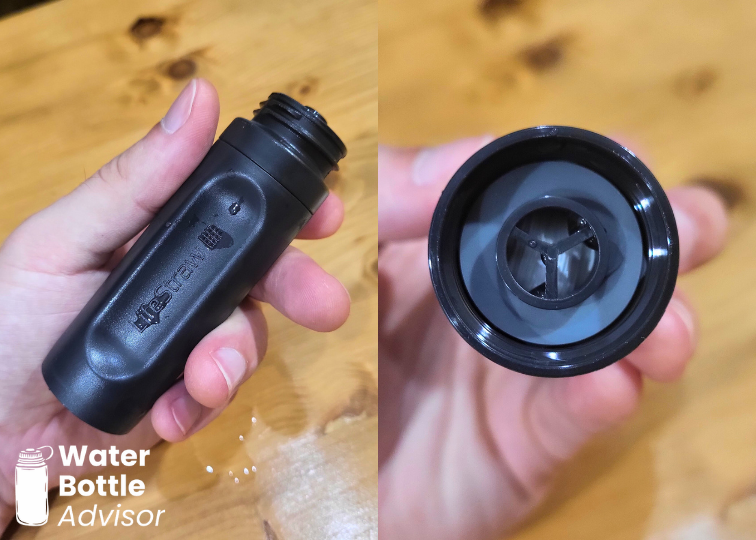
You should know that maintaining this thing takes a little effort. It is not dishwasher safe, so you have to wash it by hand. Also, to keep the water flowing fast, you need to “backflush” the filter now and then.
The kit comes with a syringe that you use to push clean water backward through the filter to clear out any gunk. It’s a bit tedious, but when the flow rate starts to drag, you know it’s time to grab the syringe.
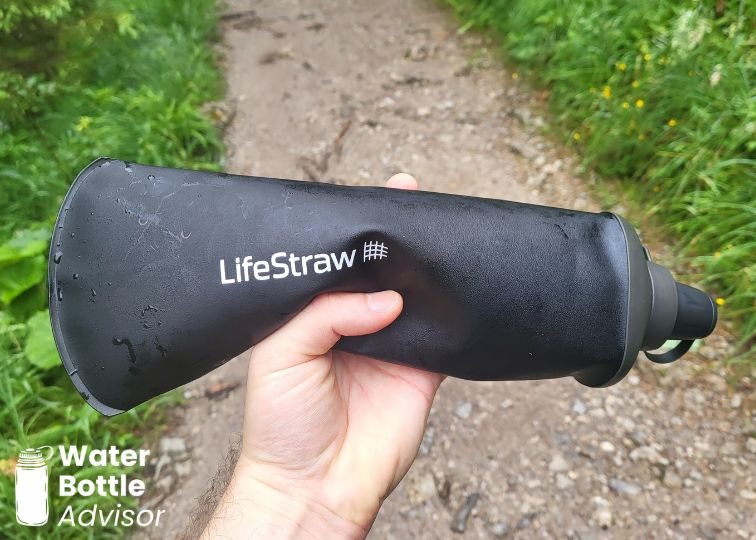
I paid about $38 for the 22 oz Peak Squeeze, and it was $38 well spent. It pays for itself after you skip a few airport kiosk purchases, and it actually saved me once when I was naive enough to run out of water while scaling a mountain.
If you want to see exactly how the backflushing works or need more details on the filter, check out my full LifeStraw Peak Squeeze review.
How to Choose a Water Bottle for Travel?
Over years of traveling, I realized that picking the right bottle isn’t about specs; it’s about understanding exactly what your day is going to look like.
When I’m packing, I look at my itinerary and ask myself three specific questions. The answers determine which bottle makes the cut.
1. Will I be carrying it on my back all day?
Weight is the enemy of travel. It doesn’t matter how well a bottle keeps ice frozen if it feels like a brick in your backpack after four hours of walking through Rome. Standard insulated steel bottles are surprisingly heavy. If a bottle weighs 22 oz empty, that’s already over half a kilo before you even add water.
If my trip involves a lot of walking or hiking, I have a strict rule: I cut weight. This is where plastic bottles like Nalgene shine – they weigh almost nothing. However, I hate drinking lukewarm water.
That is precisely why I fell in love with the Hydro Flask Trail Series. It managed to give me that cold water I crave but shaved off enough metal to keep my bag light. If you don’t care about temperature, go plastic. If you do, look for “lightweight” steel, not the standard stuff.
2. Do I trust the tap water?
This is the single most important safety question. If I’m heading somewhere with questionable water quality – parts of Southeast Asia, South America, or even just a remote hike – my standard bottle stays home. In those places, I don’t want to be forced to buy single-use plastic every time I get thirsty.
That’s when a filtration bottle (like the LifeStraw Peak Squeeze) becomes essential. It gives me the freedom to fill up from a hotel bathroom tap without worrying about losing three days of my trip to food poisoning.
3. What is the “Spill Risk”?
Drinking from a wide-mouth bottle while sitting in a cramped airplane seat or bouncing around in the back of a Jeep is a recipe for disaster. One sudden movement and you are wearing your beverage.
If my travel involves a lot of transit (planes, trains, and buses) I prioritize a bottle that is easy to manage one-handed. This is where the Owala FreeSip wins. A straw or a narrow “chug cap” minimizes the splash zone.
Final Thoughts
At the end of the day, the best water bottle for travel is the one that makes your day easier, not the one that looks the coolest sitting on a kitchen shelf.
Stanley Quencher tumblers are stylish and everywhere right now. But for travel? Let’s just say they’re not exactly built for squeezing into backpacks, surviving turbulence in a side pocket, or fitting gracefully into every cup holder.
For me, it always comes down to this: does the bottle make my trip smoother, lighter, and less annoying? If the answer is yes, that’s the one I pack.

Jeremiah Kowalski
Jeremiah Kowalski is a drinkware product researcher who has personally tested 50+ reusable water bottles, tumblers, mugs, and filtration systems from leading brands. He focuses on real-world performance, durability, and safety to help readers choose drinkware that actually fits their daily hydration needs.