What Is the Best Stanley Tumbler? Quencher vs ProTour vs IceFlow
By
Jeremiah Kowalski
Human-written
Written by a human.No AI was used to write this article or create its product photography.Read our no-AI policy →
Table of contents3 sections
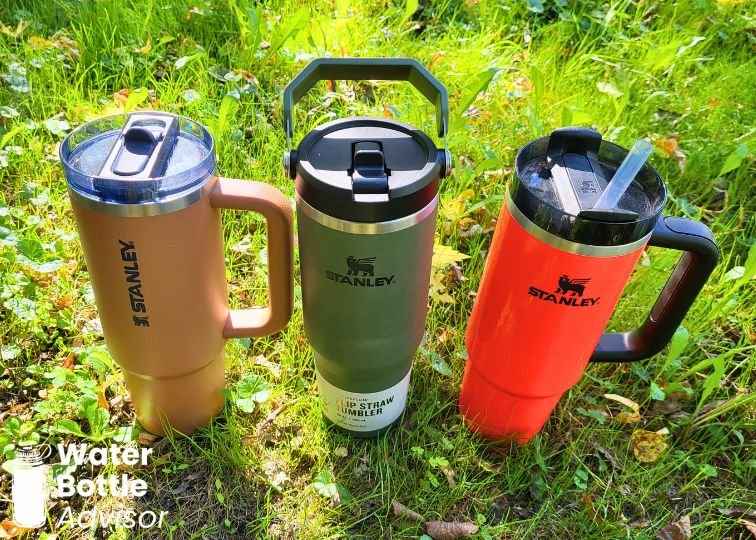
Most people associate Stanley with the viral Quencher tumbler – the one you see everywhere, from gym bags to office desks. But what many don’t realize is that Stanley offers a wide range of tumblers, each designed with slightly different use cases in mind.
In this guide, we’ll break down the three models people are obsessing over right now: the Quencher, ProTour, and IceFlow. By the end, you’ll know exactly which one fits your lifestyle best.
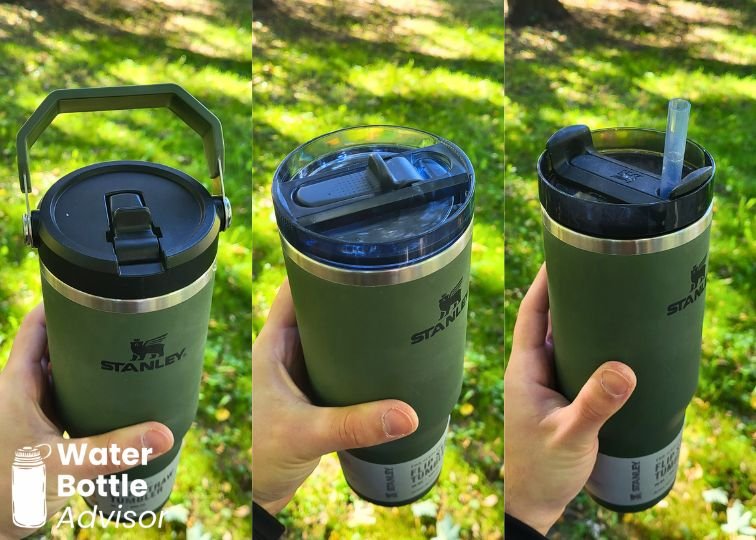
Before we start, keep in mind that the tumblers themselves are surprisingly similar. They all deliver decent insulation, durability, and that signature premium feel. The real difference? The lids. And that single detail has a huge impact on how practical, versatile, and convenient each tumbler is in everyday use.
Recorded test results: 31Completed scoring criteria: 36Latest test date: 2026-08-14T15:40:32.445Z
PROS
Compact for its capacity
Leakproof in our testing
Excellent durability in our wear and lid-cycle tests
Easy to open and use one-handed
Comfortable full-grip carry handle
Likely to fit most standard cup holders
CONS
Disassembling the lid into its individual parts takes a fair amount of time.
Thoroughly hand washing the lid takes more time than with simpler lids.
Not intended for hot drinks.
Available on Amazon
From $26.25Save 25%
Product prices and availability are accurate as of the date/time indicated and are subject to change. Any price and availability information displayed on Amazon.com at the time of purchase will apply to the purchase of this product.
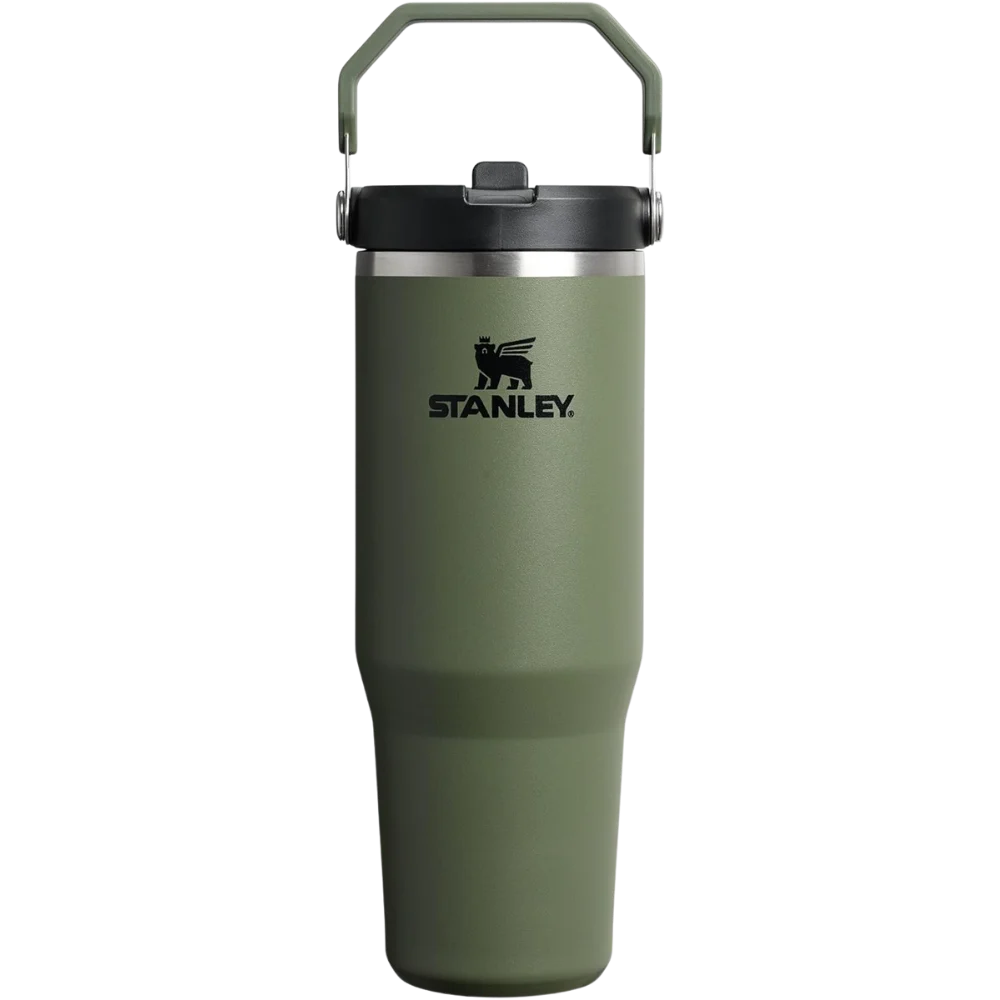
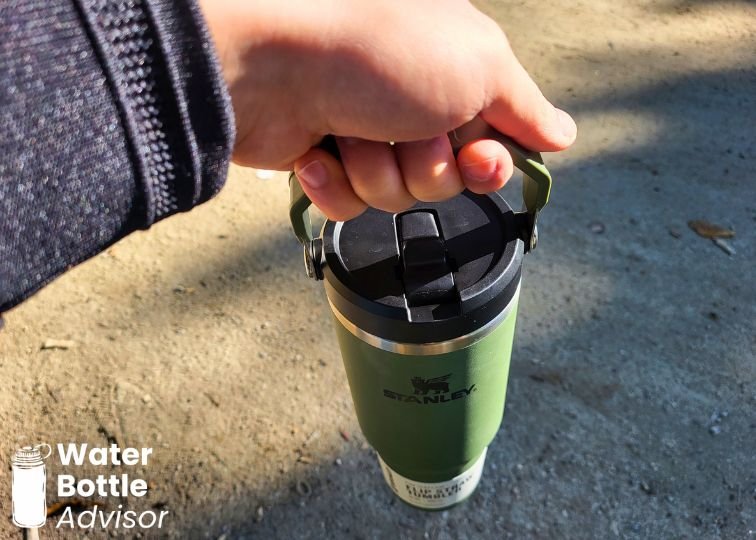
The IceFlow is my favorite Stanley tumbler. To me, it feels like an upgraded version of both the Quencher and the ProTour.
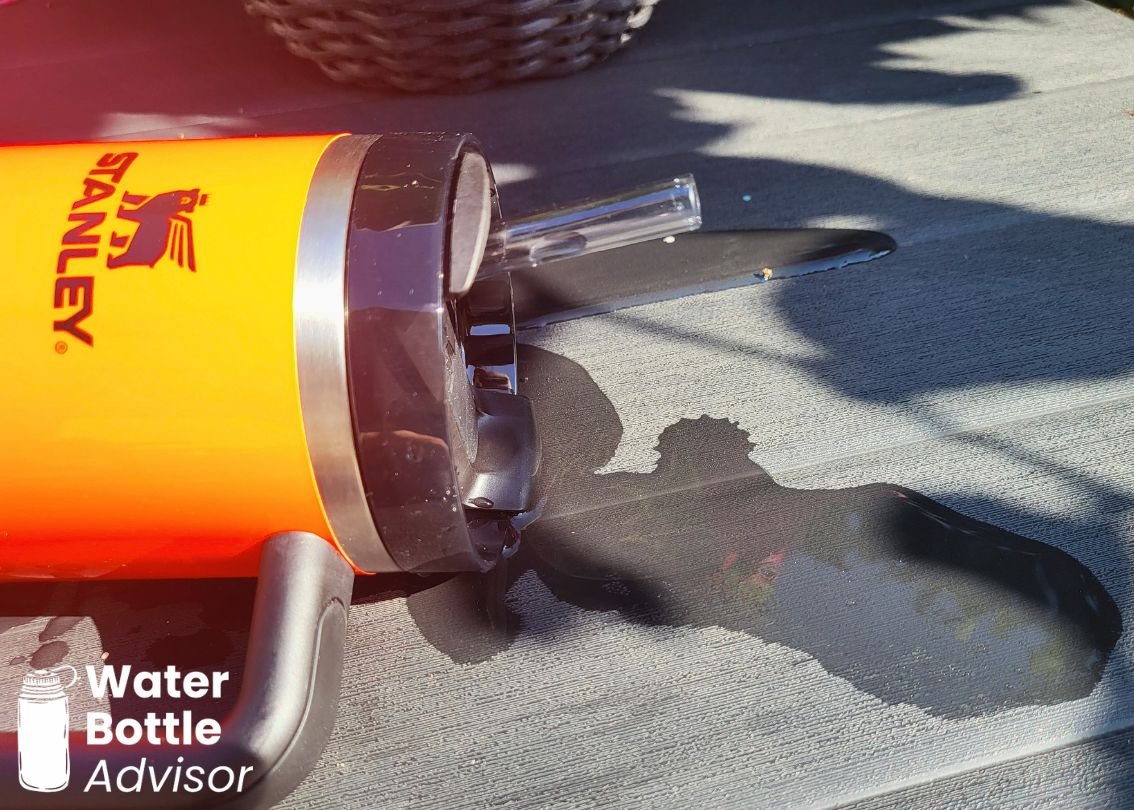
First of all, it’s completely leakproof. If you think you don’t need that, I used to think the same. I bought the Quencher and after about a month I replaced it with the IceFlow for that exact reason. Not having to worry about spills makes a bigger difference than you expect.
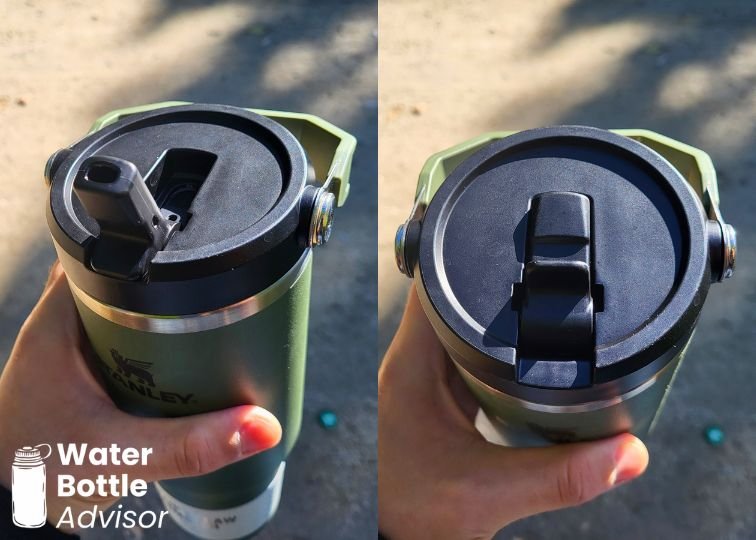
Now, the ProTour is also leakproof, so why do I still prefer the IceFlow? It mostly comes down to the lid. The ProTour lid is good, but it feels a bit thinner and less solid. The IceFlow lid, on the other hand, feels sturdier and more durable.
The lid is also easier to screw on and off because you can use the handle for leverage. After dealing with the thinner lids on the ProTour and Quencher, I actually appreciate that more than I expected.
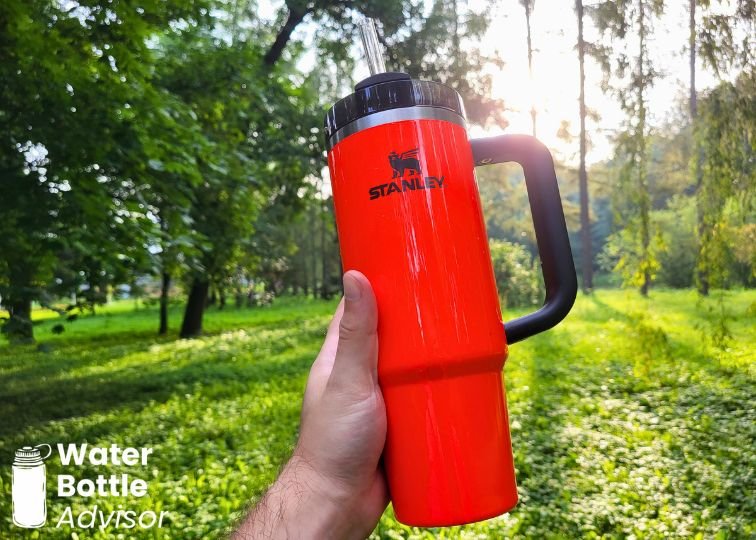
The biggest advantage, though, is the handle. Instead of a large side handle, the IceFlow has a bucket-style handle attached to the lid. It’s comfortable, well-shaped, and easy to grip with all your fingers. That alone makes it much more practical to carry around. I’ve taken it on walks, quick trips outside, even short hikes, and it just works.
Of course, this comes down to personal preference, but I’ll take this kind of handle over a side handle any day, not just on Stanley tumblers but on bottles in general.
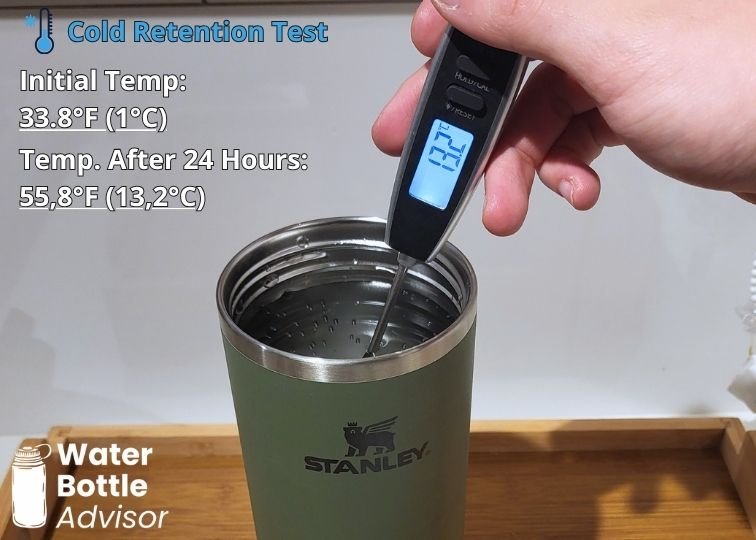
The IceFlow performs almost the same as the Quencher and ProTour in cold retention, which isn’t too surprising since all three have a very similar cup-style build. In my test, the water in my 30 oz IceFlow warmed from 33.8°F (1°C) to 55.8°F (13.2°C) after 24 hours without ice. That’s still properly cold, so there’s nothing to complain about here.
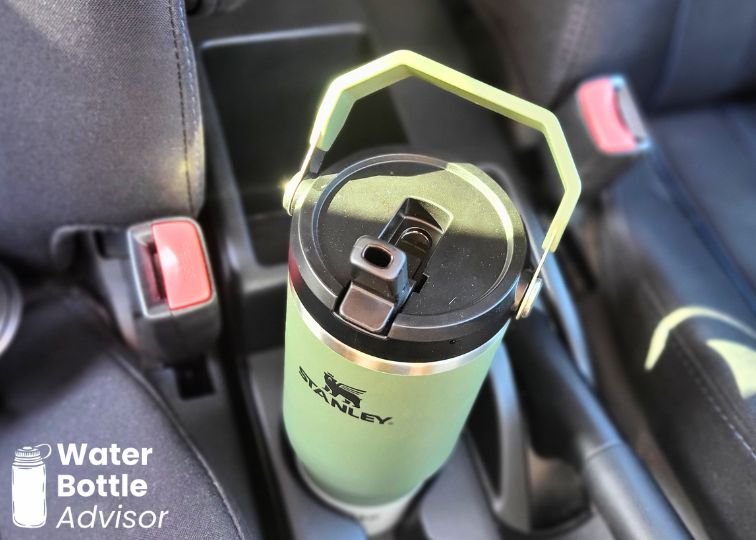
the IceFlow feels like the most versatile Stanley tumbler to me. It fits more situations than the Quencher or ProTour because it’s leakproof when closed, easier to carry by the lid handle, and still fits in car cup holders.
The only drawbacks are the weight and the cleaning process. Like Stanley’s other 30 oz tumblers, it weighs close to 20 oz empty, and you start to feel that after carrying it for a while. Cleaning also takes more effort than I’d like, since there are six parts to take apart and wash. To be fair, that’s not unique to the IceFlow. Stanley’s other tumblers have the same problem.
Available on Amazon
From $26.25Save 25%
Product prices and availability are accurate as of the date/time indicated and are subject to change. Any price and availability information displayed on Amazon.com at the time of purchase will apply to the purchase of this product.
Recorded test results: 31Completed scoring criteria: 36Latest test date: 2026-08-14T12:40:57.268Z
PROS
Leakproof
Decent thermal performance
Lifetime warranty
Fits in most cup holders
Handles everyday abuse
Interchangeable with same-size Stanley tumbler lids
CONS
Cold drinks only
Cleaning takes some work
Big handle gets tiring after a while
Available on Amazon
From $29.97Save 25%
Product prices and availability are accurate as of the date/time indicated and are subject to change. Any price and availability information displayed on Amazon.com at the time of purchase will apply to the purchase of this product.
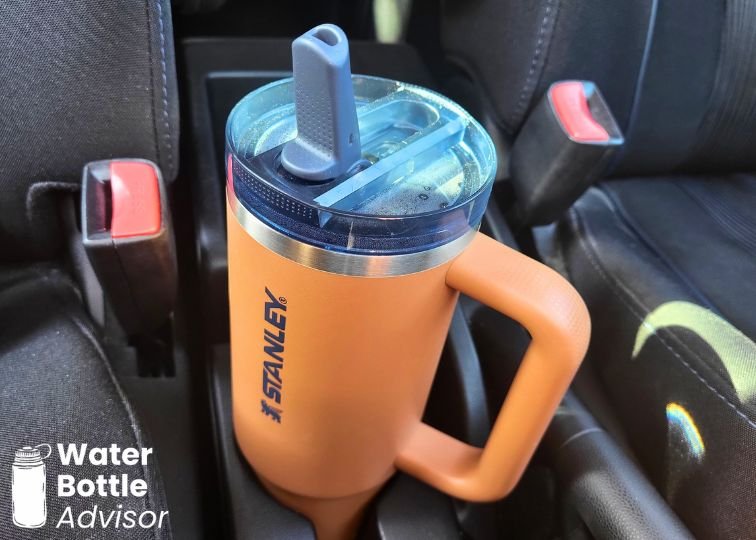
The ProTour fixes the biggest issue I have with the Quencher because it’s actually leakproof. The lid uses a straw spout that’s comfortable to drink from, and there’s a small tab you can push with your thumb, so you don’t have to touch the mouthpiece with your fingers. It feels a lot more hygienic compared to some other tumblers I’ve used.
When you’re done drinking, you just push the spout down until it clicks into place. Once it’s sealed, you don’t have to worry about leaks.
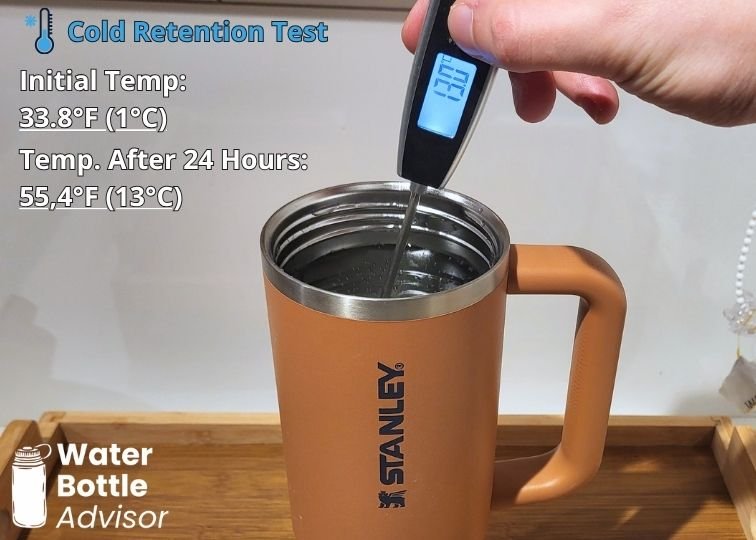
What about the ProTour’s thermal performance? I tested the cold retention in my 30 oz size, and the result was almost identical to the Quencher. The water warmed from 33.8°F (1°C) to 55.4°F (13°C) after 24 hours without ice, which is still strong enough for me.
That said, it’s not perfect. I wouldn’t use it with hot liquids because pressure can build up inside the lid. Warm drinks are fine, but anything really hot feels a bit risky. And just like the Quencher, you’re limited to carrying it by the side handle, which can get uncomfortable after a while, especially when it’s full.
Even with those downsides, I still like the ProTour a lot. I find myself reaching for it more often than the Quencher. I go into more detail in my full Stanley ProTour review.
Available on Amazon
From $29.97Save 25%
Product prices and availability are accurate as of the date/time indicated and are subject to change. Any price and availability information displayed on Amazon.com at the time of purchase will apply to the purchase of this product.
Recorded test results: 33Completed scoring criteria: 38Latest test date: 2026-08-14T11:25:24.236Z
PROS
Decent thermal performance
Can handle hot drinks
Lifetime warranty
Fits in most cup holders
Technically dishwasher-safe (but better washed by hand)
Works for right- and left-handed users
Can handle normal bumps and drops
Interchangeable with same-size Stanley tumbler lids
Three-position lid gives you options
CONS
Not leakproof
Big handle gets tiring after a while
Not great from a hygiene standpoint
Limited outside desk and car use
Not a quick rinse-and-go design
Available on Amazon
From $29.97Save 25%
Product prices and availability are accurate as of the date/time indicated and are subject to change. Any price and availability information displayed on Amazon.com at the time of purchase will apply to the purchase of this product.
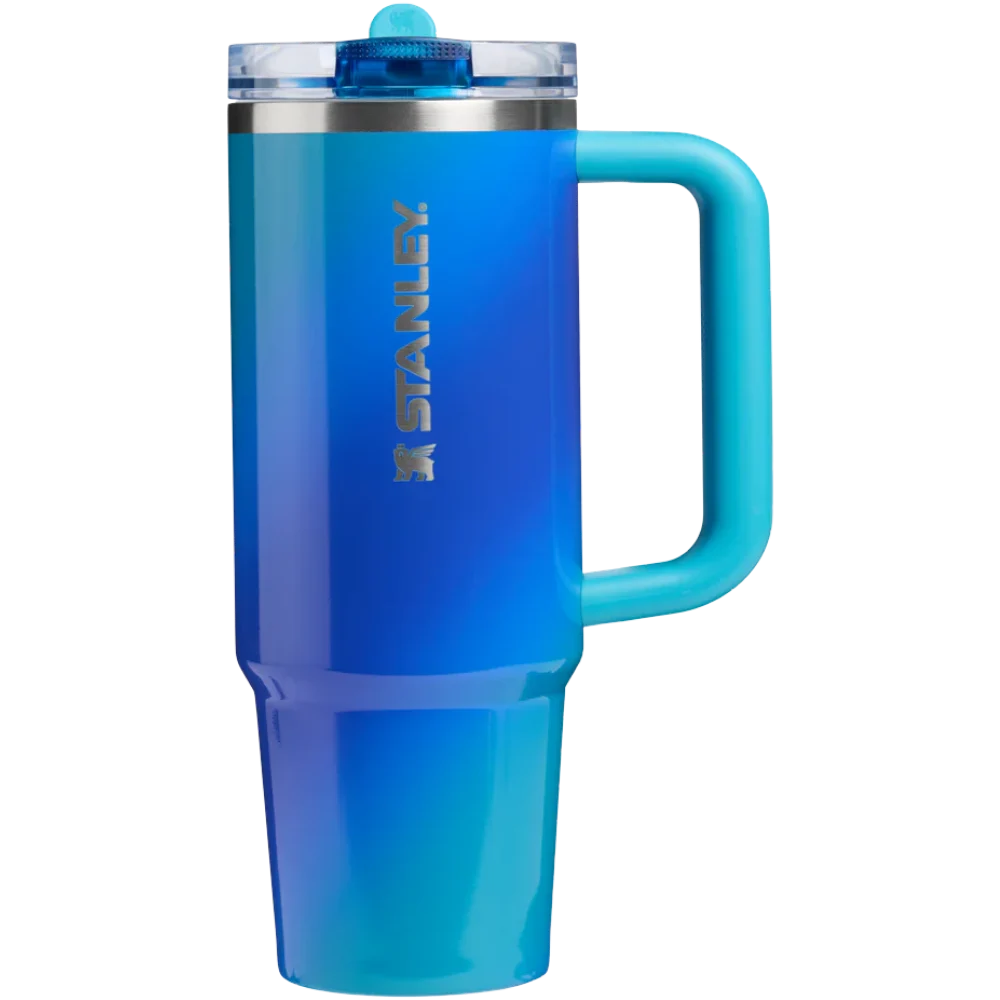
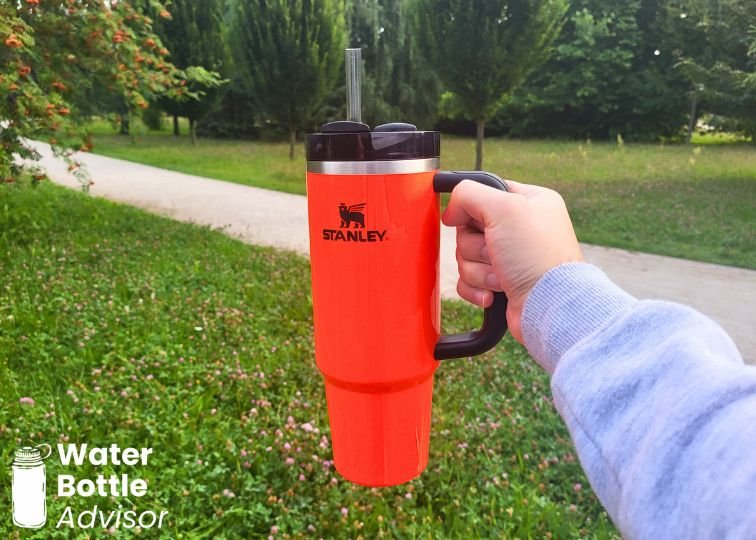
It might sound surprising that the viral Quencher, the tumbler influencers seem to love, lands in last place in my ranking. But honestly, I think it’s a bit overhyped, and I wouldn’t recommend it as your first Stanley.
My biggest issue with it is simple: it’s NOT leakproof. The Quencher comes with the FlowState lid, which leaks. Yes, there’s a rotating tab, and yes, you can remove the straw and cover the opening, but even then it doesn’t seal properly.
If the cup tips over, water will still find its way out. At best, it’s splash-resistant. It’s not something you can confidently throw into a bag and forget about. You always have to keep it upright, which gets annoying fast.
I’m also not a big fan of the handle. It looks nice and trendy, but in practice it’s not that comfortable, especially when the tumbler is full. It starts to feel bulky after a while. You can hold it by the cup itself, but most Quenchers have a smooth finish without much grip. If your hands are wet, it can easily slip, which isn’t ideal.
To be fair, the Quencher works fine in more stationary situations. It’s great for your desk or the car, and like most Stanley tumblers, it fits well in standard cup holders (aside from the massive 64 oz version).
One thing it does well is handling hot drinks. The FlowState lid doesn’t build up pressure, so you can safely use it for coffee or tea. That’s usually when I reach for it.
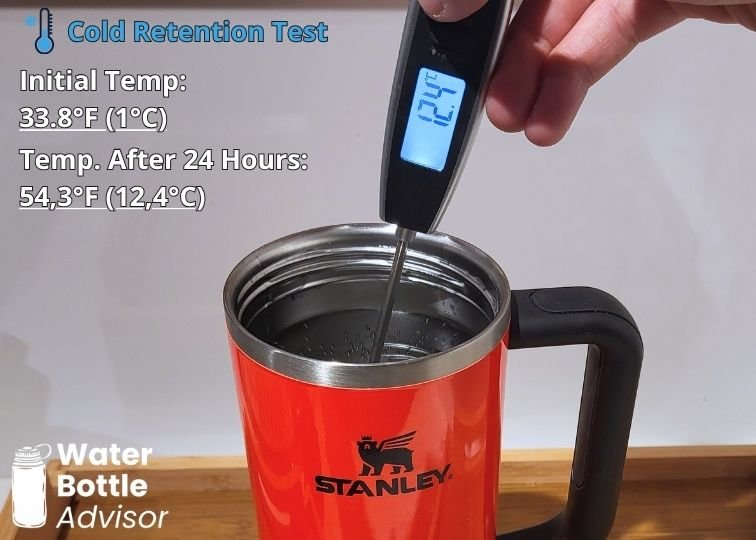
If you’re wondering what to expect from the Quencher’s insulation, my 30 oz size did better than I expected. The water warmed from 33.8°F (1°C) to 54.3°F (12.4°C) after 24 hours without ice, which is good enough for what I’d call premium cold retention.
If you’re considering it anyway, I’d recommend reading a more detailed Stanley Quencher review to understand its pros and limitations before buying.
Still, despite all the hype, I think the ProTour and IceFlow are simply better choices overall, even if they don’t get nearly as much attention.
Available on Amazon
From $29.97Save 25%
Product prices and availability are accurate as of the date/time indicated and are subject to change. Any price and availability information displayed on Amazon.com at the time of purchase will apply to the purchase of this product.
One thing worth knowing is that Stanley lids are interchangeable, as long as you’re using the same cup size. That means you can mix and match between the Quencher, ProTour, and IceFlow depending on what you need.
The catch is that Stanley only officially sells the FlowState lid on its own, usually for around $8 to $10. The other lids aren’t available separately through Stanley. You can find third-party options online that claim to be compatible, but I’d be a bit careful with those since they’re not official.
If I had to give one simple piece of advice, it would be this: go with the IceFlow, then pick up a FlowState lid separately if you want more flexibility. That way, you get a fully leakproof tumbler for everyday use, plus the option to switch lids when you want to drink hot coffee or tea without worrying about pressure building up.
It’s a simple setup, but it gives you the best of both worlds.
Finally, if you’re still unsure which capacity is right for you, it’s worth checking this guide on Stanley tumbler sizes before choosing a model. And if you’re comparing Stanley to other brands, you might also want to check this list of the best tumblers to see how it stacks up.
How we test products
Every product we review is tested using the same structured process, with dozens of measurements and checks covering areas such as thermal performance, lid usability, cleaning, durability, portability, and everyday use. Those results feed into the WBA Score, which helps us compare bottles using consistent criteria instead of relying only on manufacturer claims.
Jeremiah Kowalski founded Water Bottle Advisor to make drinkware reviews more useful and less dependent on manufacturer claims. He has personally tested more than 120 bottles, tumblers, mugs, and filtration systems, putting each one through measuring, cleaning, leak testing, and everyday use before sharing his conclusions. It also means occasionally explaining why yet another large box of bottles has arrived at his door.


Leave a Reply