
When choosing a reusable water bottle, size matters more than most people realize. With so many sleek designs and trendy colors on the market, it’s easy to focus on how a bottle looks – but in everyday use, the size is what truly determines how practical it is.
From compact, pocket-friendly bottles to oversized gallon jugs, the range of options can feel overwhelming. While you’ll most often see standard sizes like 24, 32, 40, and 64 oz, there are plenty of variations in between that can make the decision even harder.
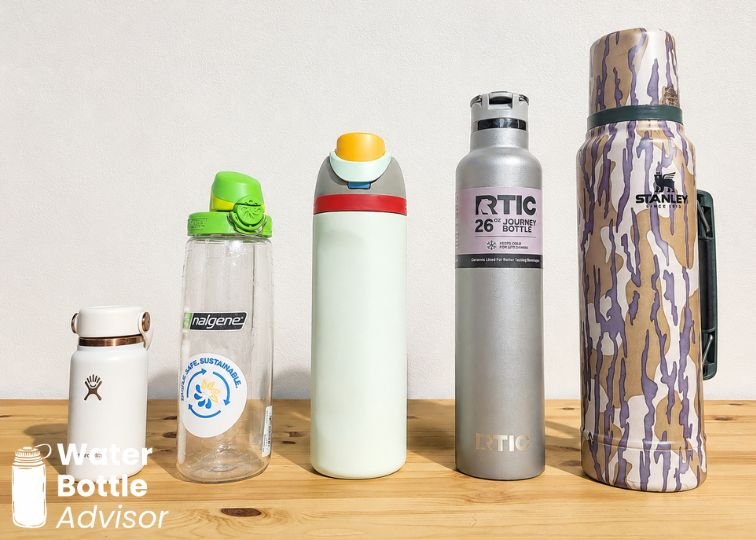
To simplify things, I’ve grouped water bottles into five clear categories: micro, small, medium, large, and jugs. Each comes with its own advantages and trade-offs, depending on how and where you plan to use it.
Some of the links on this page are affiliate links. This means that if you click on one of the links and make a purchase, I may earn a small commission at no additional cost to you.
Which Water Bottle Size Should You Choose?
Category | Capacity (oz) | Recommended Pick | Best For | Pros | Cons |
|---|---|---|---|---|---|
Micro | 5–15 oz | Short walks, kids, coffee replacement, minimalists | Ultra-portable, lightweight, easy to carry anywhere, fit most car cup holders | Needs frequent refilling, insulation doesn’t last as long as it does in larger-capacity bottles | |
Small | 16–24 oz | School, city commuting, short hiking trips | Good balance of size and portability, easy to carry, fewer refills than micro bottles, fit most car cup holders | Still limited for all-day hydration, may feel small for long trips or heavy water drinkers | |
Medium | 25–39 oz | Office, school, commuting, casual workouts | The most versatile size, enough for a few hours outdoors, longer hiking trips | You start to feel the weight when it’s full, don’t fit in most car cup holders, stronger insulation than smaller sizes | |
Large | 40–63 oz | Gym, hiking, long work shifts, travel days | Fewer refills, great for longer hydration | Heavy, less portable, don’t fit in most car cup holders | |
Jugs | 64–128 oz | Intense workouts, outdoor jobs, all-day trips, shared hydration | All-day capacity, no refills needed | Bulky, heavy, expensive |
Micro Bottles (5-15 oz)
Micro water bottles are often the default pick for kids, especially under 8. Their hydration needs are simply lower, so a small capacity is usually enough without turning the bottle into extra weight they don’t need to carry around.
Lately though, micro bottles have been showing up in adult hands more often too. A lot of that shift seems to trace back to Japan, where compact design has been a bit of a trend for years. Brands like Hydro Flask even jumped in with ultra-compact models like the Micro Hydro at around 6.7 oz. They look clean, minimal, and easy to throw in a bag.
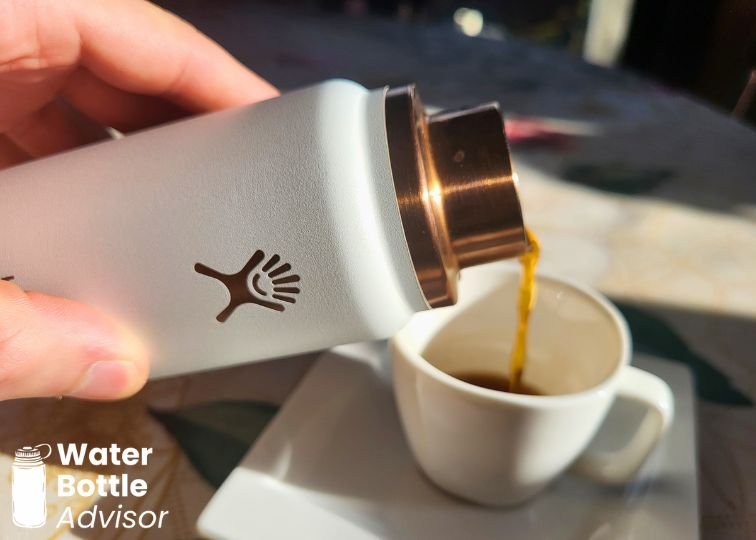
The trade-off shows up pretty quickly in daily use. For adults, that size runs out fast. To hit a normal daily water intake, you’d be refilling something that small eight to ten times a day. It doesn’t take long before that starts to feel like more effort than it’s worth.
If you like the micro aesthetic but want something that actually holds up in real life, the Hydro Flask Micro Hydro 13.5 oz is a solid middle ground. It still keeps that slim, minimalist look, but adds just enough capacity to make it practical.
It also benefits from double-wall vacuum insulation, so cold water stays cold for hours, roughly 7+ in normal conditions. See my Hydro Flask Micro Hydro review for a deeper look.
Small Bottles (16-24 oz)
I find small bottles useful for a few hours outside the house. They’re especially handy in the car, because most of them fit neatly into standard cup holders since the base usually stays under 3 inches in diameter. No need for any extra adapters or adjustable holders, just drop it in and go. If you’re curious which ones work best for driving, I’ve put together a ranking of the best water bottles that fit in car cup holders.
One clear upgrade over micro bottles shows up in insulation. Once you move into the small category, the gap becomes hard to ignore. Some of the better steel bottles, like the Owala FreeSip 24 oz, can keep water cold for up to 24 hours – something micro bottles can’t really compete with.
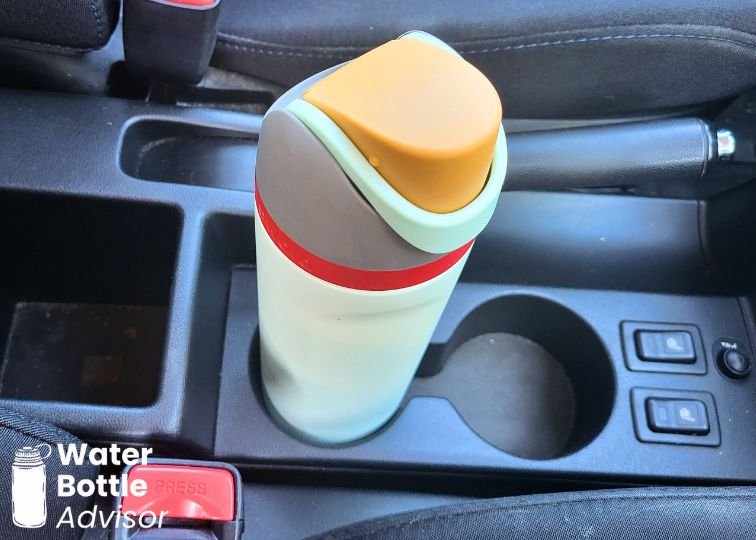
There’s a lot to like about the 16-24 oz size range, and it’s no surprise the 24 oz size is the most popular. For many people, it hits that “just right” point between portability and capacity. That said, for my own use, it’s slightly on the small side. I do longer, all-day hikes from time to time, and in those situations a 24 oz bottle runs dry after 3–4 hours, leaving me without enough water for the rest of the day.
That’s why I lean more toward 32 oz medium bottles – they feel like a more complete, all-around solution. Still, if capacity isn’t your main concern and you just want something portable that can comfortably get you through a few hours with solid insulation, small bottles, especially 24 oz models, are a really solid choice.
Medium Bottles (25-39 oz)
Medium bottles are the ones I use 70% of the time. They’re versatile, easy to carry, and hold enough water to last a few hours without needing constant refills.
For most people, this is the safest choice. A medium bottle works well for the gym, work, hikes, travel, or just daily use.
My go-to size is 32 oz, especially for stainless steel. It’s large enough to keep you hydrated for half a day, but still manageable to carry. I take mine pretty much everywhere. A solid example is the Coldest Bottle 32 oz – it’s durable and keeps temperature exceptionally well.
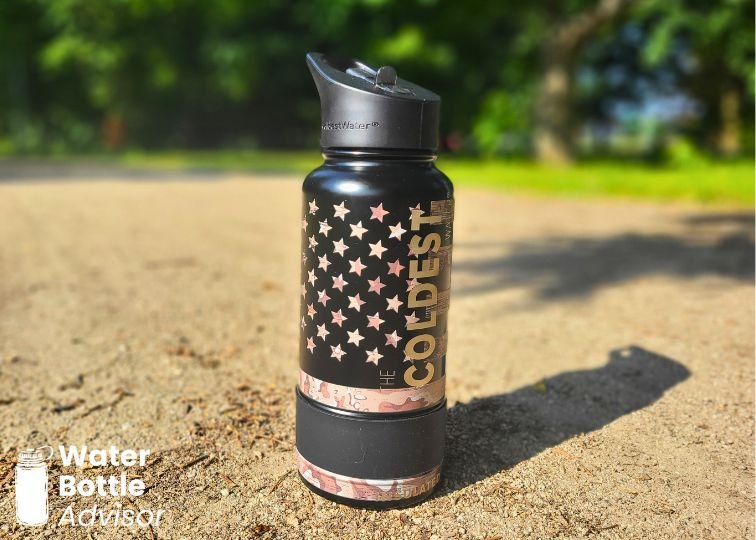
There are two downsides to keep in mind, though:
- Cup holders – 32 oz sizes and above often don’t fit
- Weight – still portable, but noticeably heavier than smaller bottles. Medium-sized bottles can weigh even 30+ oz when empty
If portability matters, pay attention to weight and base diameter – these vary a lot and make a bigger difference than you’d expect.
Overall, medium bottles give you the best balance between capacity and convenience, which is why they’re the most popular choice.
Large bottles (40-63 oz)
Large bottles aren’t for everyone, but they do have a clear use case. I mostly use them in stationary situations, like at work or at home, where the bottle just sits on a desk and I don’t need to carry it around constantly. The biggest advantage is simple: a lot of water with very few refills, sometimes none at all during the day.
They work best for people who:
- work long, fixed-location shifts (office, healthcare, construction base, etc.)
- go to the gym and don’t want to refill mid-session
- spend long hours driving or commuting
- tend to forget to drink and prefer a “set it and forget it” setup
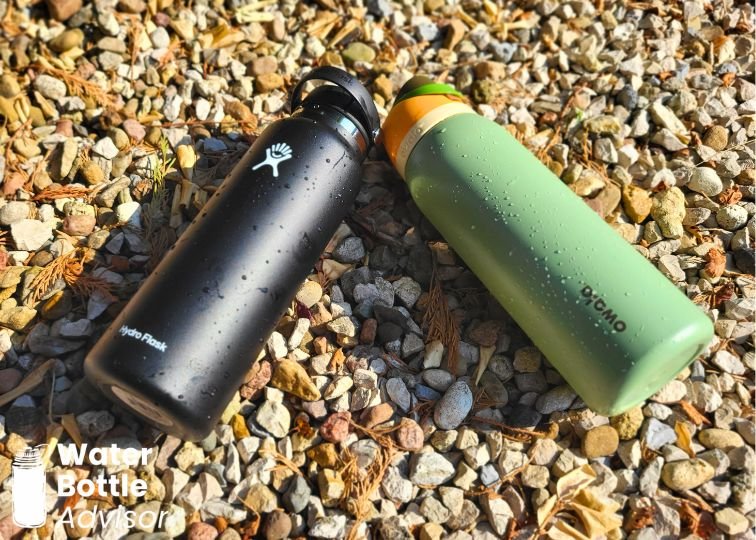
One thing I’ve noticed from using different sizes is that larger stainless steel double-wall vacuum insulated bottles often perform better in temperature retention. In simple terms: more volume helps keep the cold (or heat) stable for longer.
For example, when I tested my Stanley Quencher 40 oz Tumbler against a 20 oz version under the same conditions (cold water with ice), the larger one kept the water cold for about 18 hours longer. In other bottles the difference usually isn’t that extreme, but it’s still noticeable – larger sizes tend to hold temperature more efficiently overall.
That said, usability drops once size increases. Large bottles are noticeably bulky, and you start to feel it in everyday use. My 40 oz Hydro Flask, for example, is around 13 inches tall and has a wide base that makes it awkward to carry for long periods.
There are a few practical limitations worth keeping in mind:
- they don’t fit in most car cup holders
- they can feel unbalanced when full
- they take up more space in backpacks or bags
- they’re not ideal for one-handed drinking on the go
A 40 oz bottle is a solid “maximum practical size” for everyday use. Beyond that, you’re usually better off switching to a jug rather than trying to make a bottle do everything.
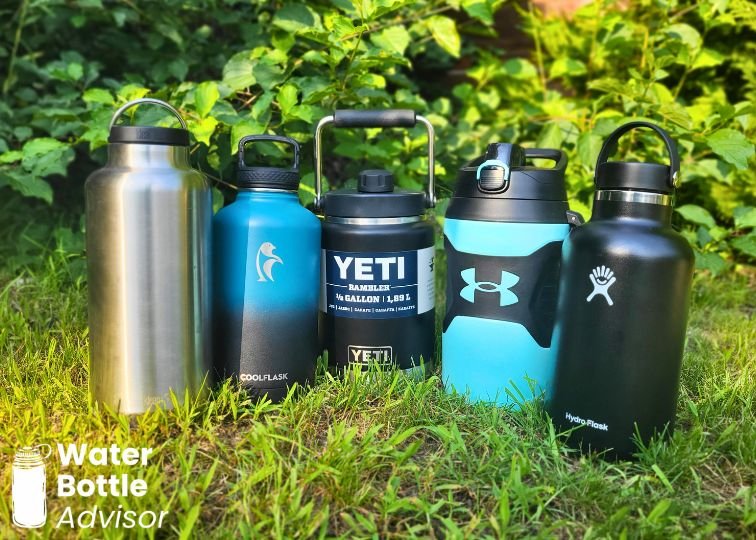
Jugs (64-128 oz)
If large bottles aren’t for everyone, then jugs are even more niche, but in the right situations, they’re incredibly useful.
They’re not something you carry around casually. Instead, they’re meant for shared or stationary hydration, where having a large amount of water in one place matters more than portability.
A good example from my experience: I once hosted a family gathering in a remote spot where access to water wasn’t easy. A 32 oz bottle would’ve been useless there – people would’ve been refilling constantly.
Instead, I brought my Hydro Flask Oasis 128 oz Jug, and it made a huge difference. We had enough water for several hours in hot weather without worrying about refills at all.
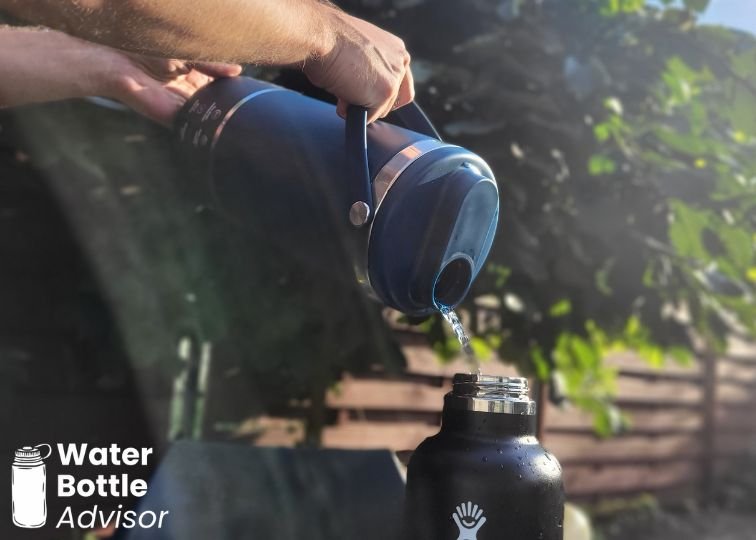
That’s really where jugs shine:
- family gatherings or group events
- long beach days
- camping trips
- outdoor work sessions
- situations where multiple people share one water source
In these cases, a jug becomes less of a bottle and more of a central hydration station.
One interesting trade-off is temperature retention vs usability. In my experience, large 40 oz stainless steel bottles usually offer the best insulation performance thanks to their vacuum-sealed, narrower openings that limit heat exchange. Jugs, on the other hand, typically have much wider mouths, which makes them more convenient to fill and clean – but it also reduces insulation efficiency compared to bottle-style designs.
That said, I still prefer jugs for what they are designed to do. The comfort of a proper handle and the ease of pouring or sharing water outweigh the slight loss in thermal performance in most real-world situations. And when I actually care about keeping water ice-cold for a long time, it’s usually enough to simply load the jug with plenty of ice at the start.
The trade-off is cost and portability. Big jugs are expensive (I paid around $130 for my Oasis) and they’re not something you casually throw in a bag. You’re paying for capacity, insulation, and convenience in one fixed place.
If you want something more affordable but still very practical, a 64 oz jug is usually the sweet spot. It can easily cover a full day of hydration for one or even two people without refilling. If you’d like to give this size a try, check out my ranking of the best 64 oz water bottles.
Final Thoughts
If you’re still unsure which size to choose, here’s my simplest advice: start with one bottle in each category over time, not all at once. It’s not the cheapest approach, but it helps you quickly understand what actually fits your lifestyle. After a while, you’ll naturally start reaching for one size more than the others.
That’s exactly what happened to me. Having different sizes means I can always grab the right bottle depending on where I’m going – whether it’s a quick walk, a gym session, a full workday, or a long day out.
That said, if you want to keep things simple or you’re working with a budget and only want one bottle, go with a 32 oz medium size. In most cases it’s the most versatile option.

Jeremiah Kowalski
Jeremiah Kowalski is a drinkware product researcher who has personally tested 50+ reusable water bottles, tumblers, mugs, and filtration systems from leading brands. He focuses on real-world performance, durability, and safety to help readers choose drinkware that actually fits their daily hydration needs.