
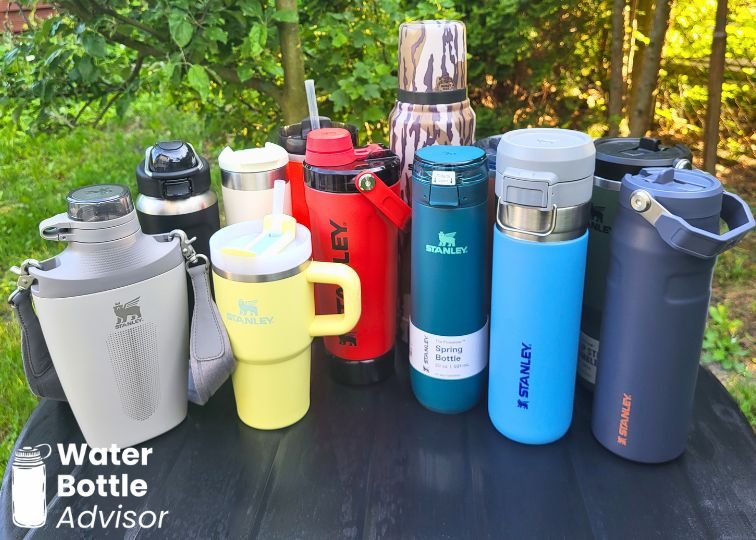
Not that long ago, Stanley was mostly known for rugged thermoses tossed into toolboxes, backpacks, and truck cup holders. Now the brand is everywhere, largely thanks to its viral tumblers that somehow turned drinkware into a lifestyle trend.
But Stanley is more than just one popular cup. The company has been around for over 100 years and makes everything from insulated bottles and mugs to food jars and travel drinkware.
In this guide, I’ll break down what the Stanley brand actually is, which products made it famous, why people love it so much, and where the criticism comes in – because despite all the hype, Stanley definitely hasn’t avoided controversy along the way.
What Is the Stanley Drinkware Brand?
Long before influencers started matching their tumblers to their outfits, the brand was already a go-to pick for construction workers, campers, truck drivers, and basically anyone who spent a lot of time outdoors.
The company made its name by creating durable vacuum-insulated steel bottles that could take a beating and still keep coffee hot all day. That “built like a tank” reputation stuck around, and it’s still a huge part of Stanley’s identity today.
Even now, most Stanley products have that sturdy, slightly overbuilt feel to them – in a good way.
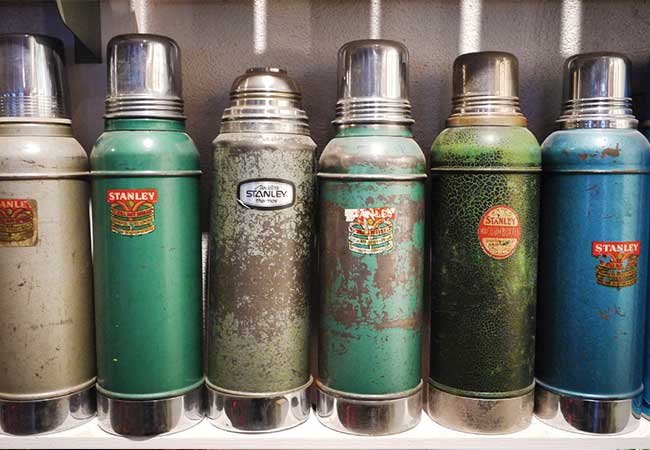
What really pushed Stanley into the spotlight recently was the Quencher tumbler line. Social media grabbed hold of it, and suddenly the brand went from “your dad’s old thermos” to something people queued up for at Target.
But underneath all the hype, Stanley is still fundamentally a practical drinkware company focused on insulation, durability, and everyday usability rather than just aesthetics alone.
That’s probably why the brand managed to stick around for so long instead of fading out after a trend cycle or two. Beneath the pastel colors and viral videos, the products are actually pretty solid.
In fact, Stanley is currently probably the hottest name in drinkware, right alongside brands like Hydro Flask, YETI, and Owala. Based on my own testing, Stanley even manages to outperform some of them in certain areas, especially when it comes to insulation performance.
Stanley Drinkware Product Range Explained
Stanley may be best known for its viral tumblers, but the brand’s lineup goes much deeper than that. It covers pretty much every type of drinkware you can think of. Some products are geared toward outdoor use, while others are clearly designed for commuting, office life, or long days on the road.
Stanley Tumblers: The Viral Product Line
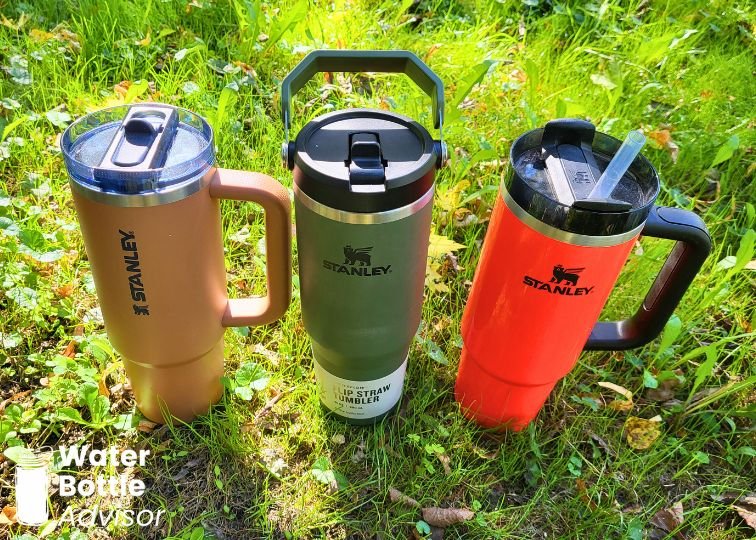
If there’s one product category that really put Stanley back on the map, it’s the tumblers. These are the bottles that blew up all over social media and turned Stanley from a long-running outdoor brand into something people suddenly lined up for at Target at 7 in the morning.
And to be fair, Stanley knew exactly what it was doing here. The tumblers combine huge capacity, strong insulation, comfortable handles, and cup-holder-friendly bases in a way that just clicks with everyday use.
The star of the show is obviously the Stanley Quencher. That’s the famous oversized tumbler you’ve probably seen a hundred times already. It became wildly popular because it solves a bunch of little annoyances at once: it holds a ton of water, keeps drinks cold for long, and fits in most car cup holders despite the size.
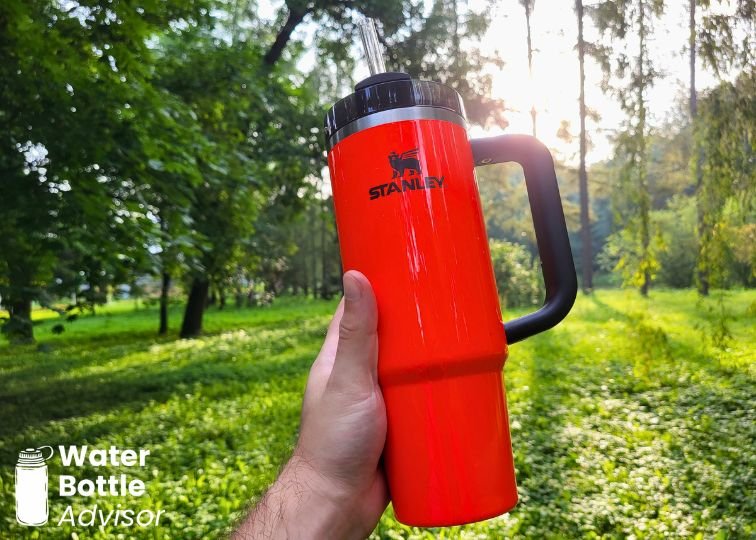
But the Quencher isn’t the only tumbler worth talking about. Stanley also makes the less talked-about IceFlow and ProTour lines, and those deserve more attention than they get.
Unlike the standard Quencher lid, IceFlow and ProTour models come with leakproof designs, which makes them much easier to toss into a backpack or carry around without worrying about spills. For commuting, travel, or gym use, that alone is a crucial feature.
One thing I really like about Stanley’s tumbler ecosystem is that the lids are interchangeable, as long as the mouth diameter matches. So if you prefer the body of one tumbler but the lid style of another, you can often mix and match without much hassle.
Stanley Bottles: Everyday Hydration Essentials
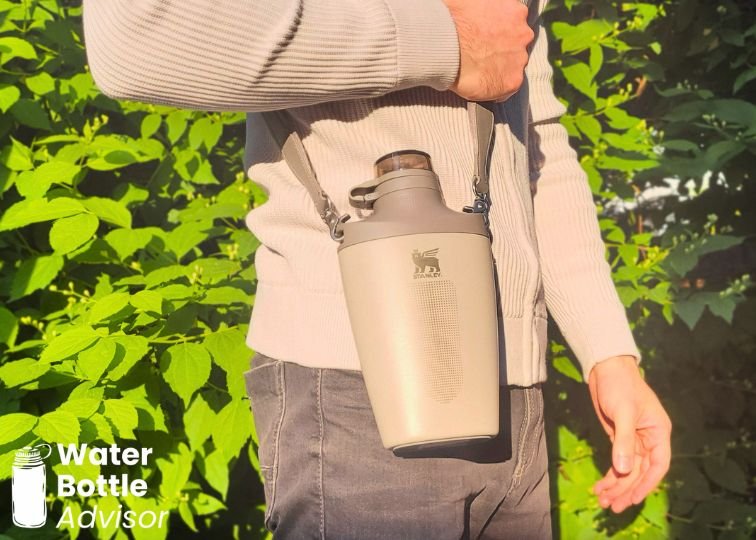
While Stanley tumblers get most of the spotlight these days, the bottle lineup is really where the brand’s roots show. These are the classic, no-nonsense pieces built for everyday hydration.
What stands out is how consistent the whole range feels. From models like the Wellspring to the Quick-Flip Go, everything is built around practicality: easy one-hand use, solid construction, and insulation that quietly does its job in the background.
And while tumblers often get all the attention for their aesthetic appeal, Stanley has clearly been putting effort into the bottle side of things too.
Newer releases like the All Day Slim Bottle or the Flowstate Spring Bottle show that Stanley is slowly finding that balance between everyday function and something you don’t mind being seen with, and the bottle lineup reflects that shift pretty clearly.
Stanley Mugs and Travel Cups
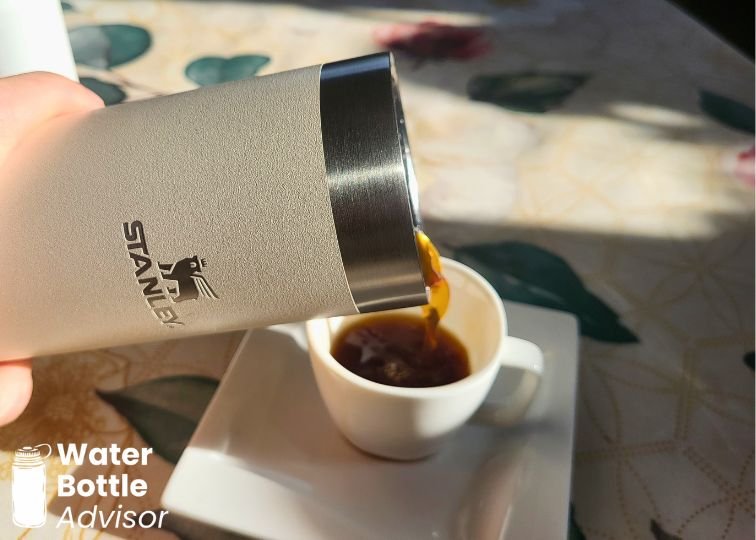
Stanley’s mugs and travel cups are the kind of gear you grab when you’re on the move – morning coffee in the car, tea at your desk, or something warm to sip while commuting.
The lineup ranges from classic insulated mugs with solid lids to more modern travel cups built for one-handed use. Most of them lean into practicality: they’re easy to clean, fit into most cup holders, and keep drinks at a stable temperature for hours.
The real standout here is the Stanley Aerolight Transit Mug. It uses Stanley’s Aerolight technology, which makes it about 33% lighter than comparable stainless steel mugs from other brands.
Overall, this category is less about hype and more about small daily conveniences. It’s the kind of drinkware you don’t really think about – and that’s exactly the point.
Stanley Accessories and Other Drinkware

Stanley doesn’t just stop at bottles and tumblers. Over time, the brand has quietly built out a whole ecosystem of smaller accessories that make everyday use a bit smoother.
You’ve got the usual practical add-ons like bottle boots to protect the base, replacement straws, cleaning brushes, and spare lids.
But Stanley has also become something of a trendsetter in the drinkware space. Accessories like dedicated slings for the Quencher turned oversized cups into something far more portable and “grab-and-go”, instead of just being bulky tumblers you set down on a desk and forget about.
Since then, bottle slings in general have taken off and become a lot more common, with more and more brands leaning into the same idea of hands-free, on-the-move hydration.
What’s interesting is that the brand hasn’t lost sight of where it came from. Alongside all the modern accessories and aesthetic add-ons, Stanley still makes the old-school gear that built its reputation in the first place – lunchboxes, hard coolers, and camp cookware designed for proper outdoor use.
It’s a reminder that underneath all the social media hype, this is still a brand that knows its way around a campsite just as well as a coffee shop.
Why People Like Stanley Products
Stanley has built a pretty loyal following over the years, and there’s a reason for that – people tend to stick with what works. Here are the main reasons people keep coming back to Stanley products.
Huge Selection of Colors and Sizes
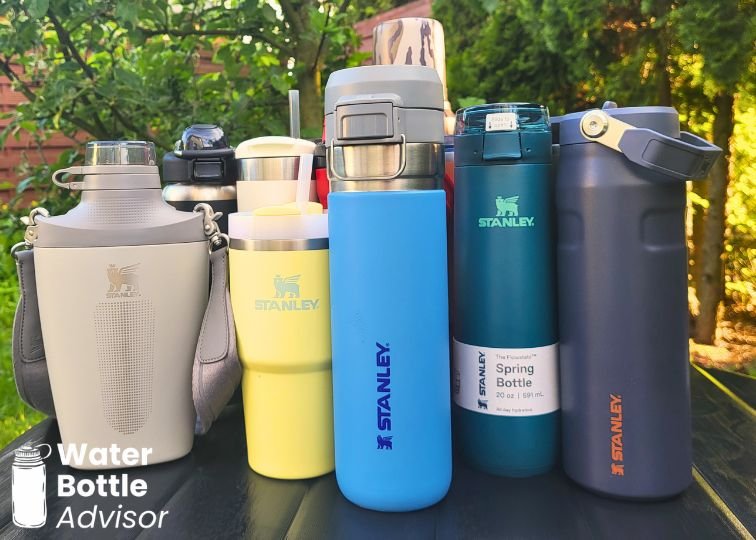
One of the biggest advantages of Stanley is just how much choice you get. Whether you’re after a compact bottle for short trips, a massive tumbler for all-day hydration, or a classic mug for your morning coffee, there’s usually a size and style that fits the bill without much compromise.
Where Stanley really goes all-in is color variety. The brand regularly drops new seasonal shades, limited editions, and collabs that keep things fresh.
It’s not just about function anymore. For a lot of people, it’s also about picking something that matches their style or even their mood that day.
According to the drinkware inventory app Cupboard, Stanley has released hundreds of SKUs and over 2,800 different color and size combinations so far, and that number keeps growing as new releases roll out.
That kind of range means you’re rarely stuck with “one option fits all”. Instead, you can actually dial in a bottle or tumbler that suits your exact needs – whether that’s size, lid type, or just the color you like looking at every day.
At the end of the day, this variety is a big part of Stanley’s appeal. It lets people mix practicality with a bit of personality, instead of treating drinkware as just another boring utility item.
Excellent Thermal Performance
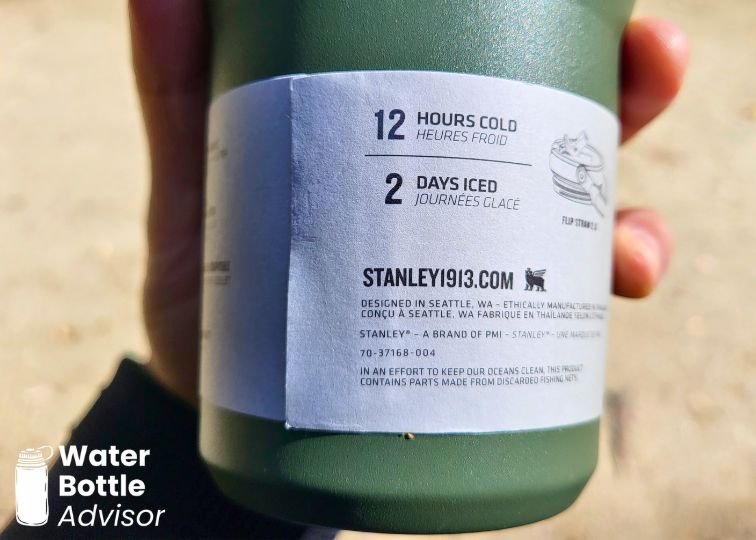
What really caught me off guard during testing was just how strong Stanley’s thermal performance is across most of the lineup. Bottles like the Wellspring and Quick-Flip Go, despite their fairly simple design, ended up performing better than I expected. keeping water cold for 30+ hours without ice and hot for around 12 hours.
In my tests, that actually edged out both my Hydro Flask and YETI bottles, which was a bit of a surprise given how established those brands are in this space.
Stanley uses double-wall vacuum insulation just like everyone else, but the results suggest there’s a bit more going on under the hood than just the standard setup. Whatever the exact tweaks are, they clearly do the job – and then some.
Quality Build
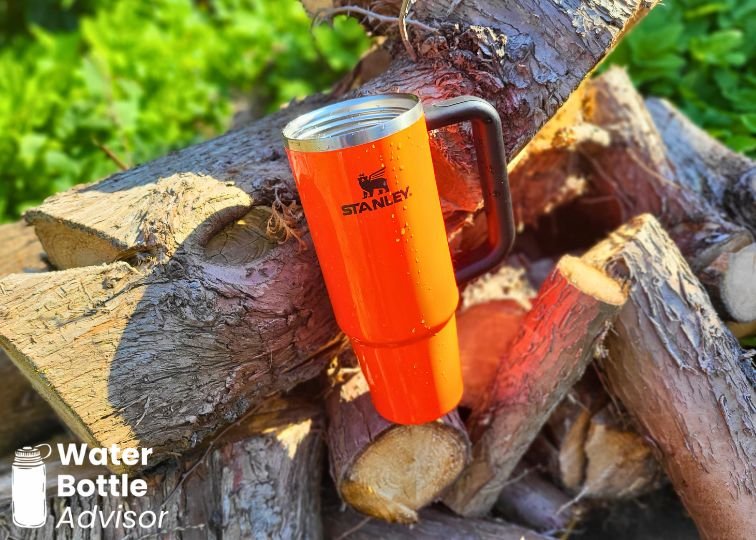
I’ve yet to come across a Stanley product that feels flimsy, and I’ve owned quite a few over the years. Most of their drinkware is made from 18/8 stainless steel, which is pretty much the standard in the premium segment.
But from experience, it’s not just about the material itself – it’s how everything is put together. I’ve had bottles made from the same steel that picked up dents and scratches after a single drop.
Stanley, on the other hand, feels a bit more solid in hand. Sure, it’s still steel, so if you throw it off a height it’ll take a hit, but in general the walls feel thicker and more resistant to everyday knocks and bumps.
The lids are usually BPA-free plastic, but they don’t feel cheap or flimsy either.
Overall, if durability is high on your list, Stanley is a safe bet. After all, this is a brand that built its reputation on gear used in tough conditions – from job sites to construction work – and that DNA still shows in its products today.
Lifetime Warranty
Drinkware isn’t exactly pocket change, so when you’re spending good money on a bottle or tumbler, it’s natural to expect it to last. Stanley leans into that expectation with a lifetime warranty on its products.
In simple terms, Stanley guarantees that its drinkware is free from defects in materials and workmanship at the time of purchase. That also includes issues like a drop in thermal performance, which is one of the key selling points of their bottles and tumblers.
Of course, this only applies if the product is used normally and looked after according to the care guidelines. So if you’re treating it reasonably and not putting it through extreme abuse, you’re covered.
The Not-So-Good Stuff About Stanley
Stanley makes solid gear, and to be fair, it’s actually hard to pick obvious flaws in the products themselves once you start using them. Most of the downsides show up more in how they’re used, bought, and talked about – from consumer habits and constant upgrades to broader environmental concerns tied to overconsumption.
It Encourages Collecting More Than Using
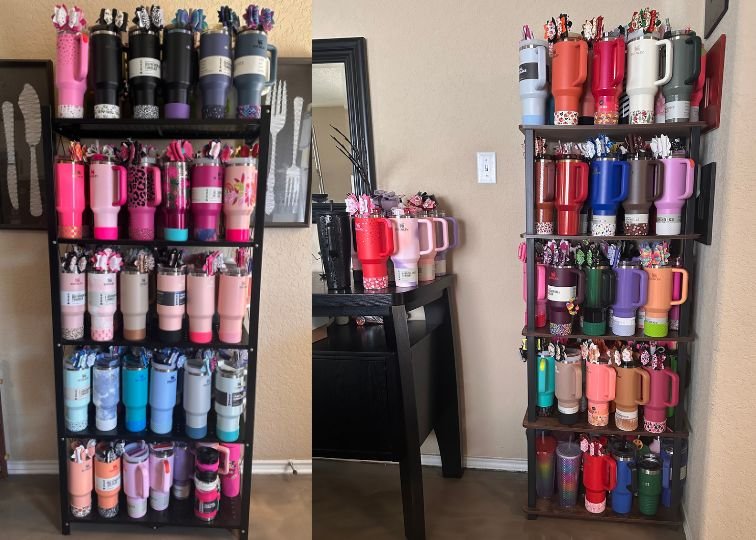
I mentioned earlier that one of Stanley’s biggest strengths is the sheer variety of models, colours, and sizes. But there’s also another side to that coin.
All those limited drops and seasonal shades don’t just give people choice – they also feed into a growing “collecting” mindset.
Instead of treating a tumbler as something you buy once and use for years, it can easily turn into something people start hunting down, swapping, and stacking at home.
New color drops especially tend to push that behaviour, with certain shades selling out quickly and creating a bit of a “got to catch them all” effect.
We actually looked into this in our report on the environmental impact of drinkware collecting. One of the more eye-opening findings was that a collection of 158 Stanley Quenchers can generate the same carbon emissions as using around 7,457 plastic bottles.
The issue isn’t just the production itself, but the fact that a lot of these items end up sitting on shelves rather than being used day to day, so the environmental “debt” never really gets offset through long-term use.
And that’s the tricky part. By constantly rolling out new colours and limited releases, Stanley (intentionally or not) encourages people to treat drinkware less like a reusable tool and more like a collectible or even a fashion accessory.
It’s not unique to Stanley, but they’ve definitely helped push this trend into the mainstream more than most brands.
It’s Expensive
Saying Stanley products are expensive is a bit like saying airline snacks aren’t exactly a bargain – technically true, but it still feels like an understatement.
When you look at price-to-capacity, things start to stand out pretty quickly. Some Stanley bottles and tumblers can come in at around $3 per ounce of capacity, while you can easily find perfectly usable alternatives for $1 per ounce or even less that still do the job just fine.
A good example is the Stanley Cross Bottle, which lands at $3.26 per ounce of capacity. That pricing sparked backlash even among longtime Stanley fans, with many people arguing that the brand was starting to lean too heavily into hype and limited-edition appeal rather than practical value.
So yes, Stanley sits firmly in the premium category, and the pricing reflects that. But I don’t think you’re just paying for a logo stamped on stainless steel. As I’ve mentioned earlier, the insulation performance is genuinely strong, and the overall build quality is up there with the best in the game (if not right at the top).
On top of that, the thoughtful design choices, interchangeable lids, and generally well-engineered details help take some of the sting out of the price tag.
It’s still not cheap, but at least you can see where the money is going.
The Stanley Lead Controversy: What Actually Happened?
At some point, Stanley found itself in the middle of a bit of a panic online and it all came down to lead.
The concern started when people noticed discussions around lead being used in the sealing process of vacuum-insulated drinkware.
That’s not unique to Stanley, by the way – it’s something that has historically been used across the industry in a very specific part of the insulation construction process, completely sealed off inside the base of the product.
The internet, as it tends to do, ran with it. Suddenly there were videos and posts suggesting that Stanley bottles might be unsafe to use, which naturally caused confusion.
Stanley responded by clarifying how their products are made. The key point is that any lead used in the manufacturing process is fully sealed inside the base of the bottle, meaning it never comes into contact with the user or the liquid.
The lead pellet is located beneath a circular stainless-steel disc at the bottom of the cup, usually the part with the Stanley logo. Under normal conditions, it stays completely enclosed. Lead exposure would only become possible if that protective steel disc somehow fell off or got punctured.

In other words, the issue wasn’t about lead being “in your drink”, but about a manufacturing component that’s locked away during production and never part of the drinking surface.
Still, the controversy stuck around for a while online, as these things often do. Even when something is technically safe, once it starts doing the rounds on social media, it can be hard to put the genie back in the bottle.
For me, it didn’t really move the needle at all. I didn’t suddenly start ditching their bottles or throwing everything in the bin. If anything, it just felt like a lot of noise around a manufacturing detail that isn’t unique to Stanley anyway. Plenty of other drinkware brands use the same vacuum insulation method involving lead in the sealed base.
Is Stanley Just a Trend or a Long-Term Brand?
At first glance, Stanley can look like it’s riding a wave of social media hype – viral colors, limited drops, and people chasing the latest release. It’s the kind of thing that makes you wonder if it will fade out just as quickly as it blew up.
I’ve even come across articles from 2024 saying the Stanley boom was over and the trend had run out of steam. But in reality, that never really happened. The brand is still everywhere, and demand hasn’t exactly dropped off a cliff.
The quality of their products is hard to argue with. I’d take a solid stainless steel bottle or tumbler from Stanley over a cheap plastic one any day.
That said, it’s not all rosy. Stanley definitely plays into trends that can push overconsumption, and that’s not something to brush off lightly from an environmental point of view.

Jeremiah Kowalski
Jeremiah Kowalski is a drinkware product researcher who has personally tested 50+ reusable water bottles, tumblers, mugs, and filtration systems from leading brands. He focuses on real-world performance, durability, and safety to help readers choose drinkware that actually fits their daily hydration needs.