
Chances are you just recently saw a hydrogen bottle glowing blue on your social media feed, and you’ve probably asked yourself the same question I did:
Where does this thing actually come from?
As it turns out, the journey of a hydrogen bottle is a lot more “international” than the label might suggest. And depending on the components inside, the story can stretch across several countries before it ever reaches your kitchen counter.
Let’s break it down, because it’s not quite as black and white as it seems at first glance.
Where Are Hydrogen Water Bottles Made?
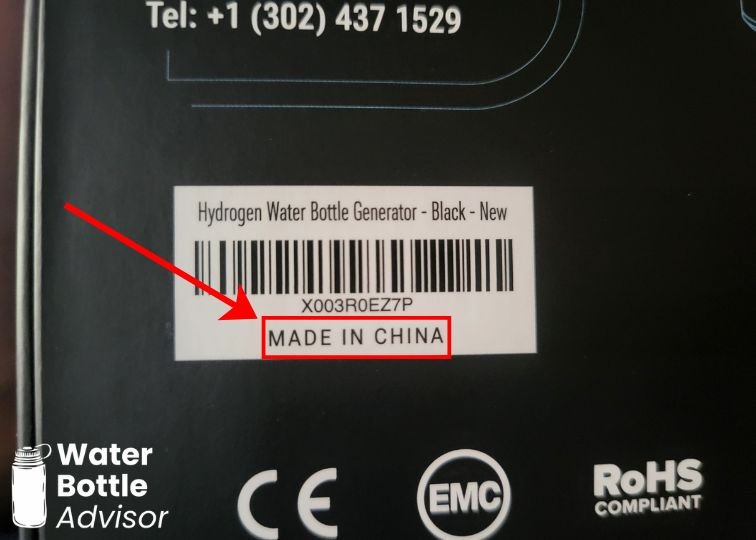
Almost all hydrogen water bottles are made in China. If you were to take a quick poll of the hydrogen bottles currently sitting on kitchen counters around the world, you’d find one very consistent piece of data.
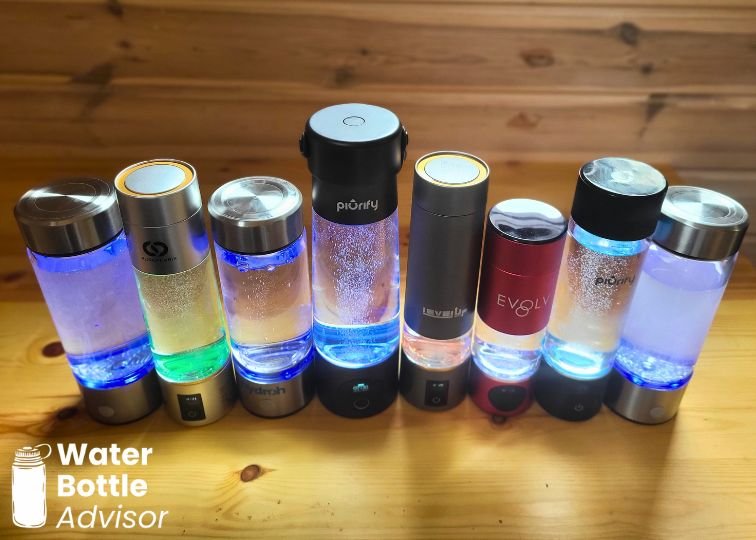
I personally own 10+ hydrogen bottles so far and every single one of them has that familiar “Made in China” label.
While the concept of hydrogen-rich water gained massive popularity through research in Japan and South Korea, the manufacturing powerhouse for the portable hardware is undeniably China.
Why Most Production is Centralized in China?
Most hydrogen water bottles are produced in the Guangdong province (specifically cities like Shenzhen and Guangzhou) and the Zhejiang province. These regions are the global “Silicon Valley of Hardware”.
Because these bottles require a specific mix of electronics, specialized plastics, and high-end electrolysis plates, China’s existing infrastructure makes it the only place capable of producing them at scale.
Are There Hydrogen Water Bottles NOT Made in China?
Yes, there actually are – though they’re relatively rare.
In my research, I found a few hydrogen water bottles manufactured in Japan. However, they tend to be significantly more expensive and harder to obtain, largely because they aren’t widely available on major marketplaces like Amazon.
A good example is the Buder hydrogen water bottle, which is fully designed and manufactured in Japan.
Are There Any Hydrogen Water Bottles Made in the US?
At the moment, there’s not a single hydrogen water bottle being fully manufactured in the United States. Despite strong interest (thousands of people search for US-made options each month) most brands rely on overseas production.
That said, “made in China” doesn’t tell the whole story. Even if the final assembly happens there, some key components or technology may be sourced from other countries.
Let’s take a closer look at those parts.
Key Components and Their Origins
Top-tier hydrogen bottles made in China usually aren’t “China-only” products in the strict sense. Final assembly happens there, but several key components come from abroad.
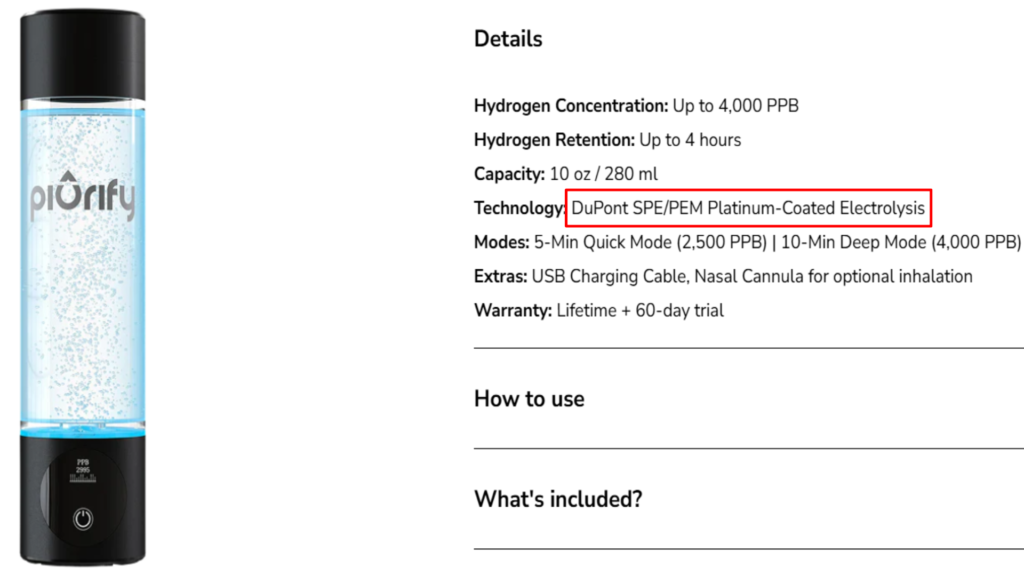
A good example is the PEM (proton exchange membrane). In many higher-end bottles, it’s based on Nafion technology developed by DuPont – an American company founded in Delaware back in 1802. That matters, because DuPont’s polymer science is widely used in industrial hydrogen and fuel cell systems.
In practice, these membranes can be produced or processed across different locations, including the US and France, depending on the supplier.
Japan also plays a big role. A lot of electrochemical know-how, especially around membrane tech and system components, comes from Japanese industry suppliers.
Then there are the electrodes. Most quality bottles use titanium plates coated with platinum or similar noble metals. These are typically produced by advanced manufacturers in Japan and South Korea, where precision coating and electrochemical materials are a strong industry.
As you can see, lumping all hydrogen bottles into a single “made in China” category is an oversimplification. In many of the top-rated hydrogen water bottles, key components are often sourced from multiple countries, reflecting a more complex and global manufacturing process.
The Difference Between “Designed In” and “Made In”
When researching hydrogen water bottles, one phrase that often causes confusion is “designed in” vs “made in”. They may sound similar, but in reality, they refer to two very different parts of the product creation process.
- “Designed in” usually refers to where the product was conceptualized, engineered, and branded. This includes decisions about features, performance goals, materials, and overall product development.
- “Made in” refers to where the physical product is actually manufactured and assembled.
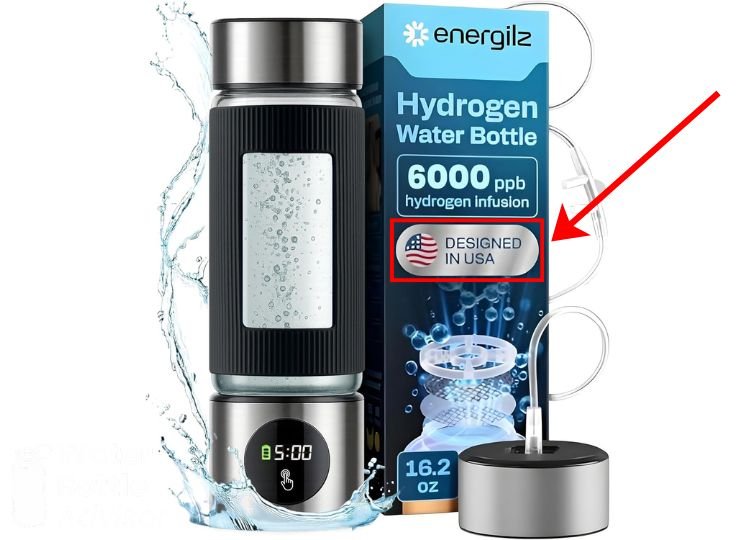
In the hydrogen water bottle market, this distinction matters more than many buyers initially realize. I’ve seen several negative reviews from customers who felt misled after purchasing a bottle advertised as “designed in the US”, only to flip it over and find a “Made in China” label on the bottom.
While this doesn’t necessarily mean the product is low quality, it can create a feeling of disappointment, especially when expectations around origin are not clearly communicated.
It’s important to understand that design does not equal manufacturing. A product can be engineered in the US but still produced overseas due to cost efficiency and supply chain reasons.
Why Buying From an American-Owned Brand Adds Value
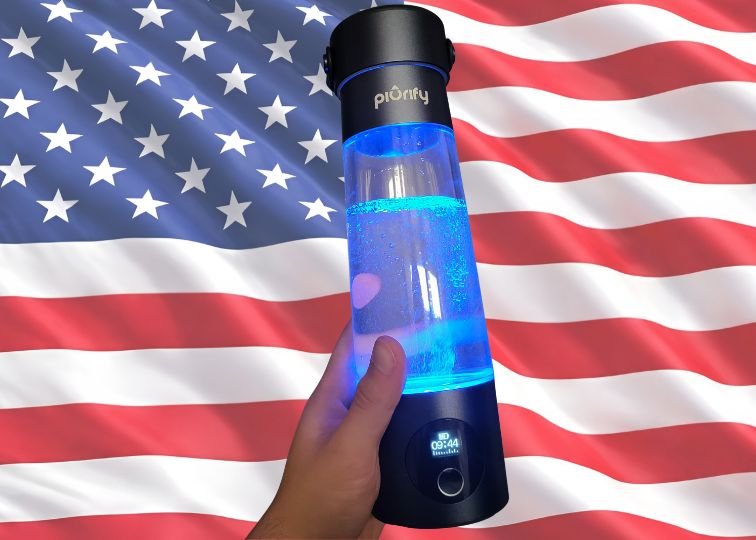
In my experience, there are meaningful advantages to choosing brands that are American-owned and design their products in the US.
These companies often place a stronger emphasis on customer support, warranty coverage, and quality assurance. This becomes especially important when you consider the price point – many hydrogen water bottles cost $100+ or even more.
In contrast, ordering a cheaper bottle directly from China may reduce upfront costs, but it often comes with trade-offs. In many cases, you may have limited or no warranty coverage, slower communication, and minimal post-purchase support if something goes wrong.
Another thing is testing and certification. Reputable US-based brands often invest in independent hydrogen concentration testing and obtain certifications such as H2 Analytics reports, which help verify that the bottle is producing meaningful levels of molecular hydrogen, not just bubbles or misleading readings.
This adds an extra layer of trust and transparency for the buyer.
American-Owned Brands In the Hydrogen Water Bottle Space
- Piurify – Based in Delaware, this is one of the most reputable brands in the market. In my experience, their products and customer support have been consistently excellent. I currently own several of their bottles and pitchers, and they remain my top choice in the hydrogen water category.
- LevelUpWay – A Florida-based brand that I’ve also had good experiences with, offering solid performance and reliable support.
- Echo Water – One of the most recognizable names in the hydrogen water industry, based in Utah, and widely used across the market.
Conclusion: Is “Made in China” a Red Flag?
In the early days of any tech trend, “Made in China” can sometimes be associated with “cheap”. But in 2026, the reality is much more nuanced.
My advice is this: Don’t be discouraged by the “Made in China” label on your hydrogen bottle. Instead, look for brands that are transparent about using SPE/PEM technology and those that utilize DuPont membranes from the US as well as plates sourced from Japan or Korea.
Quality is determined by the specs, not just the shipping port.

Jeremiah Kowalski
Jeremiah Kowalski is a drinkware product researcher who has personally tested 50+ reusable water bottles, tumblers, mugs, and filtration systems from leading brands. He focuses on real-world performance, durability, and safety to help readers choose drinkware that actually fits their daily hydration needs.