
Table of contents9 sections
Quick Verdict
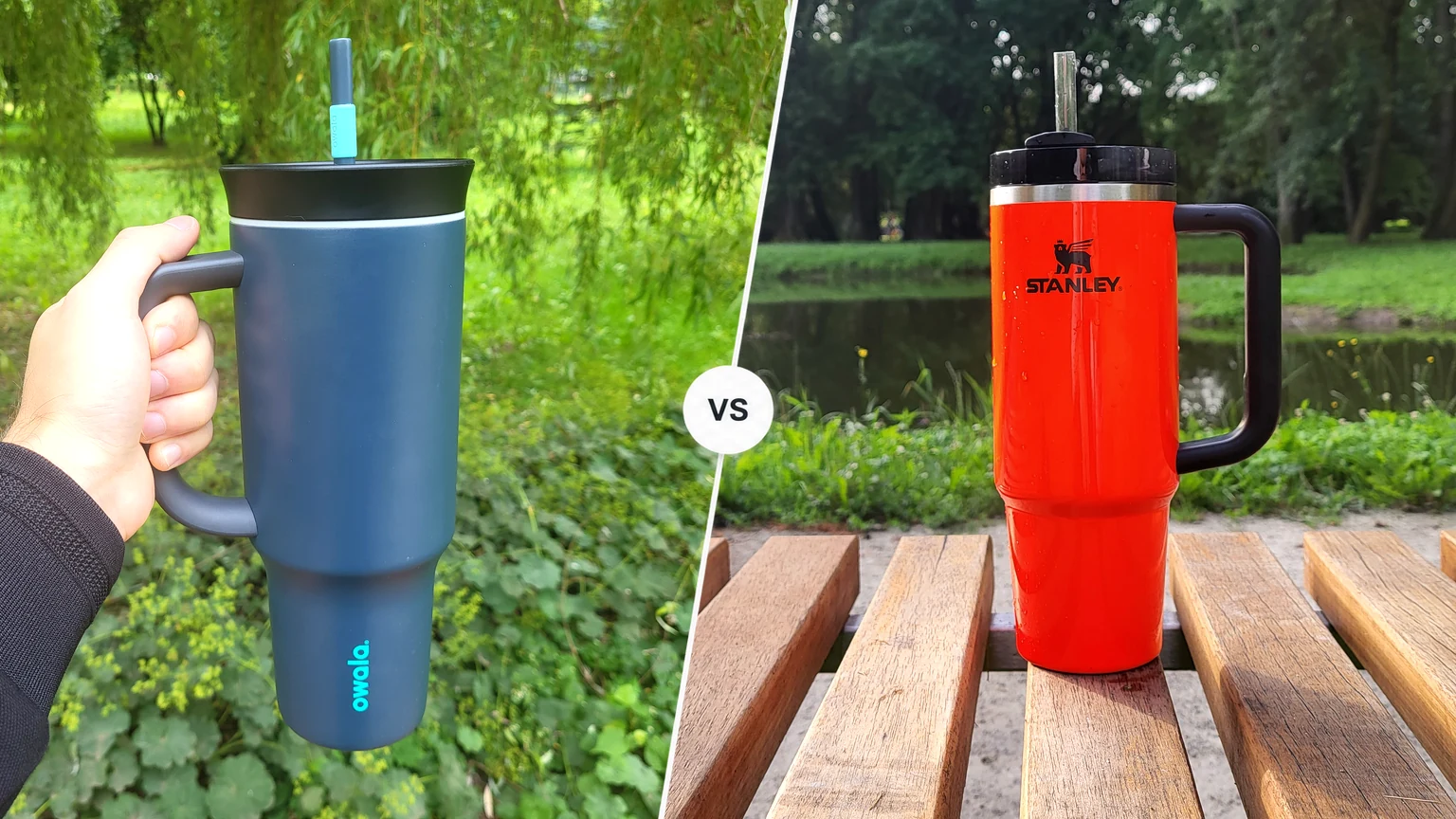
Neither of these is my favorite product from its brand, which actually makes this comparison easier to write.
The Stanley Quencher H2.0 is the better insulated tumbler in our tests and is much more car-friendly. The Owala Tumbler is more comfortable for me to drink from, faster to clean, and held up better in our exterior wear test.
Their current WBA scores are close, with Stanley slightly ahead. I think that is fair: Stanley is the stronger all-around traditional handled tumbler, while Owala’s tested 40 oz model has a few nice ideas but never became the Owala product I reach for first.
If I had to choose between these exact configurations, I would take Stanley for a car-and-desk tumbler and Owala if I cared more about the drinking feel and cleaning.
See the full comparison table ↓
Owala Tumbler vs Stanley Quencher H2.0 FlowState Tumbler comparison table
Overview
Thermal Performance
Lid & Drinking Experience
Portability & Handling
Cleaning & Maintenance
Durability & Safety
Versatility
Bottle Details
This is a 40 oz vs 30 oz comparison
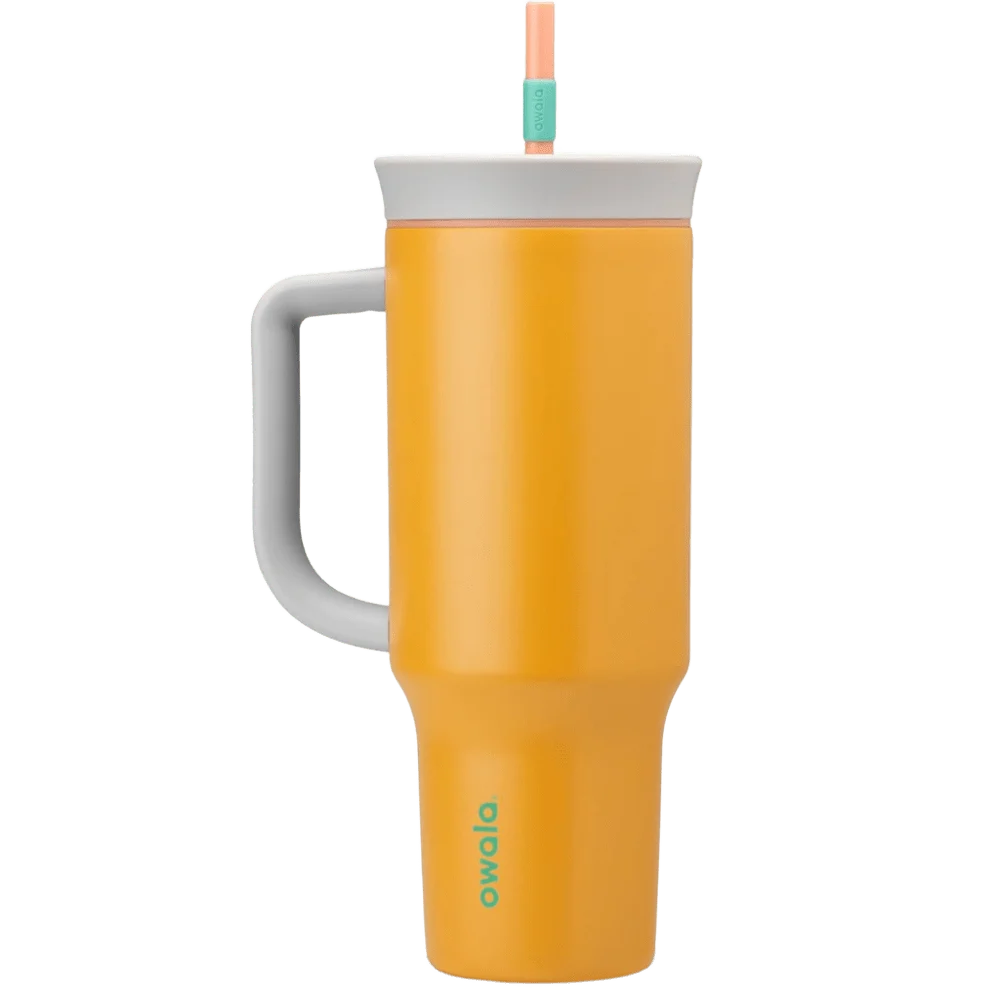
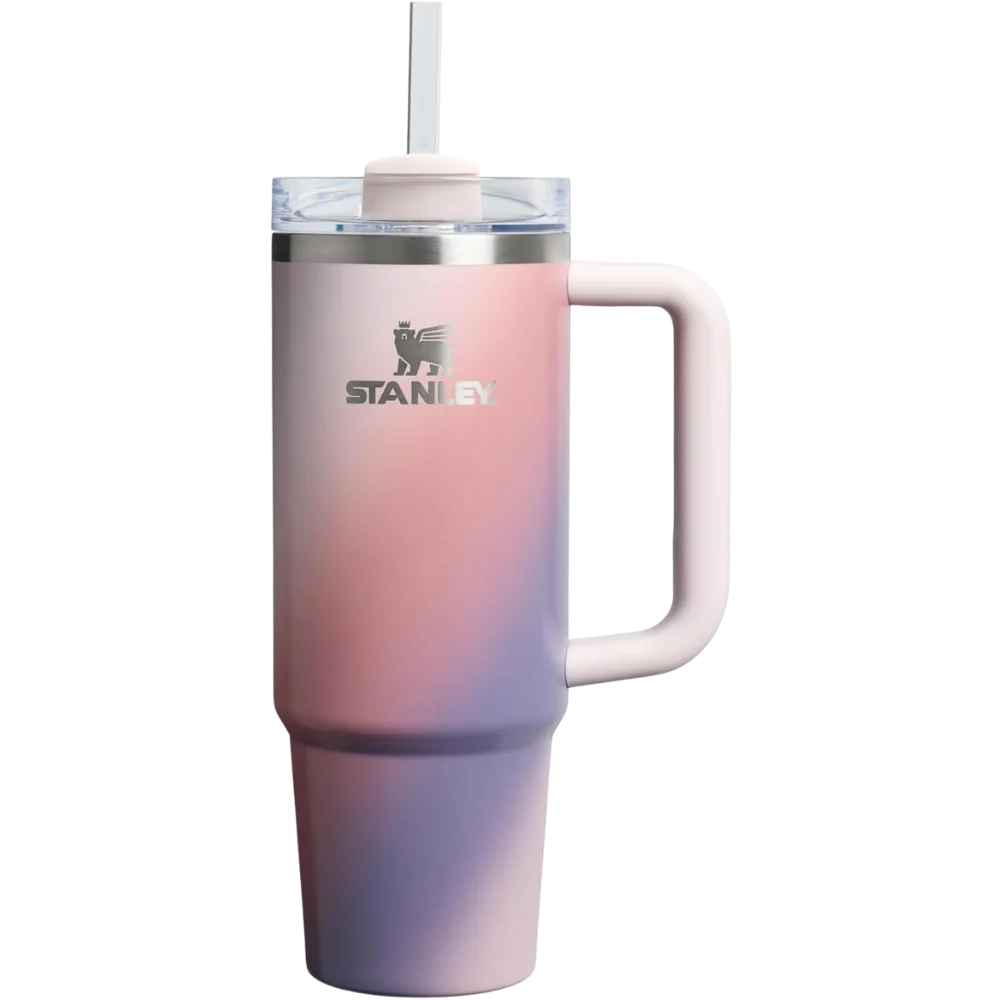
WBA tested the Owala Tumbler in 40 oz and the Stanley Quencher H2.0 in 30 oz.
That ten-ounce difference is large enough that weight and size need context.
Stanley’s H2.0 family has been offered in 14, 20, 30, and 40 oz sizes, so a 40 oz Stanley exists as a closer market match. The standard Owala Tumbler I tested was offered in 24 and 40 oz. Owala now also sells newer tumbler products such as the FreeSip Tumbler, but that is a different model and I do not transfer this tested Tumbler’s results to it.
The lids are also very different. Stanley’s FlowState lid gives straw, sip, and covered positions. Owala’s tested tumbler lid gives straw, sip-opening, and open-mouth drinking. These results belong to the exact lids in our database.
Stanley wins insulation clearly
Both started the cold test at 1°C (33.8°F).
Stanley finished at 12.4°C (54.3°F) after 24 hours.
Owala finished at 15.7°C (60.3°F).
That is a 3.3°C (6°F) advantage for Stanley.
The hot-retention test also favors Stanley: 55.1°C (131.2°F) after 12 hours versus 50.2°C (122.4°F) for Owala.
Capacity affects thermal behavior, so I would not turn those numbers into a universal brand rule. For the exact configurations tested, though, Stanley is the stronger thermal performer in both directions.
Owala is more comfortable to drink from
Both tested tumblers work one-handed and both offer multiple drinking methods.
Owala scored Comfortable for drinking comfort. Stanley scored Medium.
Owala’s opening ease was Medium and remained Medium with wet hands. Stanley was also Medium to open, but dropped to Difficult with wet hands.
Neither tested tumbler is leakproof. Neither has a covered mouthpiece in the sense I want for throwing it into a dirty bag. These are upright tumbler designs, not sealed bottle replacements.
That is important because the handles can make them feel portable. They are portable in the “carry it upright to the car” sense, not the “throw it sideways in a backpack” sense.
Owala’s lid feels a little nicer to drink from. Stanley’s FlowState lid feels more utilitarian but works well if the tumbler mostly stays upright.
Owala is faster to clean
Our full cleaning test took 3 minutes 10 seconds for the Owala and 3 minutes 50 seconds for Stanley.
Owala was 40 seconds faster.
Both bodies are easy to access with a normal sponge, which I appreciate on wide tumbler shapes. The time difference comes from the lids and small parts.
Neither is a minimalist lid, but Stanley’s FlowState assembly simply took longer to clean thoroughly in our protocol.
If you use only water, this may not bother you. If you use electrolyte mixes or anything sweet, 40 seconds per full clean becomes meaningful over time.
Owala carries much more water for almost the same empty weight
This is the most interesting size result.
The 40 oz Owala weighs 19.74 oz.
The 30 oz Stanley weighs 19.16 oz.
So Owala holds ten extra ounces while weighing only about half an ounce more empty.
That does not automatically make Owala more portable. Stanley has a high chance of fitting a standard cup holder in our database, while the tested Owala does not score well there.
Both handles fit four fingers. Owala scored Medium for carrying comfort, and Stanley also scored Medium.
For walking around, neither handle is exceptional. For car use, Stanley wins because the shape is built around cup-holder compatibility.
Owala wins the wear test
Both lid mechanisms showed no noticeable change after 500 cycles.
Owala’s exterior showed no visible wear beyond micro-scratches and earned the full durability result.
Stanley showed cosmetic wear while remaining fully functional.
That matches my broader experience with tumblers: a product can be structurally tough and still show scuffs and finish wear faster than another one.
I would not call Stanley fragile. It is not. But the Owala gave us the cleaner standardized wear result.
At the same price, I would choose based on where it will live
Both tested configurations sit around $40 in our current data.
That makes the decision straightforward.
If the tumbler will live in a car cup holder, Stanley makes more sense. It is better insulated and its shape is much more car-friendly.
If it will mostly live on a desk and I care about drinking comfort, faster cleaning, and getting more capacity for nearly the same empty weight, Owala has a stronger case.
Personally, neither changes my broader brand preferences. I still prefer the Owala FreeSip family over the standard Owala Tumbler, and I prefer Stanley’s IceFlow over the classic Quencher for many daily-use situations.
Which one should you buy?
Choose Stanley Quencher H2.0 if…
Choose Stanley if you want better insulation and better car usability.
It finished colder after 24 hours, hotter after 12, fits cup holders well, works one-handed, and gives multiple lid positions.
Its weaknesses are the lack of leakproofness, slower cleaning, and cosmetic wear in our test.
Choose Owala Tumbler if…
Choose Owala if you want more capacity for almost the same empty weight, a more comfortable drinking experience, faster cleaning, and the stronger wear result.
The main compromises are weaker thermal performance and poor cup-holder fit in the tested 40 oz configuration.
For me, Stanley is the easier traditional tumbler recommendation. Owala is the more interesting option if you specifically like this older Tumbler design.
How we test products
Every product we review is tested using the same structured process, with dozens of measurements and checks covering areas such as thermal performance, lid usability, cleaning, durability, portability, and everyday use. Those results feed into the WBA Score, which helps us compare bottles using consistent criteria instead of relying only on manufacturer claims.
You can read our full product testing protocol, learn more about Water Bottle Advisor and how we test products, or see how the WBA Score works.
About the author
Jeremiah Kowalski
Jeremiah Kowalski founded Water Bottle Advisor to make drinkware reviews more useful and less dependent on manufacturer claims. He has personally tested 50+ products, putting them through measuring, cleaning, leak testing, durability testing, and everyday use before sharing his conclusions. It also means occasionally explaining why yet another large box of bottles has arrived at his door.
Leave a Reply