
Table of contents10 sections
Quick Verdict
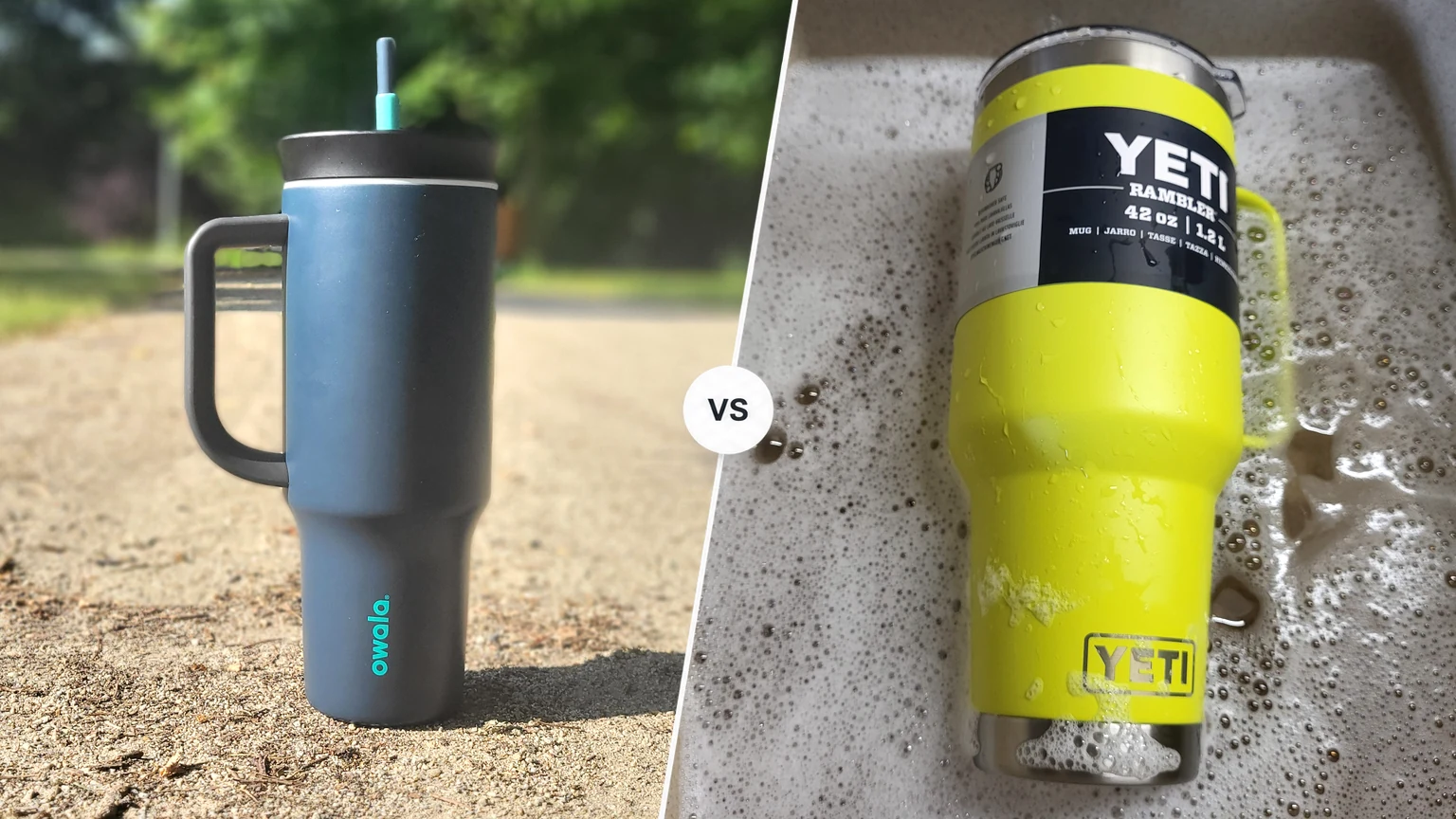
These are almost size-matched — 40 oz Owala vs 42 oz YETI — but they prioritize very different things.
YETI wins the current WBA comparison because it kept water colder, cleaned dramatically faster, and has a shape that is much more likely to fit a normal car cup holder.
Owala’s advantages are weight and carrying comfort. The 40 oz Owala is more than seven ounces lighter than the 42 oz YETI, its handle feels better in my hand, and the tested Owala configuration supports hot drinks while the YETI Straw Lid configuration does not.
Neither is leakproof, so I treat both as upright tumblers rather than sealed bottles.
If I wanted a car tumbler, I would choose YETI. If I knew I would carry it around by hand a lot, I would choose Owala.
See the full comparison table ↓
Owala Tumbler vs YETI Rambler Tumbler comparison table
Overview
Thermal Performance
Lid & Drinking Experience
Portability & Handling
Cleaning & Maintenance
Durability & Safety
Versatility
Bottle Details
The capacities are close enough for a useful size comparison
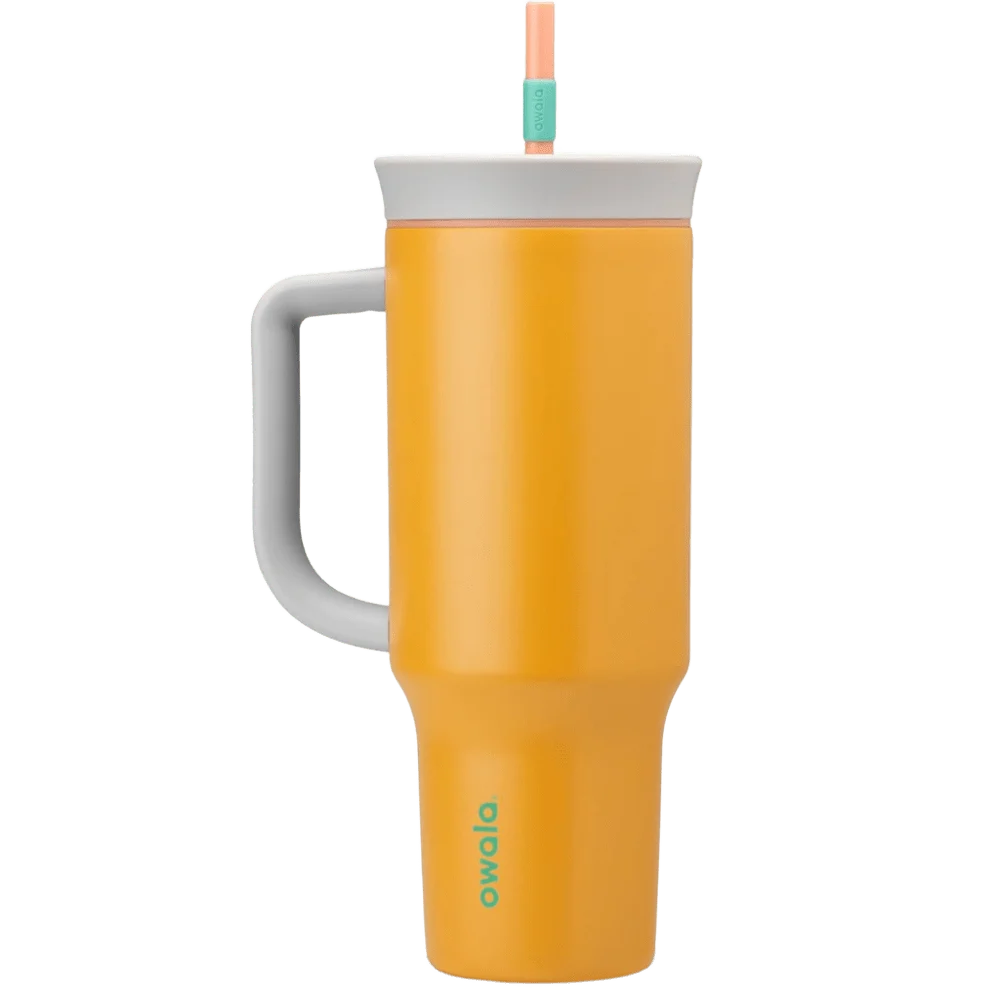
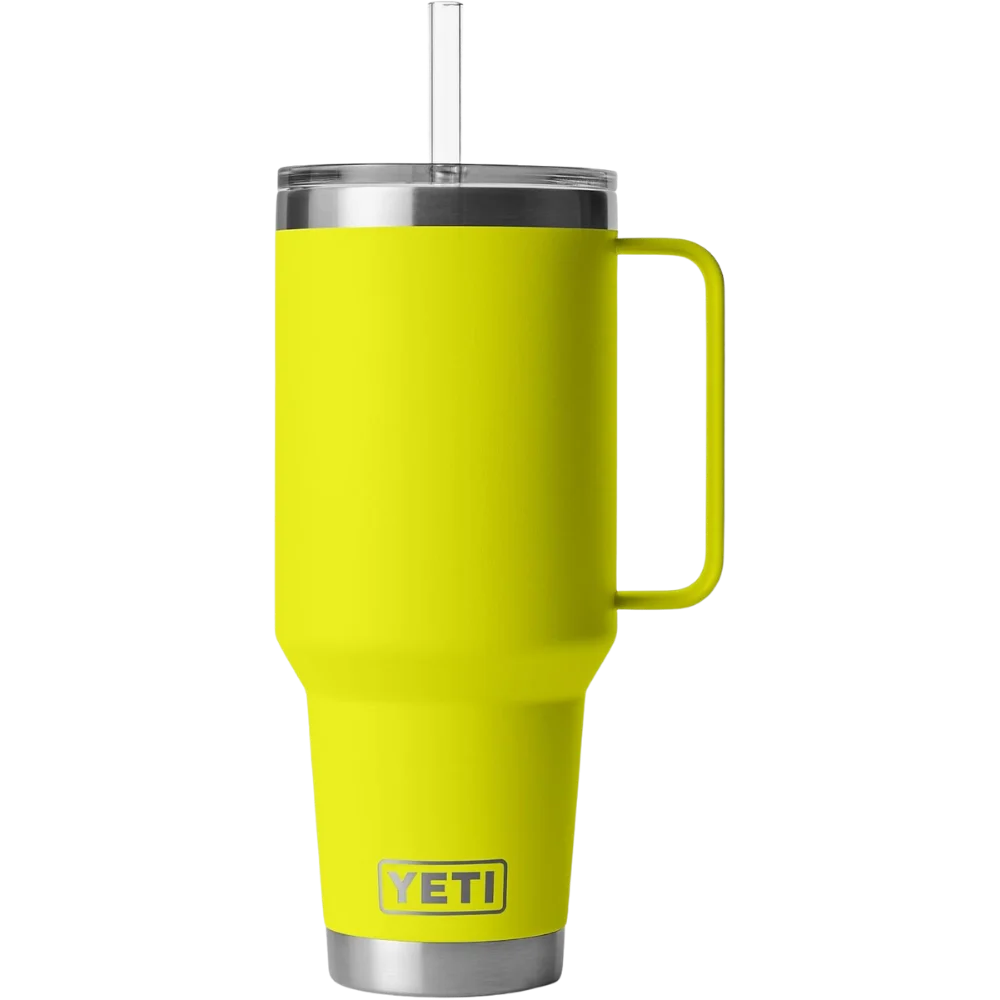
WBA tested the 40 oz Owala Tumbler and the 42 oz YETI Rambler Tumbler.
A two-ounce difference is small enough that the weight comparison is genuinely informative.
The standard Owala Tumbler I tested was sold in 24 and 40 oz sizes. Owala’s newer FreeSip Tumbler is a different model and I do not transfer this Tumbler’s results to it.
YETI’s current handled Straw Mug line includes 35 and 42 oz sizes. The 42 oz body can also use manufacturer-compatible lid options such as the corresponding MagSlider-style lid, but our WBA results here belong to the Extra Large Straw Lid configuration.
YETI wins cold retention
Both started at 1°C (33.8°F).
After 24 hours, YETI finished at 13.2°C (55.8°F).
Owala finished at 15.7°C (60.3°F).
YETI therefore finished 2.5°C (4.5°F) colder.
That is a meaningful difference. The Owala still works for a normal day, but YETI gives me more margin if the tumbler sits around for hours without fresh ice.
The tested Owala has one versatility advantage: it supports hot drinks in our current data and finished our 12-hour hot test at 50.2°C (122.4°F). The tested YETI Straw Lid configuration is not hot-drink compatible.
YETI sells other lid options for its tumbler body, but I do not assign those untested configurations the Straw Lid’s WBA results.
The drinking experience is closer than I expected
Both tested tumblers scored Comfortable for drinking comfort and both work one-handed.
Owala’s lid gives straw, sip-opening, and open-mouth drinking. YETI’s tested lid gives straw and open-mouth access.
Neither is designed to be leakproof. Neither protects the mouthpiece the way a closed bottle lid does.
Owala had Secure accidental-opening resistance. YETI’s lid was rated as opening too easily in our current protocol.
YETI was also rated Loud during normal use, while Owala was Noticeable.
So although the overall YETI score is higher, I actually prefer several small parts of the Owala lid experience.
YETI is dramatically easier to clean
This is the biggest YETI win.
YETI took 1 minute 50 seconds in our full cleaning test.
Owala took 3 minutes 10 seconds.
That makes YETI 1 minute 20 seconds faster.
YETI’s tested lid has fewer disassemblable parts and a simpler cleaning routine. The Owala lid has more pieces and more small areas to inspect.
Both bottle bodies are easy to access with a normal sponge. The difference is almost entirely the lid work.
If I used flavored drinks every day, the YETI cleaning advantage would matter a lot to me.
Owala is much lighter and nicer to carry
The Owala 40 oz weighs 19.74 oz empty.
The YETI 42 oz weighs 27.14 oz.
That is a 7.4 oz difference for only two ounces of capacity.
I absolutely feel that in use.
Both handles fit four fingers, but our carrying-comfort test rated Owala Medium and YETI Uncomfortable.
YETI makes up ground in the car. Its tested 42 oz shape has a high chance of fitting a normal cup holder in our database. The Owala 40 oz does not score well there.
So the portability question is really: are you carrying it or parking it in a cup holder?
If I am walking with the tumbler, Owala wins. If it spends most of the day in a vehicle, YETI wins.
Durability is a clean tie
Both tested tumblers scored 9/9 in our durability category.
Both lid mechanisms showed no noticeable change after 500 cycles, and both exterior finishes came through our wear testing with no meaningful visible wear beyond micro-scratches.
That is a good result for both brands, especially because large handled tumblers are easy to knock into desks, counters, and car interiors.
Price does not change my conclusion
The Owala is around $40 in our tested data. The YETI is around $45.
Five dollars is not enough for me to choose one if I prefer the other’s design.
YETI gives me better insulation, much faster cleaning, and better cup-holder fit.
Owala gives me much lower weight, a better handle experience, hot-drink compatibility in the tested setup, and slightly more lid versatility.
Which one should you buy?
Choose Owala Tumbler if…
I would choose Owala if you want a large tumbler you will actually carry around.
It is dramatically lighter at almost the same capacity, the handle is more comfortable, the lid gives multiple drinking methods, and our tested configuration can handle hot drinks.
Its weaknesses are weaker cold retention, much slower cleaning, and poor cup-holder fit in our database.
Choose YETI Rambler Tumbler if…
I would choose YETI if you want a car-and-desk tumbler.
It kept water colder, cleaned far faster, fits cup holders well, and matched Owala in durability testing.
The downside is weight. The 42 oz YETI is a heavy object once you add water, and the tested handle did not help enough in our comfort test.
For me, YETI is the more practical stationary tumbler. Owala is easier to carry and live with away from the cup holder.
How we test products
Every product we review is tested using the same structured process, with dozens of measurements and checks covering areas such as thermal performance, lid usability, cleaning, durability, portability, and everyday use. Those results feed into the WBA Score, which helps us compare bottles using consistent criteria instead of relying only on manufacturer claims.
You can read our full product testing protocol, learn more about Water Bottle Advisor and how we test products, or see how the WBA Score works.
About the author
Jeremiah Kowalski
Jeremiah Kowalski founded Water Bottle Advisor to make drinkware reviews more useful and less dependent on manufacturer claims. He has personally tested 50+ products, putting them through measuring, cleaning, leak testing, durability testing, and everyday use before sharing his conclusions. It also means occasionally explaining why yet another large box of bottles has arrived at his door.
Leave a Reply