
Table of contents14 sections
Quick verdict
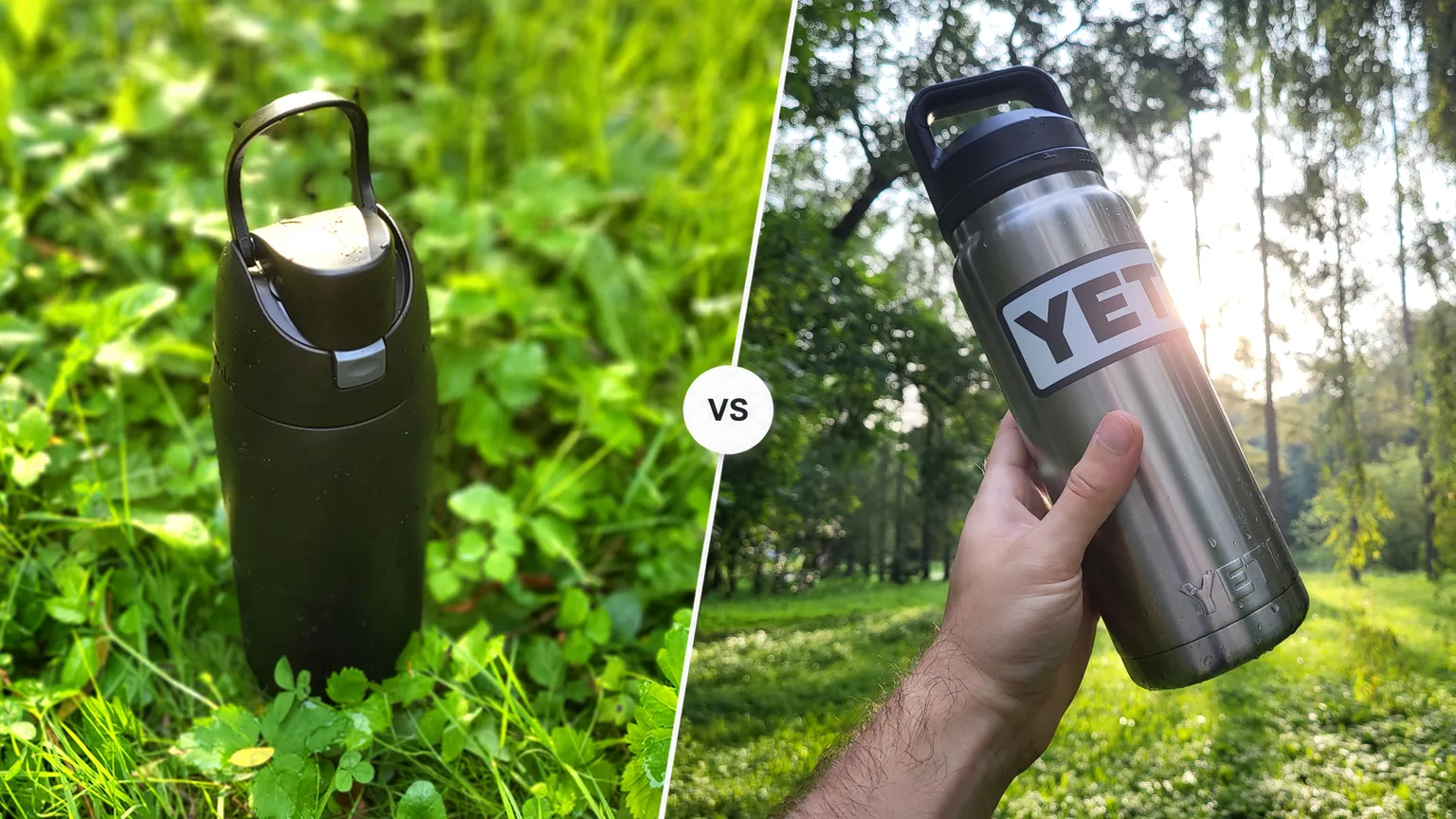
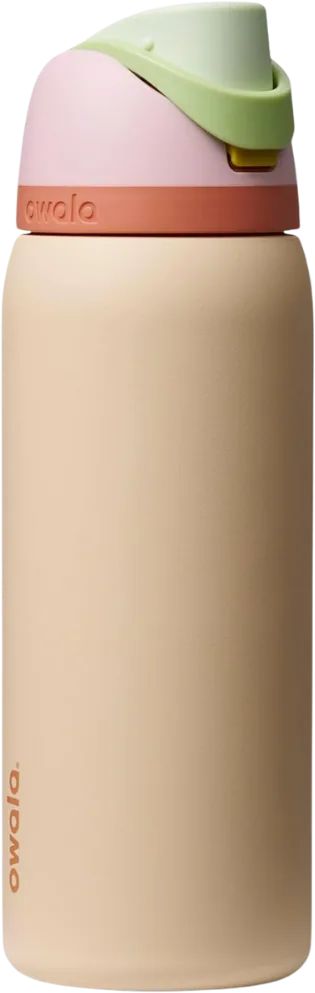
Owala FreeSip is the better bottle for most people. It has the higher WBA Score, it is dramatically lighter, easier to drink from throughout the day, and the FreeSip lid still gives me one of the best combinations of drinking comfort and convenience I’ve found.
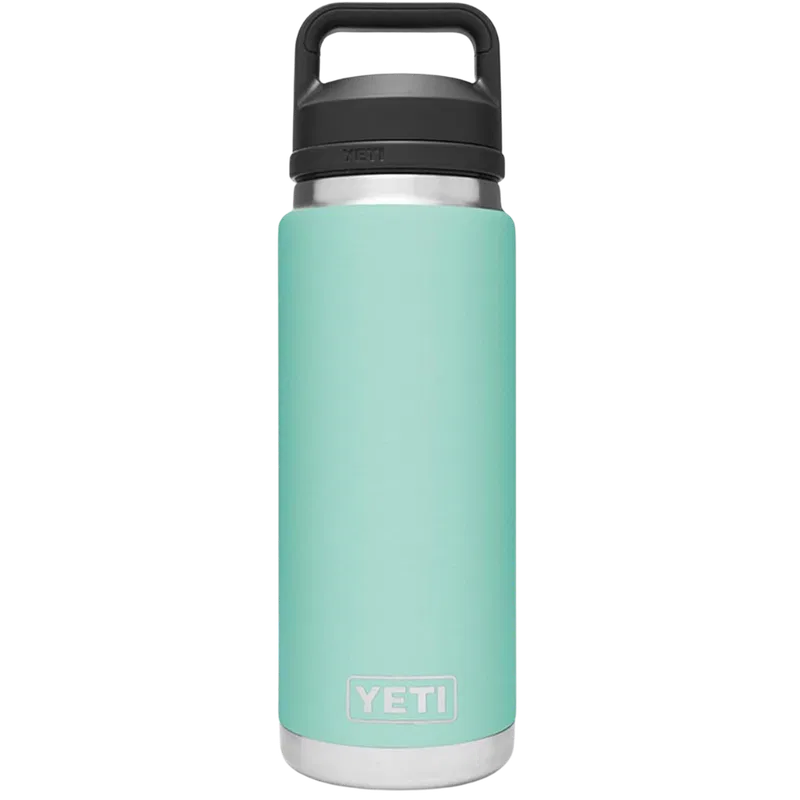
YETI Rambler is the bottle I would choose for a much narrower reason: I trust it more when things are going to get rough. Camping, fishing, working outside, throwing gear into the car, knocking the bottle around all day. That is where the Rambler starts making sense. This is not really a battle between two bottles trying to do the same job. Owala is the bottle I enjoy using. YETI is the bottle I worry about less.
If you’re deciding between them, use the table below as the evidence and the rest of this article as the reality check. The numbers tell you what happened in our tests. I’ll tell you which differences I actually notice once the bottle leaves the test bench.
See the full comparison table ↓
Owala FreeSip vs YETI Rambler comparison table
Overview
Thermal Performance
Lid & Drinking Experience
Portability & Handling
Cleaning & Maintenance
Durability & Safety
Versatility
Bottle Details
YETI is not trying to beat Owala at being convenient
The more time I spend with these two bottles, the less I think they are direct substitutes. Owala is built around convenience. Press a button, drink, close it. The FreeSip lid gives me a straw, a larger drinking opening and the option to remove the lid completely.
YETI Rambler feels like it was designed from the opposite direction. Start with a heavy, simple, tough bottle and then make it pleasant enough to use every day. That distinction matters because it changes what I forgive. I forgive the Owala lid for having more moving parts because it gives me a better drinking experience. I forgive the YETI for being heavy because I trust it when I know the bottle is going to get knocked around.
If all you need is a bottle for your desk, commute and gym bag, the Rambler’s extra mass can feel like solving a problem you never had. Take it outdoors and the logic starts making more sense.
The Rambler is the bottle I grab when I expect trouble
I’ve bought more than ten YETI products over the years, and their build quality is one of the few things about the brand I rarely question. The Rambler feels overbuilt. That doesn’t mean indestructible. Stainless steel still dents, coatings still scratch and enough force can ruin vacuum insulation. But there is a difference between knowing that intellectually and actually picking up the bottle.
The Rambler feels dense. The Chug Cap feels thick. Nothing about it feels delicate. I notice that most when I’m packing for camping, fishing or a trip into the woods. I own plenty of bottles that are nicer to drink from, yet my hand still tends to move toward the YETI when I expect dirt, rocks, wet gear and accidental drops.
I once forgot a hammer while camping and used the Rambler to knock in a few nails. That is obviously not an official YETI feature, but it is a pretty good summary of how I think about this bottle. If durability is the main reason you are buying a bottle, YETI has a real advantage.
You pay for that toughness every time you pick it up
The problem is that YETI cannot hide all that steel. Our tested Owala FreeSip 32 oz weighs 14.88 oz empty. The YETI Rambler 26 oz weighs 21.63 oz. So the smaller YETI weighs about 6.75 oz more while holding 6 oz less water.
That is not a spec-sheet difference I need to convince myself I can feel. Pick both bottles up and it is obvious. For a desk, gym or campsite, I can live with it. On a long walk, commute or hike, I would rather have the lighter Owala.
The YETI also has a 3.4-inch base diameter, while the Owala 32 oz is 3.42 inches. Neither is exactly a cup-holder specialist. If you spend a lot of time in the car, measure first. A premium bottle sitting sideways on the passenger seat because it doesn’t fit the cup holder becomes less premium surprisingly quickly.
YETI makes you carry its durability around even when you don’t need it. That is the price of the design.
Owala wins the thirty-times-a-day test
Some bottle features matter once a month. Opening the bottle is not one of them. You may do it dozens of times every day.
With the FreeSip, I move the loop, press the button and drink. The whole process works with one hand. With the standard YETI Chug Cap, I have to unscrew the upper cap. That means holding the bottle and twisting the cap with the other hand. The Rambler is not difficult to open. It is simply not a true one-hand bottle.
At a desk, that distinction is small. While walking, carrying something, cooking, moving through an airport or doing anything else with one hand occupied, it stops feeling small.
Then there is drinking comfort. The FreeSip mouthpiece is still one of my favorites. I usually use the straw, but I can switch to the larger opening when I want more water. The mouthpiece controls the flow well enough that I can drink while moving without regularly pouring water onto myself. Our testing rates the FreeSip drinking comfort as Perfect, and I agree.
The YETI Chug Cap is also pleasant to drink from, but it doesn’t give me the same combination of access and options. If I’m going to open the bottle thirty times today, I want the Owala.
The Chug Cap is simple, but it has one annoying habit
I like the YETI Chug Cap. The smaller opening gives me a good flow rate without forcing me to drink directly from a wide bottle mouth. If I want maximum flow, I can remove the lower section and use the wide mouth. The transparent spout is also clever for a very unglamorous reason: I can see when it is dirty.
The annoying part is that the Chug Cap is made from two threaded sections. The upper cap is easy enough to remove, but the lower section can tighten itself onto the bottle surprisingly well. Mine has never forced me to reach for tools, but I’ve read comments from owners who ended up using strap wrenches, and I understand how they got there. There isn’t much surface area to grab when the lower section gets stubborn.
The upper handle can at least give you some leverage when opening the cap. Owala has the opposite problem. Its lid is mechanically more complicated, with a button, spring, straw and silicone pieces, so there are simply more components that could eventually fail. I’ve seen complaints about FreeSip buttons coming loose, but it has never happened to any of mine, despite owning several and not treating them particularly gently.
So I see two different risks here: YETI can become stubborn. Owala has more things that can break. So far, both have held up well for me.
Cold retention does not give me a reason to choose either one
Both bottles performed well in our standard 24-hour cold test. They started at 33.8°F (1°C). After 24 hours, the Owala reached 51.3°F (10.7°C) and the YETI reached 52.3°F (11.3°C).
That is a difference of only 0.6°C. Technically, Owala wins. Practically, I do not care. If my water is still cold after a full workday, I’m happy. Neither bottle leaves me sitting there at lunch wondering where all my insulation went.
YETI does have one thermal advantage that changes what the bottle can do: the Rambler can be used for hot drinks with compatible caps. The stainless-steel FreeSip is intended for cold drinks. That gives YETI a useful winter role.
I would not buy the Rambler because it keeps cold water meaningfully colder than the Owala. It doesn’t. I might buy it because the same bottle can carry cold water on a summer camping trip and a hot drink when the temperature drops.
Cleaning is one place where boring is good
The FreeSip lid is more interesting to use. It is also more interesting to wash, which is not a compliment.
I remove the straw, silicone pieces and removable parts instead of lazily rinsing the assembled lid. Silicone can hold onto odors, and the FreeSip has enough small areas that I want to see what I’m cleaning. Our full-cleaning test took 2 minutes 45 seconds for the Owala and 2 minutes 22 seconds for the YETI.
Twenty-three seconds will not change your life, but simplicity has cumulative value when you wash the same bottle again and again. The Rambler’s simpler drinking system helps here, and YETI also allows the Rambler and its caps to go in the dishwasher.
I normally hand-wash my better bottles anyway, but YETI is the less fussy bottle to maintain. Sometimes boring really is a feature.
The Rambler announces its arrival
Bottle noise is one of those things nobody puts near the top of a shopping list. Then you walk into a quiet room with a loud bottle.
Owala is not silent. The spring-loaded lid makes a noticeable click when it opens and closes, and the standard bottle lacks a silicone base. The Rambler is another level. It is one of the loudest bottles I own.
The heavy steel body hitting a hard desk produces a proper metallic CLONK, and unscrewing the Chug Cap adds its own soundtrack. Outdoors, I could not care less. In a library, lecture hall or quiet meeting, I suddenly care a lot.
A silicone boot can reduce the impact noise from the bottom, but it will not turn the Rambler into a stealth bottle. If silence matters, neither is ideal. If silence matters a LOT, choose something else.
One materials difference gives Owala an advantage for me
Owala describes its bottles as lead-free. YETI uses a different manufacturing method. The company says the sealing bead in its double-wall Rambler construction contains lead, but that the bead is fully encapsulated and inaccessible. YETI also states that testing of Rambler drinkware does not detect lead, with a reported detection limit below 0.002 mg/kg.
I still use my Rambler. I do not personally treat the bottle as unsafe because of that construction. But given two good bottles, I prefer the one that avoids lead in the sealing process entirely. It is one less thing to think about.
That does not turn the YETI into a bad bottle, and I would not tell someone to throw theirs away. It simply gives Owala another small advantage in my own buying decision.
26 oz is the YETI size I would start with
YETI gives you several sizes, and I think 26 oz is the best starting point if you have regular access to refills. It is already heavy enough.
Going to 36 oz gets you more water and fewer refills, which can make sense outdoors, but now you are carrying an even bigger chunk of stainless steel around. For Owala, I still prefer 32 oz. That size gives me enough water for a large part of the day without pushing the bottle into unnecessarily bulky territory.
The 24 oz FreeSip is worth considering if grip matters. It has side indentations that the larger sizes do not, which makes it easier to hold.
The interesting thing here is that I recommend a larger Owala than YETI. That tells you quite a lot about how differently the two bottles carry their weight.
Choose the Owala FreeSip if…
Choose the Owala FreeSip if most of your bottle use happens during normal daily life. I would pick it for commuting, work, school, travel, errands, walking and any situation where one-handed access matters.
It is lighter, more comfortable to drink from and easier to reach for repeatedly throughout the day. It also has the higher WBA Score. For most people, Owala is the one I would buy.
Choose the YETI Rambler if…
Choose the YETI Rambler if you care more about toughness than weight. Camping, fishing, hunting, working outside, cold-weather trips and situations where your bottle is likely to get knocked around are much more convincing reasons to buy a Rambler than sitting at a desk all day.
You also get hot-drink compatibility with the right cap and a simpler cleaning routine. The Rambler is not the bottle I enjoy using more. It is the bottle I trust more when conditions get ugly.
And sometimes that is exactly the bottle you need.
How we test products
Every product we review is tested using the same structured process, with dozens of measurements and checks covering areas such as thermal performance, lid usability, cleaning, durability, portability, and everyday use. Those results feed into the WBA Score, which helps us compare bottles using consistent criteria instead of relying only on manufacturer claims.
You can read our full product testing protocol, learn more about Water Bottle Advisor and how we test products, or see how the WBA Score works.
About the author
Jeremiah Kowalski
Jeremiah Kowalski founded Water Bottle Advisor to make drinkware reviews more useful and less dependent on manufacturer claims. He has personally tested more than 120 bottles, tumblers, mugs, and filtration systems, putting each one through measuring, cleaning, leak testing, and everyday use before sharing his conclusions. It also means occasionally explaining why yet another large box of bottles has arrived at his door.
Leave a Reply