
Table of contents10 sections
Quick verdict
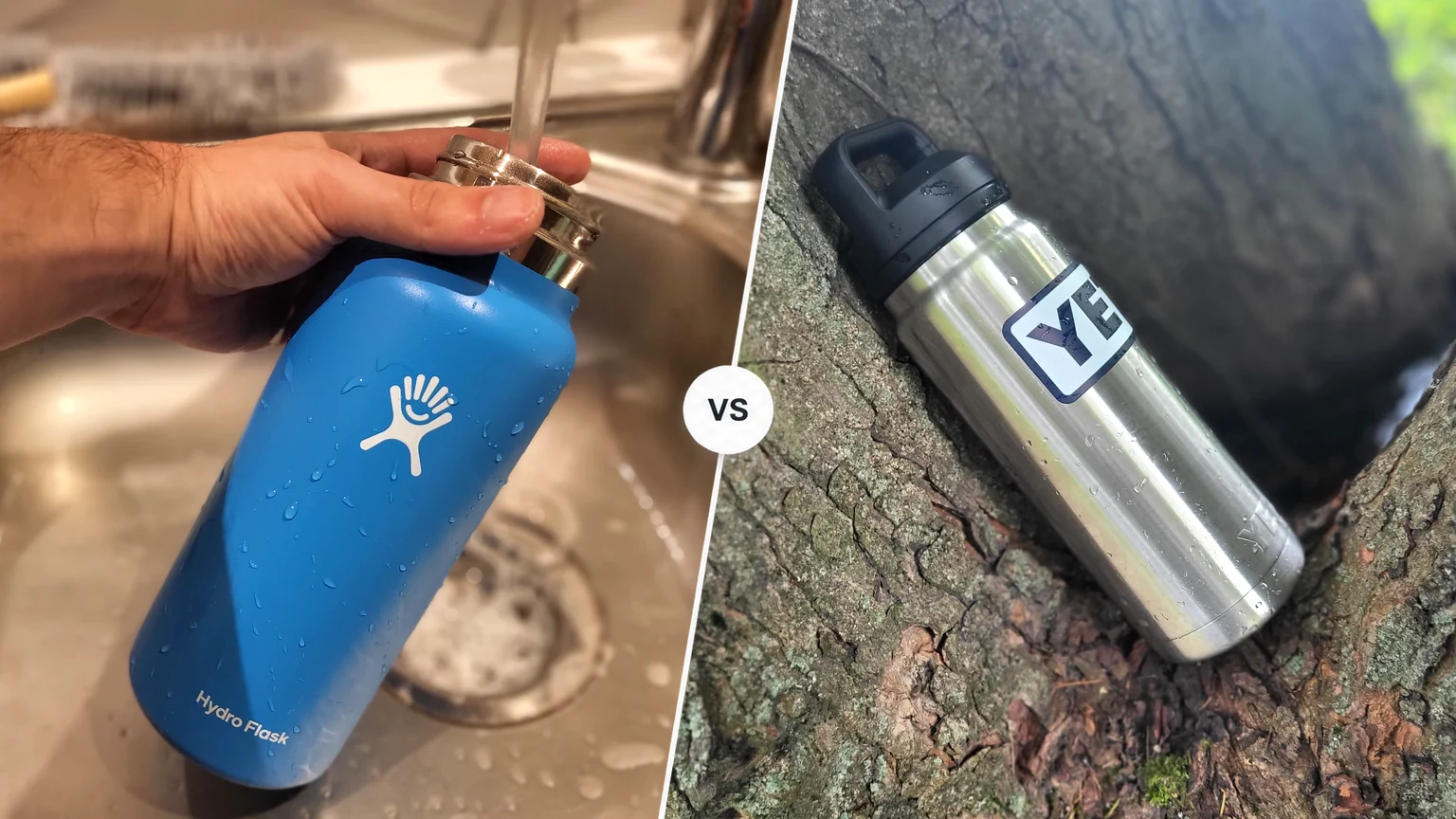
I would choose the Hydro Flask Wide Mouth for most people. It is much lighter despite holding more water, easier to clean with the basic Flex Cap, and gives me far more flexibility because I can change the cap instead of changing the entire bottle.
YETI has two advantages I notice immediately: the Chug Cap is nicer to drink from, and the Rambler feels tougher. If I were packing for camping or another trip where the bottle was likely to get knocked around, I would trust the YETI more. For normal daily use, though, Hydro Flask gives me a better balance.
Look at the weight and drinking-comfort rows in the table first. They show the argument for both bottles surprisingly well: Hydro Flask carries better, YETI drinks better. The rest of the comparison is basically deciding which of those differences matters more to you.
See the full comparison table ↓
Hydro Flask Wide Mouth vs YETI Rambler comparison table
Overview
Thermal Performance
Lid & Drinking Experience
Portability & Handling
Cleaning & Maintenance
Durability & Safety
Versatility
Bottle Details
The Hydro Flask gives me much more bottle for the weight
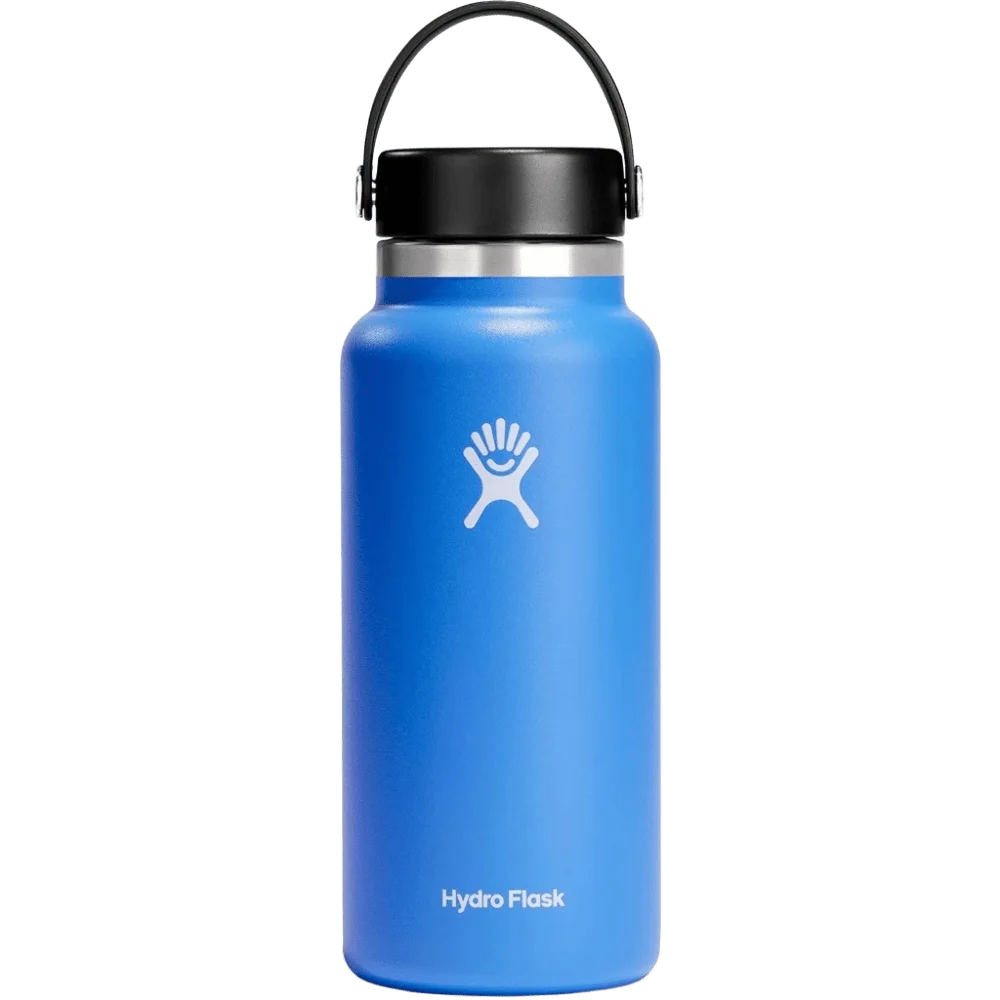
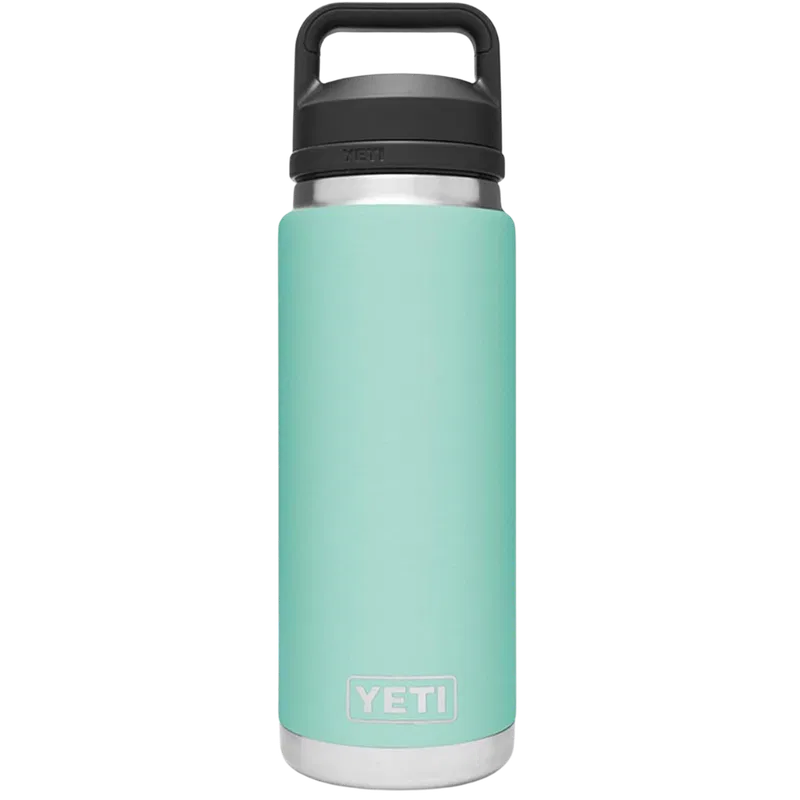
Our 32 oz Hydro Flask weighs 15.43 oz, while the smaller 26 oz YETI weighs 21.63 oz. So the YETI is 6.2 oz heavier despite holding 6 oz less water. That difference is obvious as soon as I pick them up, and on a long walk or a day when I’m carrying the bottle around for hours, I would much rather have the Hydro Flask.
I also prefer Hydro Flask’s soft Flex Cap handle for carrying because it fits all four fingers comfortably. YETI’s Chug Cap has a more rigid handle, which I like when I need some leverage to loosen the cap, but the complete Rambler package is still substantially heavier.
Neither bottle is great for narrow car cup holders. The Hydro Flask base is 3.58 inches and the YETI is 3.4 inches, so this is one of those purchases where thirty seconds with a tape measure can save a lot of irritation later.
I prefer drinking from the YETI
The YETI Chug Cap is better to drink from than Hydro Flask’s basic Flex Cap. The smaller opening gives me a controlled stream, and if I want the full wide mouth I can remove the lower section. The transparent spout is also useful because I can actually see when it needs cleaning.
Hydro Flask’s Flex Cap is almost aggressively simple: remove the whole cap and drink from the wide mouth. It works, but it is not my favorite setup if I’m taking frequent sips. I’ve also overtightened mine badly enough that it became VERY difficult to open later, especially with wet hands.
The YETI is not truly one-hand operable either. I still have to hold the bottle and unscrew the cap. The Chug Cap’s lower threaded section can also get stubborn, although mine has never reached the point where I needed tools.
If these were the only two lids available, I would take the YETI Chug Cap.
Hydro Flask wins once I start changing caps
This is where Hydro Flask becomes much more useful to me. I own several Hydro Flask caps and actually swap them: the Flex Cap is my simple option, a straw cap is better when I want easier drinking on the move, and other Wide Mouth caps let me change how the bottle works without buying another insulated body.
YETI also has interchangeable caps, so this is not a feature it completely lacks. But Hydro Flask has the better lid ecosystem in my experience, and it is one of the main reasons I have kept using the same Hydro Flask bodies for years.
The funny part is that YETI has the better cap in this particular comparison. Hydro Flask has the better system once I stop treating the stock cap as permanent.
The Flex Cap pays me back at the sink
Our full cleaning test took 1 minute 38 seconds for Hydro Flask and 2 minutes 22 seconds for YETI. Neither is difficult to wash, but the Flex Cap gives me less hardware to deal with: I remove the gasket, wash the cap, scrub the bottle and I’m basically done.
The Chug Cap has more pieces and threads that need attention, although the transparent plastic helps because grime cannot hide as easily. Both tested configurations are dishwasher compatible, but I normally hand-wash my bottles anyway.
If you dislike complicated lids at the sink, Hydro Flask is easier to live with.
The durability test was a tie, but the YETI feels tougher
Both bottles scored 9/9 in our durability category. Their lid mechanisms showed no noticeable change after 500 cycles, and both finishes performed very well, so our standardized testing does not give YETI a durability win.
My long-term impression is still different. I’ve owned more than ten YETI products, and Rambler bottles consistently feel unusually solid. The body feels dense, the Chug Cap plastic feels thick, and I worry less about it around camping or fishing gear.
My Hydro Flask bottles have also survived years of normal use and plenty of drops, so I do not consider them fragile. YETI simply feels more overbuilt to me, and the price of that feeling is the extra weight I have to carry everywhere.
Cold retention is basically a tie. Hot retention is not.
Both bottles started our cold test at 33.8°F (1°C). After 24 hours, the YETI reached 52.3°F (11.3°C) and the Hydro Flask 53.6°F (12°C), a difference of only 1.3°F (0.7°C). I would never choose between these bottles because of that.
The hot test produced a much more useful difference. After 12 hours, Hydro Flask finished at 128.8°F (53.8°C) while YETI finished at 114.8°F (46°C), giving Hydro Flask a 14°F (7.8°C) advantage.
I live somewhere with real winters, so that matters to me. Hydro Flask is the more convincing all-season bottle in this comparison, even though YETI narrowly wins with cold water alone.
Choose the Hydro Flask Wide Mouth if…
Choose the Hydro Flask Wide Mouth if you want more capacity for much less weight, faster cleaning, stronger hot retention and a cap system you can adapt over time. Those are the reasons I have kept Hydro Flask in regular use for years.
For most people, Hydro Flask is my pick.
Choose the YETI Rambler if…
Choose the YETI Rambler if drinking comfort and rugged construction matter more to you than weight. I prefer the Chug Cap to the basic Flex Cap, and the Rambler is the bottle I would rather have around camping or fishing gear.
If I expected the bottle to get treated roughly, I would take the YETI.
How we test products
Every product we review is tested using the same structured process, with dozens of measurements and checks covering areas such as thermal performance, lid usability, cleaning, durability, portability, and everyday use. Those results feed into the WBA Score, which helps us compare bottles using consistent criteria instead of relying only on manufacturer claims.
You can read our full product testing protocol, learn more about Water Bottle Advisor and how we test products, or see how the WBA Score works.
About the author
Jeremiah Kowalski
Jeremiah Kowalski founded Water Bottle Advisor to make drinkware reviews more useful and less dependent on manufacturer claims. He has personally tested 50+ products, putting them through measuring, cleaning, leak testing, durability testing, and everyday use before sharing his conclusions. It also means occasionally explaining why yet another large box of bottles has arrived at his door.
Leave a Reply