
Table of contents10 sections
Quick Verdict
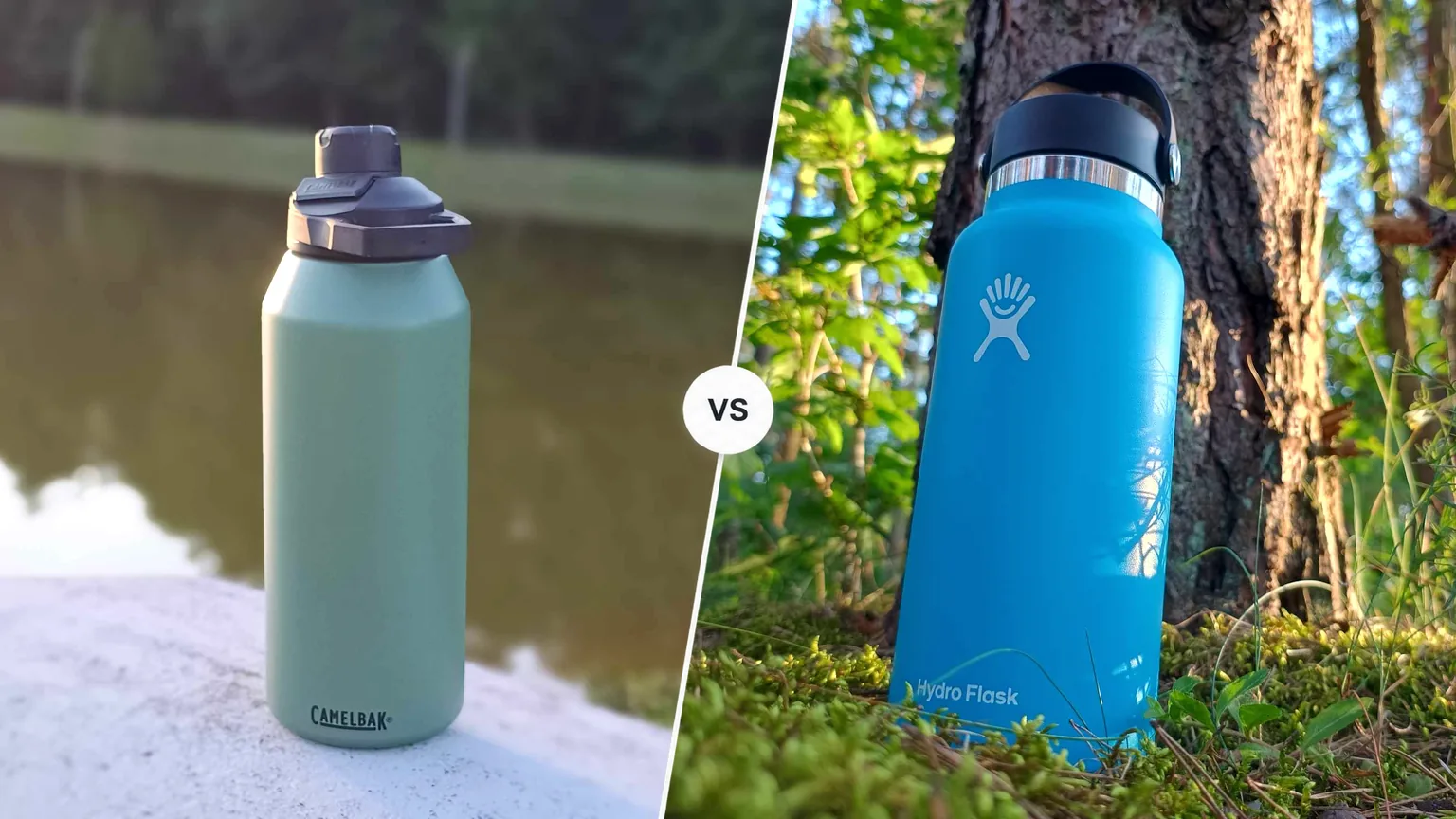
The CamelBak Chute Mag Insulated wins our current performance comparison.
It kept water colder, retained more heat, has a more comfortable default drinking spout, is easier to open with wet hands, and supports carbonated drinks in our tested data. Its current WBA score is higher for good reasons.
I would still choose the Hydro Flask Wide Mouth if I cared more about lower weight, much faster cleaning, and the broader Wide Mouth cap ecosystem.
So my short answer is: CamelBak is the better tested bottle out of the box. Hydro Flask is the easier long-term platform to customize.
See the full comparison table ↓
CamelBak Chute Mag Insulated vs Hydro Flask Wide Mouth comparison table
Overview
Thermal Performance
Lid & Drinking Experience
Portability & Handling
Cleaning & Maintenance
Durability & Safety
Versatility
Bottle Details
The tested CamelBak is eight ounces larger
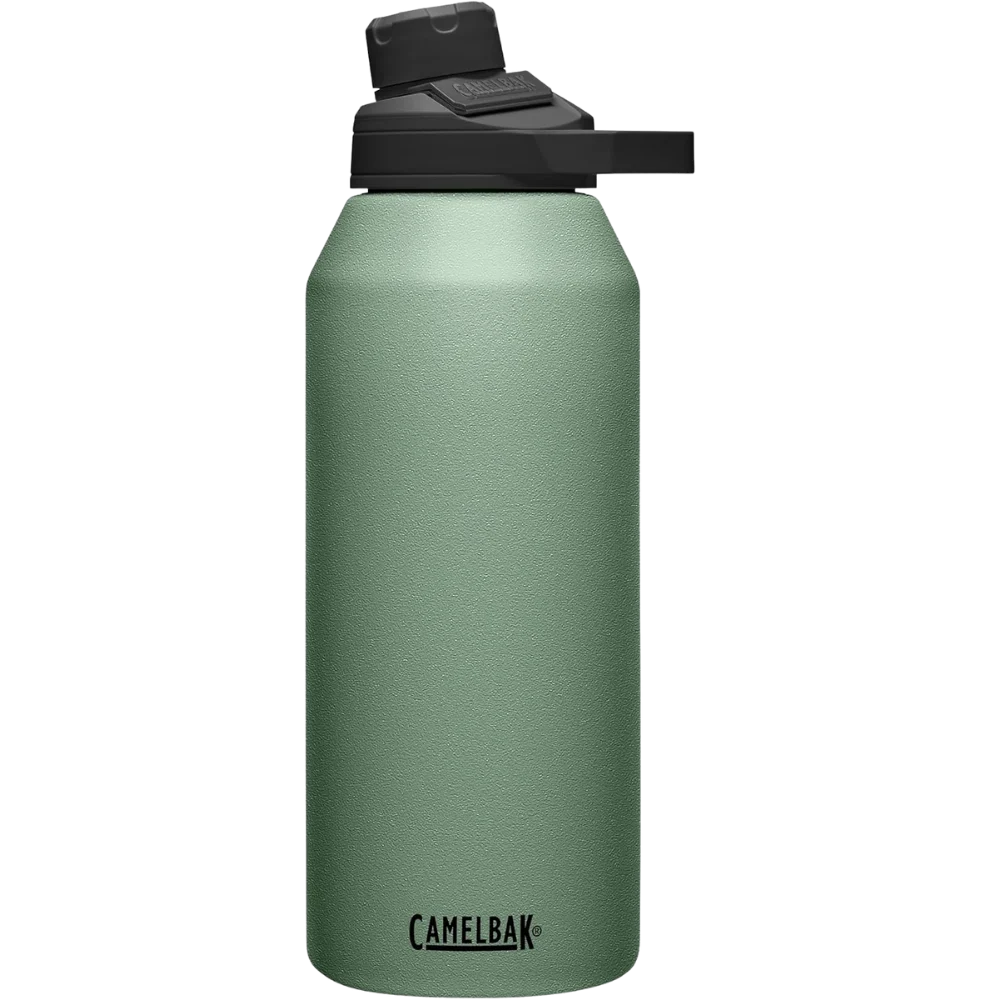
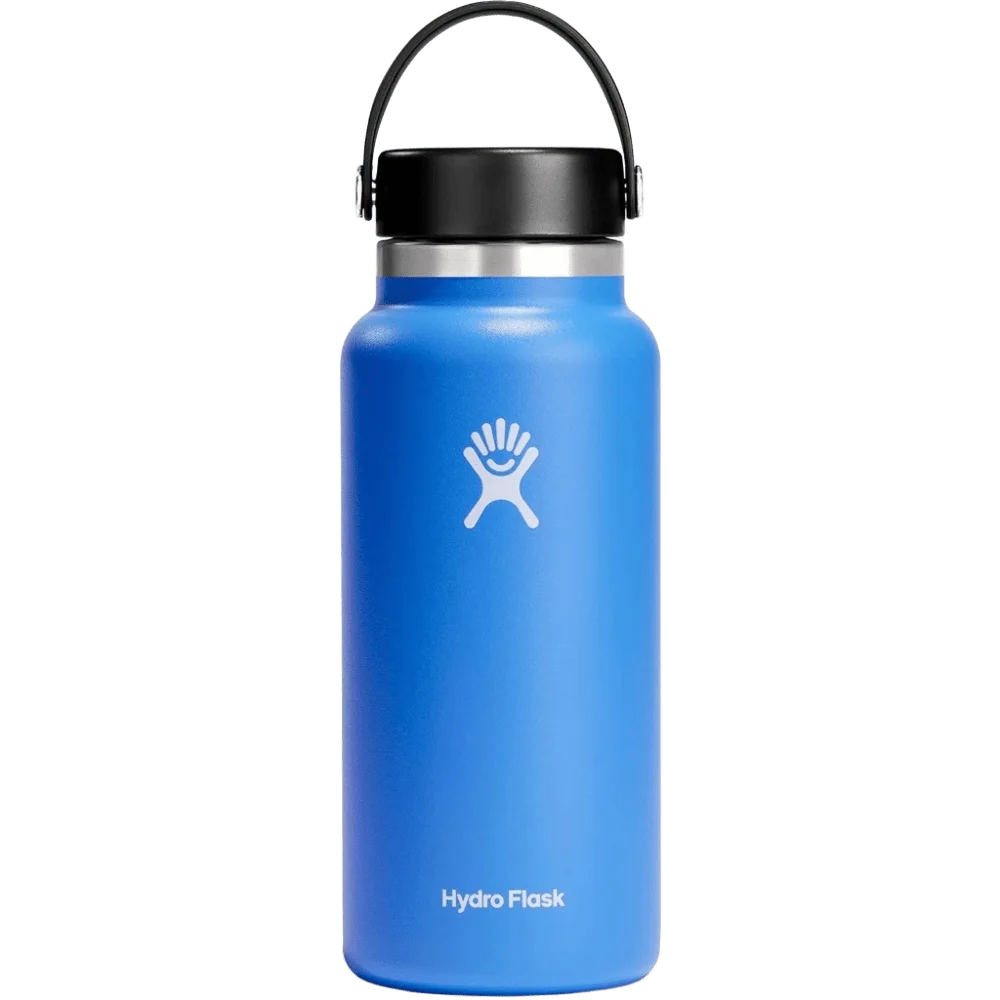
WBA tested a 40 oz CamelBak Chute Mag Insulated and a 32 oz Hydro Flask Wide Mouth.
CamelBak has offered insulated Chute Mag sizes including 20, 32, and 40 oz. Hydro Flask currently offers Wide Mouth bottles from 16 through 64 oz, including 32 and 40 oz.
So a size-matched comparison exists in the market; our database simply does not contain that exact pair yet.
Both brands also have broader cap systems. Hydro Flask Wide Mouth works with multiple Wide Mouth caps. CamelBak’s Chute Mag cap is part of a wider compatibility family across several CamelBak vessels. Our results belong specifically to the 40 oz Chute Mag and 32 oz Hydro Flask with Flex Cap.
CamelBak wins cold retention by a clear margin
Both bottles started at 1°C (33.8°F).
CamelBak finished at 9.2°C (48.6°F) after 24 hours.
Hydro Flask finished at 12°C (53.6°F).
CamelBak was 2.8°C (5°F) colder.
The 12-hour hot test also favored CamelBak: 56.5°C (133.7°F) versus 53.8°C (128.8°F) for Hydro Flask.
Both results are strong, but CamelBak is the thermal winner in these tested configurations.
That matches what impressed me most when I tested the Chute Mag: the insulation is not just marketing. It is one of the bottle’s strongest features.
CamelBak has the better default drinking cap
Hydro Flask’s Flex Cap is simple, secure, and leakproof, but the drinking experience is basically “remove the whole cap and drink from the wide mouth.”
CamelBak’s Chute Mag Cap gives me a dedicated chug spout. The small cap stays attached and uses the magnetic dock to stay out of the way while I drink.
In our tests, CamelBak scored Comfortable for drinking comfort, Easy for opening, and Easy with wet hands.
Hydro Flask scored Medium for drinking comfort, Medium for opening, and Difficult with wet hands.
Both were leakproof. Both had covered drinking surfaces and Secure accidental-opening resistance.
Neither qualified for one-hand operation in our protocol.
For the exact lids in this table, CamelBak is more pleasant to drink from.
Hydro Flask is much faster to clean
This is Hydro Flask’s biggest win.
Hydro Flask took 1 minute 38 seconds in our timed cleaning test.
CamelBak took 2 minutes 21 seconds.
Hydro Flask was 43 seconds faster.
The basic Flex Cap is simply easier to maintain. CamelBak’s cap is still relatively simple — our current data counts two disassemblable parts — but the spout and magnetic cap create more surfaces to inspect.
CamelBak is dishwasher safe in our tested data. Hydro Flask’s tested record emphasizes the very fast hand-cleaning result instead.
If I wash the bottle every day, I appreciate Hydro Flask’s simplicity.
CamelBak carries more, Hydro Flask carries more comfortably
The 40 oz CamelBak weighs 19.33 oz.
The 32 oz Hydro Flask weighs 15.43 oz.
The capacity difference explains a lot of that gap.
Neither tested bottle is strong for normal cup-holder fit. These are wide insulated bottles, not tapered travel tumblers.
CamelBak’s handle fits three fingers and scored Medium for carrying comfort. Hydro Flask’s Flex Cap strap fits four fingers and scored Comfortable.
I like the CamelBak handle shape more than I expected, but if I am carrying the bottle by the lid for a long time, Hydro Flask is the more comfortable tested configuration.
Durability is a tie
Both scored 9/9 in our durability category.
Both lid systems showed no noticeable change after 500 cycles. Both exteriors came through wear testing with no meaningful visible wear beyond micro-scratches.
That is a strong result for CamelBak because the Chute Mag mechanism has more moving interaction than a basic screw cap. The magnetic dock did not turn into a weak point in our test.
The prices are close enough that performance matters more
Our current data puts the CamelBak 40 oz around $44 and Hydro Flask 32 oz around the mid-$40 range.
I would not choose between them based on a dollar or two.
CamelBak gives you more tested capacity, stronger thermal performance, a better default chug experience, and carbonated-drink compatibility.
Hydro Flask gives you a lighter bottle, much faster cleaning, a more comfortable carry strap, and the deeper Wide Mouth cap ecosystem.
Which one should you buy?
Choose CamelBak Chute Mag Insulated if…
I would choose CamelBak if you want the stronger out-of-the-box performance.
It kept water colder, retained more heat, is leakproof, has a comfortable covered spout, opens easily with wet hands, and passed our durability testing.
Its biggest limitations are poor cup-holder fit and slower cleaning than the basic Hydro Flask configuration.
Choose Hydro Flask Wide Mouth if…
I would choose Hydro Flask if you value simplicity and the ability to change caps later.
The Flex Cap is fast to clean, comfortable to carry, leakproof, and durable. The Wide Mouth platform lets you move to straw, chug, or other cap styles without replacing the body.
For the exact tested setup, though, CamelBak is the bottle that performs better.
How we test products
Every product we review is tested using the same structured process, with dozens of measurements and checks covering areas such as thermal performance, lid usability, cleaning, durability, portability, and everyday use. Those results feed into the WBA Score, which helps us compare bottles using consistent criteria instead of relying only on manufacturer claims.
You can read our full product testing protocol, learn more about Water Bottle Advisor and how we test products, or see how the WBA Score works.
About the author
Jeremiah Kowalski
Jeremiah Kowalski founded Water Bottle Advisor to make drinkware reviews more useful and less dependent on manufacturer claims. He has personally tested 50+ products, putting them through measuring, cleaning, leak testing, durability testing, and everyday use before sharing his conclusions. It also means occasionally explaining why yet another large box of bottles has arrived at his door.
Leave a Reply