

Table of contents12 sections
Quick Verdict
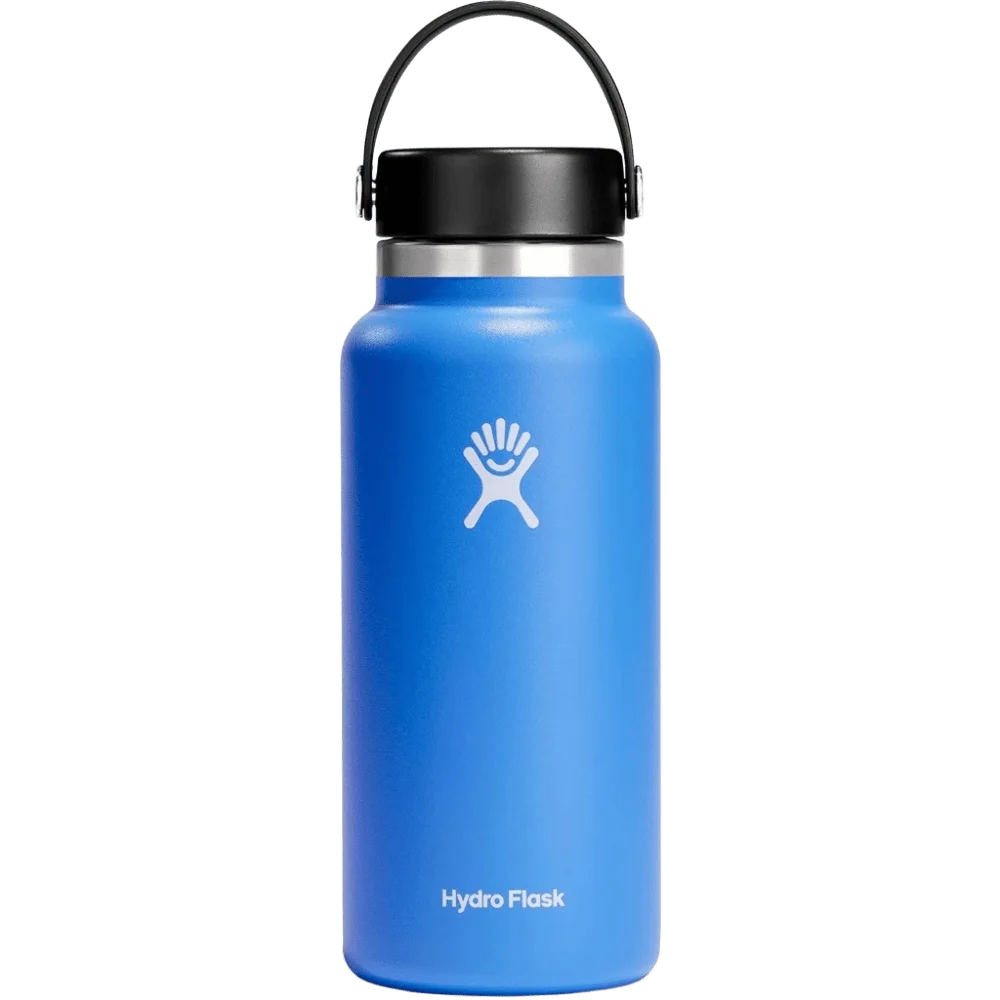
If I had to choose one of these as my main bottle, I would buy the Hydro Flask Wide Mouth.
The reason is not that ThermoFlask is bad. It is actually one of the better budget insulated bottles I have used. The problem for ThermoFlask is that Hydro Flask wins in the areas I care about most over several years of ownership: build quality, durability, insulation, lid ecosystem, and overall refinement.
ThermoFlask fights back with one very important advantage: value. It gives you a leakproof stainless-steel bottle, a comfortable spout lid, hot-drink compatibility, and a lifetime warranty for substantially less money.
So my short answer is simple: Hydro Flask is the better bottle. ThermoFlask is the better bargain.
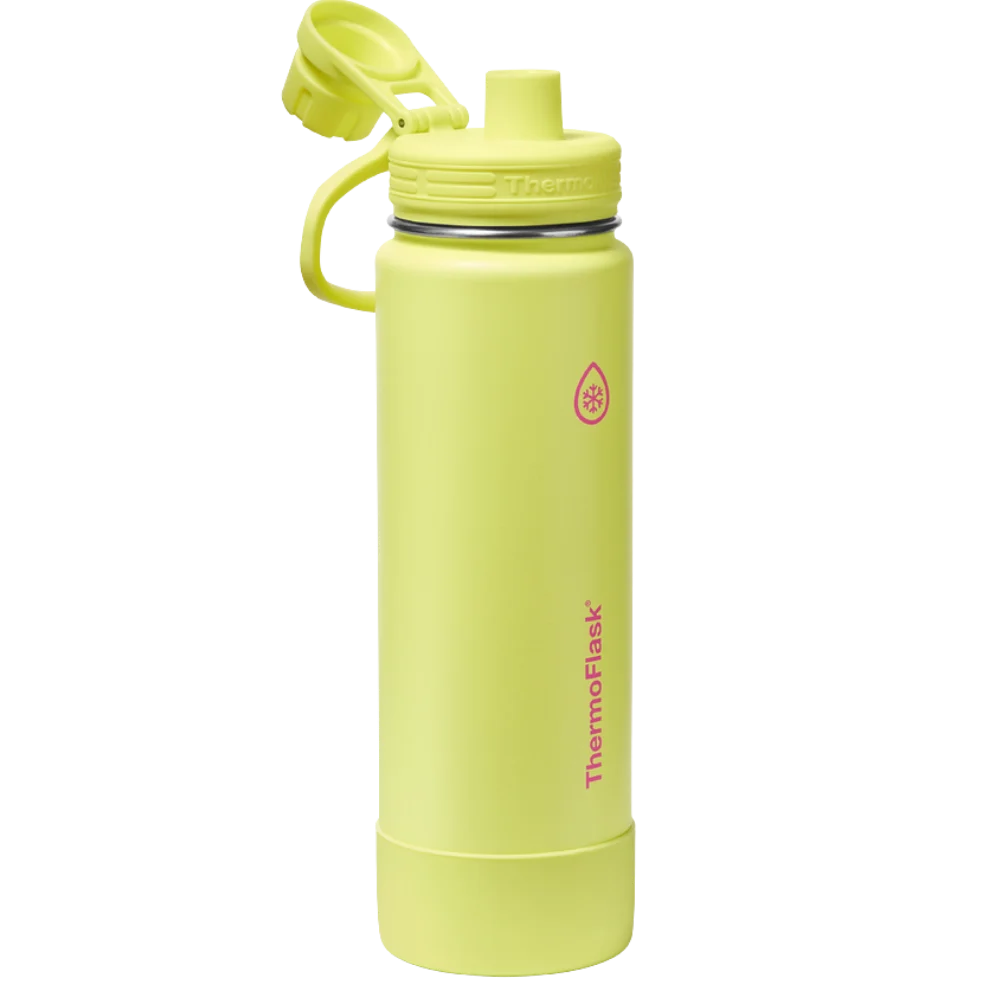
There is one important caveat with the default comparison below. The tested Hydro Flask is 32 oz, while the tested ThermoFlask is 24 oz. That size mismatch reflects what WBA has personally tested so far — not the full range sold by the brands. Hydro Flask currently lists Wide Mouth bottles in 16, 20, 24, 32, 40, and 64 oz, while ThermoFlask currently sells this bottle platform in 18, 24, 32, and 40 oz sizes. So a closer capacity match does exist on the market; we simply do not yet have those exact size-to-size combinations tested in our database. I will call out size-dependent differences instead of pretending this is a perfectly matched capacity comparison.
See the full comparison table ↓
Hydro Flask Wide Mouth vs ThermoFlask Classic Bottle comparison table
Overview
Thermal Performance
Lid & Drinking Experience
Portability & Handling
Cleaning & Maintenance
Durability & Safety
Versatility
Bottle Details
Why I still prefer Hydro Flask after using both
I have owned my 32 oz Hydro Flask since 2023, and it is one of those bottles that became more impressive the longer I kept it.
It is not especially flashy. The basic Wide Mouth with a Flex Cap is almost aggressively simple. But that simplicity has aged well. The bottle still feels solid, the powder coating has held up, the cap remains dependable, and I trust it in a backpack without thinking about leaks.
ThermoFlask has always felt different to me. I bought mine because the price-to-feature ratio was hard to ignore. It gives you many of the things people buy Hydro Flask for — stainless steel, vacuum insulation, leakproofness, a carrying handle, and hot/cold use — without the premium price.
And for normal everyday use, that is enough for a lot of people.
But when I use them side by side, Hydro Flask feels like the more finished product. The body feels sturdier. The coating feels better. The lid system is broader. Small details feel more deliberate.
That is why this comparison is less about “does ThermoFlask work?” and more about how much the premium details are worth to you.
Cold retention: Hydro Flask wins the current standardized test
In our current 24-hour cold-retention test, both bottles started at 1°C (33.8°F).
The Hydro Flask Wide Mouth finished at 12°C (53.6°F).
The ThermoFlask Classic Bottle finished at 14°C (57.2°F).
That gives Hydro Flask the stronger cold-retention result in the current WBA data.
The difference is meaningful, but I would not exaggerate it. ThermoFlask still kept the water cold enough that I would happily drink it after a workday. It is not a bad insulator. Hydro Flask simply did better.
This result also lines up with my longer-term impression of both brands. Hydro Flask has been more consistent for me when I care about keeping water cold for a long time.
There is also a capacity caveat here: the Hydro Flask tested is 32 oz and the ThermoFlask is 24 oz. They are not identical test specimens, so I would use these numbers to understand the tested configurations rather than declaring that every Hydro Flask size will beat every ThermoFlask size by the same amount.
Hot drinks: Hydro Flask has the clearer advantage
Both tested configurations are compatible with hot drinks, which already separates them from many cold-only bottles.
In our current 12-hour test, the Hydro Flask started at 88°C (190.4°F) and finished at 53.8°C (128.8°F).
The ThermoFlask started at the same 88°C (190.4°F) and finished at 45°C (113°F).
That is a much more noticeable difference than the cold test.
For me, around 50°C / 122°F is the point where a drink starts moving from “still properly hot” toward “warm.” Hydro Flask stayed above that line after 12 hours. ThermoFlask did not.
If you mainly carry cold water, this may not matter much. But if you want one bottle for water in summer and tea or coffee in winter, Hydro Flask is the stronger all-rounder.
ThermoFlask has the nicer default drinking lid
This is where the comparison gets interesting, because I actually prefer the ThermoFlask Spout Lid for straightforward drinking.
The default Hydro Flask configuration here uses the Flex Cap. It is basically the simplest Hydro Flask setup: unscrew the cap and drink from the wide mouth. It is reliable, leakproof, and very easy to clean, but it is not my favorite Hydro Flask lid for drinking throughout the day.
The ThermoFlask Spout Lid gives you a dedicated chug opening. In our current testing, drinking comfort is rated Comfortable, compared with Medium for the Hydro Flask Flex Cap.
ThermoFlask is also easier to open in our current tests, including with wet hands. That matches my experience. The lid is not fancy, but the spout is natural to drink from and the cap stays attached, so there is no small loose piece to lose.
The limitation is that ThermoFlask is more or less the bottle you bought.
Hydro Flask is a system. The current Hydro Flask compatibility guide says Wide Mouth bottles work with all Wide Mouth caps, and the current lineup includes options such as Flex Cap, Flex Straw Cap, and Flex Chug Cap. ThermoFlask also offers more than the single Spout Lid represented in our tested configuration; its current bottle listing includes interchangeable chug- and straw-style lids. In this article, I only use WBA test results for the exact lids we have personally tested. The other manufacturer-listed lid options are useful buying context, not evidence that they would score or perform the same way.
I can take the same Wide Mouth body and swap the Flex Cap for a Flex Straw Cap, Flex Chug Cap, Flex Sip Lid, or other compatible lids depending on what I am doing. That changes the bottle far more than most people realize.
So if I compare only the two lids in this default table, I prefer the ThermoFlask Spout Lid for drinking.
If I compare the lid ecosystems, Hydro Flask wins easily.
Hydro Flask is dramatically faster to clean in this configuration
The Flex Cap is not exciting, but cleaning is where its simplicity pays off.
In our current timed cleaning test, the Hydro Flask configuration took 1 minute 38 seconds to clean fully.
The ThermoFlask took 2 minutes 15 seconds.
That is a 37-second advantage for Hydro Flask.
The reason is easy to understand. The ThermoFlask Spout Lid has more pieces and more gasket areas that deserve attention. The bottle itself is straightforward, but the lid gives you more small places to inspect and clean.
Hydro Flask with the basic Flex Cap is almost the opposite. There is much less going on. I still remove the gasket periodically because hidden seals are exactly where residue can build up, but overall the process is quick.
ThermoFlask deserves credit for making its gaskets removable and, in the current data, easy to remove. It is also dishwasher safe. I do not find it difficult to maintain.
It is just slower than this very simple Hydro Flask setup.
This is also why I would not generalize the result to every Hydro Flask lid. Put a more complex lid on the same Hydro Flask body and the cleaning advantage can shrink or disappear.
Portability depends more on size than brand here
The default configurations make a direct portability comparison awkward because we are looking at a 32 oz Hydro Flask and a 24 oz ThermoFlask.
The ThermoFlask is lighter at 13.1 oz, while the larger Hydro Flask weighs 15.43 oz. That is exactly what I would expect when one bottle holds 8 oz less.
Both have handles that fit a full four-finger grip. I prefer the Hydro Flask Flex Cap strap for longer carries because it is softer and more comfortable in my hand. The ThermoFlask handle is larger than many cheap-bottle handles, which I appreciate, but the plastic feels thinner and less reassuring.
Cup-holder fit is also a size story.
My 32 oz Hydro Flask Wide Mouth is not a bottle I expect to fit a normal car cup holder. That has annoyed me for years and is one reason I like Hydro Flask’s newer Travel Bottle so much.
My 24 oz ThermoFlask has been much easier to use in the car, although fit still depends on the cup holder. Larger ThermoFlask sizes can become just as awkward.
So I would not say “ThermoFlask is more portable” as a universal rule. I would say the 24 oz ThermoFlask is easier to live with in a car than the 32 oz Hydro Flask Wide Mouth.
Hydro Flask wins durability — and our current test finally shows why
This used to be one of those comparisons where my hands told me more than the numbers.
Hydro Flask simply feels tougher. The walls feel more substantial, the powder coating feels more durable, and the lid components feel less likely to become the weak point of the bottle.
Now our current durability data gives that impression more support.
Both bottles performed very well in our exterior wear-resistance testing, with no meaningful visible wear beyond micro-scratches.
But after 500 lid-mechanism cycles, the Hydro Flask Flex Cap showed no noticeable change.
The ThermoFlask lid showed visible wear, while remaining fully functional.
That distinction matters to me.
I am not saying the ThermoFlask lid failed. It did not. But it reinforces the same concern I have had since I first handled it: the bottle body feels better than the lid. The thinner plastic handle has always been the part I trust least.
My Hydro Flask, by contrast, has spent years being dropped, carried, washed, and thrown around, and it still feels like a bottle I could keep using for a long time.
This is one of the clearest reasons I am willing to pay more for Hydro Flask.
ThermoFlask wins on value
This is where ThermoFlask makes the strongest argument for itself.
The Hydro Flask Wide Mouth 32 oz sits around $45 in our current data. The tested ThermoFlask 24 oz is around $27, and ThermoFlask is often even more attractive when you find multi-packs.
I originally bought ThermoFlask because that kind of pricing is hard to ignore.
For considerably less money, you still get an insulated 18/8 stainless-steel bottle that passed our leakproofness test, works with hot drinks, has a covered drinking surface, carries comfortably, and comes with a lifetime warranty.
That is a very good package.
If your question is “is Hydro Flask better?” my answer is yes.
If your question is “is Hydro Flask better enough to justify paying more?” the answer depends on how long you plan to keep the bottle and how much you care about the details.
I do.
Someone buying two or three bottles for a family may make a very different calculation.
Both passed our leakproofness testing
Neither bottle gave me a leakproofness problem in our standardized testing.
Both passed, both are designed to be leakproof, and both have secure accidental-opening resistance in the tested configurations.
That is important because these are bottles with carry handles. I want to be able to throw one into a backpack without treating it like an open coffee cup.
The biggest practical difference is the lid style rather than the seal quality.
ThermoFlask gives me a covered chug spout that I can access without removing the whole lid. Hydro Flask with the basic Flex Cap requires me to unscrew the cap and drink directly from the bottle opening.
Again, that can change completely if you select a different Hydro Flask lid in the comparison table.
Which one should you buy?
Choose Hydro Flask Wide Mouth if…
I would choose the Hydro Flask Wide Mouth if this is going to be a main bottle you expect to keep for years.
It has better insulation in our current tested configurations, much stronger hot retention, faster cleaning with the Flex Cap, and the more convincing durability result after 500 lid cycles.
More importantly, I trust the whole platform more. The bottle body is excellent, the finish has held up for me, and the interchangeable lid ecosystem means I can change how the bottle works instead of replacing the bottle itself.
The downside is obvious: you pay more.
I think the premium is justified if you actually use those advantages.
Choose ThermoFlask Classic Bottle if…
I would choose ThermoFlask if your priority is getting a genuinely good insulated bottle without paying premium-brand money.
Its Spout Lid is more comfortable to drink from than the basic Hydro Flask Flex Cap, both tested bottles are leakproof, it handles hot and cold drinks, and the 24 oz version is light enough for everyday carrying.
I also think ThermoFlask makes sense if you are buying multiple bottles. The value becomes much harder for Hydro Flask to compete with when ThermoFlask multi-packs are available.
Just understand where the savings show up. The lid construction does not feel as premium, and our 500-cycle test showed visible lid wear that we did not see on the Hydro Flask.
For me, Hydro Flask is the bottle I would keep. ThermoFlask is the bottle I would recommend when the budget matters more than premium details.
How we test products
Every product we review is tested using the same structured process, with dozens of measurements and checks covering areas such as thermal performance, lid usability, cleaning, durability, portability, and everyday use. Those results feed into the WBA Score, which helps us compare bottles using consistent criteria instead of relying only on manufacturer claims.
You can read our full product testing protocol, learn more about Water Bottle Advisor and how we test products, or see how the WBA Score works.
About the author
Jeremiah Kowalski
Jeremiah Kowalski founded Water Bottle Advisor to make drinkware reviews more useful and less dependent on manufacturer claims. He has personally tested 50+ products, putting them through measuring, cleaning, leak testing, durability testing, and everyday use before sharing his conclusions. It also means occasionally explaining why yet another large box of bottles has arrived at his door.
Leave a Reply