
Table of contents10 sections
Quick Verdict
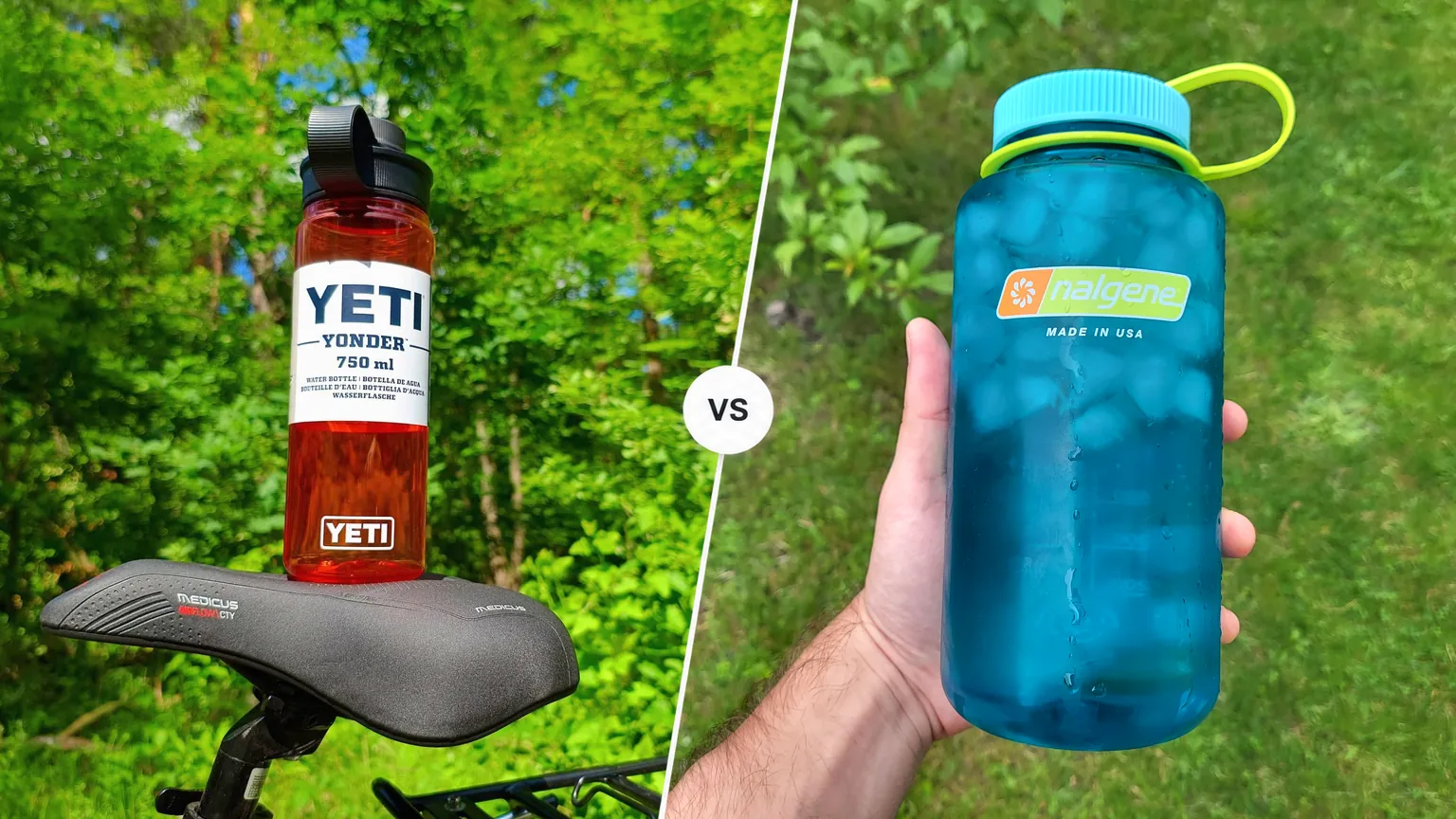
If I wanted the better bottle to drink from every day, I would choose the YETI Yonder. If I wanted the cheapest, lightest, simplest plastic bottle possible, I would choose the Nalgene Wide Mouth.
Yonder wins our current WBA comparison because its lid is much more comfortable, easier to open, easier to use with wet hands, and more pleasant to carry. It also had less odor retention in our test.
Nalgene fights back with two classic strengths: it is extremely simple and extremely light. The tested 32 oz Nalgene weighs less than the smaller 25 oz Yonder and costs significantly less.
So my short answer is: Yonder is the more refined plastic bottle. Nalgene is the better minimalist value.
See the full comparison table ↓
YETI Yonder vs Nalgene Wide Mouth comparison table
Overview
Thermal Performance
Lid & Drinking Experience
Portability & Handling
Cleaning & Maintenance
Durability & Safety
Versatility
Bottle Details
The capacities differ, but both brands sell other sizes
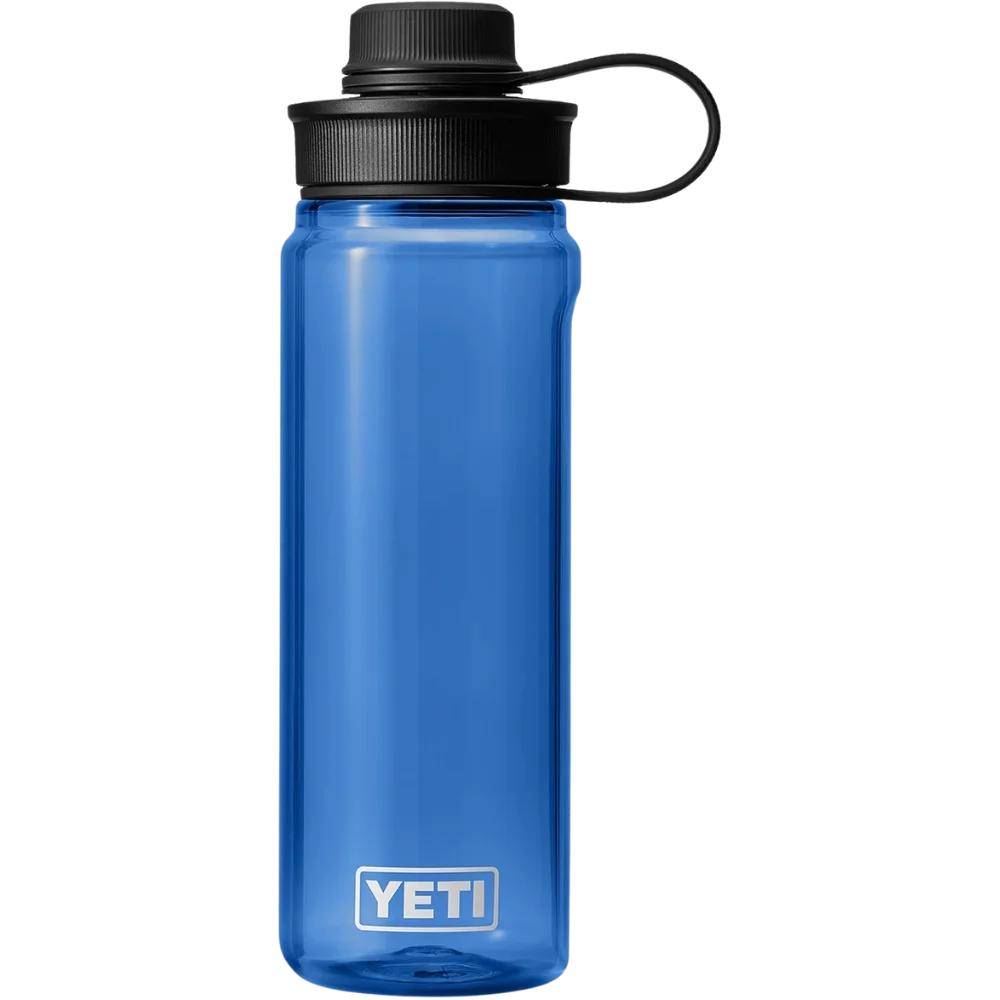
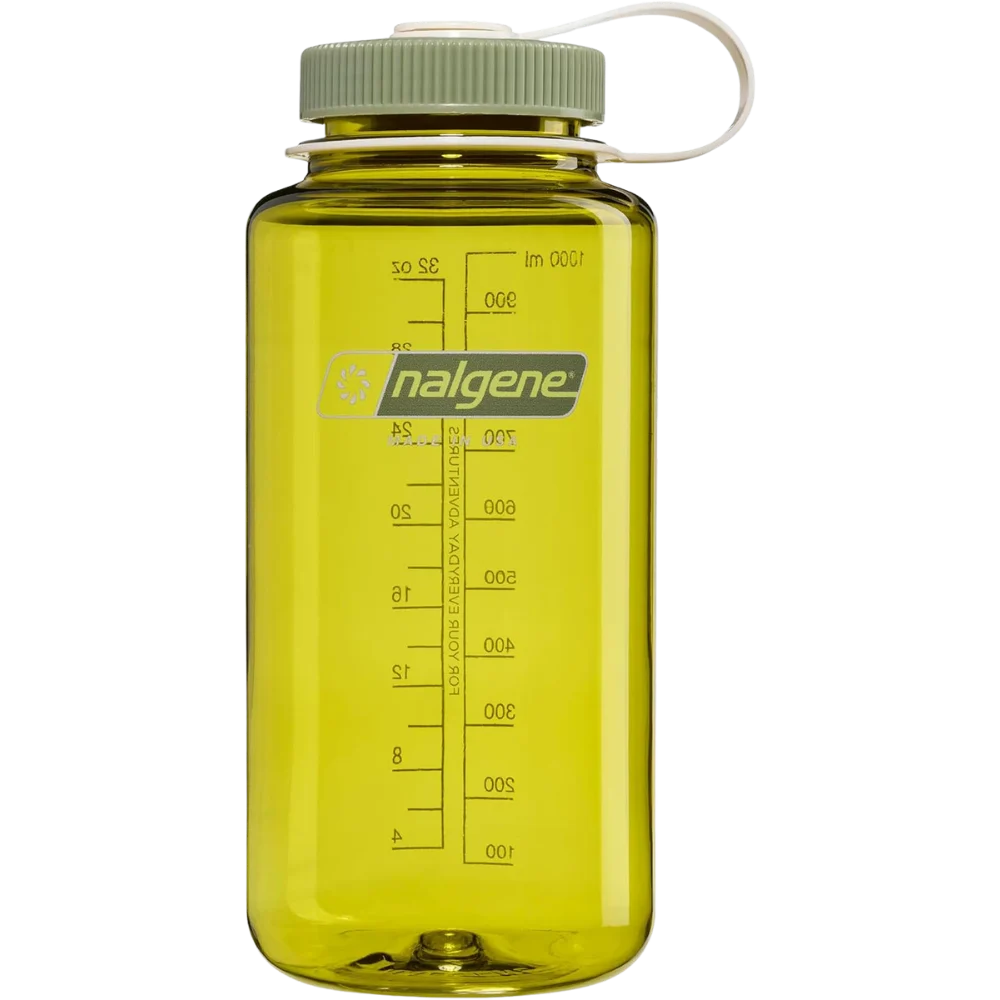
WBA tested the 25 oz YETI Yonder and the 32 oz Nalgene Wide Mouth.
YETI’s current Yonder range includes 20, 25, 34, and 50 oz sizes. Nalgene’s current Wide Mouth family includes capacities such as 16, 32, and 48 oz.
So a closer capacity match exists. We simply have not tested those exact pairs yet.
YETI also offers different Yonder cap styles, including the Tether Cap tested here and other Yonder-compatible cap options such as Chug and Straw configurations. Nalgene’s classic Wide Mouth bottle is built around its simple tethered screw lid. Our test results belong only to the exact lids represented in the table.
Yonder’s lid is the biggest reason it wins
The Yonder Tether Cap scored Comfortable for drinking comfort. The Nalgene Wide Mouth scored Uncomfortable.
That result matches the obvious design difference. Nalgene gives you a very wide opening and very little guidance for the water. It is excellent for filling, ice, and cleaning access, but drinking while walking takes more care.
Yonder gives you a more controlled chug-style opening while still letting you access the wider bottle opening.
Yonder was also Easy to open and remained Easy with wet hands. Nalgene scored Medium in both tests.
Both were leakproof. Both had secure accidental-opening resistance. Both protect the drinking surface when closed.
Neither qualified for one-hand operation, so this is not a push-button-bottle comparison.
For actual drinking, Yonder is much nicer.
Both are very fast to clean
Nalgene took 1 minute 28 seconds in our full cleaning test.
Yonder took 1 minute 31 seconds.
A three-second difference is meaningless in real life. I consider this a tie.
Nalgene has the simpler lid — only one disassemblable part in our current data — while Yonder has two. Neither tested lid uses separate silicone gaskets in our current configuration data.
Both are dishwasher safe.
The only cleaning limitation is the bottle shape: both require a bottle brush for a proper interior scrub in our test.
If easy maintenance is your priority, both are excellent.
Nalgene is lighter even though it holds more
This is the classic Nalgene advantage.
The 32 oz Nalgene weighs 6.32 oz.
The smaller 25 oz Yonder weighs 8.08 oz.
So Nalgene holds seven additional ounces while weighing 1.76 oz less.
If I were counting every ounce in a backpack, that matters.
But weight is not the whole portability story.
Yonder’s two-finger lid handle scored Comfortable in our carry test. Nalgene’s two-finger loop scored Uncomfortable.
Neither tested bottle is strong for standard car cup-holder fit.
So Nalgene wins the scale. Yonder wins the hand.
Yonder retains less odor
Plastic bottles make odor testing more interesting than stainless steel.
Yonder showed only a very faint odor after our standardized test.
Nalgene showed a noticeable but moderate odor.
Neither showed a taste change in our test, which matters more to me, but Yonder still gave us the cleaner odor result.
That is one of the small refinement differences I notice when comparing a modern premium plastic bottle with a very traditional Nalgene design.
Durability is a tie
Both scored 9/9 in our durability category.
Both lid mechanisms showed no noticeable change after 500 cycles, and both bodies came through wear testing extremely well.
That is not surprising. Simplicity is an advantage here. There are no complicated hinges, magnetic assemblies, or press-in straw mechanisms to become obvious failure points.
I would trust either bottle for hard everyday use.
Nalgene wins price
Our tested Nalgene is around $17. The Yonder is around $25.
Eight dollars is a meaningful difference on a plastic bottle.
Nalgene gives you more capacity for less money and less empty weight.
Yonder’s extra cost buys a much better drinking experience, more comfortable carry loop, easier opening, less odor retention, and a broader cap ecosystem.
Whether that is worth it depends on what annoys you about traditional wide-mouth bottles.
Which one should you buy?
Choose YETI Yonder if…
I would choose Yonder if this is going to be a daily-use bottle rather than just a lightweight container.
The lid is more comfortable, opening is easier, the carry loop feels better, odor retention was lower, and the bottle still passed our leakproofness and durability testing.
It costs more and weighs more per ounce of capacity, but I think the usability improvements are real.
Choose Nalgene Wide Mouth if…
I would choose Nalgene if you want simple, light, cheap, proven plastic hydration.
It holds 32 oz at only 6.32 oz empty, cleans quickly, is dishwasher safe, leakproof, durable, and inexpensive.
The tradeoff is the classic wide-mouth drinking experience. I still find it much less comfortable than a dedicated chug opening.
For me, Yonder is the better bottle. Nalgene is the better tool when low weight and low price matter most.
How we test products
Every product we review is tested using the same structured process, with dozens of measurements and checks covering areas such as thermal performance, lid usability, cleaning, durability, portability, and everyday use. Those results feed into the WBA Score, which helps us compare bottles using consistent criteria instead of relying only on manufacturer claims.
You can read our full product testing protocol, learn more about Water Bottle Advisor and how we test products, or see how the WBA Score works.
About the author
Jeremiah Kowalski
Jeremiah Kowalski founded Water Bottle Advisor to make drinkware reviews more useful and less dependent on manufacturer claims. He has personally tested more than 120 bottles, tumblers, mugs, and filtration systems, putting each one through measuring, cleaning, leak testing, and everyday use before sharing his conclusions. It also means occasionally explaining why yet another large box of bottles has arrived at his door.
Leave a Reply