

Table of contents10 sections
Quick Verdict
At roughly the same $35 price, this comparison comes down to lid experience versus raw bottle performance.
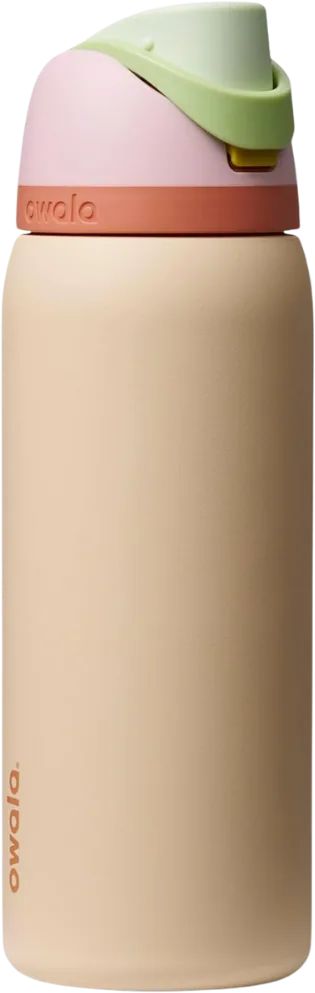
I would choose the Owala FreeSip for everyday cold-water use because the lid is much more comfortable, fully covers the mouthpiece, works naturally one-handed, and the bottle held up better cosmetically in our wear test.
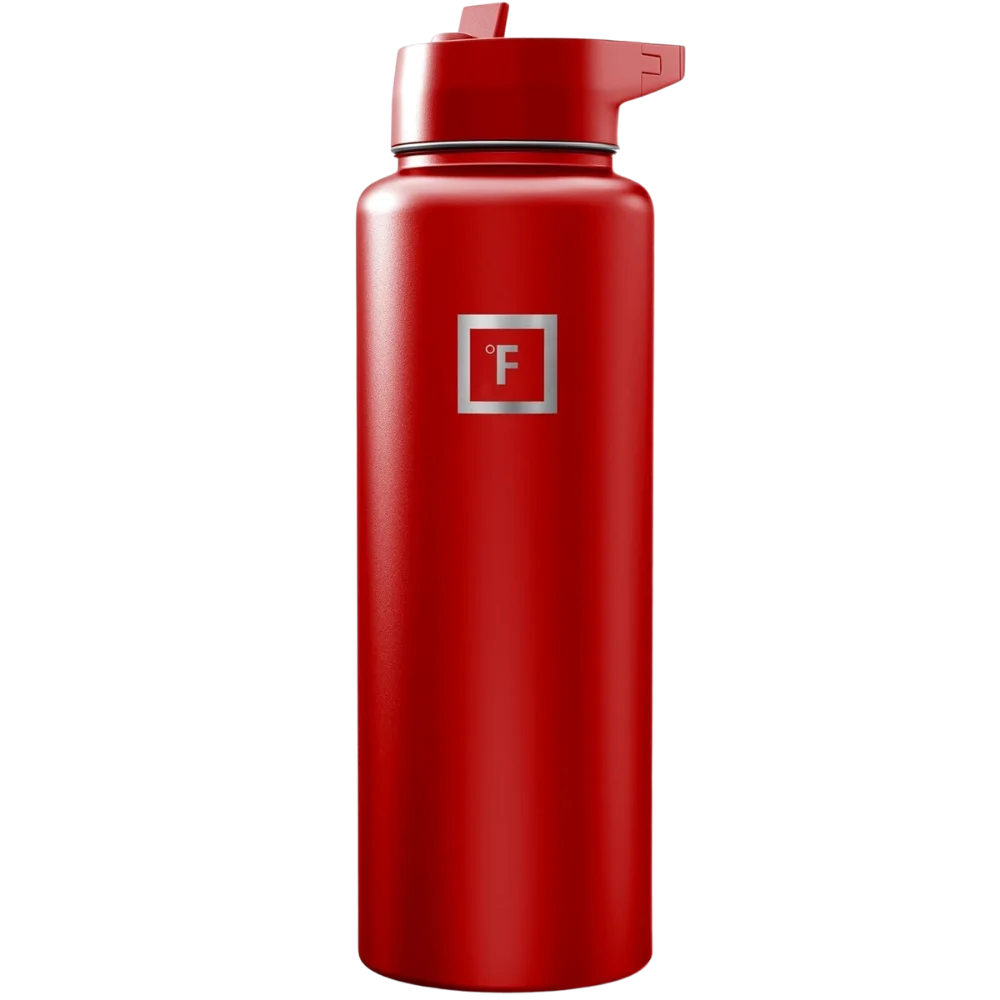
I would choose the Iron Flask if insulation and value per ounce were my priorities. The tested 40 oz Iron Flask kept water substantially colder, retained hot drinks well, holds eight more ounces, and still weighs only a few ounces more than the 32 oz Owala.
So my short answer is: Owala has the better interface. Iron Flask has the better thermal-value story.
See the full comparison table ↓
Owala FreeSip vs Iron Flask Wide Mouth comparison table
Overview
Thermal Performance
Lid & Drinking Experience
Portability & Handling
Cleaning & Maintenance
Durability & Safety
Versatility
Bottle Details
The tested capacities differ, but both brands sell matched sizes
WBA tested a 32 oz Owala FreeSip and a 40 oz Iron Flask Wide Mouth.
Owala currently sells FreeSip bottles in 24, 32, and 40 oz. Iron Flask’s current Wide Mouth lineup includes 22, 32, 40, and 64 oz.
So both 32-vs-32 and 40-vs-40 comparisons are possible in the market. We simply have not tested those exact matched configurations yet.
Iron Flask also offers multiple Wide Mouth lid styles, including straw, flip/spout, and stainless screw-on options. Our results here belong specifically to the Carabiner Straw Lid. Owala’s results belong to the standard FreeSip Lid.
Iron Flask wins insulation decisively
Both started at 1°C (33.8°F).
Iron Flask finished the 24-hour cold test at 7.8°C (46°F).
Owala finished at 10.7°C (51.3°F).
Iron Flask was 2.9°C (5.3°F) colder.
Iron Flask also supports hot drinks in our tested configuration and finished the 12-hour test at 55.4°C (131.7°F). The tested Owala FreeSip is cold-drink only.
The 40 oz capacity may help explain some thermal behavior, so I would not assume a 32 oz Iron Flask would reproduce the exact same result. For the bottles we actually tested, though, Iron Flask is the stronger thermal performer by a wide margin.
Owala has the much better drinking lid
The FreeSip lid is why I would still personally reach for Owala more often.
It scored Perfect for drinking comfort, works one-handed, was Easy to open, stayed Easy with wet hands, passed our leakproofness test, fully covers the drinking surface, and had Secure accidental-opening resistance.
Iron Flask also passed leakproofness testing and was Easy to open with wet hands. But drinking comfort scored Medium, one-hand use required changing grip, the mouthpiece is only partially protected, and accidental-opening resistance was Mostly Secure.
The Iron Flask straw setup is perfectly functional. FreeSip is simply more refined.
I also like being able to switch between straw and chug drinking through the same Owala opening without changing lids.
Iron Flask is a little faster to clean
Iron Flask took 2 minutes 22 seconds in our full cleaning test.
Owala took 2 minutes 45 seconds.
Iron Flask was 23 seconds faster.
That result is interesting because the Iron Flask lid has more silicone pieces and not all of them were removable in our test.
Owala’s FreeSip lid has its own complexity around the button, mouthpiece, straw, and gasket. Even with fewer headline parts, the full cleaning routine took longer.
Neither is a nightmare to maintain, but Iron Flask wins the stopwatch.
Iron Flask carries eight more ounces for surprisingly little extra weight
The 32 oz Owala weighs 14.88 oz.
The 40 oz Iron Flask weighs 17.6 oz.
Iron Flask gives you eight extra ounces of capacity for only 2.72 oz more empty weight.
That is a strong capacity-to-weight result.
Neither tested configuration is good for a normal car cup holder in our database.
Both lid handles fit about two fingers and both scored Medium for carrying comfort.
So portability is less about the handle and more about how much water you want to carry. Owala is the lighter object; Iron Flask is more efficient if you need 40 oz.
Owala wins durability and finish
Owala scored 9/9 in our durability category.
Iron Flask’s lid mechanism also survived 500 cycles with no noticeable change, but its exterior showed cosmetic wear while remaining fully functional.
Owala’s exterior showed no visible wear beyond micro-scratches.
That matches my broader impression of Iron Flask: the core performance is shockingly good for the price, but the finish does not feel as premium as the best-known brands.
The price makes Iron Flask extremely competitive
Both tested configurations are around $35.
That means Iron Flask gives you 40 oz, stronger measured insulation, hot-drink compatibility, and a straw lid at essentially the same price as the 32 oz Owala.
Owala’s value comes from the experience rather than the raw spec sheet: lower weight, better drinking comfort, a covered mouthpiece, one-hand operation, and the FreeSip design.
Which one should you buy?
Choose Owala FreeSip if…
I would choose Owala if this is primarily a cold-water bottle I interact with all day.
The lid is better, the mouthpiece is fully protected, one-hand operation is excellent, the bottle is leakproof, and our durability results were stronger cosmetically.
The compromises are weaker insulation than the tested Iron Flask and no hot-drink compatibility.
Choose Iron Flask Wide Mouth if…
I would choose Iron Flask if you want maximum bottle performance per dollar.
It kept water much colder, retained heat well, passed leakproofness testing, carries more capacity efficiently, and costs about the same as Owala in our current data.
Its lid is less refined and the finish showed more wear, but the value is exceptional.
For me, Owala is the bottle I enjoy using more. Iron Flask is the bottle that wins if I reduce the decision to insulation, capacity, and price.
How we test products
Every product we review is tested using the same structured process, with dozens of measurements and checks covering areas such as thermal performance, lid usability, cleaning, durability, portability, and everyday use. Those results feed into the WBA Score, which helps us compare bottles using consistent criteria instead of relying only on manufacturer claims.
You can read our full product testing protocol, learn more about Water Bottle Advisor and how we test products, or see how the WBA Score works.
About the author
Jeremiah Kowalski
Jeremiah Kowalski founded Water Bottle Advisor to make drinkware reviews more useful and less dependent on manufacturer claims. He has personally tested more than 120 bottles, tumblers, mugs, and filtration systems, putting each one through measuring, cleaning, leak testing, and everyday use before sharing his conclusions. It also means occasionally explaining why yet another large box of bottles has arrived at his door.
Leave a Reply