

Table of contents9 sections
Quick Verdict
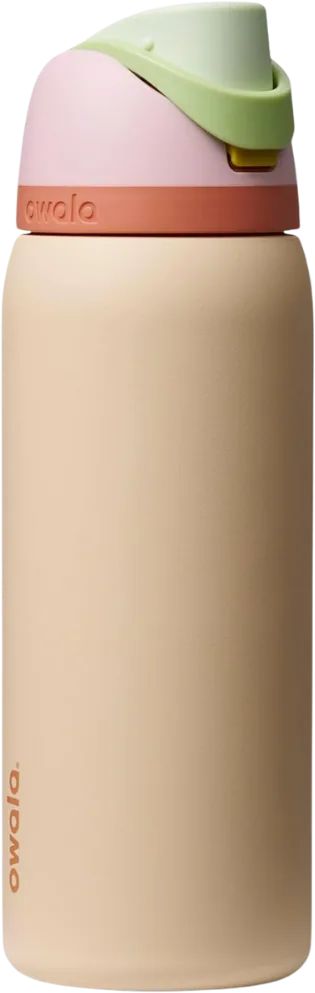
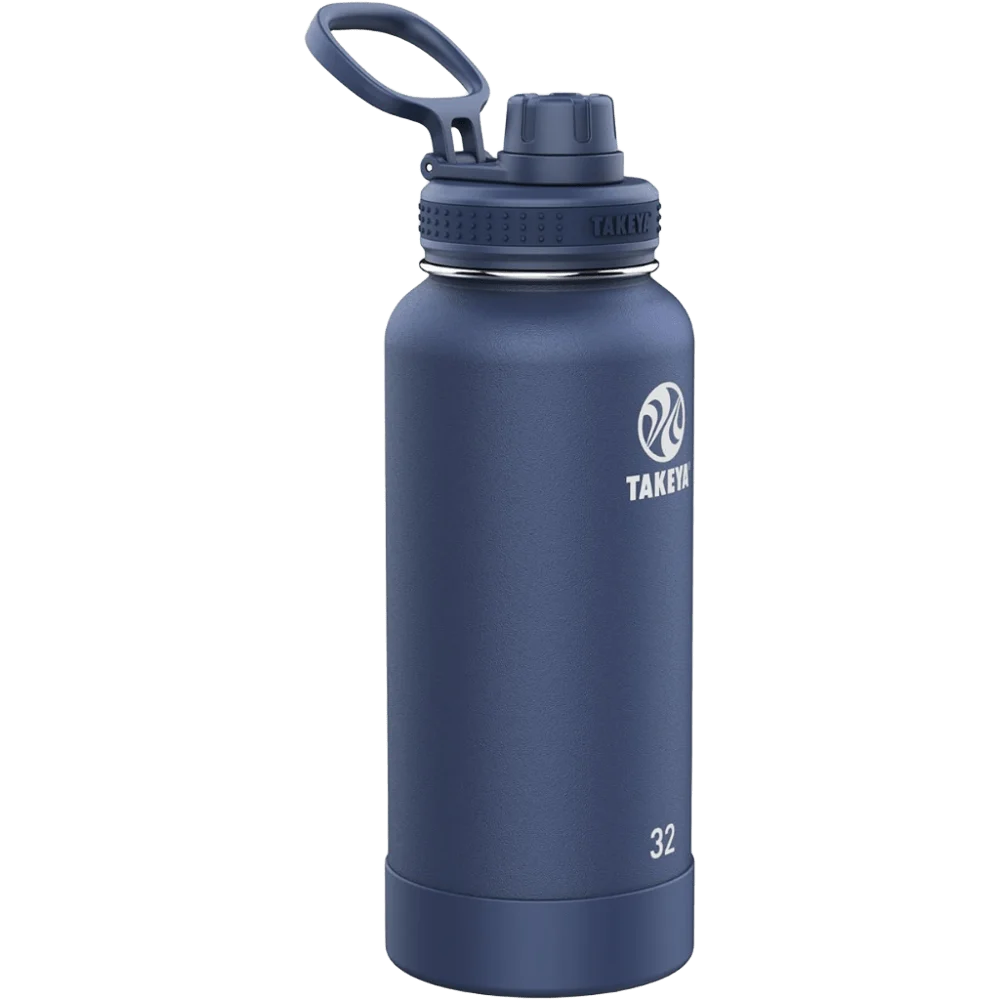
This is a very clean comparison because WBA tested both bottles in 32 oz.
For me, the Owala FreeSip wins. It kept water colder, is slightly lighter, works one-handed, and the FreeSip lid gives me more drinking flexibility than Takeya’s Spout Lid.
Takeya is not far behind. It is leakproof, durable, easier to clean, and — unlike the tested Owala — supports hot and carbonated drinks in our current data.
Both cost around $35 in the configurations we tested, so price does not really rescue one from the other.
My short answer is: Owala for the better cold-water experience. Takeya for a more conventional bottle that handles a wider range of drinks.
See the full comparison table ↓
Owala FreeSip vs Takeya Actives comparison table
Overview
Thermal Performance
Lid & Drinking Experience
Portability & Handling
Cleaning & Maintenance
Durability & Safety
Versatility
Bottle Details
This is a true 32 oz vs 32 oz comparison
Both tested configurations hold 32 oz, which means I can compare their weight and dimensions without hiding behind a capacity caveat.
Owala currently sells FreeSip bottles in 24, 32, and 40 oz. Takeya’s Actives line is broader, with 18, 22, 24, 32, 40, and 64 oz options.
Takeya also sells Actives with Spout Lid and Straw Lid variants. Owala’s FreeSip concept combines straw and larger-mouth drinking in the same lid. The results below apply to our tested FreeSip Lid and Takeya Spout Lid only.
Owala wins cold retention
Both bottles started at 1°C (33.8°F).
After 24 hours, Owala finished at 10.7°C (51.3°F) while Takeya finished at 12°C (53.6°F).
Owala therefore finished 1.3°C (2.3°F) colder.
That is enough for me to call Owala the better cold-retention performer in this exact matchup, although both are comfortably good enough for a normal day.
Takeya has a versatility advantage: our tested Actives supports hot drinks and carbonated drinks. Owala FreeSip does not in this tested configuration.
Takeya’s 12-hour hot-retention result finished at 49.2°C (120.6°F). If you want one bottle that can move beyond cold water, that matters.
FreeSip is the better drinking system for me
This is the decisive category.
Owala scored Perfect for drinking comfort, worked one-handed, was Easy to open, stayed Easy with wet hands, passed leakproofness testing, and keeps the mouthpiece covered when closed.
The FreeSip design also gives me three practical drinking modes: built-in straw, larger chug-style opening, and open-mouth access.
Takeya’s Spout Lid is good rather than exciting. It scored Comfortable for drinking, was Easy to open, remained Easy with wet hands, was secure, covered, and leakproof.
Its biggest weakness relative to Owala is that it did not qualify for one-hand operation in our protocol.
If you prefer a familiar chug spout, Takeya may actually feel simpler. But if you want the most flexible lid without changing caps, Owala wins clearly.
Takeya is a little faster to clean
Owala took 2 minutes 45 seconds in our timed cleaning test.
Takeya took 2 minutes 23 seconds.
Takeya was 22 seconds faster.
That is not an enormous difference, but I notice it over repeated washes.
Owala’s clever lid creates more places to inspect around the mouthpiece, button, internal straw, and gasket. Takeya’s Spout Lid is more conventional.
Both 32 oz bodies required a long bottle brush in our testing. Takeya’s silicone parts were removable and easy to remove.
For plain water, neither is a problem. For daily flavored drinks, I would rather clean the Takeya.
Owala is slightly lighter
The Owala FreeSip 32 oz weighs 14.88 oz empty.
The Takeya Actives 32 oz weighs 15.42 oz.
Owala is about half an ounce lighter. The difference is real but small.
Neither tested 32 oz bottle is strong for standard car cup holders in our database.
Takeya’s lid handle fits three fingers and scored Medium for carrying comfort. Owala’s smaller loop fits around two fingers and also scored Medium.
I do not see a meaningful portability winner beyond Owala’s slight weight advantage.
Durability is a tie
Both configurations scored 9/9 in our durability category.
Both lid mechanisms showed no noticeable change after 500 cycles. Both finishes came through our wear testing with no meaningful visible wear beyond micro-scratches.
That matters because the products feel different in the hand. Takeya feels more conventional and utilitarian; Owala feels more design-driven because of the lid. The standardized result says both held up very well.
At the same price, the decision comes down to what you drink
Both tested configurations sit around $35 in our current WBA data.
That removes the easiest tie-breaker.
If I drink mostly cold water, Owala gives me better cold retention and the lid I prefer.
If I want hot drinks or carbonated drinks too, Takeya immediately becomes more useful because the tested FreeSip does not support those use cases.
Takeya also has the advantage if you strongly prefer a traditional spout and do not care about switching between straw and chug drinking.
Which one should you buy?
Choose Owala FreeSip if…
I would choose Owala if you mainly carry cold water and want the more interesting daily drinking experience.
It kept water colder, is slightly lighter, works one-handed, is leakproof, protects the mouthpiece, and gives me straw and chug drinking in the same lid.
FreeSip remains one of my favorite lid designs because I do not have to choose how I want to drink before I leave the house.
Choose Takeya Actives if…
I would choose Takeya if you want a simpler, more versatile beverage bottle.
It is leakproof, durable, a little quicker to clean, comfortable to drink from, and supports hot and carbonated drinks in the configuration we tested.
Takeya also offers other Actives sizes and a Straw Lid variant if the tested Spout Lid is not what you want, but those untested variants do not inherit this configuration’s results.
For my own cold-water routine, Owala wins. For somebody who wants one bottle to handle more types of drinks, Takeya is the better fit.
How we test products
Every product we review is tested using the same structured process, with dozens of measurements and checks covering areas such as thermal performance, lid usability, cleaning, durability, portability, and everyday use. Those results feed into the WBA Score, which helps us compare bottles using consistent criteria instead of relying only on manufacturer claims.
You can read our full product testing protocol, learn more about Water Bottle Advisor and how we test products, or see how the WBA Score works.
About the author
Jeremiah Kowalski
Jeremiah Kowalski founded Water Bottle Advisor to make drinkware reviews more useful and less dependent on manufacturer claims. He has personally tested more than 120 bottles, tumblers, mugs, and filtration systems, putting each one through measuring, cleaning, leak testing, and everyday use before sharing his conclusions. It also means occasionally explaining why yet another large box of bottles has arrived at his door.
Leave a Reply