
Table of contents8 sections
Quick Verdict
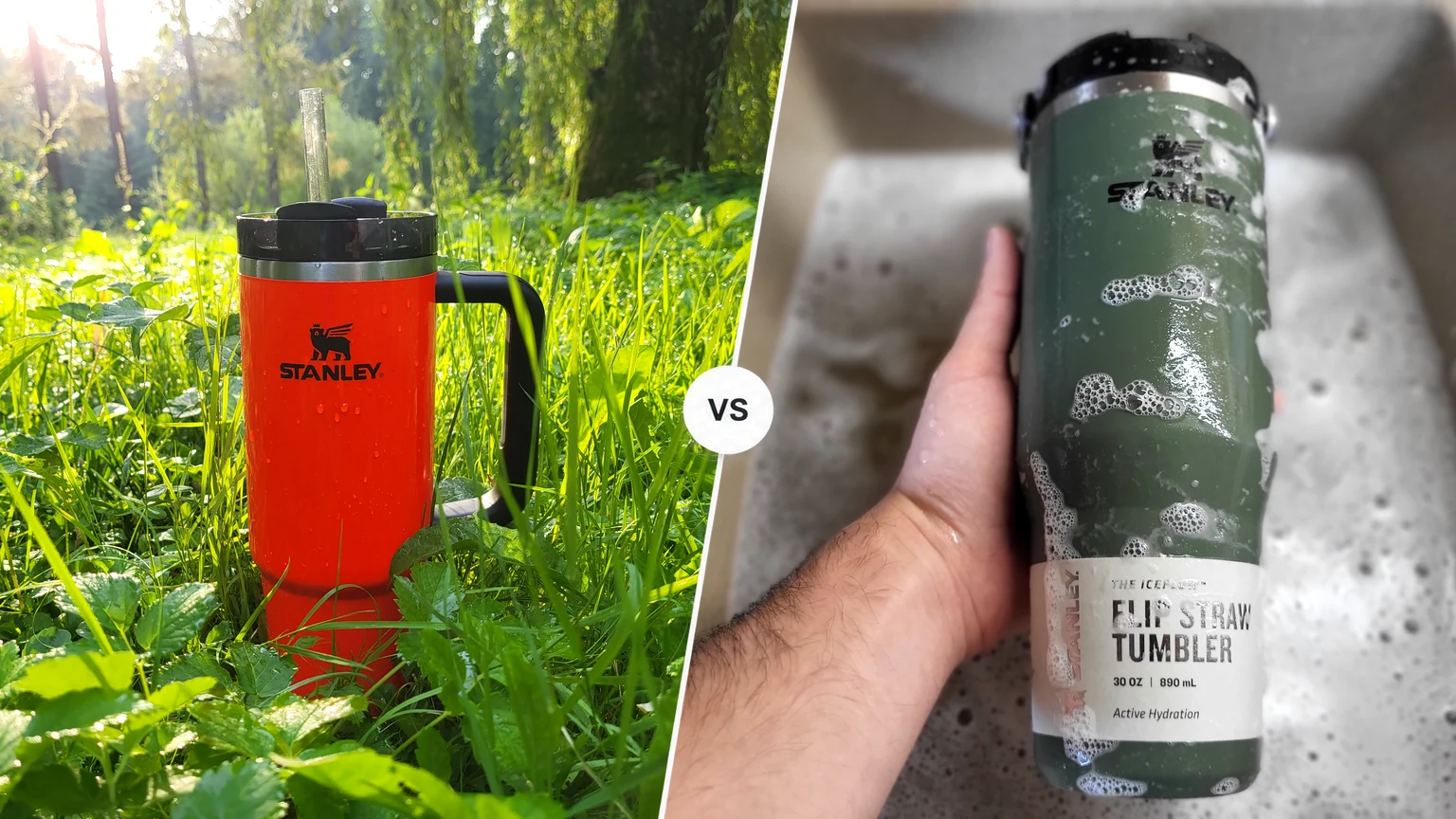
If you ask me which Stanley tumbler I would buy, the answer is the IceFlow.
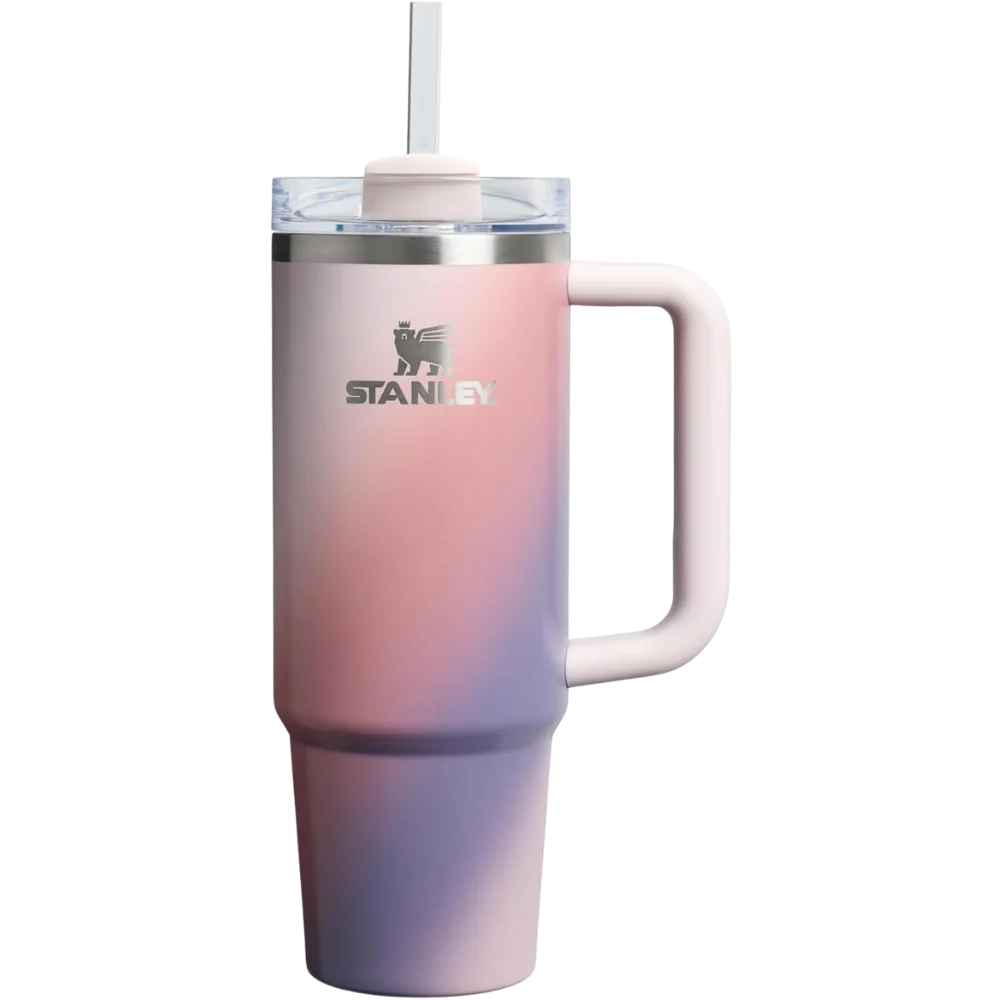
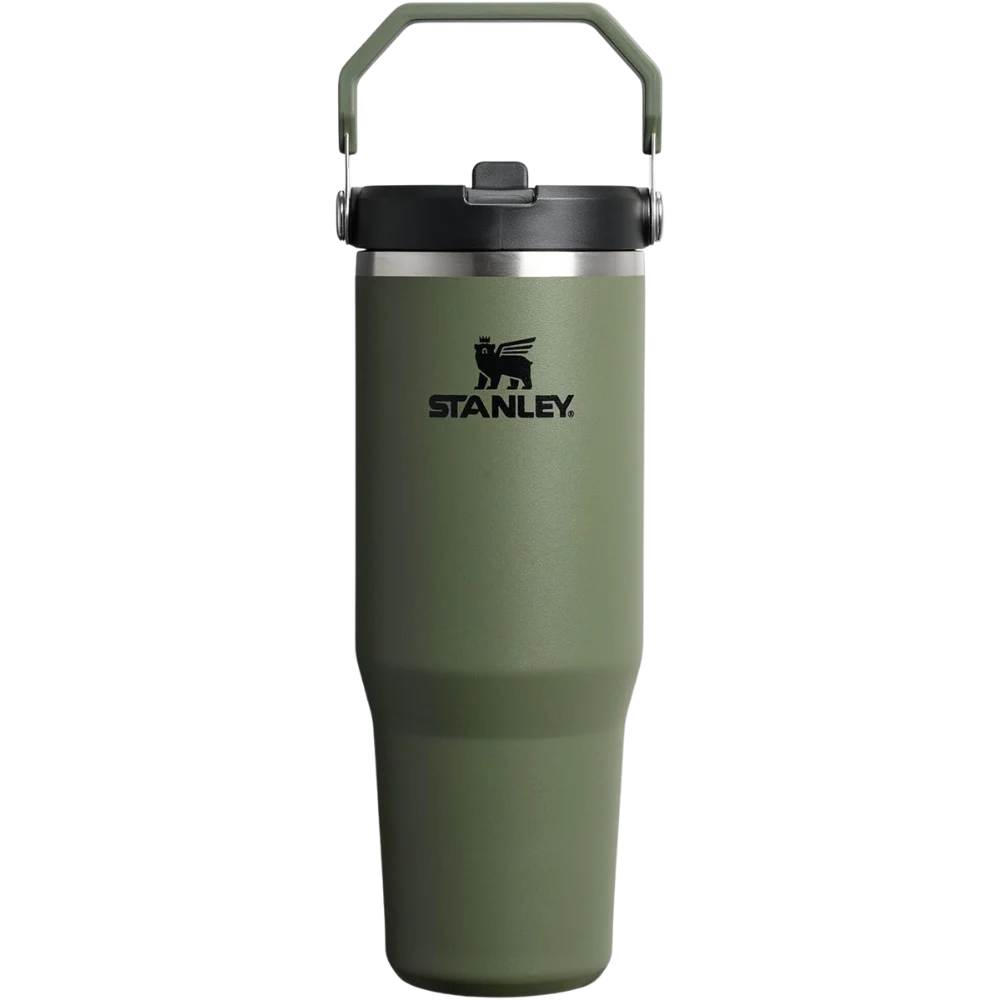
Both tested bottles are 30 oz, both fit cup holders, both work one-handed, and their empty weights are almost identical.
The H2.0 has slightly better cold retention, supports hot drinks in our tested configuration, and gives you three FlowState drinking positions.
IceFlow is leakproof, easier to open, better with wet hands, more comfortable to drink from, more comfortable to carry, faster to clean, cheaper, and performed better in our exterior wear test.
That is why I have consistently preferred IceFlow over the classic Quencher format for daily use. H2.0 is the more flexible upright tumbler. IceFlow is the better portable tumbler.
See the full comparison table ↓
Stanley Quencher H2.0 FlowState Tumbler vs Stanley IceFlow Tumbler comparison table
Overview
Thermal Performance
Lid & Drinking Experience
Portability & Handling
Cleaning & Maintenance
Durability & Safety
Versatility
Bottle Details
This is a direct 30 oz vs 30 oz comparison
Both WBA-tested configurations hold 30 oz.
Stanley’s H2.0 family is sold in several sizes, including 14, 20, 30, and 40 oz. The current IceFlow flip-straw family includes 20 and 30 oz versions.
Because our capacities match, the weight, height, cup-holder, and handle comparisons are directly useful.
The main difference is not the steel body. It is what Stanley put on top of it.
H2.0 is slightly better thermally
Both started at 1°C (33.8°F).
H2.0 finished the 24-hour cold test at 12.4°C (54.3°F).
IceFlow finished at 13.2°C (55.8°F).
H2.0 was 0.8°C (1.5°F) colder.
That is a modest advantage rather than a dramatic one.
The bigger thermal difference is versatility. Our tested H2.0 supports hot drinks and finished the 12-hour hot test at 55.1°C (131.2°F).
IceFlow is cold-drink only.
If you want one Stanley tumbler for both cold water and hot drinks, H2.0 has the advantage.
IceFlow’s lid is much better for portability
Both lids work one-handed.
That is where the similarities end.
IceFlow passed our leakproofness test. H2.0 did not.
IceFlow partially protects the drinking surface when the flip straw folds down. H2.0’s tested mouthpiece is exposed.
IceFlow scored Comfortable for drinking comfort, while H2.0 scored Medium.
IceFlow was Easy to open and stayed Easy with wet hands. H2.0 was Medium to open and Difficult with wet hands.
IceFlow had Secure accidental-opening resistance. H2.0 was Mostly Secure.
This is why I prefer IceFlow in real life. The Quencher handle makes the H2.0 look portable, but I still need to keep it upright. IceFlow actually behaves like something I can carry with less worry.
H2.0 does give you more drinking positions
The FlowState lid has three practical positions: straw opening, larger sip opening, and a more covered position.
IceFlow is simpler: flip the straw up to drink, fold it down to close.
If you like switching between straw and larger-mouth sipping without removing the lid, H2.0 gives you more flexibility.
I personally prefer IceFlow’s simpler interaction because the closure is obvious and the lid feels sturdy. That clear click when the straw mechanism closes gives me confidence that I actually finished the action.
IceFlow is slightly faster to clean
IceFlow took 3 minutes 32 seconds in our full cleaning test.
H2.0 took 3 minutes 50 seconds.
IceFlow was 18 seconds faster.
Neither is a particularly quick-cleaning tumbler. Both have multi-part lids and wide bodies that are easy to reach with a sponge.
The difference is modest, but it moves in the same direction as the rest of the daily-use results: IceFlow asks for slightly less work.
Weight is essentially a tie
H2.0 weighs 19.16 oz.
IceFlow weighs 19.45 oz.
A 0.29 oz difference is meaningless to me.
Both have a high chance of fitting standard cup holders. Both handles fit four fingers.
The difference is comfort. IceFlow scored Comfortable for carrying; H2.0 scored Medium.
I strongly prefer IceFlow’s bucket-style handle because I can let my arm hang naturally rather than hold a large side handle out from the body.
IceFlow also wins the wear test
Both lid mechanisms showed no noticeable change after 500 cycles.
IceFlow’s exterior had no visible wear beyond micro-scratches and earned the full durability result.
H2.0 showed cosmetic wear while remaining fully functional.
Neither result worries me structurally. IceFlow simply stayed looking better.
IceFlow is cheaper too
Our current WBA data puts the 30 oz IceFlow around $35 and the 30 oz H2.0 around $40.
So IceFlow is cheaper while also giving me leakproofness, better handle comfort, easier wet-hand operation, faster cleaning, and the stronger wear result.
H2.0’s extra value is concentrated in two things: slightly better insulation and more beverage/drinking-mode versatility.
Which one should you buy?
Choose Stanley IceFlow Tumbler if…
I would choose IceFlow if you want a Stanley tumbler for everyday cold-water use.
It is leakproof, cup-holder friendly, comfortable to carry, easy to open, one-hand friendly, durable, and cheaper.
It is still the Stanley tumbler I personally prefer.
Choose Stanley Quencher H2.0 if…
I would choose H2.0 if you specifically value hot-drink compatibility or the three-position FlowState lid.
It kept water slightly colder in our test and gives you more ways to drink without changing lids.
But you give up leakproofness and some day-to-day convenience.
For my own use, IceFlow wins clearly.
How we test products
Every product we review is tested using the same structured process, with dozens of measurements and checks covering areas such as thermal performance, lid usability, cleaning, durability, portability, and everyday use. Those results feed into the WBA Score, which helps us compare bottles using consistent criteria instead of relying only on manufacturer claims.
You can read our full product testing protocol, learn more about Water Bottle Advisor and how we test products, or see how the WBA Score works.
About the author
Jeremiah Kowalski
Jeremiah Kowalski founded Water Bottle Advisor to make drinkware reviews more useful and less dependent on manufacturer claims. He has personally tested more than 120 bottles, tumblers, mugs, and filtration systems, putting each one through measuring, cleaning, leak testing, and everyday use before sharing his conclusions. It also means occasionally explaining why yet another large box of bottles has arrived at his door.
Leave a Reply