
Table of contents9 sections
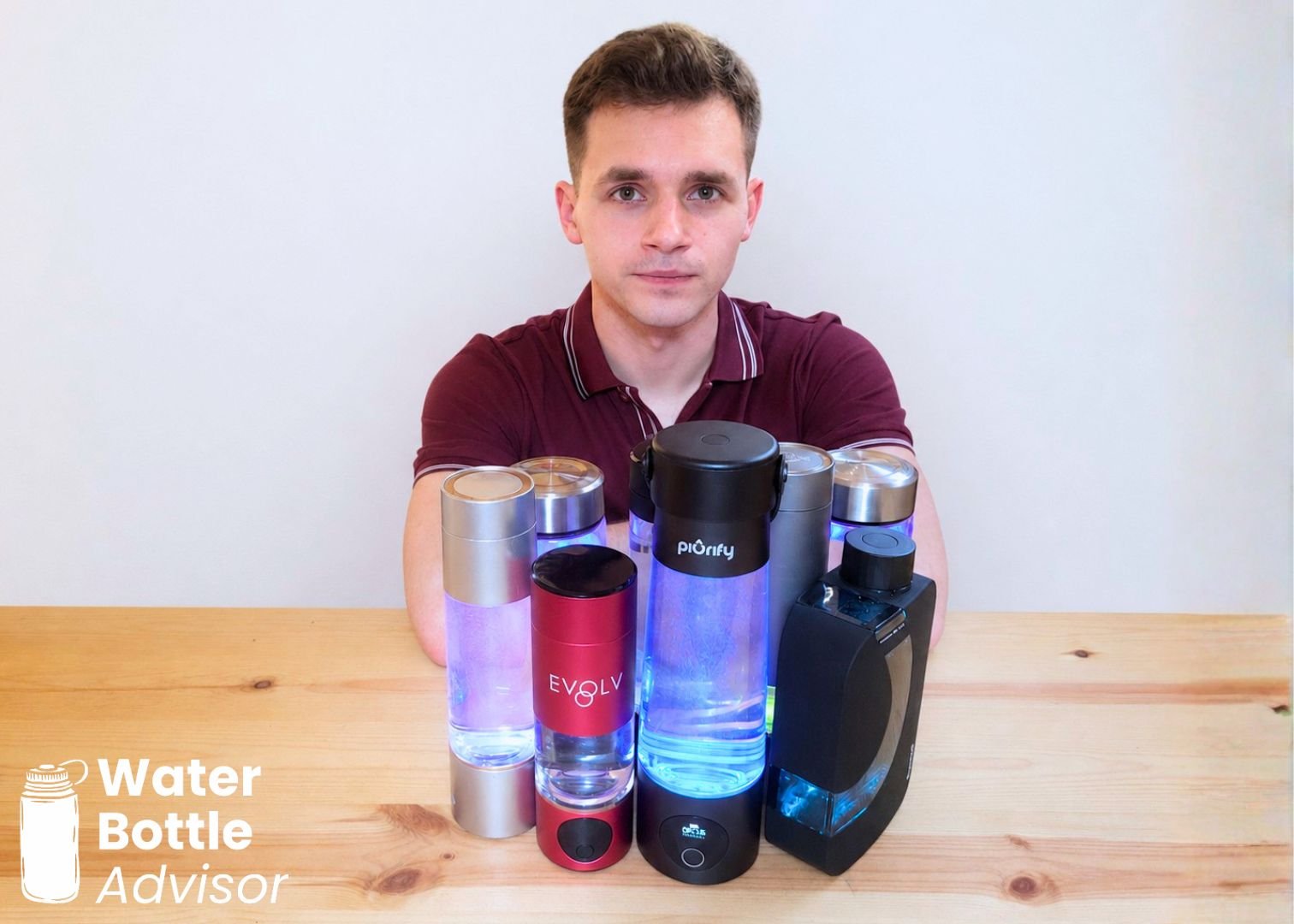
Searching for the best hydrogen water bottle? I’ve been testing them since 2023, and my current top three are the Piurify Hydrogenator Bottle with Handle, Piurify Hydrogenator Flask, and EVOLV H2GO.
I’ll also show you a few bottles that have left my regular rotation but still work well for less money, plus the ones that completely disappointed me and that I think you should avoid.
I bought, used, and tested these bottles myself. So this isn’t another “best hydrogen bottles” article thrown together by ChatGPT in five minutes. These rankings come from products I’ve actually lived with.
Before You Buy a Hydrogen Water Bottle
Before spending money on a bottle, I recommend reading my analysis of 54 confirmed human trial families. It separates the promising findings from the claims that hydrogen-water marketing often makes sound much more certain than they really are.
I’m also one of the people who actually tests hydrogen water on themselves. I’ve been drinking it since 2023, I plan to keep doing it, and my experience has been positive. I describe that in more detail in Do Hydrogen Water Bottles Work?.
But I’m not going to tell you this is a magical cure. If you’re expecting a quick health boost, you may be disappointed.
For me, consistency is key here.
If you’re unsure whether hydrogen water is worth the money, start with the research and come back when you’re ready.
What Are the Best Hydrogen Water Bottles?
| Final score ranking | #1 Winner 92.17 Exceptional | #2 78.39 Good | #3 76.25 Good |
|---|---|---|---|
| Product3 bottles | |||
| H₂ output (WBA tested) | ≥1.6 ppm | ≥1.6 ppm | ≥1.6 ppm |
| Hydrogen cycle options | 10 / 20 min | 10 / 20 min | 5 / 10 min |
| H₂ runtime per charge | 140 min | 210 min | 100 min |
| Weight | 19.86 oz | 22.27 oz | 12.96 oz |
| Body material | Food-Grade PC | Copolyester | Food-Grade PC, Aluminum |
| Typical price | $160.00 | $250.00 | $149.00 |
| Cleaning time | 1 min 15 sec | 2 min | 1 min 9 sec |
| Capacity | 17 oz | 12 oz | 7.78 oz |
| Buy now |
Buy on Amazon
From $179.99
|
1st Place: Piurify Hydrogenator Bottle 2.0
WBA Test Results
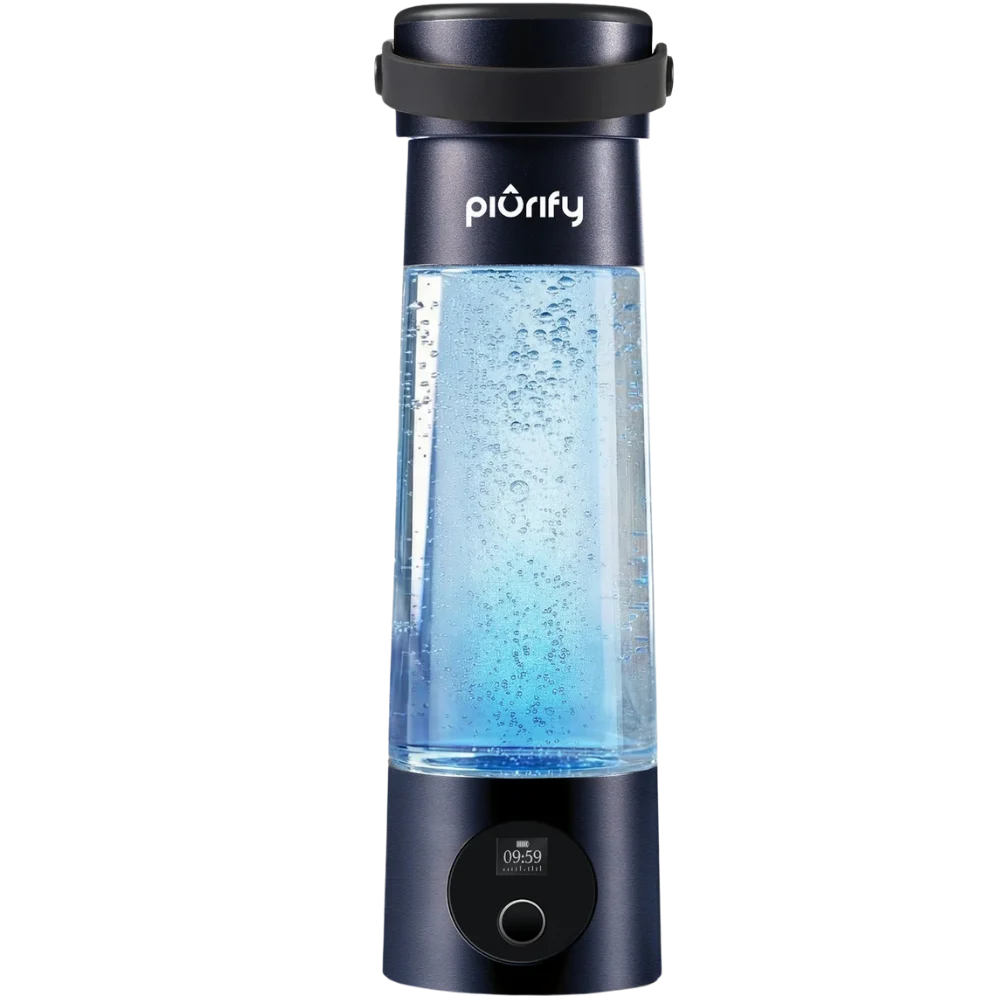
The biggest reason I rank the Piurify Hydrogenator 2.0 first is hydrogen performance.
Piurify reports 4,240 ppb in the 10-minute mode and 6,290 ppb in the 20-minute mode. Those numbers are above the range I can verify with my own meter, so I treat them as manufacturer and lab data, not WBA measurements.
My meter has a reliable reporting range up to 1.6 ppm. In my testing, all five baseline readings reached ≥1.6 ppm. I repeated the same test after 100 generation cycles and got five out of five readings at ≥1.6 ppm again.
That consistency matters more to me than one flashy peak reading. Within the range my equipment can verify, the bottle retained 100% of its measured H₂ output after 100 cycles.

Piurify also provides an H2 Analytics certificate for the bottle. I like having that second source because it gives me independent lab data for concentrations my own meter can’t measure, while my WBA testing tells me whether the bottle can perform consistently over repeated use. You can read the certificate here.
One of the biggest selling points is the lifetime warranty. Hydrogen bottles have batteries, electronics, membranes, and other parts that can fail over time, so lifetime coverage matters more to me here than it does on a simple reusable bottle.
If something goes wrong through normal use, I’d much rather have that support than save a little upfront and be on my own later.
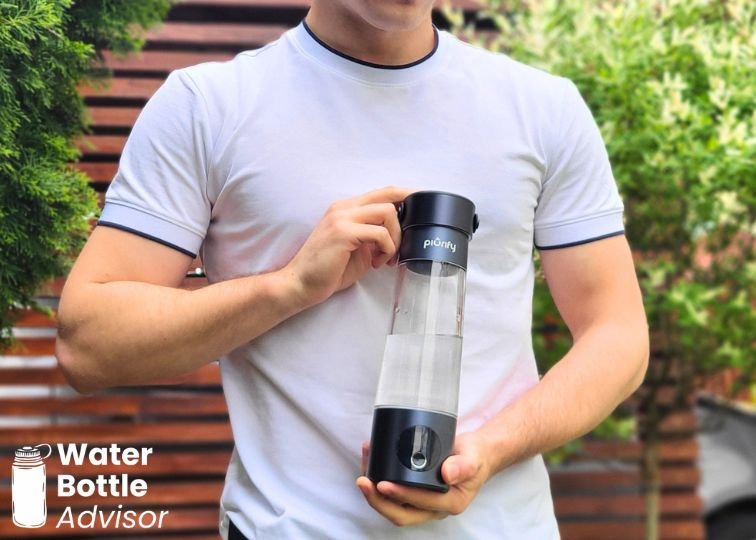
The capacity is another plus. It holds 17 oz, which may not sound like much if you’re used to regular water bottles, but for hydrogen bottles, that’s actually generous. Many are stuck around 10 oz, so this means fewer refills throughout the day.
I also like the small details. It has a flexible four-finger handle, fits in car cup holders, glows with a clean blue light while producing hydrogen, and has a premium feel without being complicated to use. The touchscreen is simple, and the whole bottle feels more polished than most hydrogen bottles I’ve tested.
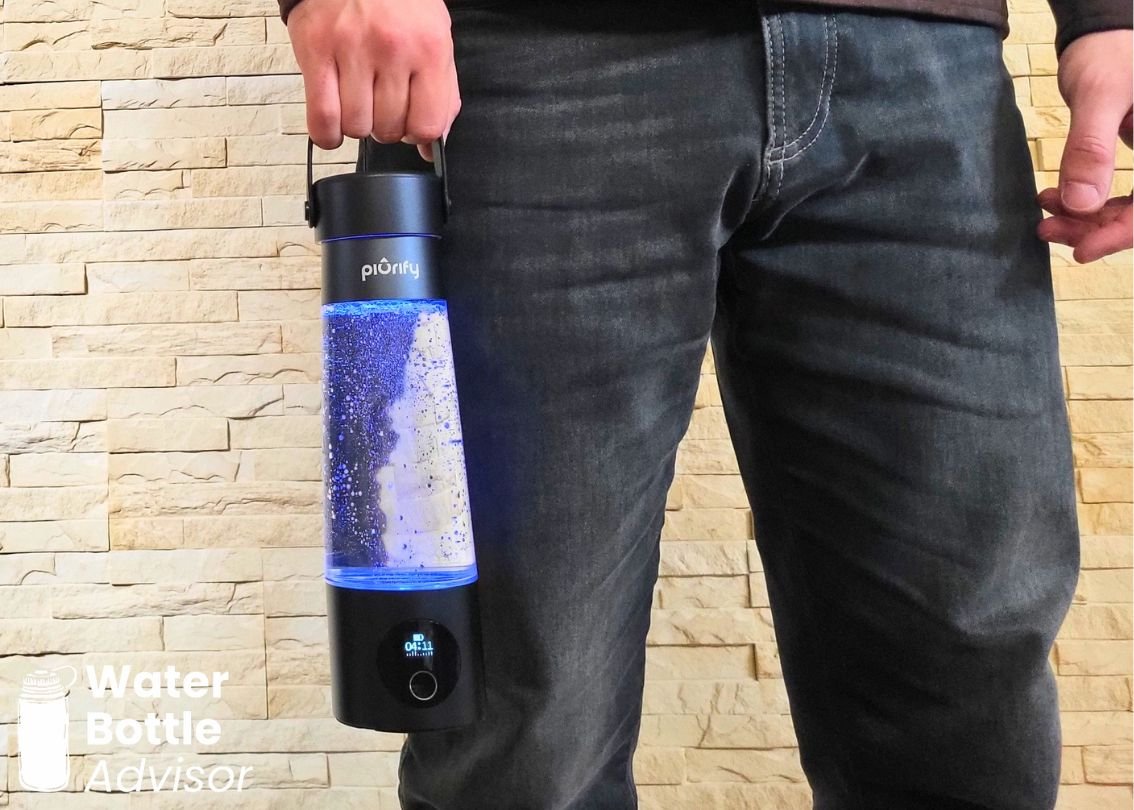
Piurify is based in Delaware, USA, and you can tell some thought went into the design. It doesn’t look like another generic white-label bottle with a logo slapped on it. It has its own style. And I like that.
Right now, the Piurify Hydrogenator 2.0 is my top hydrogen water bottle recommendation. It has strong hydrogen output, third-party testing, my own at-home test results to back it up, a larger capacity, a lifetime warranty, and a design that actually feels different from the rest. It won’t be easy to knock this one off the top spot.
That said, it’s still a pricey bottle, so I highly recommend reading my full Piurify Hydrogenator Bottle review before investing in it. That way, you’ll get the full picture – the good, the small drawbacks, and everything I noticed after using it myself.
2nd Place: Piurify Flask
WBA Test Results

The Piurify Flask is another option from Piurify. In my experience, they’re simply one of the best brands when it comes to designing hydrogen water products.
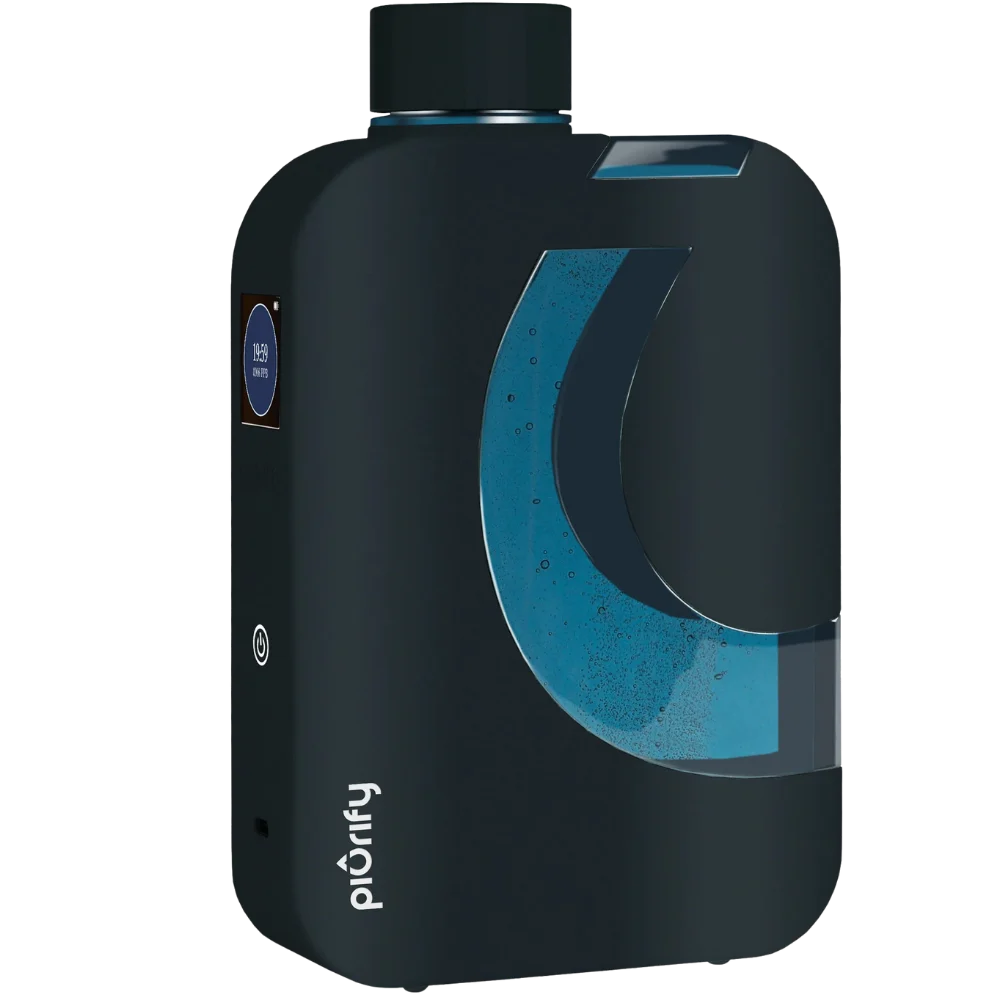
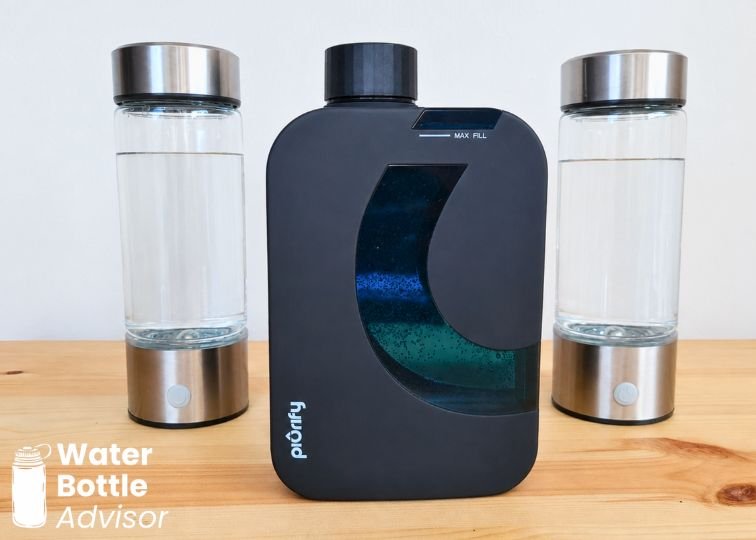
Technically, this is still a bottle. But the shape, feel, and overall design make it look more like a flask – and that’s one of the things I like most about it.
If the Piurify Hydrogenator Bottle already felt unique, this one takes the design a step further. Just look at the image below and compare it to the usual copy-paste hydrogen bottles you see all over Amazon. This doesn’t look like a random generic product with a logo slapped on it. It looks like something you actually want to have on your desk, carry around, or be seen with.
Hydrogen output is one of the Flask’s strongest points.
According to Piurify, it can produce 4,800 ppb in a 10-minute cycle and up to 8,600 ppb in a 20-minute cycle. That is one of the highest manufacturer-reported figures among the bottles I’ve tested.
I used to give the biggest ppm number more weight than I do now. After digging much deeper into the human research, I no longer treat a higher ppm number as evidence of a bigger health benefit.
I still want a hydrogen bottle to produce a meaningful and verifiable amount of hydrogen. But I did not identify a randomized human trial directly showing that higher-ppm water works better than lower-ppm water.
So I still care about output, just for a different reason. A bottle should actually do the job it was designed to do. I just would not choose one solely because 8 ppm sounds healthier than 3 ppm.

My own testing is easier to interpret. All five baseline readings reached ≥1.6 ppm, the upper reliable range of my meter. After 100 generation cycles, all five readings reached ≥1.6 ppm again. So whatever the exact concentration above my meter’s limit, I know the Flask can produce strong H₂ levels consistently and maintain that performance over time.
The Flask also has a two-minute self-cleaning mode. I use it as a maintenance feature, not a replacement for washing the bottle.
It helps between proper cleanings, but I still clean the bottle manually.
There’s also a small screen on the side. It shows a hydrogen concentration value while the cycle is running, which is useful as a quick progress indicator.
I don’t treat that number as a WBA measurement. The meter tests are what I use for the H₂ results in this review.
There’s also a small Piurify logo animation when you turn the modes off. It’s not a necessary feature, of course, but I like details like this. They make the product feel more polished and less like another generic bottle.
The Piurify Flask also has a calm blue glow while it’s producing hydrogen. It also comes with a lifetime warranty.
So why did I place it second?
Mostly because I prefer the Piurify 2.0 in everyday use. The Flask looks great, but the rectangular body is less convenient to carry and there’s no handle. On a desk, I barely care. On a walk or when my hands are full, I do.
That doesn’t make the Flask a bad choice. I still like the design, the strong and consistent hydrogen performance, the simple controls, and the lifetime warranty. I just reach for the 2.0 more often.

Overall, I really like the Piurify Flask. It’s a looker, and I like the simple controls and lifetime warranty.
If this flask sounds like something you’d like to learn more about, read my full Piurify Flask review. It’s worth knowing the smaller details before you decide whether it belongs on your desk, in your bag, or in your daily routine.
3rd Place: EVOLV Hydrogen Water Bottle
WBA Test Results
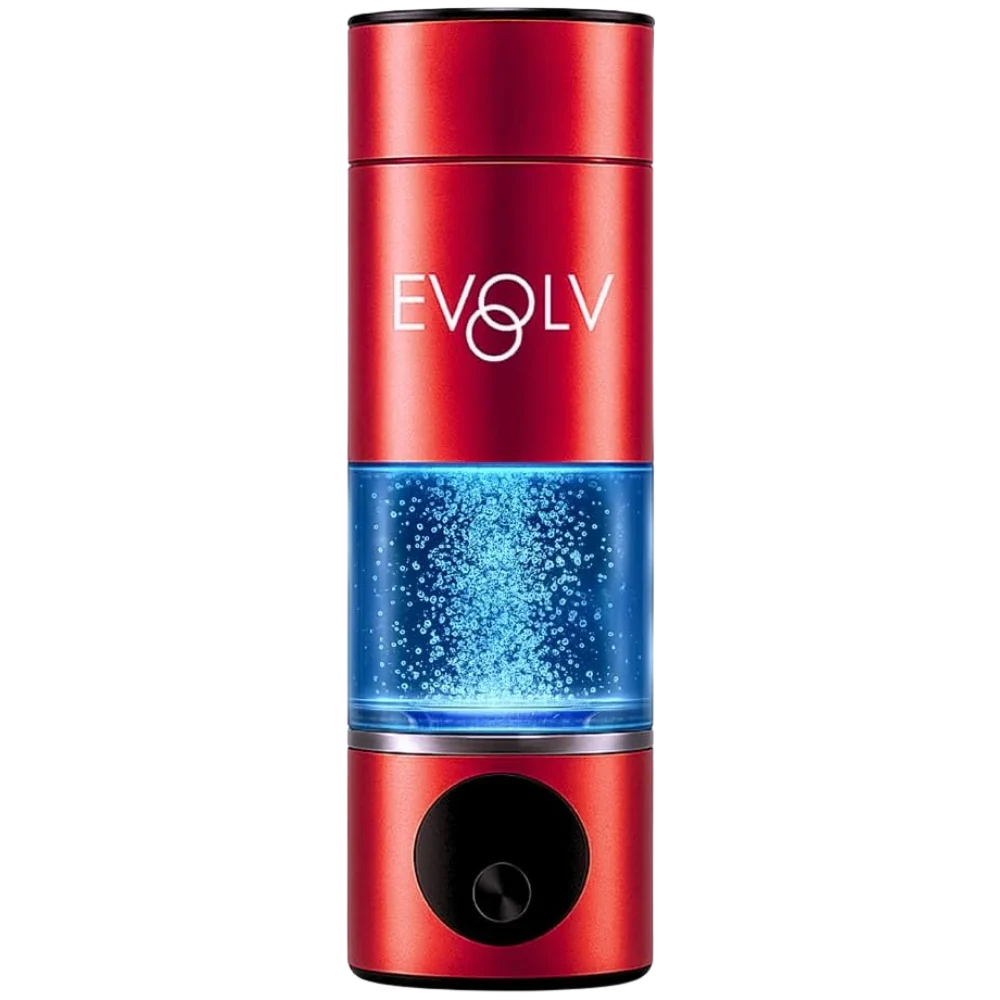
The EVOLV hydrogen water bottle is an interesting one. Like the Piurify bottles, it stands out right away with a modern, premium-looking design. One detail I really like is the outer shell. It’s made from aircraft-grade aluminum, and it has that slightly cold, high-quality feel when you hold it. Small thing, but it makes the bottle feel more expensive in a good way.
EVOLV also offers a few color options. I went with the crimson version, and I love how it looks.
Just like Piurify, EVOLV is also based in the US, and I do think that matters. The design feels more thought-out than the typical copy-paste bottles, and communication with their support is much easier too. Their support has been responsive in my experience, which is always good to know when you’re buying a bottle with electronics inside.

EVOLV reports 2,500 ppb in the 5-minute mode and up to 5,000 ppb after 10 minutes. Again, those higher numbers come from the brand and its third-party testing, not from my own meter.
In my WBA testing, all five baseline readings reached ≥1.6 ppm. I ran the same test again after 100 generation cycles, and all five readings reached ≥1.6 ppm again.
That is much more useful to me than a single meter reading. The EVOLV didn’t just hit the upper range of my meter once – it repeated the result and maintained it through extended cycling.
You can see the third-party certificate here.

There are a few other details I like too.
The magnetic charger is unique, looks cool, and glows while charging. The only catch is that it can detach a bit too easily if you accidentally move the bottle or cable.
Battery life is solid, so you’re not constantly running back to the charger. It’s also very easy to use, with just one button and a clean OLED screen. And yes, it fits in car cup holders, which is always a practical bonus.
So there’s a lot to like here.

That said, I still have to point out the drawbacks.
The first one is capacity. The EVOLV bottle holds only 7.8 oz, which is really small. I’ve bought kids’ bottles bigger than this. So if you choose EVOLV, get ready for frequent refills.
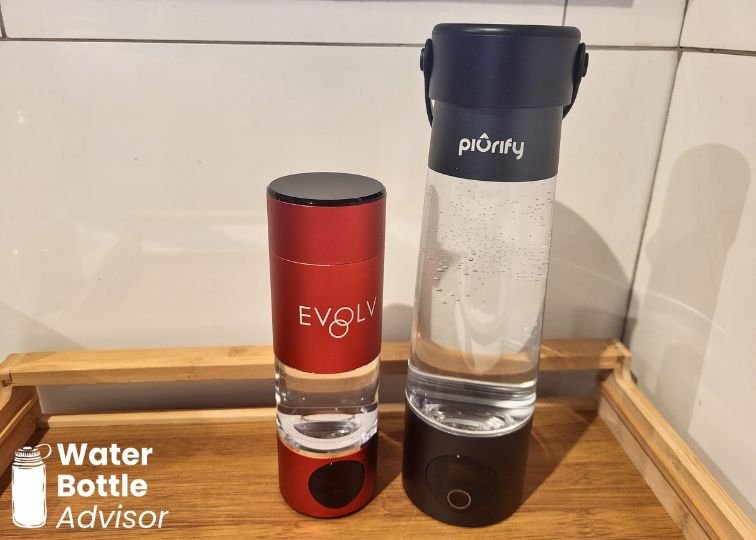
The second drawback is portability. There’s no handle, so just like with the Piurify Flask, you have to carry it in your hand. It looks great, but for walks, travel, or daily use outside the house, a handle would have helped.
The third issue is the warranty. EVOLV offers a 13-month warranty, which is still better than many hydrogen bottles that come with one month of coverage or no real warranty at all. But compared to Piurify’s lifetime warranty, it doesn’t look quite as strong.
Other than that, I don’t have much to complain about.
The EVOLV bottle feels premium, produces strong hydrogen levels, has third-party testing, looks beautiful, and is easy to use. I still prefer my Piurify Hydrogenator Bottle and Piurify Flask, but I use the EVOLV bottle from time to time and enjoy it almost as much. Read my full EVOLV hydrogen bottle review if you want the smaller details before deciding whether its compact size and short warranty are worth the tradeoffs.
Honorable Mentions
These three bottles all scored well in my testing, and I used each of them quite a bit at one point. They only fell out of my daily rotation after I bought newer hydrogen bottles that I prefer using.
They still work well. They just aren’t my first choice anymore.
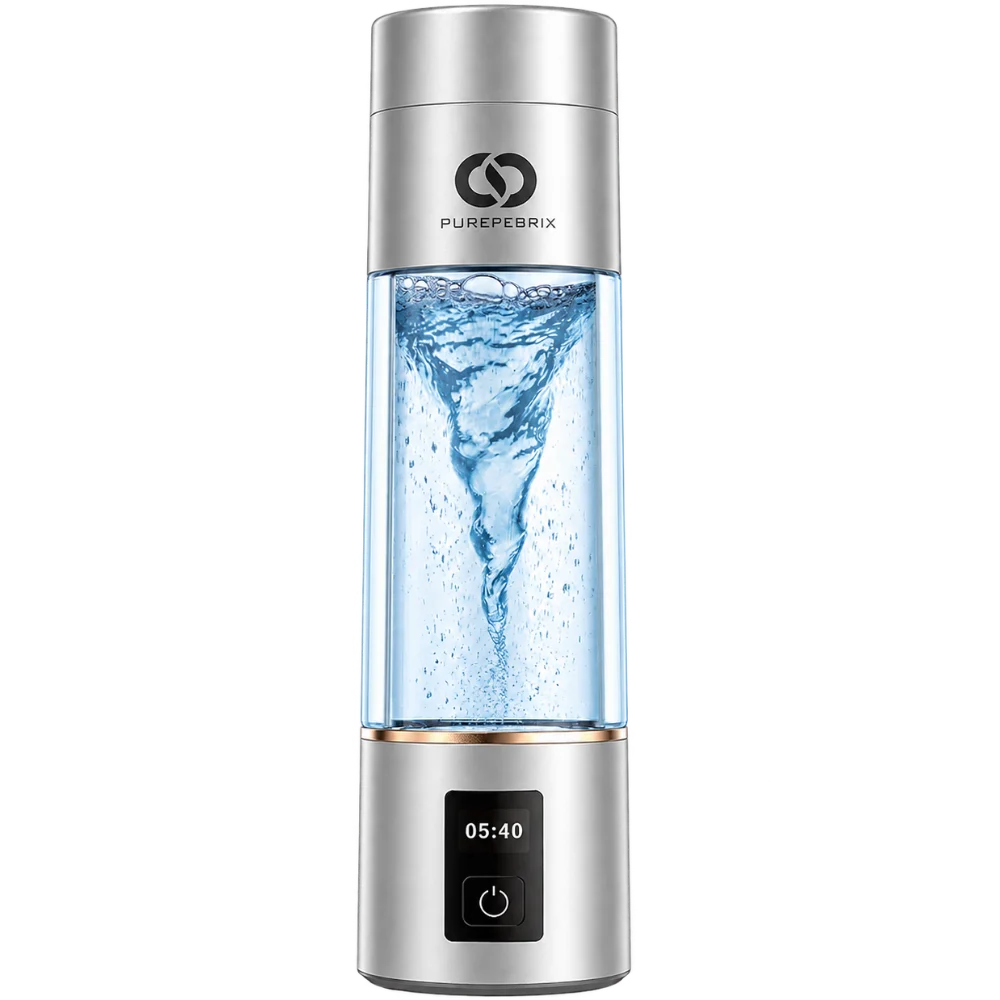
PUREPEBRIX H4000
WBA Test Results
The PUREPEBRIX H4000 earned the highest WBA Score of these three at 81.78/100.
Hydrogen performance was excellent. Both the average and peak readings reached at least 1.6 ppm, which is the upper limit of the meter I use for these tests. It also repeated that performance consistently, so this wasn’t one lucky cycle.
Battery performance is good too. I measured 30 cycles per charge, with a six-minute shortest cycle. More importantly, after 100 generation cycles, hydrogen output was still at 100% of the baseline and I recorded zero operational failures.
I used the H4000 regularly for a while. It only dropped out of my rotation after I bought newer hydrogen bottles that I liked using more. The 10 oz capacity is relatively small, there is no carrying handle, and today I have other options that I instinctively reach for first.
PUREPEBRIX itself also gives me fewer reasons to worry than an unknown marketplace brand. The H4000 comes with a one-year warranty, and PUREPEBRIX publishes certification information for the bottle.
LevelUpWay Pro 5000 PPB
WBA Test Results
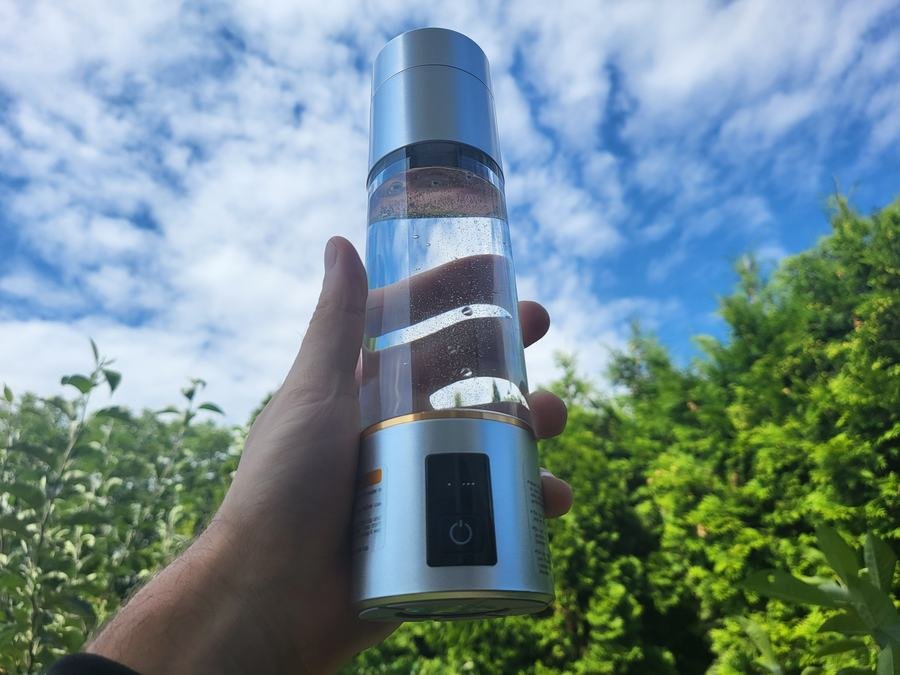
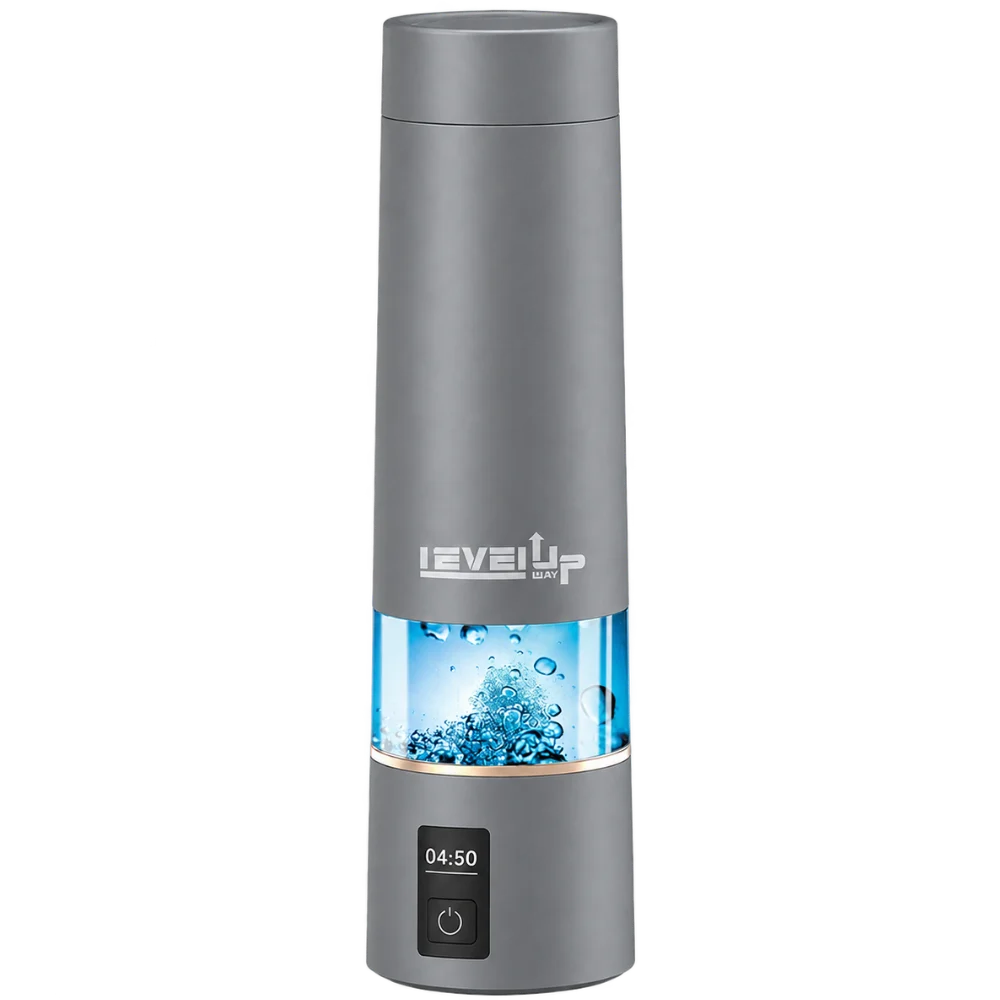
The LevelUpWay Pro scored 79.78/100, and testing it immediately reminded me of the PUREPEBRIX.
They are almost comically similar. Both measured 9.05 inches tall, both have a maximum body diameter of 2.48 inches, both took 72 seconds in my cleaning test, and both completed 30 cycles per charge. Their weights were 12.02 oz and 12.04 oz.
That kind of similarity is not unusual in the hydrogen bottle market. Different brands often sell bottles built around very similar (or sometimes seemingly identical) designs that may come from the same manufacturers.
That doesn’t automatically make them bad products. A bottle can share its basic design with other models and still work well for years if the components and quality control hold up.
Hydrogen performance was also excellent. The LevelUpWay reached at least 1.6 ppm for both average and peak readings, maintained its hydrogen output through 100 cycles, and completed that test without an operational failure.
I used this bottle quite a bit too, but today there isn’t enough about the design to make me choose it before my current favorites.
The big upside is the lifetime warranty. LevelUpWay is also based in the U.S., with its business in Florida, which is always reassuring when it comes to customer support and dealing with a warranty claim.
Piurify Hydrogenator Bottle
WBA Test Results
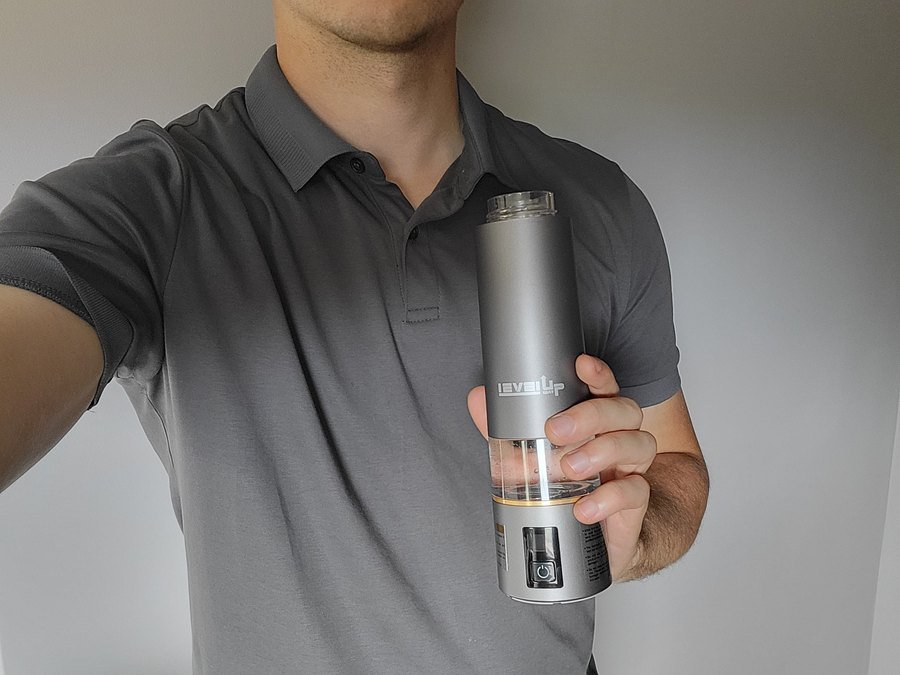
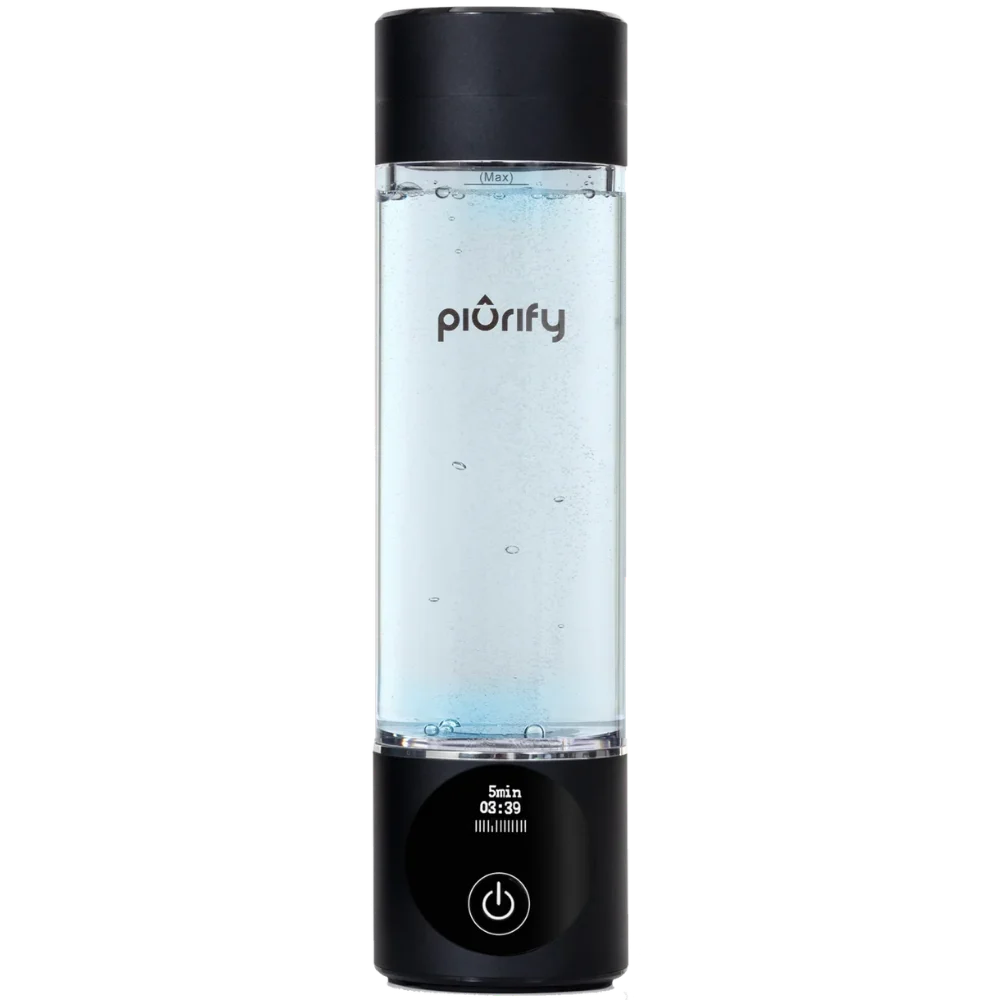
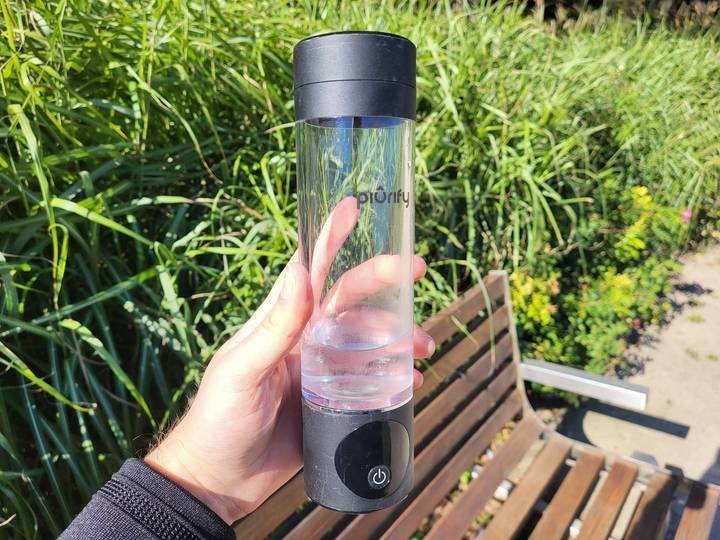
The original 10 oz Piurify Hydrogenator was the first hydrogen water bottle I ever bought, back in 2023. I used it a lot, and it was the bottle that pulled me into the whole hydrogen water rabbit hole.
The original Hydrogenator scored 79.52/100 in my current testing. It reached at least 1.6 ppm for both average and peak hydrogen readings, and its shortest cycle takes only five minutes. I measured 23 cycles per charge, and it retained its hydrogen output through 100 cycles without an operational failure.
It also stayed leakproof after hydrogen generation and produced no detectable change in the taste or smell of the water.
The reason I don’t use it much anymore is simple: newer bottles replaced it in my rotation. The original model is still sold today, but Piurify has since released the Hydrogenator Bottle 2.0, which is now #1 in this ranking.
I wouldn’t choose the original Hydrogenator before the newer 2.0 today. But that doesn’t make the old bottle bad.
Which Bottles Should You Avoid?
Since I showed you my top recommendations, it’s only fair to talk about the bottles I don’t recommend – including a few I got burned by myself.
In my experience, you should be careful with hydrogen bottles that have that generic, copy-paste design. You’ve probably seen them before: a clear cylindrical glass body, plastic base and cap, silver-colored aluminum trim, and one basic button with no OLED display or touchscreen.
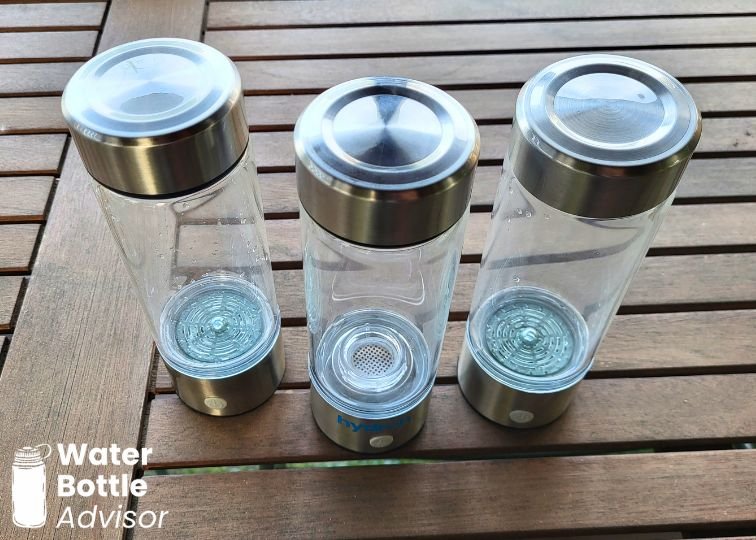
I bought three bottles like this from Hydroh, Aqua Vital, and UIEXITRA and they cost me $70, $57, and $12. Visually, they were nearly identical, so I dug a little deeper and ran my own comparison. Same appearance. Same charging speed. Same glass body. Very similar build. And even the same weak hydrogen output of around 300-500 ppb.
That told me what I needed to know.

The three generic bottles I bought looked almost identical, were sold at very different prices, and all produced similarly weak hydrogen output in my testing.
That doesn’t prove they came from the same factory, but it gives me a reason to be cautious.
If a bottle looks like dozens of others, has vague hydrogen claims, no useful third-party data, a weak warranty, and no clear support behind it, I’m not paying a premium just because the product page looks expensive.
Instead of starting with a brand name, I’d look for a bottle with verifiable hydrogen data, consistent test results, meaningful warranty coverage, and real support if something goes wrong.
A familiar logo is nice. Evidence is better.
What Is a Hydrogen Water Bottle & How Does It Work?

A hydrogen water bottle is a special kind of water bottle that adds extra hydrogen gas into the water you drink. This hydrogen water is also known as hydrogen-rich water or hydrogen-infused water.
Hydrogen water bottles work by using a process called electrolysis, which splits the water into two parts: hydrogen gas and oxygen gas.
Then, it mixes the hydrogen back into the water, without the oxygen. The result? Your water now has more hydrogen in it.
The best part is, using this bottle is as simple as charging your phone. You charge it up, fill it with water, push a button, and wait a few minutes. That’s it! Now, your water has extra hydrogen in it, ready to drink.
Read more about what is a hydrogen bottle and how does it work.
Does It Matter Which Hydrogen Water Bottle You Use?
It’s tempting to buy the cheapest option and assume that hydrogen bubbles are hydrogen bubbles. My experience has been messier than that.
I’ve owned inexpensive bottles that produced measurable hydrogen at first and then lost most or all of that output after a few weeks. If hydrogen output drops that far, you may end up drinking water with little or no measurable dissolved hydrogen.
That’s the part I can actually test. Whether that changes any health effect is a separate question.

How to Choose a Hydrogen Water Bottle?
SPE/PEM is one of the first things I look for, but the label by itself doesn’t impress me much. A bottle still has to prove that it can generate strong hydrogen levels consistently, hold that performance over time, stay leakproof after generation, and manage electrolysis by-products properly.
SPE/PEM is a good starting point, not a free pass.
I also look for a dedicated by-product release system. Depending on the water chemistry and electrolysis design, unwanted electrolysis by-products can form. I prefer bottles that are designed to separate and vent them away from the drinking water instead of leaving that part vague.

The material of the bottle matters too.
Plastic has a bad reputation, and I get why. Nobody wants cheap plastic sitting in contact with their drinking water all day. But with hydrogen water bottles, good-quality plastic can actually be the better choice because it’s much more durable than glass.
I’ve owned hydrogen bottles made from Tritan, polycarbonate, and copolyester, and they’re still going strong. My oldest bottle is over 3 years old and still works perfectly fine, apart from a few scratches. That’s exactly what you want from a bottle you’ll be using every day.
The key is to choose BPA-free plastic that’s made for repeated contact with water.
Glass may look cleaner and more premium, but it has one obvious problem: it’s fragile. One bad drop and that’s it. You’ve lost dozens of dollars, and even if the bottle comes with a warranty, it probably won’t cover accidental damage. I even had one glass hydrogen bottle delivered to me already broken.
So while I’d avoid cheap PET plastic bottles, I don’t automatically see plastic as a downside. For hydrogen bottles, a strong BPA-free material like Tritan can be a big advantage, especially if you plan to use the bottle daily and take it with you outside the house.

There are several other factors to consider, such as hydrogen concentration levels, battery quality, maintenance requirements, and overall build quality. I go into much more detail about all the features worth evaluating in my full “how to choose a hydrogen water bottle” guide, so if you want a deeper breakdown, make sure to check it out.
Final Thoughts
Hydrogen water bottles are not magical cures, and I don’t want to present them that way. But after almost three years of regular use, my personal experience has been positive enough that I’ll keep using them.
Several of the cheaper hydrogen bottles I tested had weak output, poor durability, or short useful lives. That doesn’t mean a bottle under $100 is automatically bad. It means price alone is a terrible shortcut for quality.
Hydrogen bottles have electronics, membranes, batteries, and other parts that regular reusable bottles don’t. I care much more about how a bottle performs after repeated use than how impressive the product page looks on day one.
How we test products
Every product we review is tested using the same structured process, with dozens of measurements and checks covering areas such as thermal performance, lid usability, cleaning, durability, portability, and everyday use. Those results feed into the WBA Score, which helps us compare bottles using consistent criteria instead of relying only on manufacturer claims.
You can read our full product testing protocol, learn more about Water Bottle Advisor and how we test products, or see how the WBA Score works.
About the author
Jeremiah Kowalski
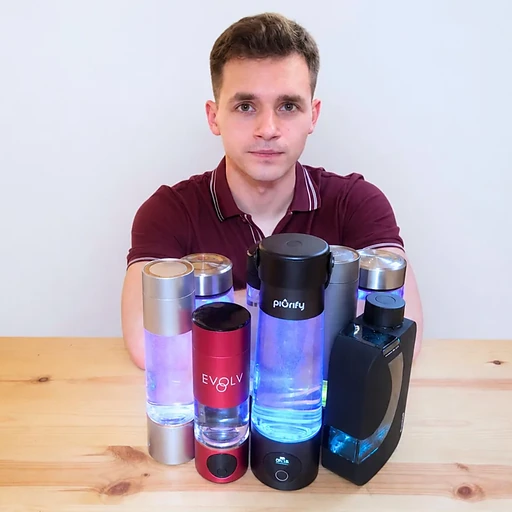
Jeremiah Kowalski founded Water Bottle Advisor to make drinkware reviews more useful and less dependent on manufacturer claims. He has personally tested 50+ products, putting them through measuring, cleaning, leak testing, durability testing, and everyday use before sharing his conclusions. It also means occasionally explaining why yet another large box of bottles has arrived at his door.
CERTAIN CONTENT THAT APPEARS ON THIS SITE COMES FROM AMAZON. THIS CONTENT IS PROVIDED “AS IS” AND IS SUBJECT TO CHANGE OR REMOVAL AT ANY TIME.
Leave a Reply