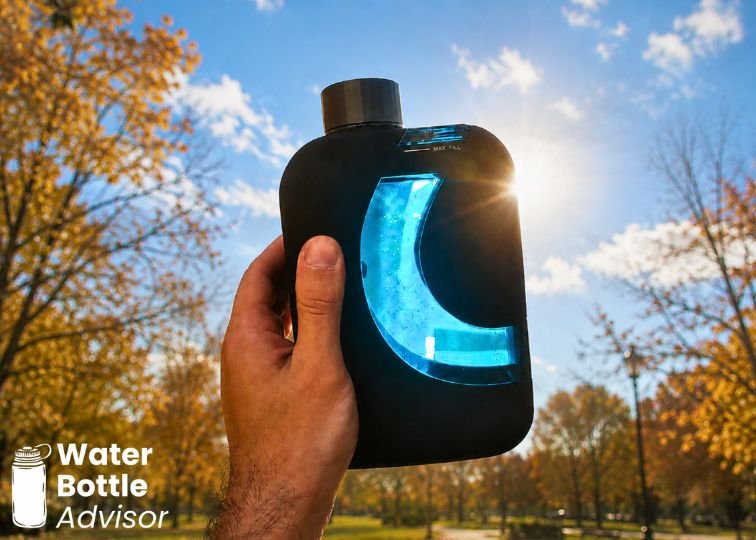

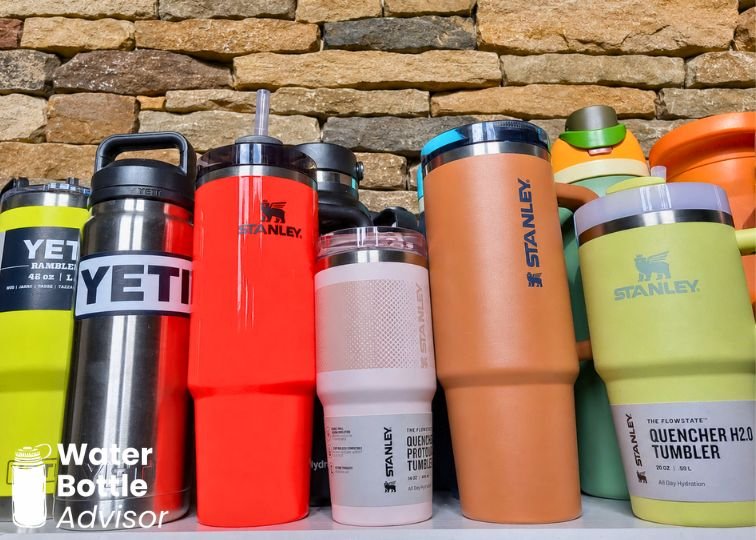
You’ve probably noticed that almost every insulated bottle claims to have amazing temperature retention. The problem is that some brands don’t provide specific numbers, and even when they do, those claims aren’t always accurate in real-world use.
That’s why I tested 46 insulated bottles I personally own and bought with my own money. This test is not sponsored by any brand and I used the same methodology for every bottle to make the results as fair, consistent, and realistic as possible.
Unsurprisingly, the best performers were thermoses, which are technically still bottles – just ones designed specifically to maximize thermal performance. However, I also included regular water bottles from popular brands for anyone who wants something more practical for everyday use.
You’ll also find a few interesting experiments in this guide, because there are still some surprisingly unclear questions when it comes to water bottle insulation.
I’ll keep updating this guide as I test new bottles, so consider bookmarking it. That way, whenever you’re ready to buy a new bottle, you’ll have an up-to-date reference for which bottles offer the best (and worst) insulation.
Some of the links on this page are affiliate links. This means that if you click on one of the links and make a purchase, I may earn a small commission at no additional cost to you.
Methodology
All bottles were tested in the same room-temperature environment, at approximately 20°C / 68°F.
To make the results as fair as possible, each bottle started at a very similar initial temperature.
- For the cold retention test, I aimed for an initial temperature of around 1°C / 34°F.
- For the heat retention test, I aimed for an initial temperature of around 88°C / 190°F.
Of course, getting the exact same starting temperature for every bottle is difficult, but I kept the variation as small as possible. In most cases, the differences were only decimal-level, so they had minimal impact on the final comparison.
I tested each bottle against the common industry benchmarks for insulated bottles:
- 24 hours for cold retention (without ice)
- 12 hours for heat retention
To keep the test conditions consistent and maximize insulation performance, the bottles were only opened once: after 24 hours for the cold test and after 12 hours for the heat test.
Final temperatures were measured using a digital instant-read thermometer with ±0.5°F precision. For each measurement, I waited until the reading stabilized before recording the final result.
Note: The bottles in this ranking are not necessarily the best-insulated bottles in the world – they are the best performers among the bottles I have personally tested so far. I’ll continue updating this ranking as I test more bottles in the future.
Top 5 Bottles for Cold Retention
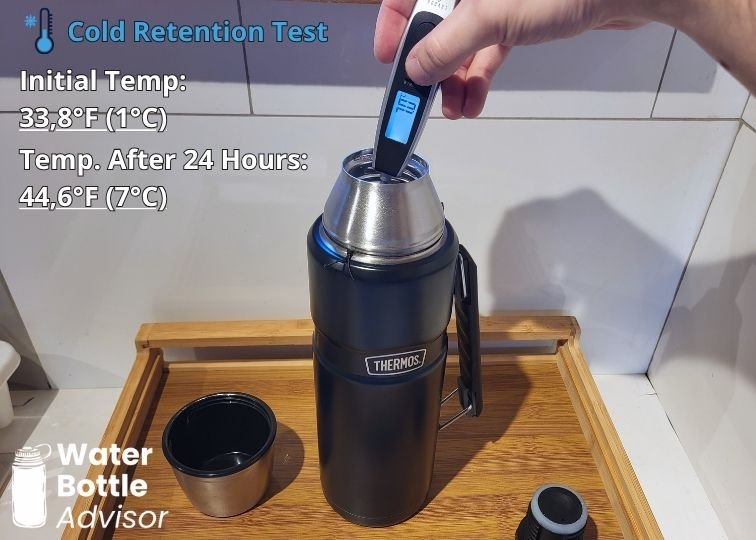
The cold-retention champion in this year’s ranking is the THERMOS Stainless King 40 oz. I still haven’t bought a bottle that can beat its performance: just a 6°C / 10.8°F increase after 24 hours. And again, that was without a single ice cube. Just cold water. Add ice, and you can only imagine how long this thing could keep your drink cold.
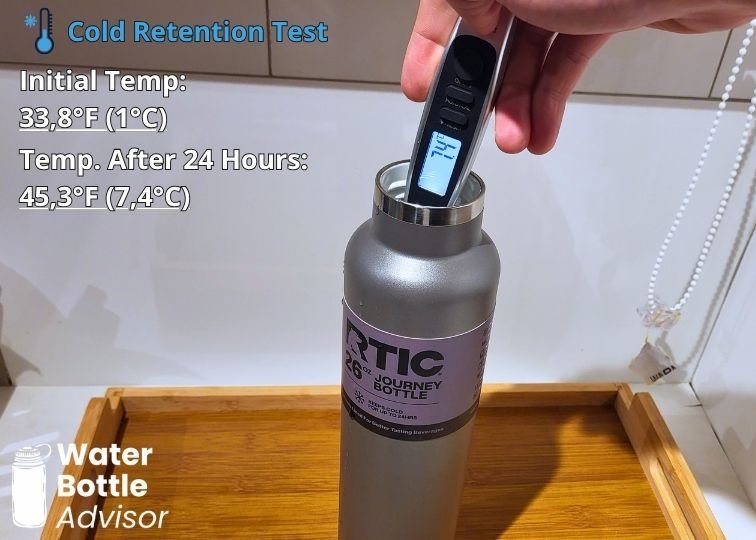
Second place surprised me. The RTIC Journey Bottle promises 24-hour cold retention, and not only does it live up to that claim, it beats it by a wide margin. In my test, the water warmed up by just 6.4°C / 11.5°F, putting it incredibly close to the THERMOS.
But the Journey is also more practical. It fits in my car cup holder, it’s lighter, and it looks gorgeous. On top of that, it has a pretty unique feature: a ceramic-lined interior, which helps keep the taste clean and neutral. If you have sensitive taste buds, that’s a big plus. I love the Journey bottle not just for its cold retention, but as an everyday bottle too.
Third place goes to the Hydro Flask Hot Flask 36 oz, which warmed up by only 6.5°C / 11.7°F in my test. While the THERMOS looks more like a classic bottle, this one feels like a proper thermos. It can serve you all year round, and if you spend a lot of time outdoors, you’ll probably get a lot of use out of it. It even comes with a steel cup, so you don’t have to bring a separate one with you.
I wrote a detailed review of this thermos, which you can check out in my Hydro Flask Hot Flask review.
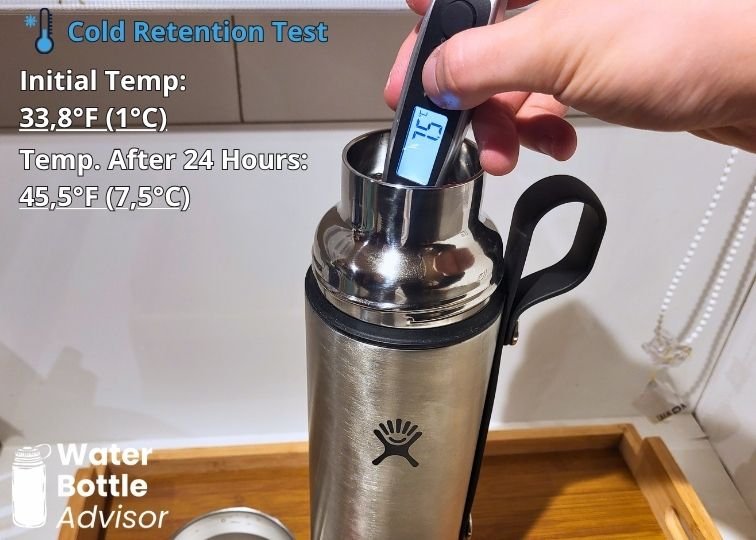
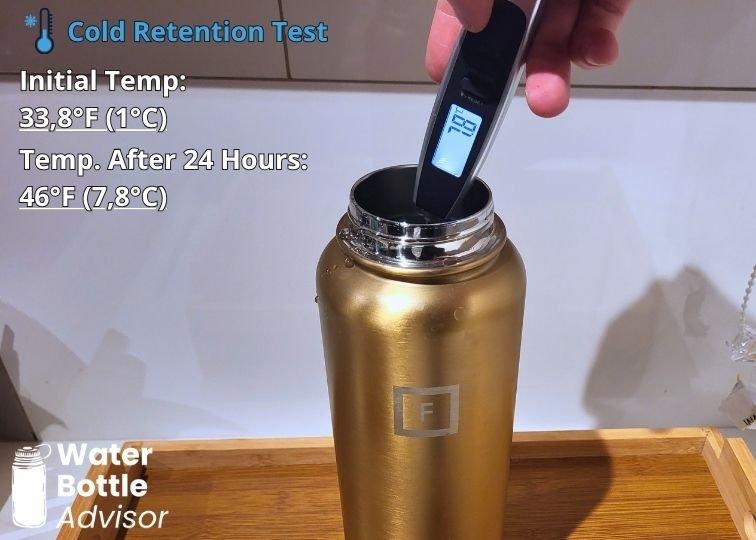
Fourth place is another big surprise: the Iron Flask 40 oz. When I bought it, I had no idea it would be this good at cold retention. It looks more like a lifestyle bottle, with dozens of colors and designs to choose from, but it turns out it performs like a serious insulated bottle too.
In my test, the water warmed up by just 6.8°C / 12.2°F after 24 hours, without any ice. That makes it a great pick if you care about style and performance. It’s not a complicated bottle, but it does have a few extra features worth knowing about, which I cover in my Iron Flask review.
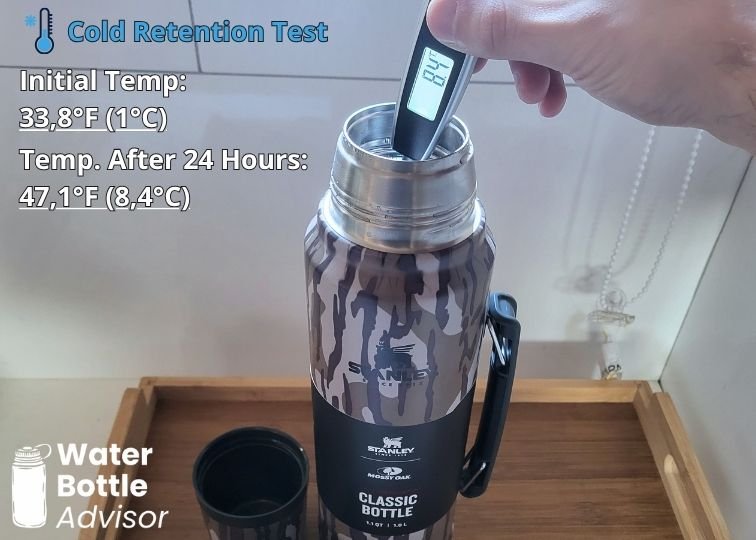
Fifth place belongs to the Stanley Legendary Bottle 1L. Stanley is known for excellent insulation, so it’s not exactly shocking to see at least one Stanley bottle in the top five. In my test, the water warmed up by just 7.4°C / 13.3°F after 24 hours.
It has “bottle” in the name, but it feels more like a proper thermos. You get the classic Stanley design, a pour-through lid, a narrow mouth, and a cup attached to the top that you can drink from. It’s a bottle with a long history behind it, and it’s pretty cool that Stanley still sells it today. To see how it has held up for me over the years, take a look at my Stanley Legendary Bottle review.
Now, you might be wondering: are these results actually good? Does the water still feel properly cold?
For reference, after testing 100+ bottles over the years, I’ve set my personal threshold at 15°C / 59°F. That may sound high, especially if you live somewhere scorching hot, like the middle of Australia or Death Valley in the US. But to me, water at that temperature still feels pleasantly cold. Anything above that starts to feel lukewarm.
So when you look at my test results, you can use 15°C / 59°F as a rough benchmark. If a bottle keeps water below that point, I’d still count it as doing its job well.
With that in mind, the top performers here are seriously impressive.
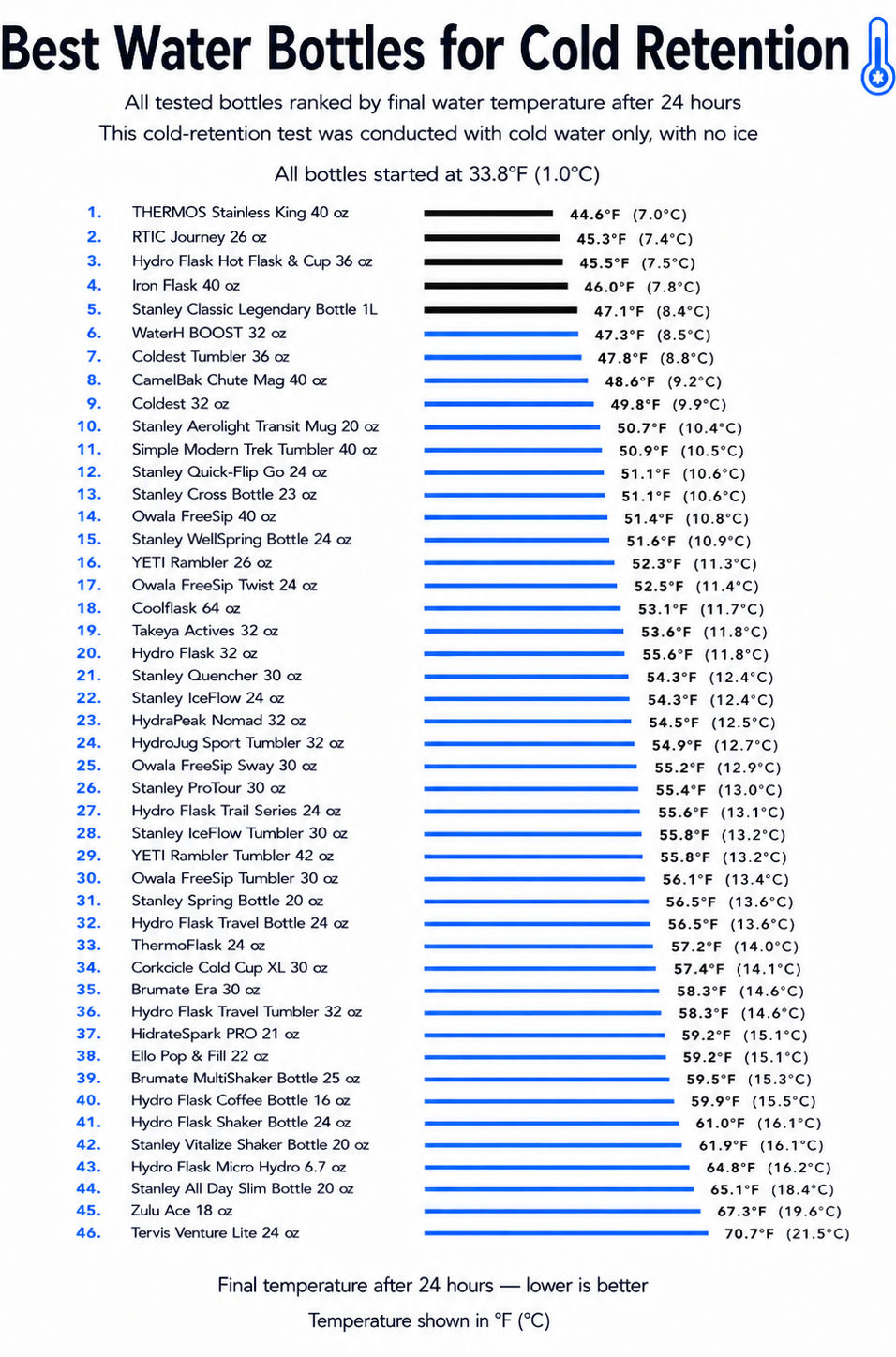
Of course, these are only the five best options. If you want to see all 46 bottles I tested for cold retention this year, check out the chart below.
Top 5 Bottles for Heat Retention
There’s nothing better than having near-boiling tea or coffee within reach during the colder months. Or at work. Or on a long drive. Or, really, anywhere you suddenly feel like you fancy a cuppa.
The tricky part is finding a bottle that can do two things well: safely handle very hot liquids and actually keep them hot for a useful amount of time.
Hot retention is a tougher test than cold retention. That’s because hot drinks lose useful temperature faster than cold drinks gain it. The temperature gap between near-boiling water and room temperature is much bigger than the gap between cold water and room temperature, so the bottle has to work harder from the start.
That’s also why most premium insulated bottles promise around 12 hours of heat retention, not 24 hours like they often do with cold drinks. If a bottle can keep your drink properly hot for 12 hours, that’s already a top-tier result.
For reference, I set my personal threshold at 50°C / 122°F. If you pour water at that temperature onto your hand, it may not feel wildly hot. But drinking it is a different story. To me, it still feels properly hot enough to enjoy as tea or coffee. So when you look at my results, you can use 50°C / 122°F as a practical benchmark. If a bottle stays above that after 12 hours, I’d call that a very good performance.
So, which bottles topped my heat retention test this year?
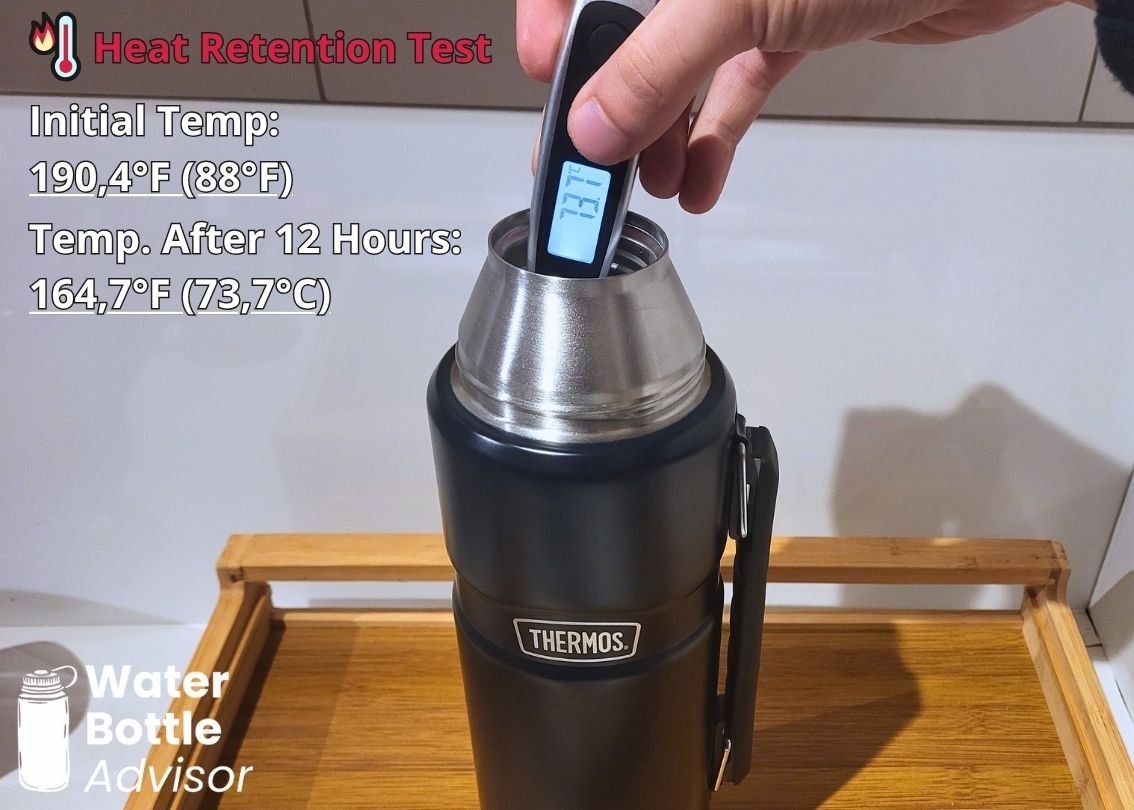
First place goes to the THERMOS Stainless King 40 oz, with the temperature dropping by just 14.3°C / 25.7°F after 12 hours. That’s an excellent result and, once again, this bottle proves why it keeps showing up at the top of my rankings.
Next are the Stanley Classic Legendary Bottle 1L and the Hydro Flask Hot Flask, both with the water temperature dropping by 16°C / 28.8°F after 12 hours. I’ve already talked about all three of these bottles earlier, so I won’t go over the same ground again. But the next two places are worth stopping at for a moment.
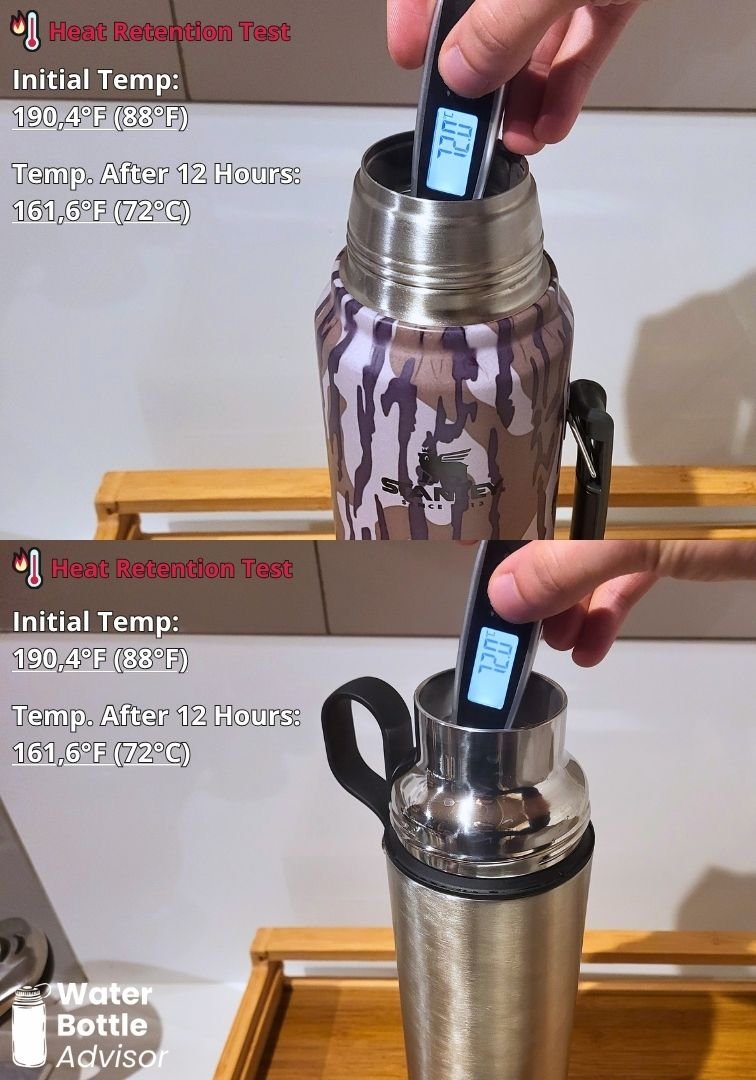
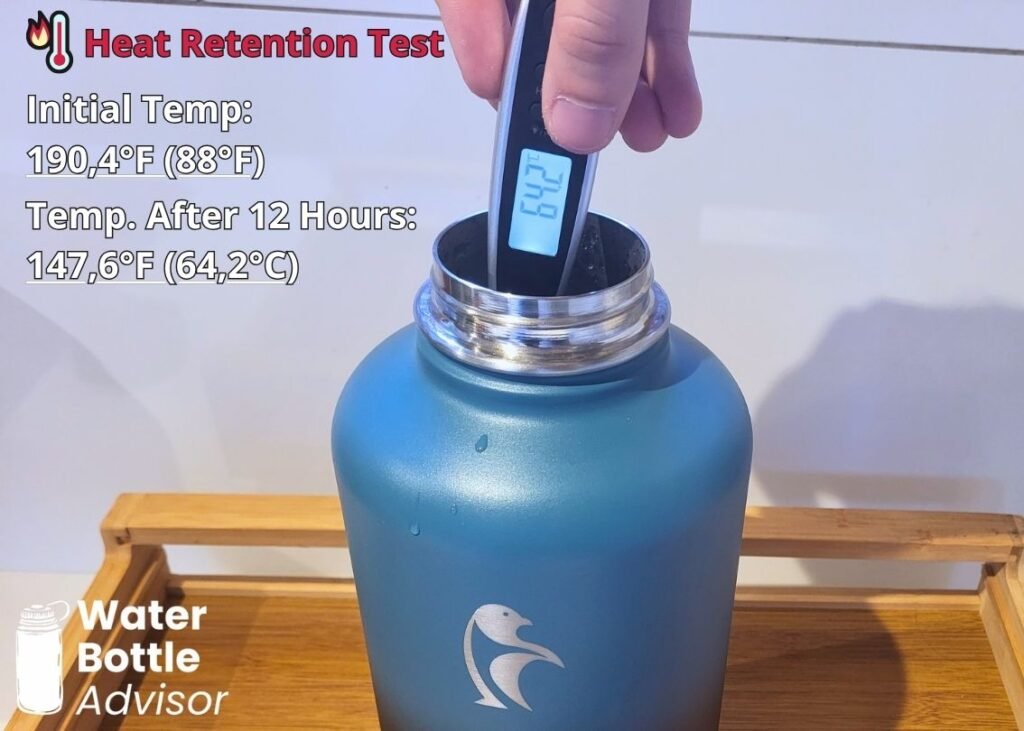
Fourth place goes to the Coolflask, where the water temperature dropped by 23.8°C / 42.8°F after 12 hours. I tested the large 64 oz version, and bigger capacity can help with insulation performance. Not always by a huge amount, as my testing has shown over the years, but it can make a difference (more on that in a moment!).
Apart from its strong heat retention, Coolflask is a really solid choice if you want an affordable bottle with a lot of extras in the box. I bought the huge 64 oz version for around $40, and it came with two extra lids, additional straws, a straw brush, and even a useful bottle sling, which makes carrying such a large bottle much easier. For the money, that’s a lot of bottle.
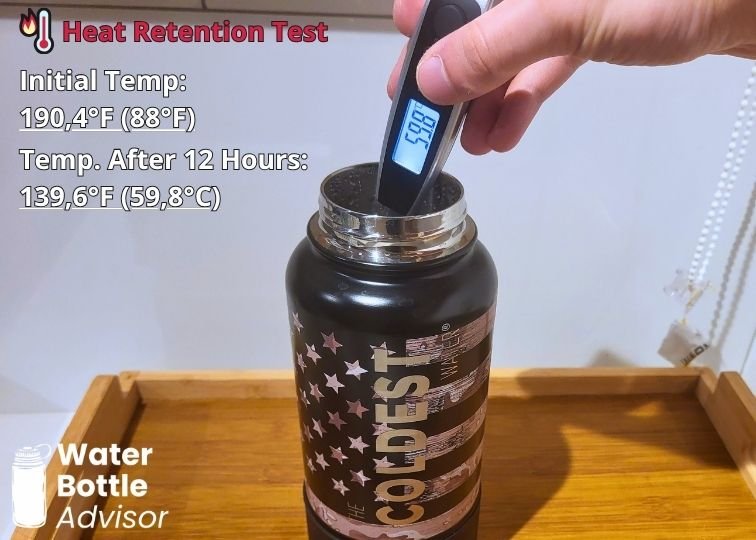
Rounding out my top five is the Coldest Bottle 32 oz, with the water temperature dropping by 28.2°C / 50.8°F after 12 hours.
This is currently my best water bottle overall, and probably the most versatile one I own. It ticks almost every box for me. It performs well with hot drinks, works just as well with cold water, has a sturdy build, comes with a great straw lid, and in my testing, it’s also one of the safest bottles you can buy.
There’s a lot to like about this one, and I go into more detail in my full Coldest Bottle review.
Below, you’ll find 15 more bottles I’ve owned over the years that can be used safely with hot liquids.
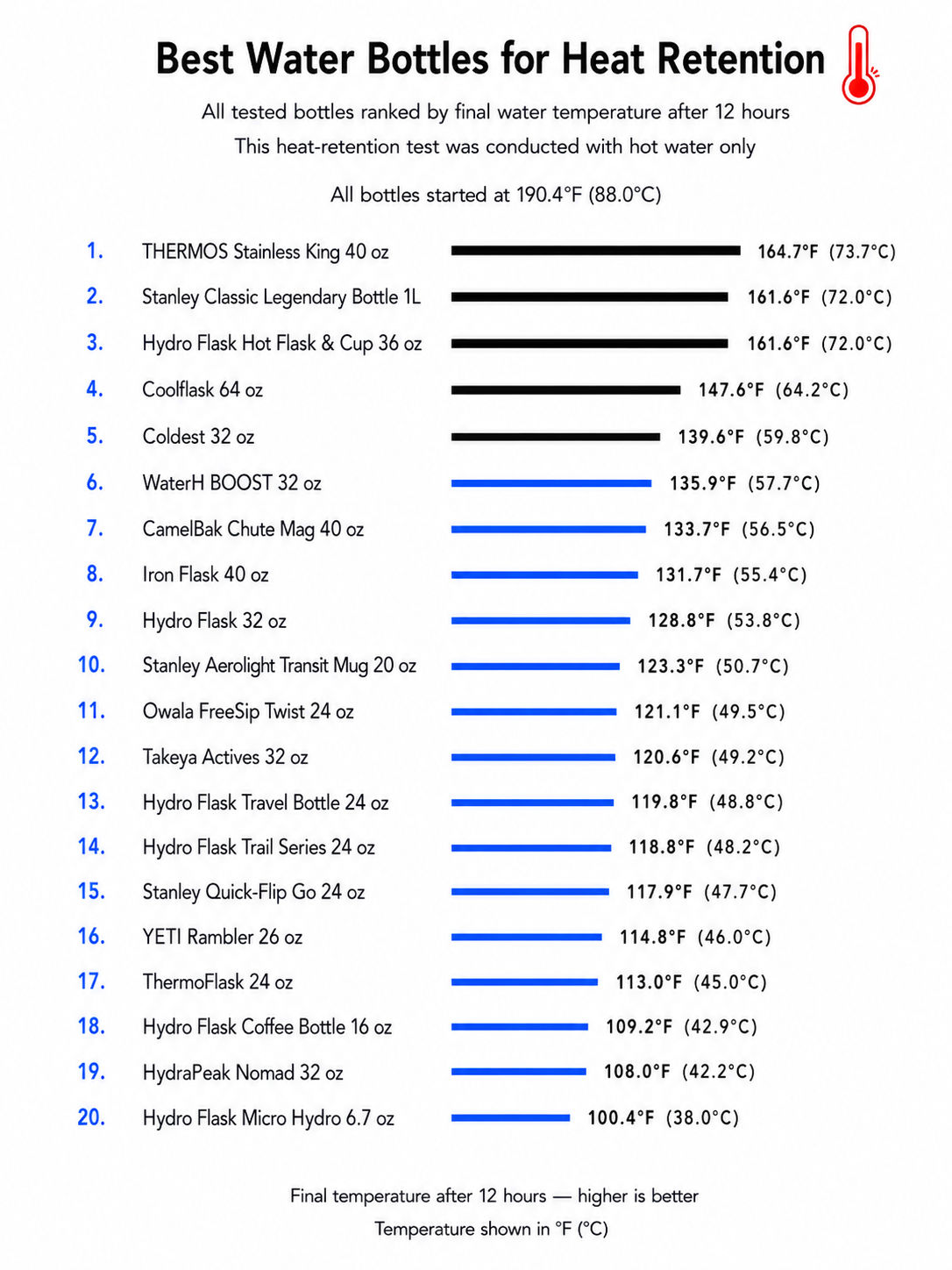
Best All-Rounders (Cold + Hot Retention)
I live in a place where summers can be scorching hot and winters can be seriously harsh, so I have a soft spot for bottles that can safely handle both cold and hot liquids.
If you need one bottle that can safely handle both cold and hot drinks, and on top of that you want maximum insulation performance in both directions, a thermos-style bottle is the best choice.
Thermos-style bottles are built to fight temperature change as much as possible. They usually have narrower openings, cup-style lids, and designs that reduce heat transfer whether you’re trying to keep ice water cold or tea hot. So it’s no accident that they dominate my insulation rankings.
Just look at the chart below. The gap between proper thermoses and some regular insulated bottles in my test is massive, both for cold retention and heat retention.
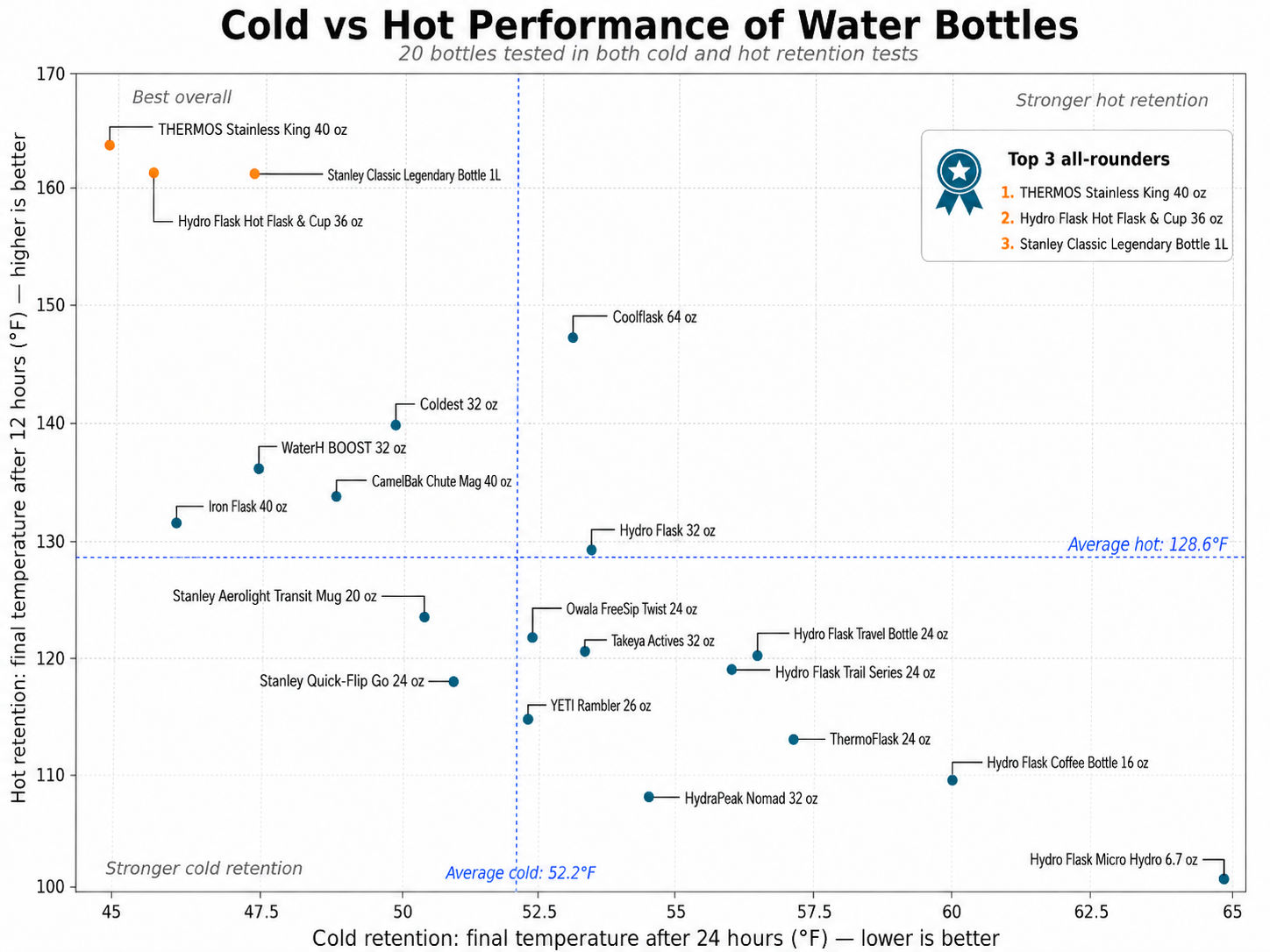
The best performers so far in the “all-rounder” category have been the THERMOS Stainless King 40 oz, Hydro Flask Hot Flask 36 oz, and Stanley Classic Legendary Bottle 1L.
But thermoses usually aren’t the most portable or stylish options. They’re practical, yes. Tough, yes. But they can also be bulky, heavy, and a little too “camping trip with your uncle”, as I call them.
So, if you prefer a regular bottle design but still want excellent cold and heat retention in one bottle, I have four great recommendations:
All four surprised me with how well insulated they are. They still feel like regular bottles, not giant thermoses, but their performance is much closer to the big boys than I expected.
How the Insulation Works in Water Bottles?
Insulated water bottles work by slowing down the movement of heat.
Heat naturally tries to move from a warmer place to a colder place. So if you put cold water inside a bottle on a warm day, heat from the outside tries to get in. If you put hot coffee inside, heat from the drink tries to escape.
Most high-quality insulated bottles use double-wall vacuum insulation. This means the bottle has two stainless steel walls with a small empty space between them. That empty space is a vacuum, meaning most of the air has been removed.
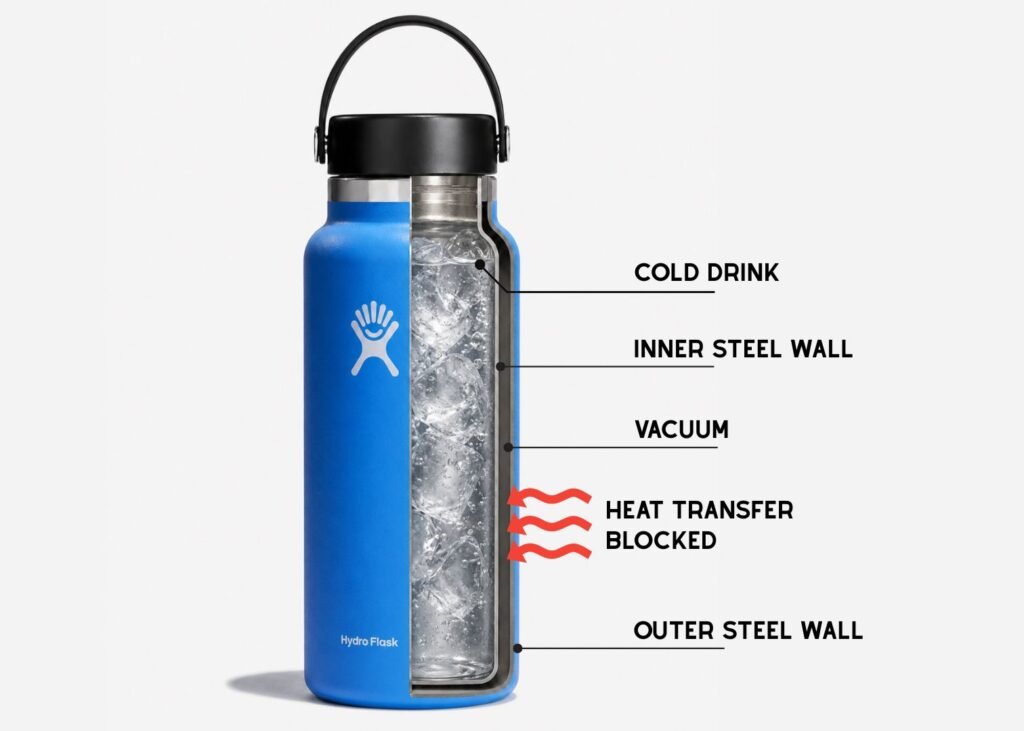
This matters because heat usually travels in three main ways:
- Conduction: heat moving through direct contact
- Convection: heat moving through air or liquid
- Radiation: heat moving as infrared energy
The vacuum between the walls greatly reduces conduction and convection because there is almost no air between the walls to transfer heat. Some bottles also add a copper layer, which helps reflect radiant heat, almost like a mirror for thermal energy.
But the bottle body is only part of the story. The lid is often the weakest point because it is usually made of plastic, has openings, and does not insulate as well as the stainless-steel body. That’s why two bottles with similar stainless-steel construction can perform very differently depending on the lid design.
In simple terms: an insulated bottle keeps drinks cold or hot by creating a barrier between the liquid inside and the outside temperature. The better the vacuum, lid, shape, and overall construction, the longer your drink keeps its temperature.
Double vs Triple-Wall Vacuum Insulation: Is There a Real Difference?
In theory, triple-wall vacuum insulation should perform better than standard double-wall insulation. Many consumers see the word “triple” and naturally assume it means something like 50% better insulation.
But the reality is more complicated.
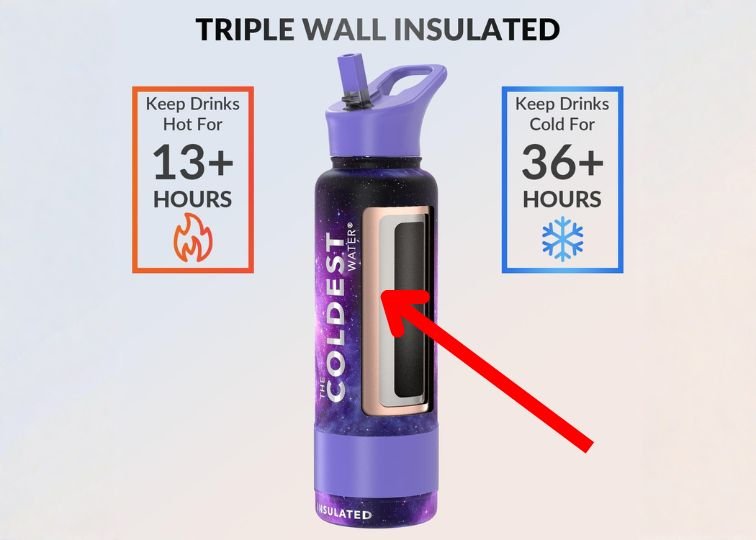
The problem is that “triple-wall” does not have one universal definition. In most cases, brands use the term in one of two ways:
- Double-wall vacuum insulation with a copper layer
- Three physical insulation layers
The second option is much harder to verify, and in my opinion, most brands using the term “triple-wall” are probably referring to the first version: a standard double-wall vacuum bottle with an added thin copper coating on one of the internal walls.
That copper layer has a real purpose. Copper is highly reflective to infrared radiation. Instead of absorbing and transferring thermal radiation across the vacuum gap, it reflects much of that heat back toward the source.
So, does triple-wall insulation actually make bottles perform better?
Based on my testing, it can.
Out of the 46 bottles I tested for insulation, several claimed to use triple-wall vacuum insulation, including WaterH Boost, The Coldest Bottle, The Coldest Tumbler, Coolflask, HydroJug Sport, and multiple Owala bottles: the classic FreeSip, FreeSip Tumbler, and FreeSip Sway.
And to be fair, they performed very well. On average, these triple-wall bottles finished at 52.0°F after 24 hours without ice. Not a single triple-wall insulated bottle I tested exceeded my personal acceptable threshold of 15°C / 59°F for cold water. Meanwhile, several double-wall vacuum-insulated bottles did exceed that threshold.
That makes it difficult to ignore the pattern.
I cannot say with 100% certainty that triple-wall insulation is always better than double-wall insulation, because bottle design, lid type, capacity, shape, and vacuum quality all play a role. But I also do not think it is a coincidence that all triple-wall bottles I tested performed so well.
| Group | Bottles | Avg. temp after 24h |
|---|---|---|
| Triple-layer bottles | 8 | 52.0°F |
| Double-wall bottles | 38 | 55.3°F |
| Difference | — | 3.3°F colder |
The bottom line: there does seem to be a correlation between triple-wall design and strong insulation performance, but triple-wall does not automatically mean better. A well-built double-wall bottle can still outperform a poorly designed triple-wall bottle.
Does Bottle Capacity Affect Insulation Performance?
Not many buyers consider insulation performance when choosing a bottle size. Some brands are transparent and show different temperature-retention claims for each size, but others use the same promise across all sizes, which can be misleading.
My experiment shows that bottle capacity can make a noticeable difference – but not always.
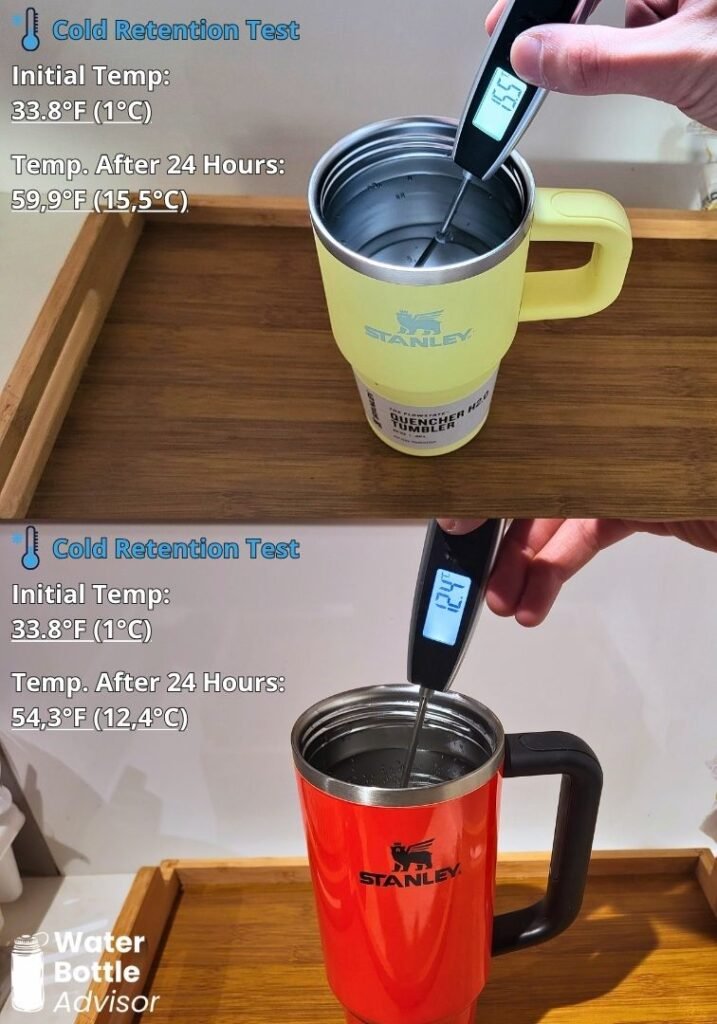
I tested cold retention using a 20 oz Stanley Quencher and compared it with the same model in a larger 30 oz size. Both had the same straw lid and a nearly identical starting temperature. After 24 hours, the 20 oz bottle reached 59.9°F / 15.5°C, while the 30 oz bottle finished at 54.3°F / 12.4°C.
That’s a difference of 3.1°C, which is significant considering the capacity difference is only 10 oz.
However, the same pattern did not appear with Owala. I compared the 24 oz Owala FreeSip with the larger 40 oz FreeSip. After 24 hours, the smaller bottle measured 52.7°F / 11.5°C, while the larger one measured 51.4°F / 10.8°C.
Despite the much bigger capacity gap, the final difference was only 0.7°C – not something most people would notice while drinking.
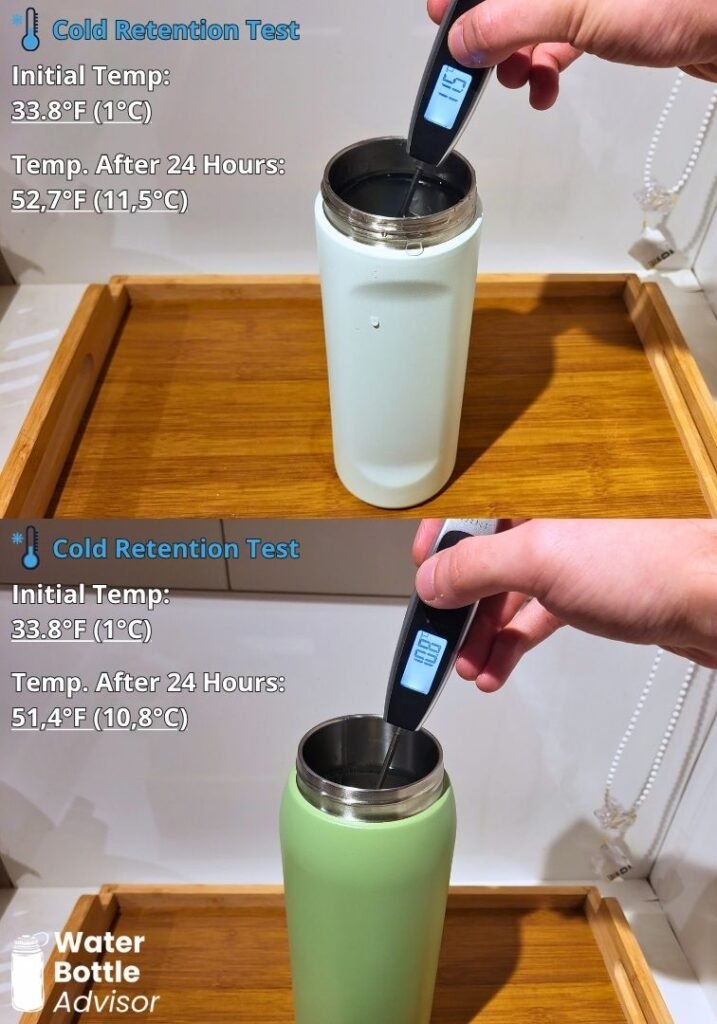
The bottom line: capacity can affect insulation, but it is not the only factor. In some bottle designs, a larger size performs noticeably better because it holds more liquid relative to the surface area exposed to heat transfer. But in other designs, the lid, shape, vacuum insulation quality, and construction seem to matter more than capacity alone.
Does Paying More Get You Better Insulation?
To see whether more expensive bottles actually insulate better, I compared each bottle’s price with its final water temperature after 24 hours.
The result was a -0.35 correlation between price and final temperature. Since lower final temperature means better cold retention, this suggests that more expensive bottles did tend to perform slightly better.
However, the relationship was not strong. Price explained only about 12% of the difference in insulation performance, which means many other factors mattered more than price alone.
That showed up clearly in the results. Some affordable bottles, like the RTIC Journey 26 oz and Iron Flask 40 oz, performed extremely well, while some more expensive bottles did not rank near the top.
Final Thoughts
Insulation is the most important feature for me personally when choosing a stainless steel bottle. Compared to plastic, glass, or other materials, a well-insulated steel bottle is simply much more comfortable to use – whether it’s scorching hot in summer or freezing cold in winter.
That’s why it’s worth spending a little extra time researching real insulation performance and checking what reviewers say. Brand claims can be helpful, but as my testing showed, they are not always accurate in real-world use.
I hope this guide helped you understand how insulation works in water bottles and which models performed best in my tests. As I test more bottles, I’ll keep updating this guide with new results and any bottles that surprise me with strong thermal performance, so feel free to revisit this page or bookmark it for later!

Jeremiah Kowalski
Jeremiah Kowalski is a drinkware product researcher who has personally tested 50+ reusable water bottles, tumblers, mugs, and filtration systems from leading brands. He focuses on real-world performance, durability, and safety to help readers choose drinkware that actually fits their daily hydration needs.