
You’d think choosing a reusable water bottle would be the easiest decision ever. But if you’ve ever stood in front of a wall full of sleek stainless steel designs, colorful tumblers, minimalist glass bottles, and high-tech “smart” options, you already know – it’s not that simple.
Some of these bottles cost $30, $50, even $100. And when you’re paying that much, you don’t just want something that looks good on your desk or in your gym bag. You want something that survives daily drops, fits your car’s cup holder, doesn’t leak in your backpack, keeps your drink cold for hours, and actually makes you want to drink more water.
The wrong choice is annoying and expensive. Replacing bottle after bottle because something “felt off” adds up quickly.
I’ll walk you through the nine most important factors to consider when choosing the right water bottle for you. If you’re in a hurry, though, and just want a quick recommendation, you can skip straight to my best water bottles ranking, where I break down the top picks.
Some of the links on this page are affiliate links. This means that if you click on one of the links and make a purchase, I may earn a small commission at no additional cost to you.
Material
The worst thing you can do is grab the first bottle off the shelf without even checking what it’s made of. The material determines durability, weight, insulation, taste, safety, and how long the bottle will realistically last.
You’d be surprised how many materials are used for water bottles today:
- Stainless steel
- Plastic
- Glass
- Copper
- Silicone
- Aluminum
- Titanium
Each has its own strengths (and weaknesses). If you want a deep dive into every option, check out my full guide to the best water bottle materials. But if you want the short, practical answer: for most people, stainless steel, plastic, and glass are the smartest choices.
Stainless Steel (My Personal Favorite)
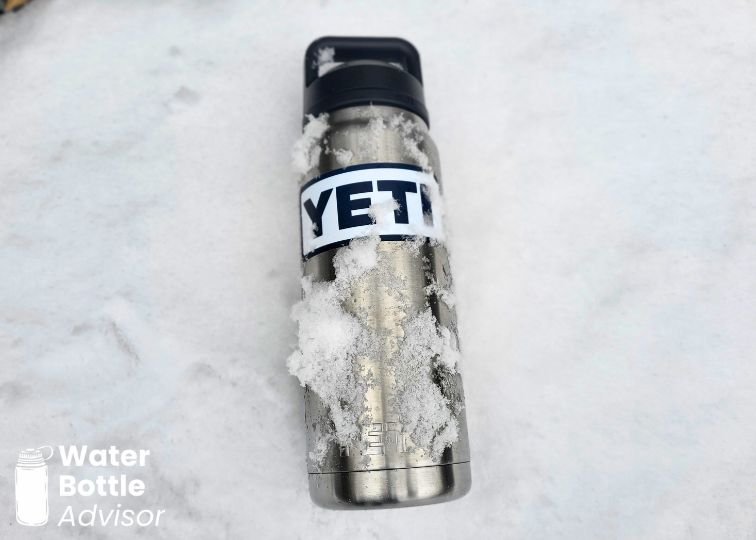
The most durable bottles on the market are made from stainless steel. My YETI Rambler could probably double as a hammer in a pinch.
Most high-quality steel bottles are double-walled and vacuum insulated, meaning they can keep water cold for 12-24+ hours and hot drinks hot for hours. Just make sure you’re not accidentally buying a single-wall version, because those aren’t insulated and are usually less rigid.
Other advantages:
- Extremely durable
- Most can handle both hot and cold beverages
- Doesn’t retain flavors when cleaned properly
- Often dishwasher safe (but always check manufacturer instructions)
Now here’s something many people overlook: not all stainless steel is the same.
Look for 18/8 stainless steel (also called 304 grade). That means it contains 18% chromium and 8% nickel, which gives it excellent corrosion resistance and durability. It won’t rust easily and will last for years.
If durability and insulation matter most to you, check out my guide to the best stainless steel water bottles where I compare the top-performing models.
Plastic (Lightweight & Surprisingly Practical)
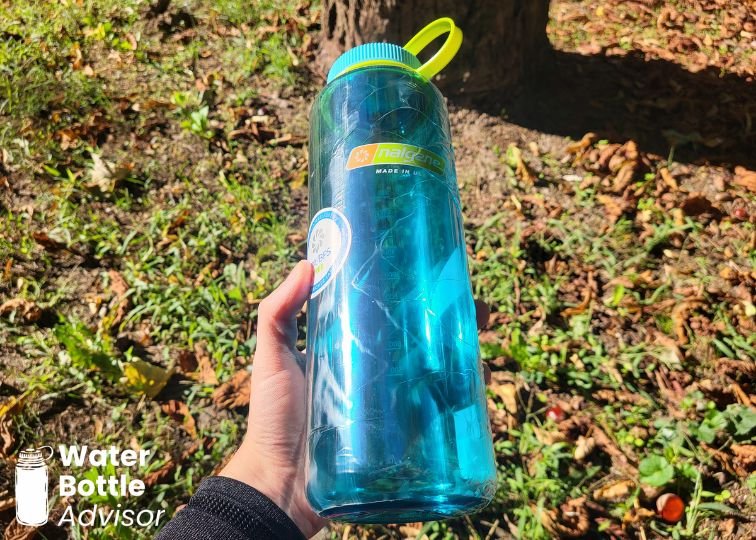
Plastic has bad connotations, but modern high-quality plastic bottles can be fantastic, especially for hiking, travel, or situations where weight matters.
The biggest advantage? They’re ultra-light. A steel bottle can feel heavy once filled. Plastic almost disappears in your bag.
The material I trust most is Tritan (commonly used in bottles like Nalgene). It’s:
- Extremely durable and impact-resistant
- Shatter-resistant
- Lightweight
- Resistant to odors and taste retention (if cleaned regularly)
- 100% BPA, BPS, and phthalate free
I’ve used Tritan bottles for years, and they’re my go-to for outdoor trips.
I also own bottles made from polypropylene and polyethylene. They’re safe and functional, but generally less durable and not as premium-feeling as Tritan.
If weight and practicality matter more than insulation, take a look at my breakdown of the best plastic water bottles.
Glass (Pure Taste, But Handle With Care)
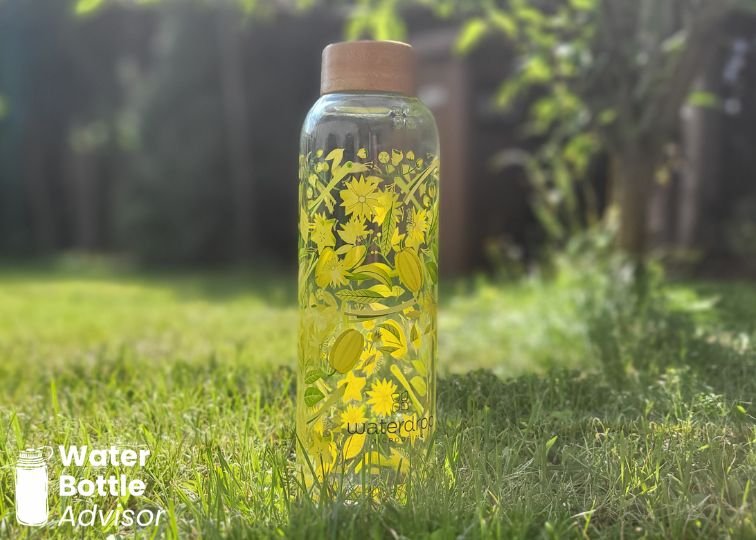
If you’re committed to living plastic-free, glass is the obvious choice.
The biggest advantage of glass is chemical neutrality. It doesn’t absorb flavors, doesn’t leach anything into your drink, and delivers the purest taste possible. If you’re sensitive to flavor changes, you’ll notice the difference immediately.
But glass has one major flaw: It breaks.
I love glass bottles, but I’ve broken more of them than I’d like to admit. Taking them outdoors or to the gym can feel risky unless you’re extremely careful.
If you choose glass:
- Always go for borosilicate glass (it’s stronger and more temperature-resistant than regular glass).
- Buy one with a silicone or neoprene sleeve for impact protection.
- Treat it as a home, office, or low-risk bottle.
If pure taste and a plastic-free lifestyle are your top priorities, explore my picks for the best glass water bottles.
Insulation
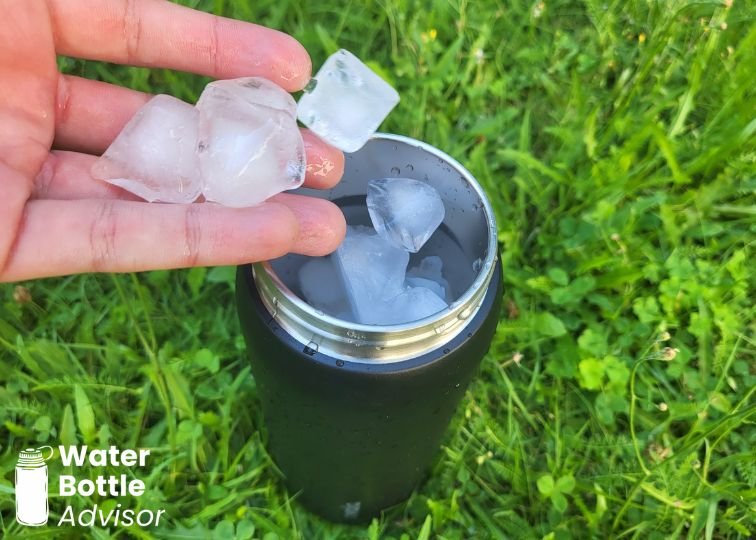
I’m the type of person who wants ice-cold water in July and properly hot tea in January. If you’re anything like me, insulation is essential.
Heat escapes in three ways:
- conduction (through solid materials),
- convection (through moving air),
- radiation (infrared heat transfer).
A well-insulated bottle is designed to slow down all three at once. That’s why the best insulated water bottles are almost always made from stainless steel with double-wall vacuum insulation.
In a vacuum-insulated bottle, you have an inner steel wall, an outer steel wall, and a vacuum-sealed gap between them. That empty space is the magic.
With no air trapped inside, convection is nearly eliminated, conduction is drastically reduced, and radiation is minimized – especially if the inner wall has a reflective coating.
In real life, this means your drink can stay cold for 12-24+ hours, hot for 6-12+ hours, and the bottle won’t sweat all over your desk. For most people, a high-quality double-wall vacuum bottle is more than enough.
“Triple-layer” insulation
“Triple-layer” insulation usually adds a copper coating around the inner wall. Copper reflects thermal radiation back toward the liquid, which can improve heat retention by a few more hours.
I’ve personally noticed a difference with heat and cold retention. Some of my triple-walled insulated bottles have kept water icy for days in the right conditions (something I tested myself and described in detail in my Coldest bottle review).
That said, triple insulation is sometimes more marketing than engineering. With reputable brands, it can help. With cheap ones, it’s just a label.
There are also other insulation types:
- air-insulated double walls
- foam-filled plastic bottles
- neoprene sleeves
While they’re better than nothing, they don’t come close to true vacuum insulation. If temperature control actually matters to you, stick with vacuum. Everything else is a compromise.
Size & Weight
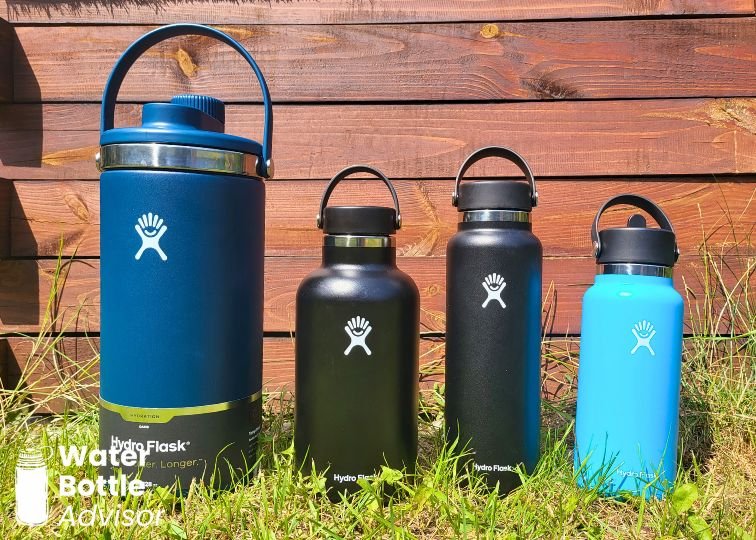
Size is the next thing you should think about, but don’t overcomplicate it.
After testing dozens of bottles, I’ve found that 24-32 oz is the sweet spot, and 32 oz is my personal favorite. It’s portable enough to carry daily, even in stainless steel, but still large enough to be practical.
A typical 32 oz double-wall vacuum bottle weighs around 15-20 oz empty, which is noticeable but completely manageable. For me, it’s the most versatile size for work, travel, driving, and everyday use.
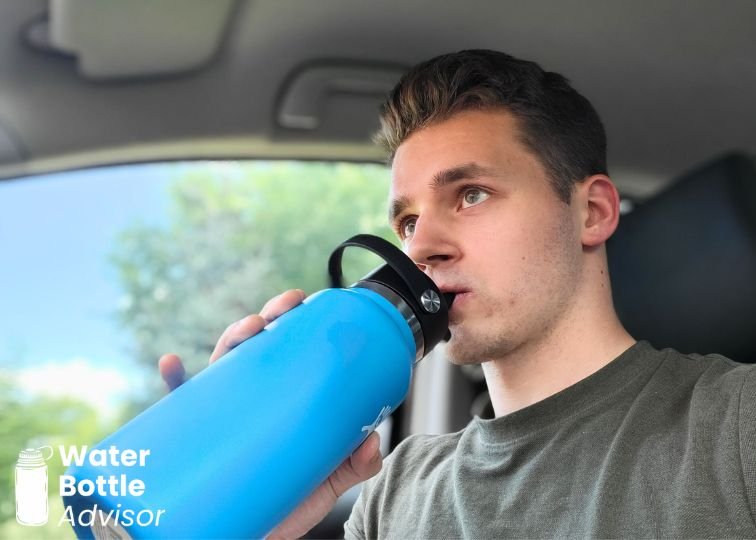
If you don’t need portability – for example at the gym, camping, long road trips, or family gatherings – 64 oz bottles make a lot of sense. They’re heavy, yes, but they can last all day without a refill.
If you’re considering one, check out my guide to the best water bottles with 64 oz capacity. And if you really want maximum capacity for long training sessions or outdoor work, the best gallon water bottles are built exactly for that purpose.
One interesting thing I spotted in my bottles is that size directly affects insulation performance. Bigger bottles usually maintain temperature longer. It’s simple physics.
A larger bottle has more liquid (more thermal mass) compared to its surface area, which means heat escapes more slowly. That’s why a 40 oz bottle made from the same materials will typically hold temperature longer than a 12 oz version.
Smaller bottles change temperature faster so you must be prepared for that while buying those bottles.
Portability
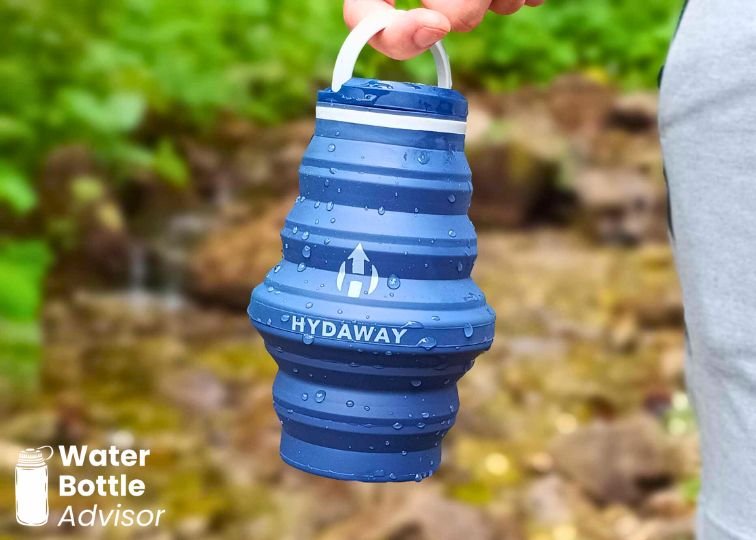
I’ve seen too many people struggle with bottles that won’t stay in a car cup holder. One wrong move and your prized drink ends up rolling across the seat, or worse, leaking everywhere. Not fun.
I’ve found two practical ways to avoid that headache.
First, an adjustable cup holder in your car is a “game-changer”. I spent around $15 on mine, and it’s still in constant use years later. It can fit almost any bottle, even some of the 64 oz giants, and keeps smaller bottles from wobbling and falling over while driving.
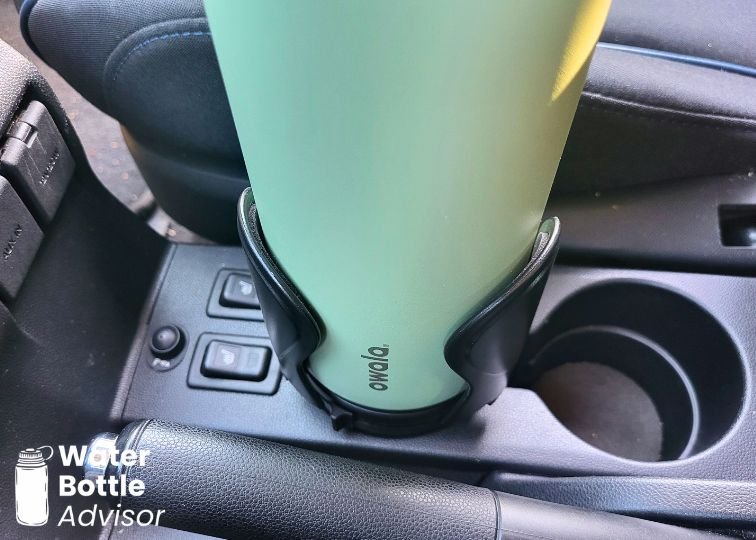
If you’d rather skip the extra accessory, aim for bottles under about 3 inches in diameter. Most cup holders are built around that size, though you’ll usually be limited to bottles around 24 oz.
I even put together a ranking of the best water bottles that fit in car cup holders if you want a quick shortcut.
Carrying the bottle by hand is another part of portability people often overlook. A good powder coating makes a huge difference – even sweaty hands can maintain a firm grip.
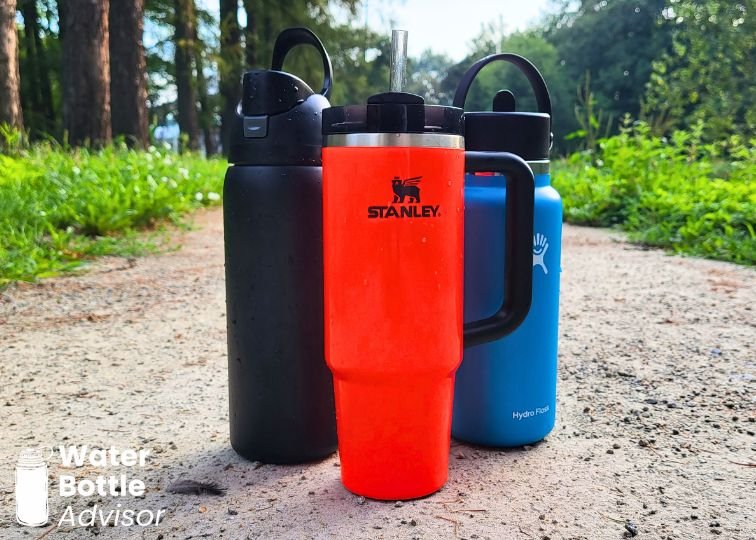
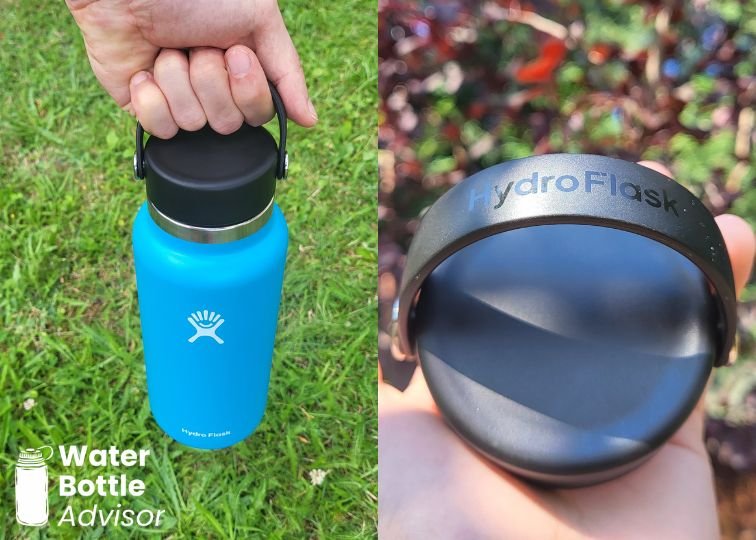
But the most important thing is the handle. Flexible, soft, and roomy enough for four fingers, a well-designed handle lets you carry heavy bottles comfortably all day. Hydro Flask’s Flex Cap or Flex Straw Cap is a perfect example of this in action.
Lid Design
While brands offer endless lid variations, you really only need to decide between two paths: the screw-on lid or the straw lid.
The screw-on lid is the gold standard for leakproof security. It’s built for “chuggers” who want maximum flow without a straw getting in the way.
The design is foolproof: just twist it tight and toss it in your bag. My only word of caution is to watch your grip; if you crank it down too hard with wet hands, you might find yourself in a wrestling match just to get a drink.
On the other hand, straw lids are the ultimate “sipper’s” companion, perfect for staying hydrated without breaking your focus or unscrewing a cap every five minutes.
However, they usually come with two compromises: you can’t chug when you’re truly parched, and the exposed mouthpieces can be magnets for dust and germs.
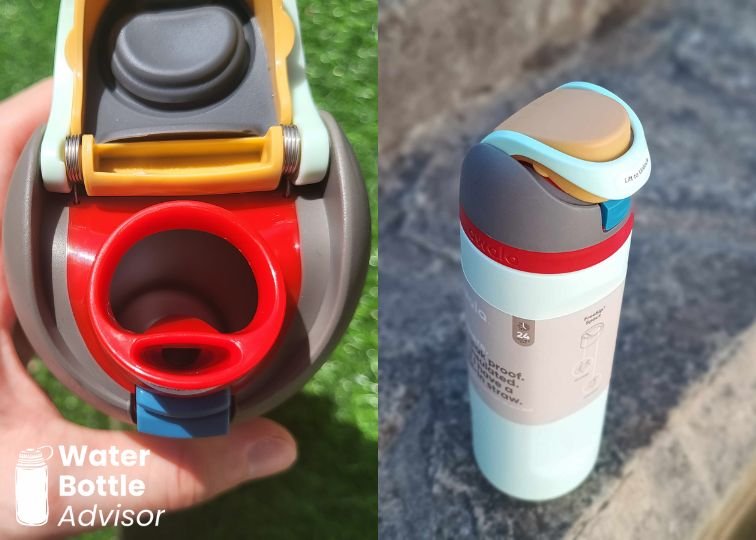
If you want to avoid the hygiene “ick” factor, I highly recommend looking for a design like the Owala FreeSip, because it hides a dedicated straw and a spout under a single, locking cap. It’s also the only bottle I’ve found that masters the hybrid approach of drinking through a straw and chug through a spout.
The Opening Width
The width of your bottle’s opening is a detail I used to overlook, but it dictates your daily experience.
Wide mouths are king for hygiene; being able to fit a scrub brush or sponge inside allows for a deep clean, and they are great for chugging water when I’m parched. However, I’ve spilled water down my front too many times trying to drink from them while walking or driving.
Narrow mouths fix the splash risk, but they are a nightmare to clean. I’m often limited to just shaking soapy water inside and hoping for the best.
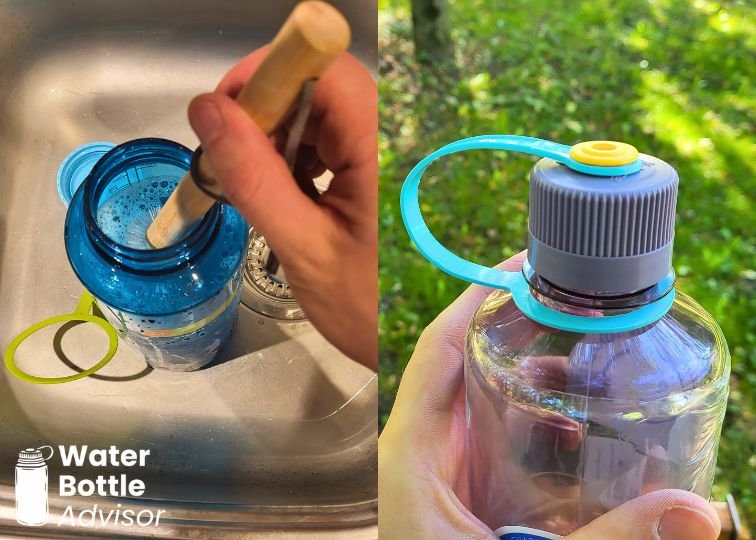
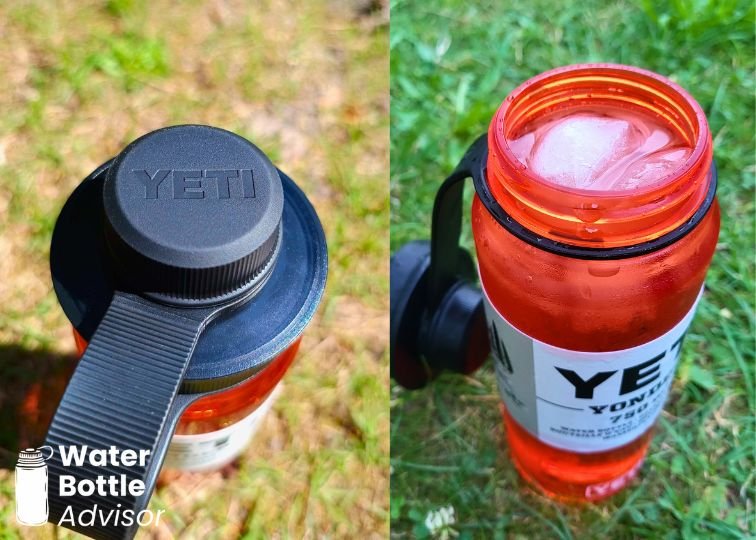
For me, the ultimate solution is a two-part lid, like the YETI Yonder Tether or Rambler Chug Cap. These offer a narrow spout for controlled sipping on the go, but the entire top unscrews to reveal a wide mouth for scrubbing. It completely eliminates the need to choose between hygiene and dry clothes.
Ease of Cleaning
While the wide opening I mentioned earlier is the first step toward hygiene, the real test of a bottle’s maintenance is its lid design. In my experience, the more moving parts a lid has, the harder it is to keep clean. Complexity is the enemy here.
Take the Owala FreeSip, for example. I love how versatile it is, but cleaning it requires patience I don’t always have. With rubber gaskets, hidden threads, and tight nooks, I often have to fully disassemble it to scrub every part properly. If you’re curious, I even wrote a guide on how to clean Owala that walks through the process step by step.
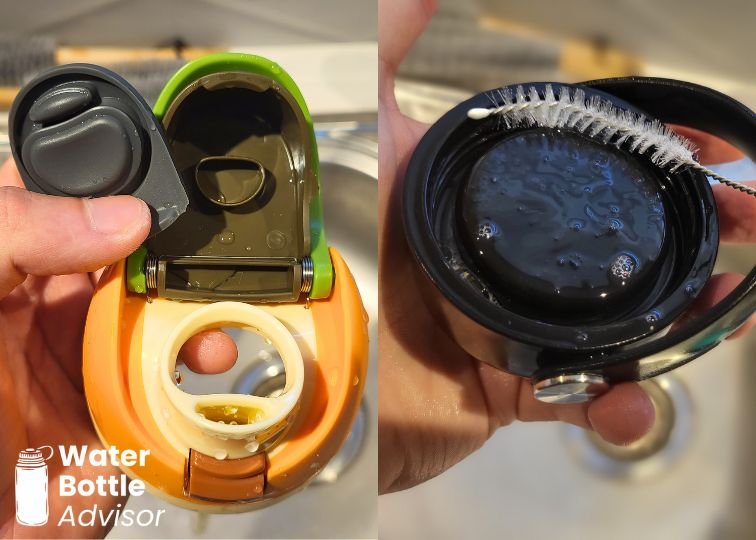
If you want a truly low-maintenance life, stick to a simple screw-on cap. Straw lids are convenient for sipping, but they come with their own maintenance challenge. It’s easy to scrub the bottle and forget the straw, where grime quietly builds up. If you’re new to this, check out my tips on how to clean straws – a dedicated pipe cleaner makes a world of difference.
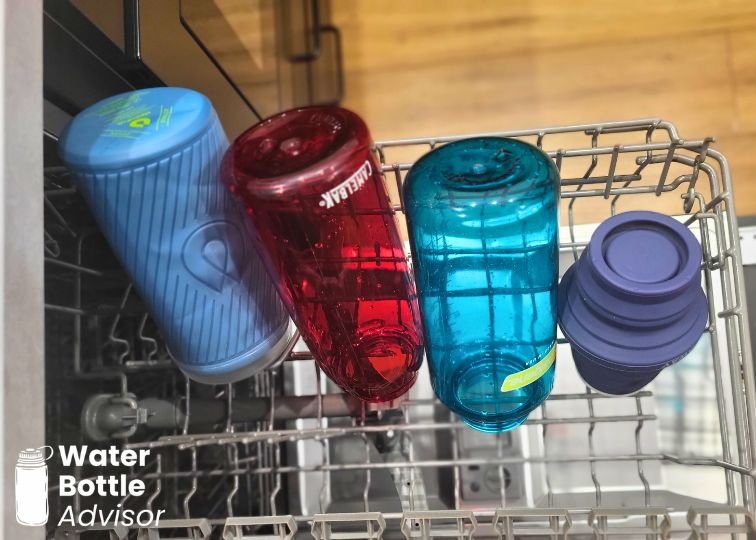
If you’re looking for the easiest water bottles to clean possible, the “dishwasher safe” label is the holy grail. Manufacturers are usually clear about this, and it’s worth checking because the intense heat of a dishwasher can peel the powder coating or damage the vacuum seal on bottles not built for it.
If you do go the machine route, I have one golden rule: always place your bottle on the top rack. This keeps it further away from the intense heating element at the bottom of your dishwasher, ensuring it gets sanitized without warping the plastic or ruining the finish.
Warranty
A warranty on a reusable water bottle is more important than most people realize. Most brands offer warranties that cover manufacturer defects, which basically means they will replace or repair the bottle if something goes wrong due to faulty materials or poor construction, not because you accidentally dropped it or left it in the freezer.
That alone is reassuring, but some brands go a step further. Bottles made by Coldest, for example, guarantee temperature retention performance and a 100% leakproof promise, meaning if your bottle doesn’t perform as advertised, they will make it right.
Some companies even add a 30-Day Money-Back Guarantee, giving extra confidence before you commit.
The brands I trust the most even offer lifetime warranties, but not every bottle comes with that level of protection. A good rule of thumb is to choose a bottle that offers at least a 1-year warranty.
If a bottle has no warranty at all, that’s a red flag – it usually signals low-quality materials or construction, and I personally avoid those.
Special Features
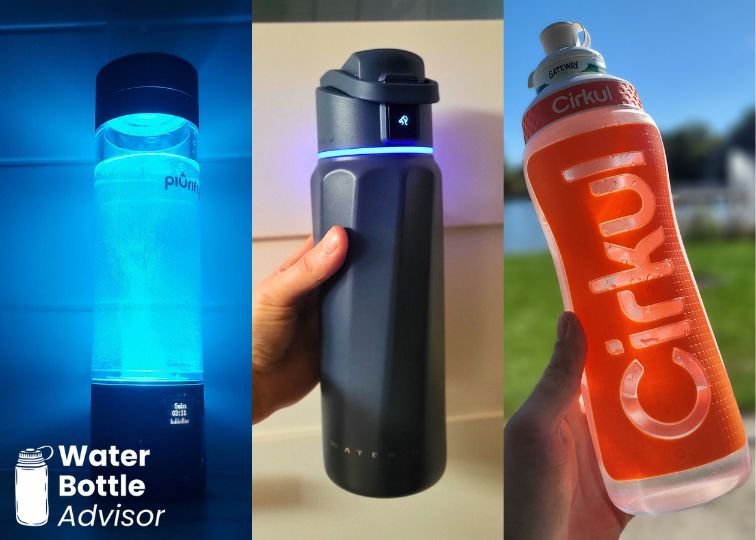
Finally, consider features that actively solve a problem in your routine. For example, if you find plain water uninspiring, flavor systems like Cirkul and AirUp can be a revelation.
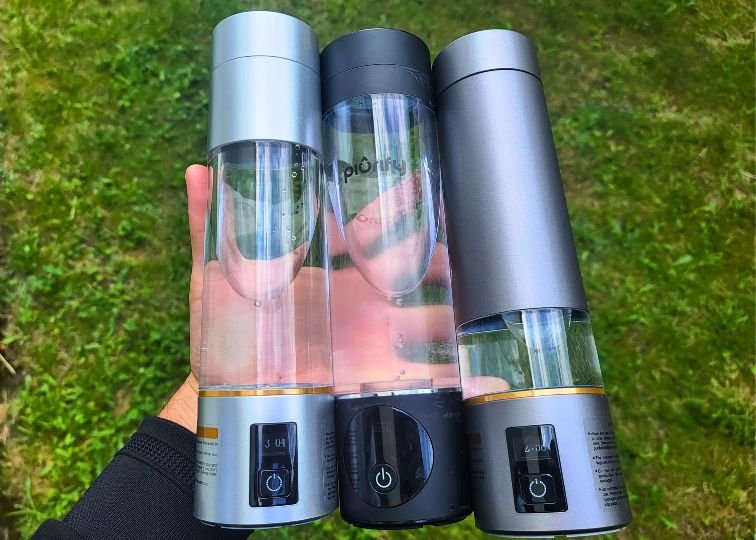
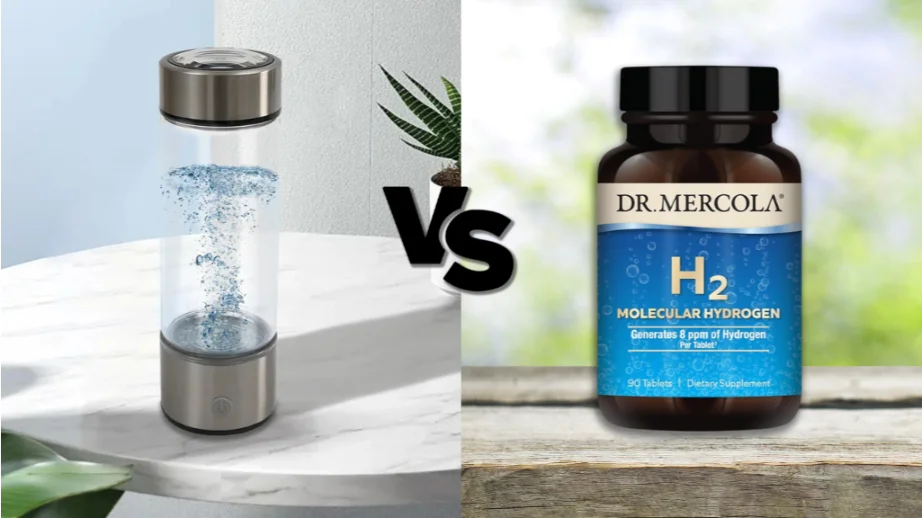
On the high-tech side, I’ve experimented with the best hydrogen water bottles for their potential health benefits, and I’ve found that the best smart bottles with LED glow reminders are a savior for anyone who simply forgets to sip during a busy day.
You will inevitably encounter internet purists screaming that these features are expensive gimmicks and that a bottle should just be a container. I strongly disagree.
If a flashing light, a flavor pod, or a hydrogen generator is the catalyst that actually makes you enjoy hydrating, it is worth every penny over a standard steel vessel. Don’t be afraid to spend a little extra on a bottle that makes you smile.
Final Thoughts
Choosing the perfect water bottle is harder than it seems. After testing dozens of them, I’ve learned that it’s almost impossible to find one that checks every single box. There’s always a trade-off.
That’s why the key isn’t perfection, but priorities. Think about your lifestyle and what matters most. If you spend a lot of time in your car, portability and cup-holder fit may outweigh ease of cleaning. But if you drink tea, coffee, or flavored beverages, then easy maintenance becomes far more important than other features.
I hope this guide and the tips I’ve shared help you choose a bottle that truly fits your routine and that you’ll actually enjoy using every day!

Jeremiah Kowalski
Jeremiah Kowalski is a drinkware product researcher who has personally tested 50+ reusable water bottles, tumblers, mugs, and filtration systems from leading brands. He focuses on real-world performance, durability, and safety to help readers choose drinkware that actually fits their daily hydration needs.